Most of us spend the bulk of our day indoors. That can make life feel flat, noisy, and mentally tiring. You may not notice it at first. Then you step into a room with soft daylight, fresh air, warm wood tones, and a small touch of green. Your shoulders drop. Your mind slows down.
That is the idea behind biophilic design for mental health. It is not a decorating trend. It is a practical way to shape indoor spaces so they feel more calming, restorative, and easier to live in. The goal is simple: bring helpful parts of the outdoors inside, in a way that supports mood, focus, and everyday stress recovery.
This guide explains what biophilic design is, why it links to mental well-being, and how you can apply it at home, at work, or even in a small apartment. You will also see common mistakes, budget-friendly options, and simple ways to tell if your space is actually helping.
The Pull Of Nature Indoors (Why This Matters Now)
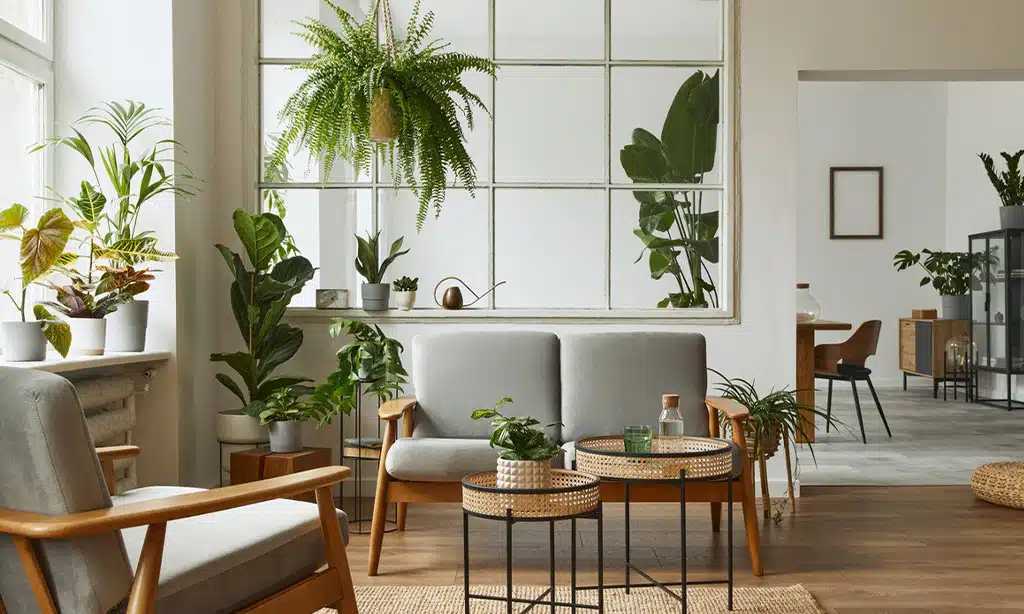
Many people live inside “high-stimulus” spaces: screens, harsh lighting, clutter, and constant noise. Over time, that sensory load can raise stress and drain focus.
Biophilic design takes a different approach. It builds small nature cues into everyday life so your space supports you instead of exhausting you.
What This Article Helps You Do
| Reader Goal | What You’ll Learn | Practical Outcome |
|---|---|---|
| Feel calmer at home | Which nature cues support stress recovery | A simple plan you can apply today |
| Focus better indoors | How restorative environments work | Less mental fatigue in work zones |
| Avoid hype | What research supports and what it does not | Realistic expectations |
| Make it affordable | Budget tiers and quick wins | Results without a remodel |
What Biophilic Design Actually Means (No Jargon)
Biophilia is the idea that humans tend to respond well to nature. Biophilic design uses that idea in real spaces.
It is not only plants. It is any design choice that helps you feel connected to natural patterns, materials, light, and comfort.
Biophilic Design In Simple Terms
| Term | Plain Meaning | Common Confusion |
|---|---|---|
| Biophilia | People often feel better around nature | It is not “a style” |
| Biophilic design | Nature connection built into a space | It is more than plants |
| Nature connection | Visual and sensory cues | It can be indirect and still help |
| Patterns | Repeatable design strategies | Not rules you must follow |
Biophilic Design vs “Just Add Plants”
Plants can help, but you can also build a nature-connected space with:
-
Better daylight and softer lighting
-
Natural materials like wood, linen, jute, clay, and stone textures
-
Gentle airflow and comfortable temperature
-
Reduced noise and calmer acoustics
-
Views and layout choices that feel safe and grounded
Biophilic Design For Mental Health: Why It Works
Biophilic design often supports mental well-being through two main pathways.
Stress Recovery
Natural cues can help the body relax. Think of it as a “downshift.” The space feels less harsh, less crowded, and less demanding.
Attention Recovery
Many people experience attention fatigue after long periods of focused work, screens, or busy environments. Nature-like settings can help attention rebound, especially when the environment feels calming and gently interesting rather than loud or chaotic.
Two Main Pathways
| Pathway | What It Means | What A Room Can Do |
|---|---|---|
| Stress recovery | Your nervous system calms down | Reduce harsh sensory load, add soothing cues |
| Attention recovery | Your focus refuels | Create “micro-restoration” moments |
| Mood support | Comfort influences mood | Improve light, reduce glare, soften textures |
| Sense of control | Control lowers stress | Easy control of lighting and privacy |
A Reality Check
Biophilic design can support mental health. It does not replace professional care. Think of it as a helpful environment that can make good habits easier.
What The Research Says (And What It Does Not Say)
Research across healthcare settings, workplaces, and public health suggests that nature exposure supports stress recovery, attention, and well-being. Indoor design can’t replicate a forest, but it can borrow the cues that seem to help people feel better.
What research often cannot prove is that a single design change will create the same mental health outcome for everyone. People differ. Homes differ. Climate, noise, and lifestyle differ.
What Evidence Is Strongest For
| Evidence Type | What It Suggests | How To Use It Responsibly |
|---|---|---|
| Nature views and recovery | Natural views support restoration | Prioritize daylight and views |
| Workplace studies | Nature cues link to better well-being | Apply low-cost changes in offices |
| Green space reviews | Nature exposure supports mental health pathways | Use indoors as a complement |
| Healthcare reviews | Natural elements may ease stress | Focus on comfort, not decoration |
The 14 Patterns Framework (A Practical Map, Not A Rulebook)
Many designers use a framework that groups biophilic design into three buckets:
Nature In The Space
Direct experiences of nature:
-
Daylight
-
Plants
-
Air movement
-
Water elements (even sound)
Natural Analogues
Indirect cues:
-
Wood grain
-
Stone texture
-
Natural fibers
-
Fractal patterns and organic shapes
Nature Of The Space
How the space feels:
-
Prospect (open views)
-
Refuge (safe, cozy corners)
-
Mystery (gentle curiosity without clutter)
The Three Buckets
| Bucket | What It Includes | Mental Health Angle |
|---|---|---|
| Nature in the space | Light, plants, air | Calmer sensory feel, better mood cues |
| Natural analogues | Textures, materials, shapes | Warmth, grounding, visual comfort |
| Nature of the space | Layout and shelter | Safety + calm focus zones |
Core Elements That Make A Space Feel Restorative
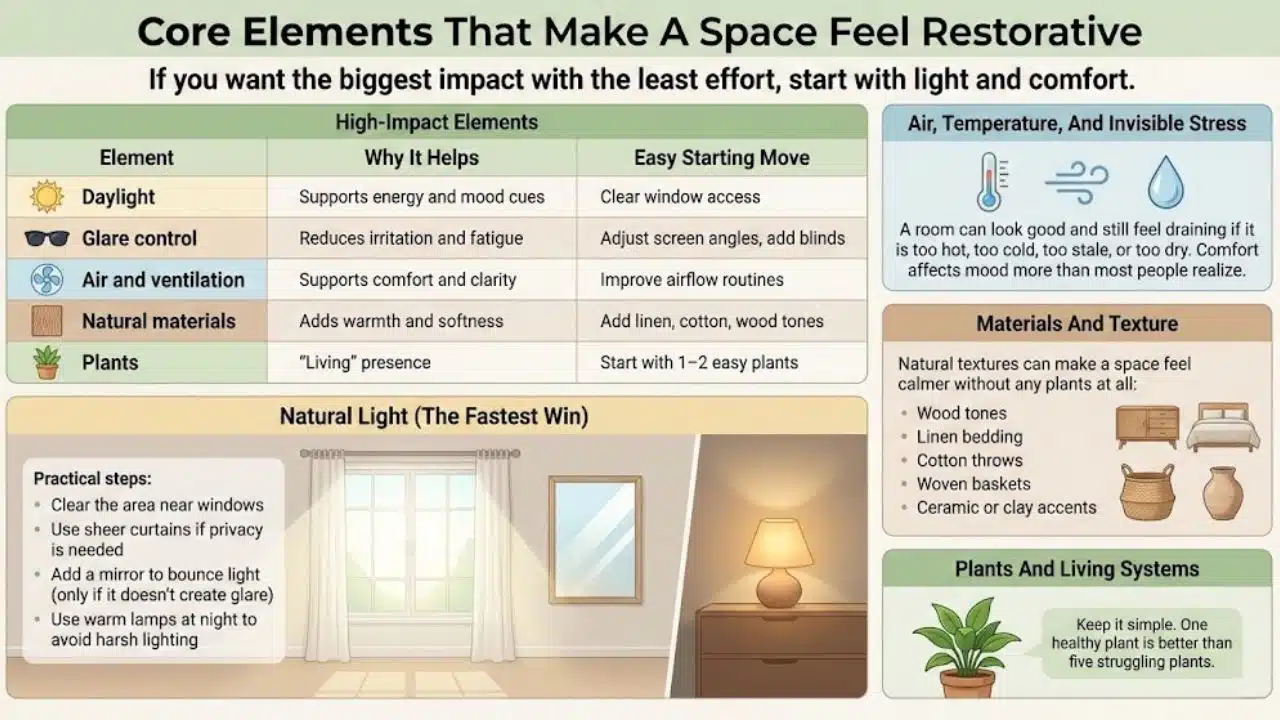
If you want the biggest impact with the least effort, start with light and comfort.
High-Impact Elements
| Element | Why It Helps | Easy Starting Move |
|---|---|---|
| Daylight | Supports energy and mood cues | Clear window access |
| Glare control | Reduces irritation and fatigue | Adjust screen angles, add blinds |
| Air and ventilation | Supports comfort and clarity | Improve airflow routines |
| Natural materials | Adds warmth and softness | Add linen, cotton, wood tones |
| Plants | “Living” presence | Start with 1–2 easy plants |
Natural Light (The Fastest Win)
Practical steps:
-
Clear the area near windows
-
Use sheer curtains if privacy is needed
-
Add a mirror to bounce light (only if it doesn’t create glare)
-
Use warm lamps at night to avoid harsh lighting
Air, Temperature, And Invisible Stress
A room can look good and still feel draining if it is too hot, too cold, too stale, or too dry. Comfort affects mood more than most people realize.
Materials And Texture
Natural textures can make a space feel calmer without any plants at all:
-
Wood tones
-
Linen bedding
-
Cotton throws
-
Woven baskets
-
Ceramic or clay accents
Plants And Living Systems
Keep it simple. One healthy plant is better than five struggling plants.
Room-By-Room Biophilic Design For Mental Health
Room Goals And Best Moves
| Room | Main Goal | High-Impact Moves |
|---|---|---|
| Living room | Stress downshift | Light + textures + one living element |
| Bedroom | Better sleep cues | Soft lighting, calm colors, natural fabrics |
| Home office | Focus and lower fatigue | View, plant, simple textures, micro-break corner |
| Kitchen | Freshness and energy | Herbs, daylight, warm materials |
| Bathroom | Reset | Gentle lighting, humidity-safe greenery |
Living Room: Build A Reset Corner
-
Put a chair near the best natural light
-
Add a plant or nature artwork
-
Add a textured throw or rug
-
Keep the area uncluttered
Bedroom: Calm, Dark, And Morning Light
-
Use warm bedside lamps
-
Choose breathable fabrics
-
Keep visual clutter low
-
Let morning light in when you wake up
Home Office: Focus Without Feeling Sterile
-
Face a window if possible
-
Add one nature cue within sight
-
Reduce glare and harsh overhead lighting
-
Add a “two-minute reset” spot (even just standing by the window)
Kitchen And Bathroom
-
Kitchen: herbs, wood boards, good lighting
-
Bathroom: moisture-friendly plants, natural textures, soft light
Biophilic Design In Offices And Schools
Even small changes can help in high-stress indoor spaces.
Settings And Workarounds
| Setting | Common Problem | Biophilic Workaround |
|---|---|---|
| Open office | Noise and distraction | Soft materials, refuge seating, plants in shared zones |
| Classroom | Attention fatigue | Daylight, calm nature cues |
| Clinics | Anxiety and waiting | Views, textures, gentle lighting |
Low-cost moves:
-
Add plants where many people see them
-
Use calmer lighting instead of harsh white light
-
Improve acoustics with rugs, panels, or soft surfaces
-
Create a small “quiet corner” where possible
Budget-Friendly Biophilic Design
Budget Tiers
| Budget Level | What To Do | Why It Works |
|---|---|---|
| Free | Clear windows, declutter sightlines, move seating | Big payoff with no spend |
| Low cost | One tough plant, natural fabric cover, nature print | Fast “outdoors-in” effect |
| Medium | Better lamps, dimmers, shades, rug | Improves daily comfort |
Common Mistakes (And How To Avoid Them)
Mistakes And Fixes
| Mistake | What Happens | Better Option |
|---|---|---|
| Too many plants | Maintenance stress | Fewer, tougher plants |
| Dark corners | Low energy and mood | Layered lighting |
| Visual clutter | Mental noise | Fewer items, repeat textures |
| Strong scents | Headaches for some | Fresh air, mild choices |
| Humidity issues | Mold risk | Ventilation-first planning |
How To Tell If It’s Working
Simple Signals
| Signal | What To Look For | Easy Tracking |
|---|---|---|
| Stress | Easier calm-down after work | 1–10 rating before/after time in space |
| Focus | Longer deep work blocks | Count focused sessions |
| Sleep | Easier wind-down | Short sleep notes |
| Mood | More steady energy | Daily quick check-in |
Keep it simple. Change a few things. Live with it for two weeks. Then adjust.
Final Thoughts
Biophilic design for mental health is not about copying nature perfectly. It is about creating everyday conditions that feel calmer and more human. When your space has better light, softer textures, cleaner air, and a sense of comfort, your mind often has less to fight against.
If you want a simple starting plan, pick one room and one goal. Then make three changes:
-
Improve daylight and reduce glare
-
Add one natural texture you will touch or see daily
-
Create a small refuge corner for quiet resets
Those moves are realistic, affordable, and easy to maintain. Over time, they can make your home or workspace feel like a support system instead of another source of stress. That is why biophilic design for mental health keeps growing in popularity. It meets a real need with practical, livable design choices.