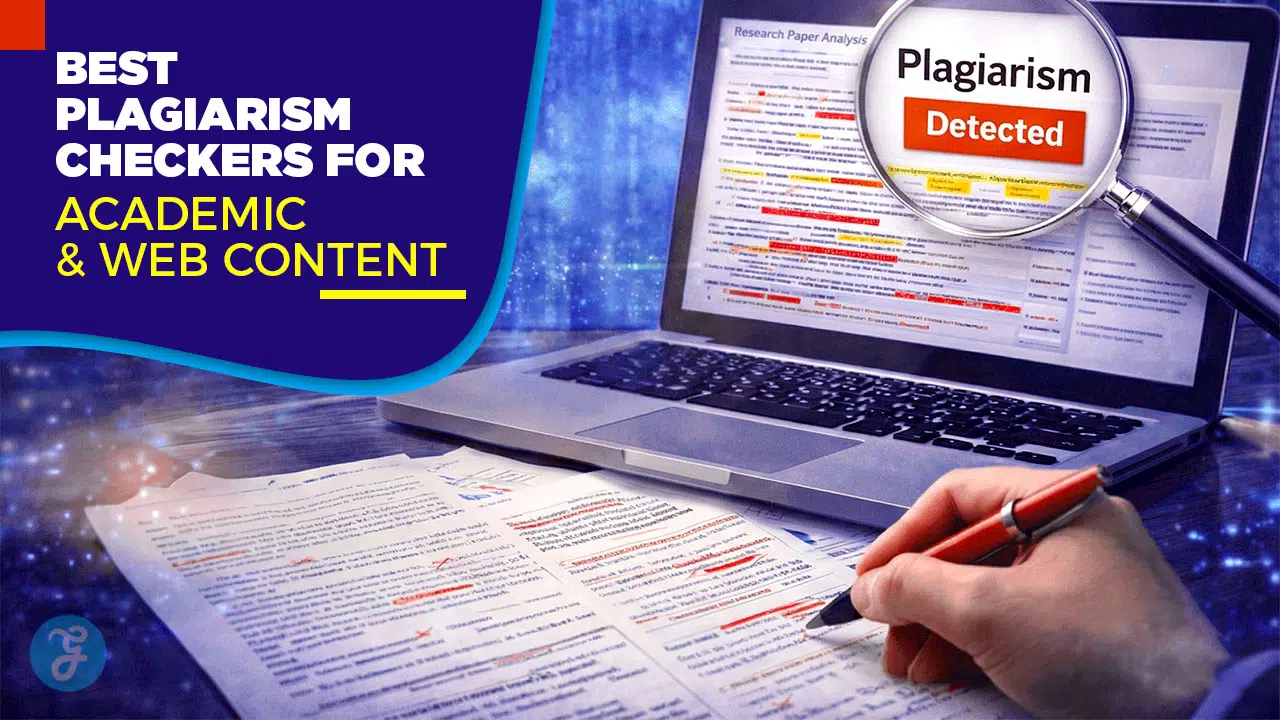
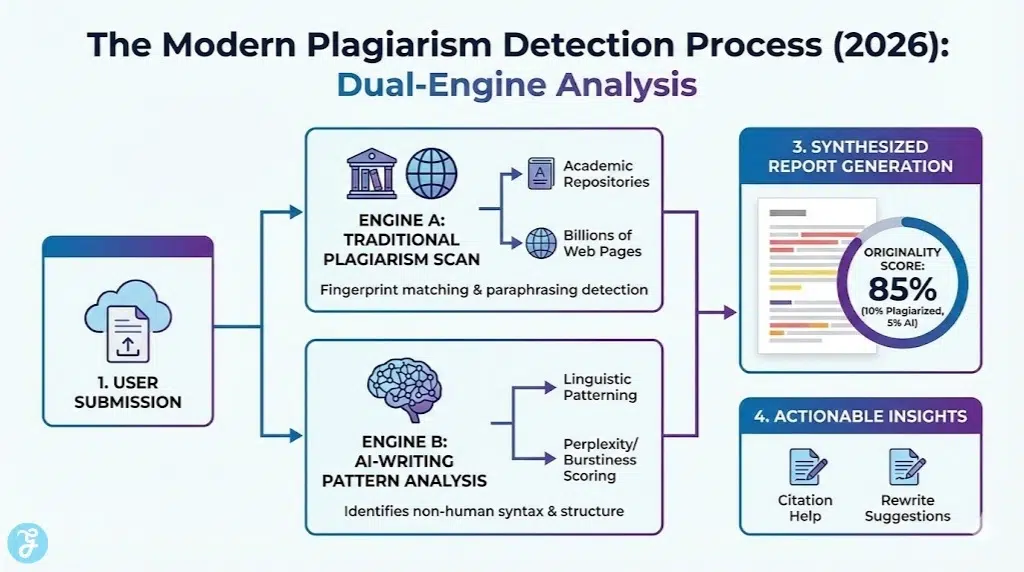
Identifying the best plagiarism checkers in 2026 is essential for maintaining the integrity of both scholarly research and digital marketing. As AI-generated content becomes more prevalent, modern detection tools have evolved to identify not just direct “copy-paste” instances but also sophisticated paraphrasing and AI-assisted writing. For students, a reliable checker ensures academic success, while for web publishers, it protects SEO rankings from the penalties associated with duplicate content.
The following tools represent the highest standards in accuracy, database depth, and user experience for the current year.
How We Selected Our 10 Best Plagiarism Checkers
Our selection process for 2026 focused on the shift toward “intelligent detection.” We prioritized tools that provide a high “Originality Score” while offering actionable feedback on how to fix flagged issues. Below are the specific metrics and criteria used to rank these industry-leading plagiarism detectors.
| Criteria | Evaluation Metric | Importance |
| Database Size | Billions of web pages + academic journals | High |
| Paraphrase Detection | Ability to catch “synonym-swapping” | High |
| AI Content Scoring | Integrated AI-writing detection | High |
| Report Clarity | Color-coded highlights and source links | Medium |
| Individual Access | Availability for single users vs. institutions | High |
The 10 Best Plagiarism Checkers for Academic and Web Content
The following tools have been ranked based on their performance across academic and professional web environments in 2026.
1. Paperpal
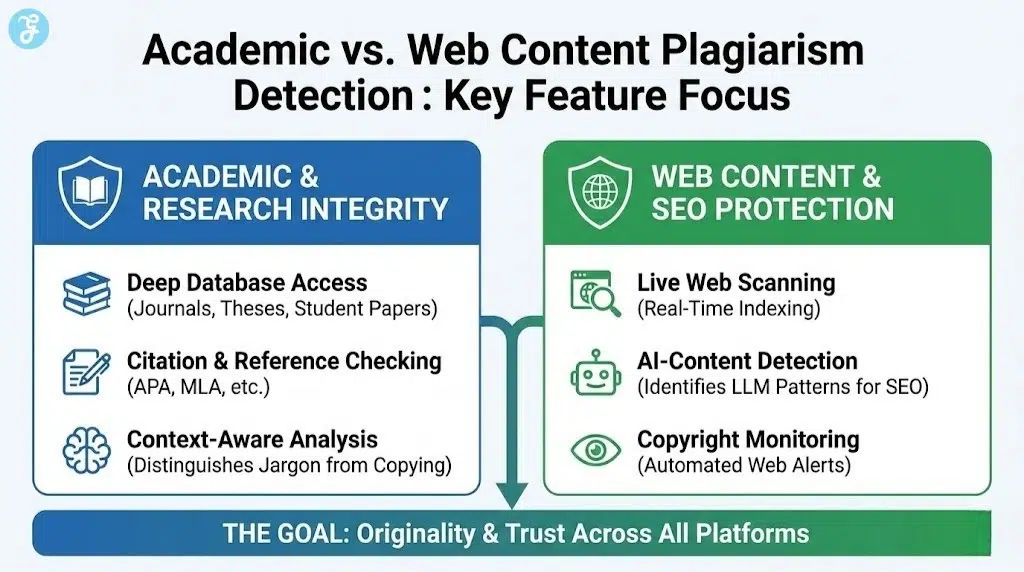
Paperpal has emerged as the premier choice for researchers and academic authors. Unlike generic checkers, it is specifically tuned to the nuances of scholarly writing and journal expectations. It uses a massive database of published research to identify similarity issues before they reach peer review. In 2026, its standout feature is the “Context-Aware” detection, which can distinguish between common technical phrases and actual plagiarism.
-
Best features: Integrated academic writing assistant and journal-specific similarity reports.
-
Pros: Designed specifically for researchers and minimizes “false positives” in technical papers.
-
Things to consider: More expensive than basic web-content checkers.
2. Turnitin
Turnitin remains the undisputed gold standard for educational institutions worldwide. It boasts the largest repository of student-submitted papers and academic journals in existence. While primarily accessible through schools and universities, its reporting depth is unmatched, providing a “Similarity Report” that is the legal benchmark for academic integrity. It now includes advanced AI-writing detection to combat the use of LLMs in classrooms.
-
Best features: The world’s largest academic database and deep LMS integration.
-
Pros: The most accurate tool for catching academic-specific plagiarism.
-
Things to consider: Individual access is generally not available; requires an institutional subscription.
3. QuillBot
QuillBot is the top choice for general writers who need a balance between high-grade accuracy and ease of use. In 2026, it is highly rated for its “Scan and Cite” feature, which not only finds plagiarism but helps you create the proper citation on the spot. It strikes a perfect balance between detection speed and report readability, making it ideal for blog posts and essays alike.
-
Best features: Built-in citation generator and a very high web-detection rate.
-
Pros: Very affordable and features one of the most user-friendly interfaces on the market.
-
Things to consider: Processing times can be slightly longer for very large documents.
4. Copyleaks
Copyleaks is the frontrunner for multilingual detection and AI-content identification. It supports over 100 languages, making it indispensable for global marketing teams and international students. Its 2026 update introduced “Source Preview,” allowing users to see the plagiarized source side-by-side with their own text without leaving the app. It is a powerhouse for detecting “obfuscated” plagiarism that tries to hide behind translation or light editing.
-
Best features: Exceptional AI-content detection and 100+ language support.
-
Pros: Extremely thorough and great for organizations with a global reach.
-
Things to consider: The interface can feel technical and overwhelming for casual users.
5. Grammarly
Grammarly’s plagiarism checker is integrated into its world-class writing assistant, making it the best choice for “draft-stage” checking. It scans your content against ProQuest’s massive academic database and billions of web pages. While it might not be as deep as a specialized tool like Turnitin, its convenience is unmatched. You can check for originality as you type, ensuring that every sentence is cited correctly before you even finish the first draft.
-
Best features: Real-time feedback and integration with ProQuest’s 16-billion-page database.
-
Pros: All-in-one tool for grammar, style, and plagiarism.
-
Things to consider: Its detection rate for heavily paraphrased text is lower than specialized rivals.
6. Scribbr
Powered by Turnitin’s proprietary technology, Scribbr offers institutional-grade accuracy to individual students and researchers. It is the best option for those who do not have a university login but want the “Turnitin experience” for their thesis or dissertation. Scribbr’s reports are highly educational, explaining why certain sections are flagged and providing guidance on how to interpret the results.
-
Best features: Access to the official Turnitin database for individual users.
-
Pros: High accuracy for academic papers and superior customer support.
-
Things to consider: Uses a “pay-per-document” model, which can be expensive for frequent use.
7. Quetext
Quetext is the budget-friendly leader of 2026, offering a generous 100,000-word monthly limit for a very low subscription fee. It uses “DeepSearch” technology to identify contextual similarity, which goes beyond simple word-matching. It is particularly popular among students and freelancers who need to scan long manuscripts or multiple blog posts without breaking the bank.
-
Best features: DeepSearch technology and a color-coded “ColorGrade” feedback system.
-
Pros: Excellent value for the money and a very clean, distraction-free UI.
-
Things to consider: Its database of very recent web publications is slightly smaller than QuillBot’s.
8. Originality.ai
Originality.ai is designed specifically for professional content teams and digital marketers. In the age of AI-driven SEO, this tool is vital because it detects both plagiarism and AI-generated text simultaneously. It allows editors to verify that their writers are producing 100% human-written, unique content. Its 2026 version includes “Site Scanning,” which can audit an entire website for duplicate content in minutes.
-
Best features: Combined AI and plagiarism detector with full-site auditing capabilities.
-
Pros: Ideal for high-volume content publishers and SEO agencies.
-
Things to consider: The credit-based pricing can add up quickly for very large projects.
9. Copyscape
Copyscape is the industry standard for protecting web-published material. While its interface is a bit dated, its “Copysentry” service is a game-changer for 2026; it automatically monitors the web and emails you if someone steals your content. It is the fastest tool for checking if your blog post has been copied elsewhere online, making it a favorite for SEO professionals and copyright lawyers.
-
Best features: URL-based scanning and automatic web-monitoring (Copysentry).
-
Pros: Very low cost per search and highly effective for web-theft detection.
-
Things to consider: Does not have access to private academic databases.
10. Plagiarism Checker X
Plagiarism Checker X is a unique desktop-based tool that allows for offline checking and bulk comparisons. It is the best choice for teachers who need to compare a batch of student assignments against each other rather than just the web. Because it runs locally on your computer, your data remains private and is never stored on a cloud server. It is a fast, robust tool for high-volume internal checks.
-
Best features: Bulk “Cross-Comparison” of multiple documents and offline functionality.
-
Pros: High privacy and excellent for comparing multiple internal drafts.
-
Things to consider: Available only for Windows, which limits its accessibility for Mac users.
Quick Overview
The table below summarizes the core strengths and ideal users for each of our top 2026 selections.
Comparison Table
| Tool Name | Primary Strength | Best For | AI Detection |
| Paperpal | Research Integrity | Academic Authors | Yes |
| Turnitin | Database Depth | Universities | Yes |
| QuillBot | Balanced Accuracy | General Writers | Yes |
| Copyleaks | Multilingual Scanning | Global Teams | Yes (Advanced) |
| Grammarly | Writing Integration | Daily Drafting | Basic |
| Scribbr | Student Support | Thesis/Dissertations | Yes |
| Quetext | High Word Count | Budget Fasters | Yes |
| Originality.ai | Content Marketing | SEO Agencies | Yes (Advanced) |
| Copyscape | Web Theft Detection | Website Owners | No |
| Plagiarism X | Bulk Comparison | Teachers/Privacy | No |
Quick Picks
If you are looking for an immediate recommendation based on your specific writing needs:
-
Best for PhD and Research Papers: Paperpal
-
Best for Bloggers and SEO: Originality.ai
-
Best for Students (Individual): Scribbr
-
Best Free Quick Check: Quetext
Final Thoughts
Choosing the best plagiarism checkers in 2026 is about more than just avoiding “trouble”—it is about ensuring the originality and value of your voice in a crowded digital space. We highly recommend using a combination of a drafting tool like Grammarly for immediate feedback and a specialized tool like Paperpal or Copyleaks for a final deep scan before submission. By using these tools ethically, you can protect your academic reputation and ensure that your web content remains a unique asset in the eyes of search engines.