

In 2026, the global coffee industry has shifted from a “do no harm” philosophy to a “regenerative and restorative” one. Coffee drinkers are no longer just looking for the Fair Trade seal; they are seeking out brands that actively rebuild soil health and offer complete financial transparency through blockchain-verified QR codes. Finding the best ethical coffee brands 2026 means supporting roasters who treat farmers as equal business partners, ensuring that every cup contributes to both environmental resilience and social equity.
A truly ethical cup of coffee should support biodiversity and ensure that the people behind the beans are thriving. This guide highlights five standout brands that have set the gold standard for sustainability and social impact this year.
How We Chose Our Top 5 List?
Our evaluation process for 2026 is data-driven, focusing on third-party certifications and published impact reports from the current year. We prioritize brands that go beyond the minimum requirements for organic and fair trade status to offer innovative solutions for climate resilience.
We applied the following weightings to our research and comparison efforts to identify our top picks:
| Criteria | Weighting | Focus Area |
| Supply Chain Transparency | 40% | Traceability to the farm level via blockchain or QR tech |
| Environmental Impact | 30% | Regenerative organic practices and carbon-negative operations |
| Social Responsibility | 30% | Direct trade, farmer-led governance, and fair wage verification |
Here are The Top 5 Best Ethical Coffee Brands of 2026
The following brands represent the pinnacle of ethical coffee production this year. We have evaluated these roasters based on their commitment to long-term sustainability and their ability to provide a superior flavor profile.
1. Pachamama Coffee
Pachamama remains the most radical model of ethical coffee in 2026 because it is 100% owned and governed by the farmers themselves. Instead of just receiving a fair price, the farmers in Peru, Nicaragua, Guatemala, Mexico, and Ethiopia own the roastery and the profits. This ensures that the financial rewards of the “specialty” market go directly back to the communities that produce the beans.
Special Features:
-
100% farmer-owned cooperative model.
-
Annual transparency reports verified by third-party auditors.
-
Focus on traditional shade-grown and bird-friendly methods.
Things to Consider:
-
Flavor profiles are often traditional and focused on single-origin purity.
-
Primarily available through direct subscription or specialty shops.
-
Shipping times can vary depending on harvest cycles.
Best for: Coffee drinkers who want the most direct financial connection to the farmer.
2. Tiny Footprint Coffee
Tiny Footprint has solidified its position in 2026 as the world’s first carbon-negative coffee brand. For every pound of coffee sold, they fund reforestation projects in Ecuador’s Mindo cloud forest. Their data shows that the trees planted for each pound sold will remove 54 lbs of CO2 from the atmosphere over their lifetime, making your morning routine a net positive for the planet.
Special Features:
-
Carbon-negative roasting process using green energy.
-
Supports biodiversity and water table restoration through reforestation.
-
Offers a wide range of roasts from light to espresso.
Things to Consider:
-
Packaging is fully compostable but requires specific disposal for best results.
-
Focus is primarily on environmental impact rather than cooperative ownership.
-
Uses high-quality organic beans, though the primary USP is carbon offset.
Best for: Environmentalists looking to offset their personal carbon footprint through daily habits.
3. Purity Coffee
Purity Coffee is the leader in the “healthy coffee” movement for 2026. They source certified organic, specialty-grade Arabica beans that are regeneratively farmed. Every batch is subjected to rigorous third-party testing for mycotoxins, pesticides, and heavy metals, ensuring the cleanest possible cup.
Special Features:
-
100% lab-tested for toxins (molds, mycotoxins, and pesticides).
-
Smithsonian Bird Friendly and Regenerative Organic certifications.
-
High antioxidant profile due to specific roasting protocols.
Things to Consider:
-
Premium pricing reflects the cost of comprehensive lab testing.
-
Primarily focused on the health benefits of the brew.
-
Best experienced as a subscription to maintain freshness.
Best for: Health-conscious individuals and morning runners who prioritize purity and gut health.
4. Equal Exchange
A pioneer in the fair trade movement, Equal Exchange has expanded its impact in 2026 by strengthening its long-term partnerships with over 40 small farmer organizations. As a worker-owned cooperative itself, the brand aligns its internal structure with the values of the cooperatives it supports, educating consumers on the true cost of production.
Special Features:
-
Long-term direct relationships (often 20+ years) with small-scale farmers.
-
Certified B Corp and worker-owned cooperative status.
-
Extensive range of roasts and blends available in major retail outlets.
Things to Consider:
-
Larger scale means they are less “niche” than newer direct-trade roasters.
-
Flavor profiles are consistent and designed for broad appeal.
-
Some blends incorporate beans from multiple cooperatives.
Best for: Those who want to support the cooperative movement on a global scale.
5. Kicking Horse Coffee
Based in the Canadian Rocky Mountains, Kicking Horse Coffee has become a household name for ethical beans without compromising on bold, kick-ass flavor. In 2026, they remain committed to 100% Organic and Fair Trade certifications, ensuring that their deep, dark roasts are as good for the planet as they are for your energy levels.
Special Features:
-
100% Certified Organic and Fair Trade across all products.
-
Roasted in a carbon-neutral facility powered by renewable energy.
-
High accessibility through supermarkets and online retailers.
Things to Consider:
-
Known specifically for dark, bold roasts; light roast options are fewer.
-
Heavy focus on branding and “vibe,” which some minimalist purists may dislike.
-
Packaging is recyclable but has not yet fully transitioned to home-compostable in all regions.
Best for: Coffee lovers seeking certified organic and Fair Trade coffee with bold flavors at accessible prices.
How Should You Choose The Best Option For You
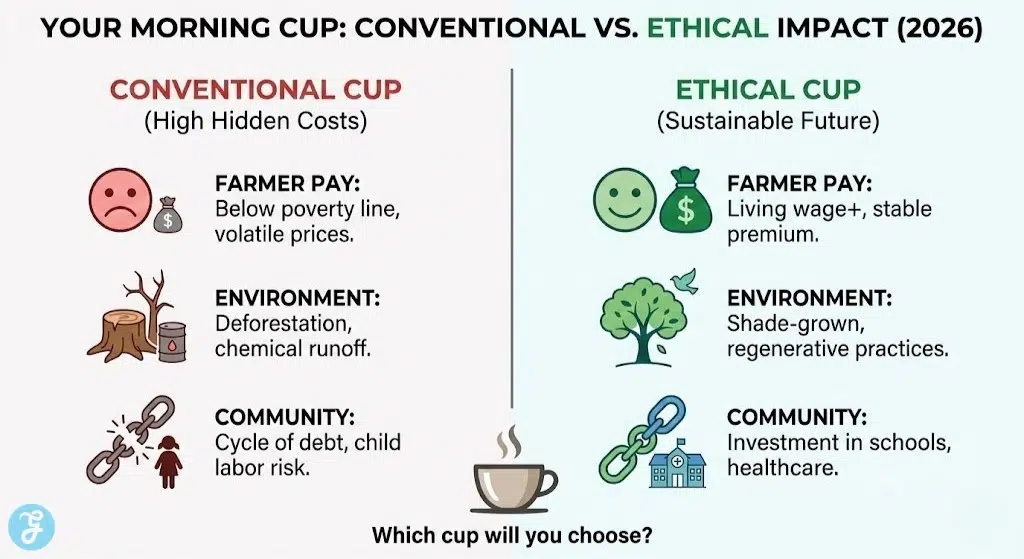
Choosing the right ethical coffee brand depends on which “pillar” of sustainability matters most to you. Use the following checklist to narrow down your choice:
-
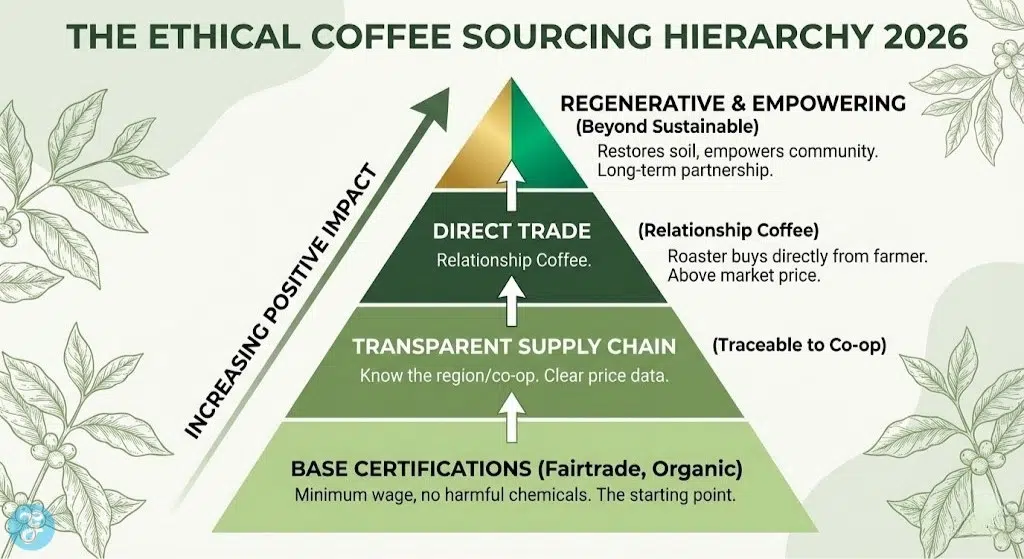
Look for “Direct Trade” labels: These often indicate higher farmer payouts than generic fair trade.
-
Check for B Corp status: This ensures the entire company—not just the beans—meets high standards.
-
Verify “Regenerative Organic”: This is the gold standard for soil health and biodiversity in 2026.
-
Packaging disposal: Prioritize home-compostable bags over simple recyclables.
To recap:
| Category | Top Pick | Primary Reason |
| Farmer Empowerment | Pachamama | Direct ownership of the entire supply chain. |
| Carbon Neutrality | Tiny Footprint | Active reforestation with every pound sold. |
| Health & Purity | Purity Coffee | Rigorous lab testing for toxins and pesticides. |
| Global Accessibility | Equal Exchange | Widespread availability with deep cooperative roots. |
Wrap-Up
The journey to finding the best ethical coffee brands 2026 reveals a market that is more transparent and impactful than ever. By voting with your dollar, you aren’t just buying a beverage; you’re investing in the future of the planet and the livelihoods of those who care for it. Transitioning to an ethical brand is one of the simplest ways to make a positive impact every single day.
Sustainable coffee is a long-term commitment to quality over quantity. As you explore these five brands, pay attention to the stories behind the beans and the measurable changes they are making.




























