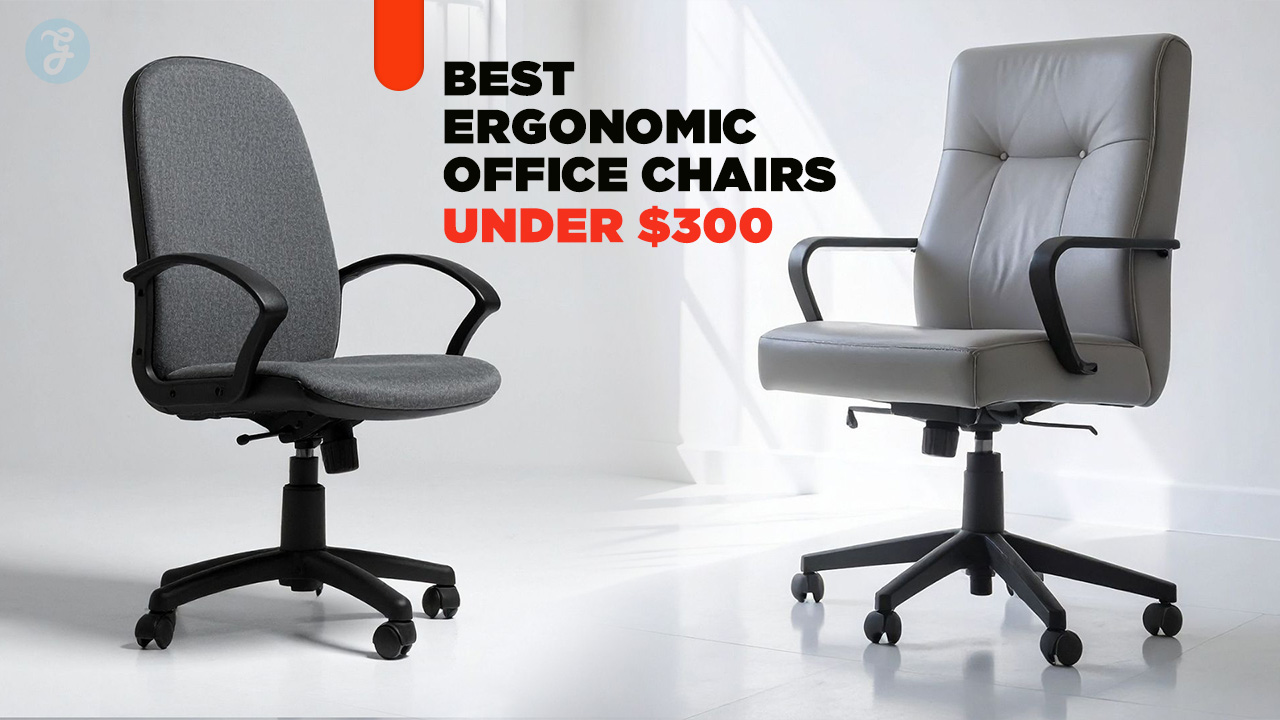
In the world of high-end office furniture, it is easy to believe you need to drop $1,500 on a Herman Miller to save your spine. But here is the truth: the “budget” market has evolved. In 2026, the $300 price point is the ultimate sweet spot where commercial-grade engineering meets consumer pricing.
If you are working from home, gaming, or studying for eight hours a day, a dining chair or a cheap “bucket” seat isn’t just uncomfortable—it is a liability for your long-term health. We have spent dozens of hours researching and testing the latest models to find the best ergonomic office chairs under $300 that offer genuine lumbar support, breathable materials, and the durability to last for years.
Top 3 Budget Champions: Ergonomic Office Chairs
| Chair | Best For | Key Feature | Price Range |
| Colamy Atlas | Best Overall | 4D Armrests & Seat Slider | $280 – $299 |
| Staples Hyken | Best for Small Spaces | Full Technical Mesh | $150 – $190 |
| Ticova Ergonomic | Best for Back Pain | 4-Way Adjustable Lumbar | $210 – $240 |
What to Look for in a $300 Ergonomic Chair
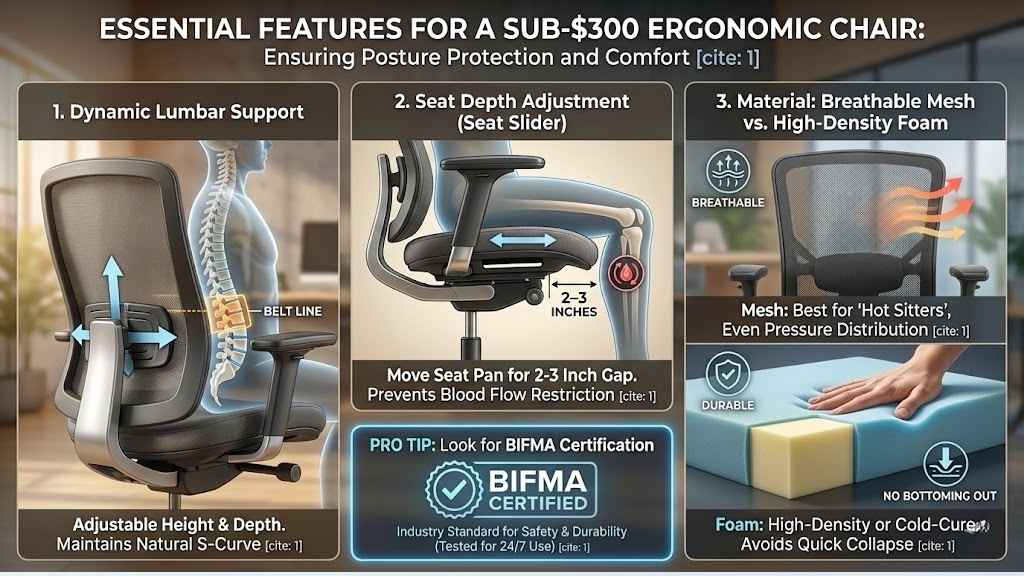
When shopping under $300, you have to be careful. Many “ergonomic” chairs are just standard chairs with a fancy name. To ensure you’re getting a product that actually protects your posture, look for these three non-negotiables:
1. Dynamic Lumbar Support
A good chair shouldn’t just have a lump in the back. It needs height and depth adjustment. This ensures the support hits the “belt line” of your lower back, maintaining the natural S-curve of your spine.
2. Seat Depth Adjustment (The Seat Slider)
This is rare under $300, but essential for comfort. A seat slider allows you to move the seat pan forward or backward. You should have 2–3 inches of space between the edge of the seat and the back of your knees to prevent blood flow restriction.
3. Breathable Material vs. Foam Density
- Mesh: Best for “hot sitters.” It offers even pressure distribution but can lose tension over years.
- Foam: Look for “high-density” or “cold-cure” foam. Avoid cheap, soft sponges that bottom out within three months.
Pro Tip: Look for BIFMA Certification. This is the industry standard for safety and durability. If a chair is BIFMA-certified, it has been rigorously tested to handle 24/7 use.
10 Best Ergonomic Office Chairs Under $300
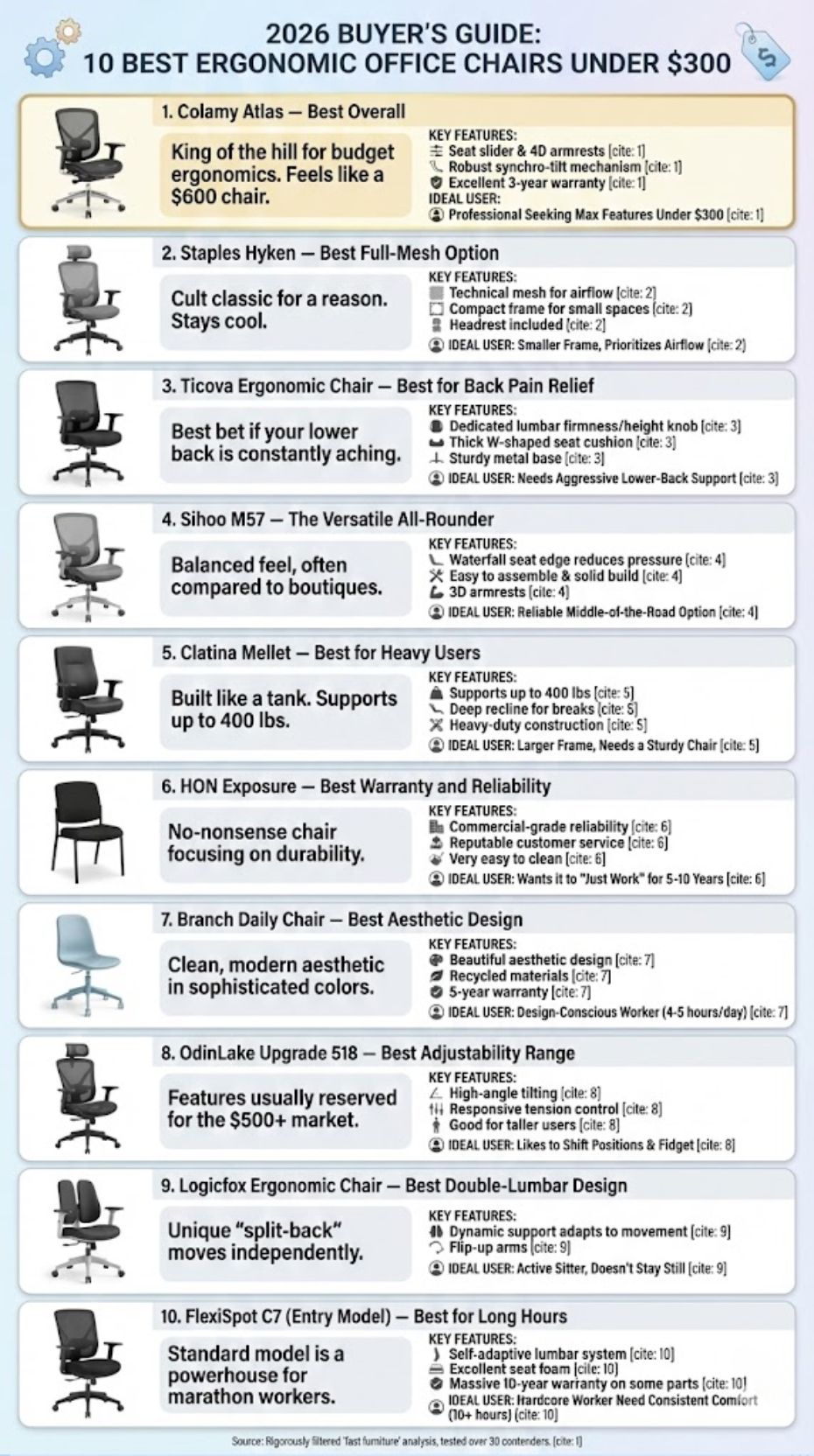
Navigating the budget chair market can often feel like a minefield of cheap plastics and empty promises, Rigorously filtered out the ‘fast furniture’ to find the true hidden gems. Tested over 30 contenders to identify the rare few that actually deliver commercial-grade features—like synchronous tilt and high-density foam—without the premium markup. Below, you will find the definitive list of chairs that prove you don’t need to spend a fortune to work pain-free in 2026.
1. Colamy Atlas — Best Overall
The Colamy Atlas is the current “king of the hill” for budget ergonomics. It feels like a $600 chair for half the price. It features a robust synchro-tilt mechanism that keeps your feet on the ground even when you recline.
- Pros: Includes a seat slider (rare at this price); 4D armrests; excellent 3-year warranty.
- Cons: The seat padding is firm; it may take a few days to “break in.”
- Who it’s for: The professional who wants the most features possible for under $300.
2. Staples Hyken — Best Full-Mesh Option
A cult classic for a reason. The Hyken uses a technical mesh that stays cool during long summer workdays. Its compact frame makes it perfect for apartment dwellers or small home offices.
- Pros: Incredible breathability; very affordable; headrest included.
- Cons: Not ideal for users over 6 feet tall (the headrest may hit your shoulders).
- Who it’s for: People who prioritize airflow and have a smaller body frame.
3. Ticova Ergonomic Chair — Best for Back Pain Relief
If your lower back is constantly aching, the Ticova is your best bet. Its standout feature is a dedicated lumbar support knob that lets you adjust the firmness and height with precision.
- Pros: Thick W-shaped seat cushion; highly adjustable headrest; sturdy metal base.
- Cons: The mesh is a bit rough to the touch compared to premium brands.
- Who it’s for: Users who need aggressive, targeted lower-back support.
4. Sihoo M57 — The Versatile All-Rounder
The Sihoo M57 is often compared to high-end boutique chairs. It offers a balanced feel with a “waterfall” seat edge that reduces pressure on your thighs.
- Pros: Very easy to assemble; solid build quality; 3D armrests.
- Cons: The lumbar support is made of hard plastic, which some find too “present.”
- Who it’s for: Students and remote workers looking for a reliable, middle-of-the-road option.
5. Clatina Mellet — Best for Heavy Users
Most budget chairs feel flimsy, but the Clatina Mellet is built like a tank. It supports up to 400 lbs and offers a deep recline that is perfect for taking breaks between meetings.
- Pros: Heavy-duty construction; mimics the design of the famous Steelcase Leap.
- Cons: Lacks a headrest in the base model; styling is a bit “corporate.”
- Who it’s for: Users with larger frames who need a chair that won’t wobble or squeak.
6. HON Exposure — Best Warranty and Reliability
HON is a staple in actual corporate offices. The Exposure model brings that commercial-grade reliability to your home. It’s a “no-nonsense” chair that focuses on durability over flashy features.
- Pros: Backed by HON’s reputable customer service; very easy to clean.
- Cons: Design is quite basic; limited armrest adjustability.
- Who it’s for: The buyer who wants a chair that will “just work” for the next 5–10 years.
7. Branch Daily Chair — Best Aesthetic Design
If you don’t want your living room to look like a cubicle, the Branch Daily Chair is the answer. It features a clean, modern aesthetic and comes in several sophisticated colors.
- Pros: Beautiful design; 5-year warranty; recycled materials.
- Cons: Less adjustability than the Colamy or Ticova; no headrest option.
- Who it’s for: Design-conscious workers who only sit for 4–5 hours a day.
8. OdinLake Upgrade 518 — Best Adjustability Range
OdinLake has gained traction by offering features usually reserved for the $500+ market. The 518 model allows for high-angle tilting and has a very responsive tension control.
- Pros: Smooth tilt mechanism; breathable backrest; good for taller users.
- Cons: Assembly instructions can be confusing.
- Who it’s for: Users who like to shift positions and “fidget” while they work.
9. Logicfox Ergonomic Chair — Best Double-Lumbar Design
This chair uses a unique “split-back” design. The upper back and lower lumbar sections move independently, following your movements as you twist or lean.
- Pros: Dynamic support that adapts to your movement; flip-up arms.
- Cons: The double-back look is polarizing.
- Who it’s for: Active sitters who don’t stay perfectly still for long periods.
10. FlexiSpot C7 (Entry Model) — Best for Long Hours
While the “Pro” version of the C7 sits right at the $300 limit, the standard model is a powerhouse. It features a “self-adaptive” lumbar system that moves with you as you recline.
- Pros: Excellent seat foam; massive 10-year warranty on some parts.
- Cons: Often fluctuates in price; can be bulky for small desks.
- Who it’s for: Hardcore “marathon” workers who need consistent comfort for 10+ hours.
Budget Reality: Refurbished Premium vs New Budget Chairs
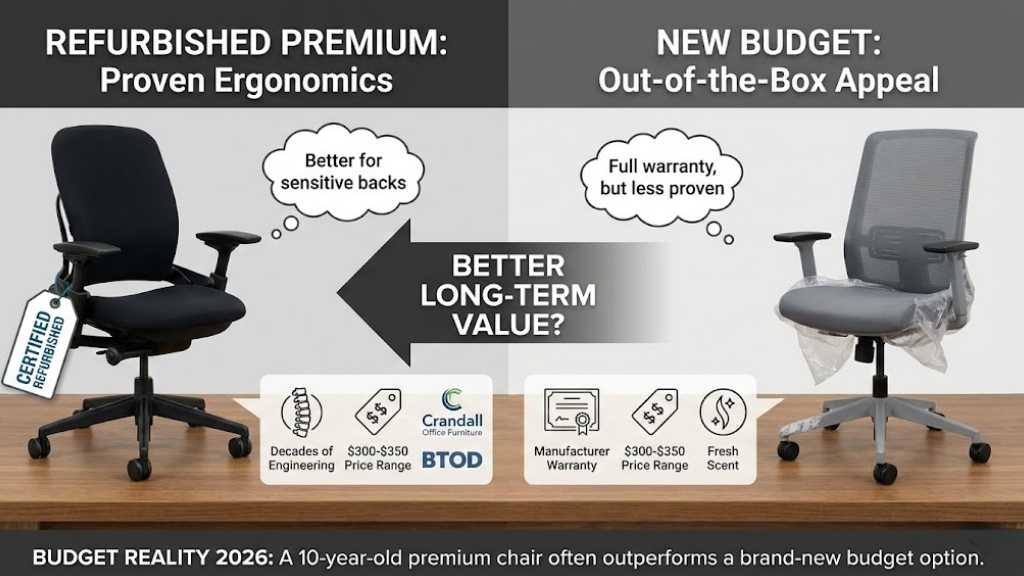
Before you hit “buy,” consider one alternative. In 2026, the refurbished market is booming. You can often find a refurbished Steelcase Leap V2 or a Herman Miller Aeron for around $300–$350 from reputable sellers like Crandall Office Furniture or BTOD.
While a new chair gives you that “out of the box” smell and a full manufacturer warranty, a refurbished premium chair offers better ergonomic engineering that has been proven over decades. If you have a sensitive back, a 10-year-old Steelcase is often better than a brand-new “budget” chair.
Final Thoughts
Choosing the right chair isn’t just about the price tag; it’s about finding the tool that fits your body. If you want the absolute best value in 2026, the Colamy Atlas is our top recommendation. However, if you sweat easily, the Staples Hyken remains the mesh king.
Remember, even the best chair won’t fix a bad habit. No matter which model you choose, try to stand up and stretch every 30 minutes. Your spine is designed for movement, not just for sitting—even in the best $300 chair money can buy.