Do you ever feel like life is just too heavy to carry alone? Sometimes, anxiety or sadness sneaks in and refuses to let go. While others seem to smile, some struggle quietly inside. It is a tough feeling. You are definitely not alone. The U.S. Surgeon General has officially declared loneliness a national public health epidemic, a crisis that continues to heavily impact Americans in 2026.
Many popular shows bring these exact feelings to light. Over 1,000 fans recently voted on their favorite series that portray real mental health struggles, including depression and anxiety.
Here are 5 anime that tackle mental health issues honestly, exploring themes of loneliness, guilt, and hope. Grab a cup of coffee and explore these stories together.
Perfect Blue: A Descent into Identity and Madness
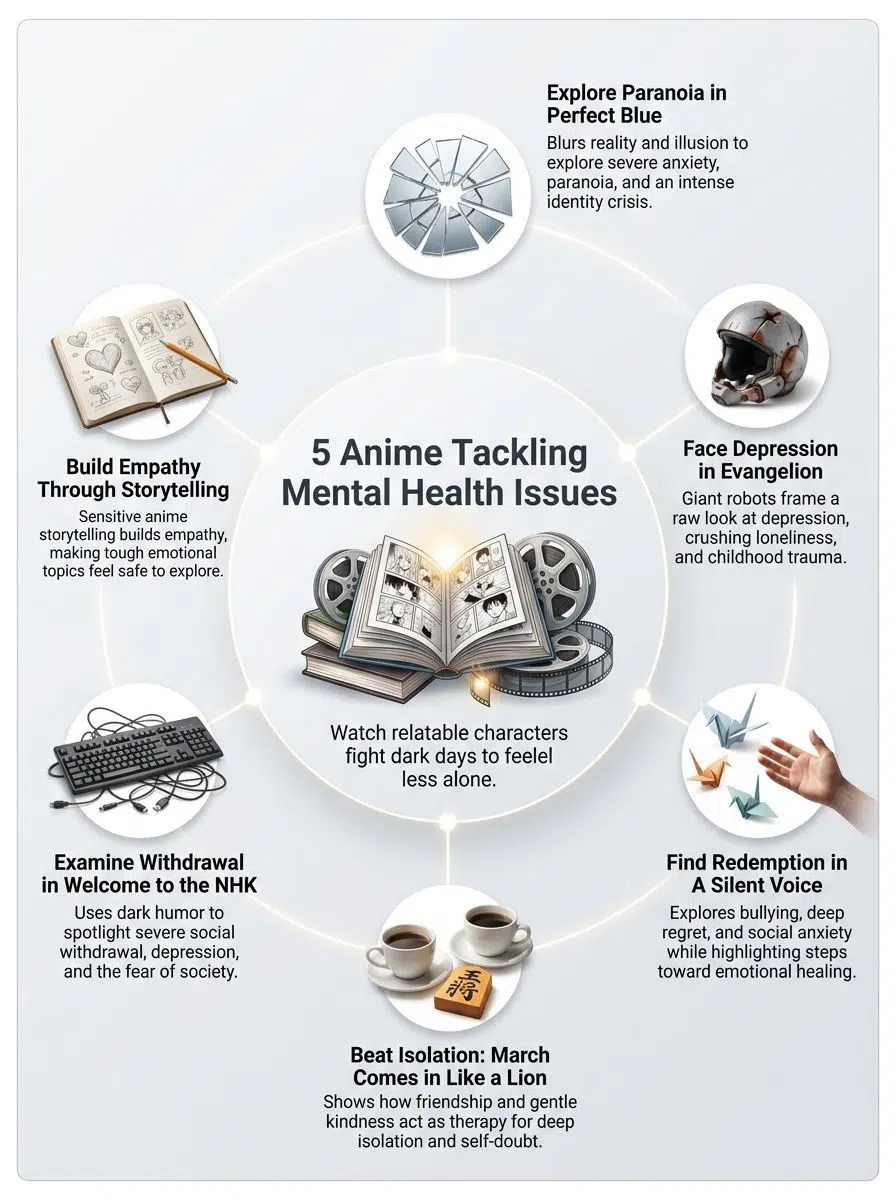
Perfect Blue paints a chilling picture of stress and fear as reality blurs for its main character. This 1997 film pulls you deep into her mind. It makes you question what is true and what is an illusion at every turn.
Directed by Satoshi Kon
Director Satoshi Kon uses surreal art to show the main character’s struggle with her own thoughts. He paints a sharp, unsettling picture of paranoia and confusion. This narrative exploration of an identity crisis sticks with viewers long after the credits roll.
This movie holds a strong 84% Certified Fresh score on Rotten Tomatoes. Fans and critics rank Perfect Blue among the top anime exploring psychological themes. In fact, GKIDS brought a newly restored 4K version to US theaters in late 2025, introducing this terrifying masterpiece to a whole new audience.
“Many fans recommend watching Perfect Blue with a friend, as the heavy themes of stalking and isolation can feel overwhelming to process alone.”
Explores Themes of Paranoia and Identity Crisis
The story follows Mima. She is a former pop idol who quit singing to become an actress. Mima faces intense anxiety and confusion over her changing identity.
Stalkers haunt her every move. The line between reality and fantasy blurs quickly. Scenes twist with suspense as Mima’s paranoia grows sharper every single day. This journey mirrors real experiences of vulnerability felt by those dealing with extreme social pressure.
Perfect Blue highlights several intense mental health struggles:
- Imposter Syndrome: Mima constantly doubts her worth in her new acting career.
- Dissociation: She loses track of time and cannot tell her dreams from reality.
- Burnout: The crushing weight of fame pushes her to an emotional breaking point.
- Paranoia: Intense fear isolates her from the people trying to help.
Neon Genesis Evangelion: The Weight of Loneliness and Depression
Neon Genesis Evangelion paints a raw picture of inner pain using giant robots and broken teenagers. Each episode feels like peeking inside someone’s head during their worst day. The show leaves every emotion on full display.
Created by Hideaki Anno
Hideaki Anno created this groundbreaking anime in the 1990s. He struggled with severe depression himself, which deeply shaped the story.
The plot follows Shinji Ikari, a lonely boy forced to pilot a giant robot called an Eva. He faces depression and anxiety head-on while fighting for his father’s approval.
The series weaves actual therapy concepts right into the script. For example, it perfectly illustrates the “Hedgehog’s Dilemma.” This psychological concept explains how people who want to be close to others end up hurting each other, just like hedgehogs trying to huddle for warmth.
Over 1,000 viewers ranked Neon Genesis Evangelion as a top anime for mental health representation. It leads to powerful selfdiscovery and resilience for the audience.
Facing Complex Psychological Struggles
This show does not sugarcoat anything. Its characters carry the heavy burden of saving humanity while fighting their own massive fears.
We can see different trauma responses through the main cast:
| Character | Core Struggle | Coping Mechanisms |
|---|---|---|
| Shinji Ikari | Severe Depression and Low Self-Esteem | Avoidance and running away from problems. |
| Misato Katsuragi | Childhood Trauma and Guilt | Burying emotions through overworking and drinking. |
| Asuka Langley | Fear of Abandonment | Overcompensation through anger and perfectionism. |
The series shines a bright light on resilience. It shows the messy, painful search for acceptance in a world that often feels too difficult to handle.
A Silent Voice: Bullying, Guilt, and Redemption
A Silent Voice paints an honest picture of regret and hope. The story shows the viewpoints of both the hurt person and the one who caused the pain. Every heartfelt moment pulls you into its look at second chances.
Based on the Manga by Yoshitoki Ōima
Bullying leaves deep scars. This anime, produced by the acclaimed Kyoto Animation studio, handles that raw truth with extreme care.
Shoya Ishida bullied a deaf girl named Shoko Nishimiya in elementary school. Years later, intense guilt eats at him.
He struggles with severe social anxiety. The movie visualizes his panic attacks by placing large “X” marks over the faces of everyone around him. This brilliant artistic choice helps viewers truly understand what social isolation feels like from the inside.
Over 1,000 fans voted for this show as a top choice for emotional wellbeing topics. According to recent data, millions of US students experience bullying each year. This makes Shoya and Shoko’s journey to seek redemption incredibly relevant for modern audiences.
Highlights Social Anxiety and Emotional Healing
As time moves forward, these two teenagers must learn to face their past pain. Anxiety follows Shoya through the school halls like a dark shadow. It makes it nearly impossible for him to trust or reach out to others.
However, the film shows a realistic path to emotional wellbeing. It happens through very small, intentional steps.
- Facing the Past: Shoya actively seeks out Shoko to apologize.
- Building a Support System: They slowly gather a group of patient, understanding friends.
- Learning to Communicate: Shoya learns sign language to bridge the gap he created.
- Forgiving Yourself: Both characters must realize they deserve to be happy.
March Comes in Like a Lion: Loneliness and Personal Growth
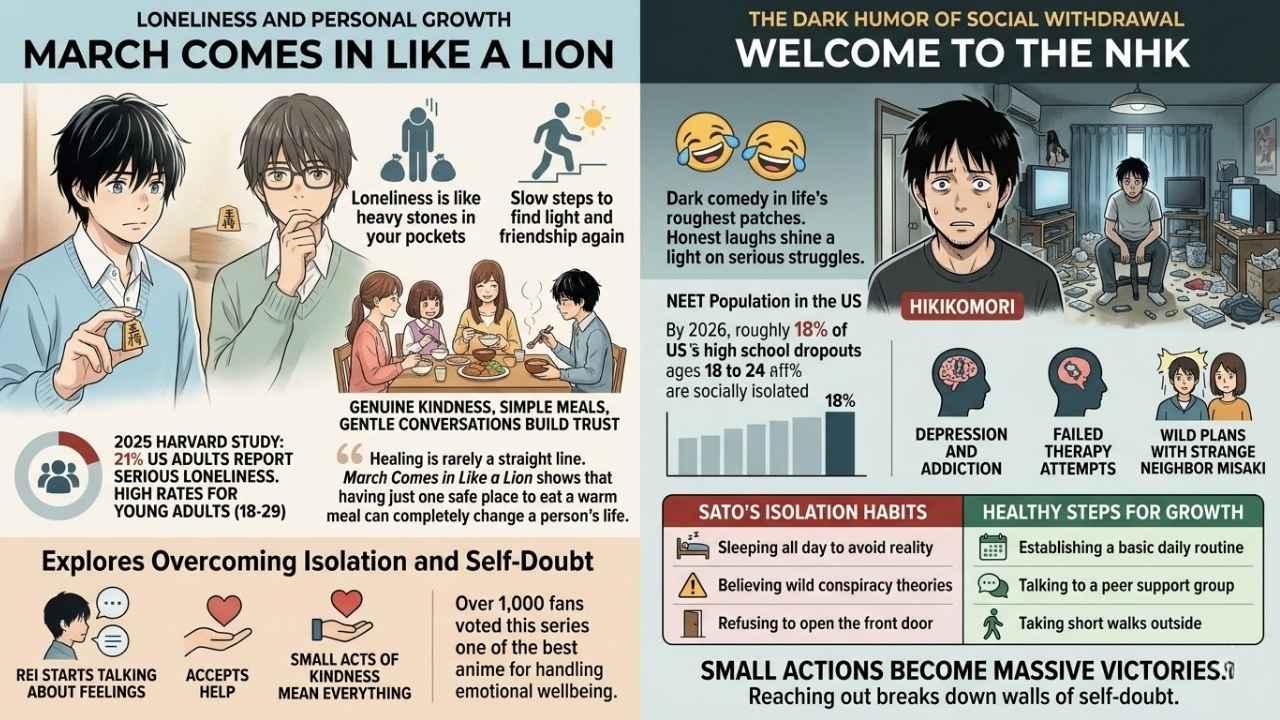
March Comes in Like a Lion shows how loneliness can feel like carrying heavy stones in your pockets. The story gently paints the slow steps people take to find light and friendship again.
Based on the Manga by Chica Umino
Rei Kiriyama is a young professional shogi player. Shogi is a Japanese board game similar to chess.
Rei struggles with deep isolation after losing his family. His world feels entirely cold until he meets the Kawamoto sisters.
These three sisters offer Rei genuine kindness without asking for anything in return. Simple meals and gentle conversations build trust in places where fear once lived. Friendship acts as a form of natural therapy for Rei.
The themes in this anime are highly relevant today. A 2025 Harvard study found that 21% of US adults report serious feelings of loneliness. Young adults between 18 and 29 years old experience some of the highest rates of this isolation.
“Healing is rarely a straight line. March Comes in Like a Lion shows that having just one safe place to eat a warm meal can completely change a person’s life.”
Explores Overcoming Isolation and Self-Doubt
Over 1,000 fans voted this series as one of the best anime for handling emotional wellbeing. Viewers watch Rei slowly experience true character development and healthy coping mechanisms.
He starts talking about his feelings and accepts help instead of hiding away in his dark apartment. The series highlights moments where very small acts of kindness mean everything to someone fighting an inner storm.
Welcome to the NHK: The Dark Humor of Social Withdrawal
Welcome to the NHK finds dark comedy in life’s roughest patches. This series uses honest laughs to shine a light on serious emotional struggles. It makes you stop and think between the giggles.
Adapted from the Light Novel by Tatsuhiko Takimoto
The main character, Tatsuhiro Sato, lives as a hikikomori. This is a Japanese term for people who severely withdraw from society and rarely leave their rooms. Sato feels trapped by fear and anxiety in his tiny apartment.
This lifestyle closely mirrors the growing NEET population in the US. NEET stands for “Not in Education, Employment, or Training.” By 2026, data shows that roughly 18% of US high school dropouts ages 18 to 24 fall into this socially isolated category.
Takimoto’s story shines a bright light on depression and addiction. Sato tries many ways to escape his loneliness, including failed therapy attempts and wild plans cooked up by his strange neighbor, Misaki.
Examines the Hikikomori Lifestyle and Mental Health Challenges
The anime adds humor to heavy topics but never ignores the real pain behind each laugh. Sato fears facing the outside world. He thinks life has trapped him in an endless loop of shame.
We see a stark contrast between his isolated habits and the healthy steps he needs to take:
| Sato’s Isolation Habits | Healthy Steps for Growth |
|---|---|
| Sleeping all day to avoid reality. | Establishing a basic daily routine. |
| Believing wild conspiracy theories. | Talking to a peer support group. |
| Refusing to open the front door. | Taking short walks outside the apartment. |
Sato’s journey proves that small actions become massive victories. Reaching out helps break down walls built by self-doubt.
Key Takeaways from 5 Anime That Tackle Mental Health Issues
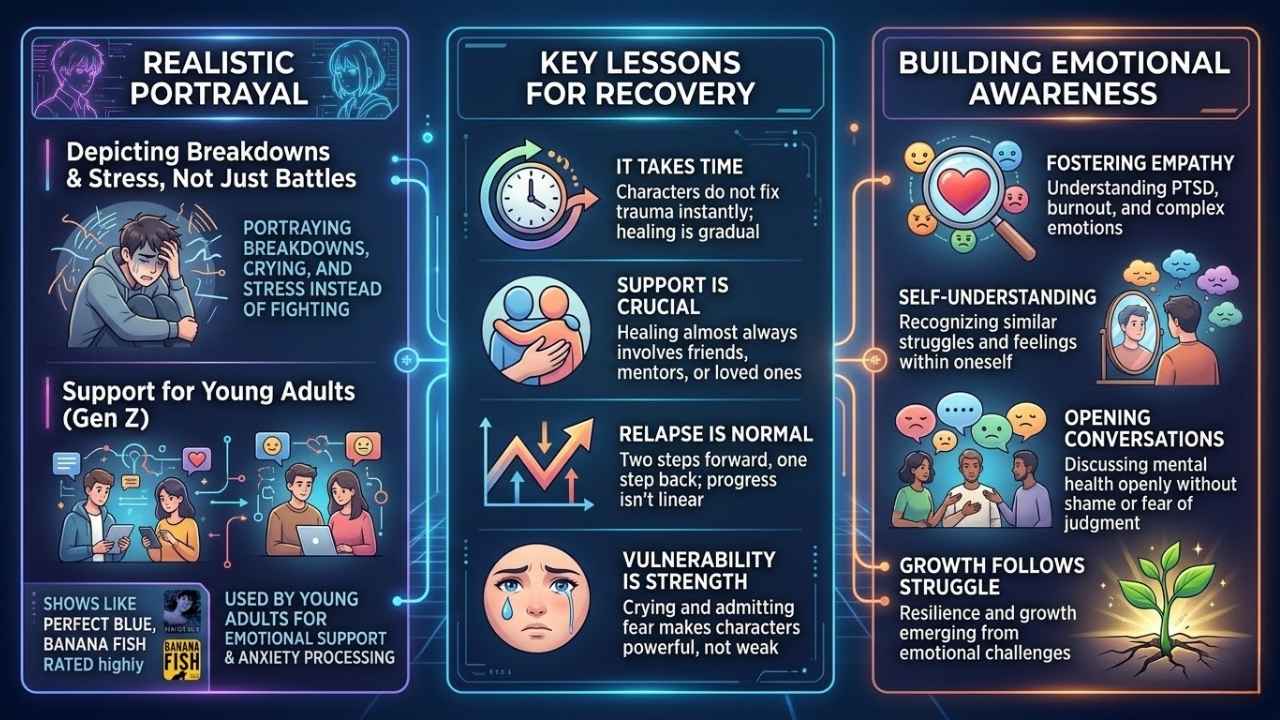
Anime puts mental health directly in the spotlight. These stories spark honest conversations and help viewers see their own struggles with fresh eyes. It helps us confront real social issues.
Representation of Real Mental Health Struggles
Creators use storytelling to pull viewers into these heavy emotions. Fans see heroes break down crying or freeze up from stress instead of just fighting epic battles. Over 1,000 fans consistently rate shows like Perfect Blue and Banana Fish as top choices for real portrayals of mental illness.
Young adults frequently use these shows for emotional support. A recent Gen Z survey highlighted that many young people turn to media and digital communities to process their anxiety. Watching a character survive a panic attack helps normalize the experience.
These stories teach us several vital lessons about healing:
- It Takes Time: Characters do not fix their trauma in a single episode.
- Support is Crucial: Healing almost always involves letting a friend or mentor help.
- Relapse is Normal: Heroes often take two steps forward and one step back.
- Vulnerability is Strength: Crying and admitting fear makes the characters stronger, not weaker.
The Impact of Storytelling on Emotional Awareness
Guiding audiences step by step through each character’s struggle helps build deep empathy. Viewers see characters dealing with PTSD or burnout and start to recognize similar emotions within themselves.
Anime’s sensitivity opens doors for talks about emotional wellbeing without any shame or fear of judgment. It reminds us all that growth always follows a struggle.
Final Thoughts
These 5 anime that tackle mental health issues shine a light on anxiety, depression, and healing in ways that feel incredibly real. Each show uses powerful stories that anyone can relate to, making tough topics much easier to discuss with friends or even yourself. Are there moments from these shows that changed how you think about your own feelings?
Watching characters struggle and grow reminds us we all face hard days. It is completely okay to ask for help when things get heavy. If you want more support to boost your emotional wellbeing, try talking with someone close to you. In the US, you can always call or text the 988 Suicide & Crisis Lifeline for free, confidential support. Sometimes the very first step is just pressing play on a good show, and then reaching out a hand.