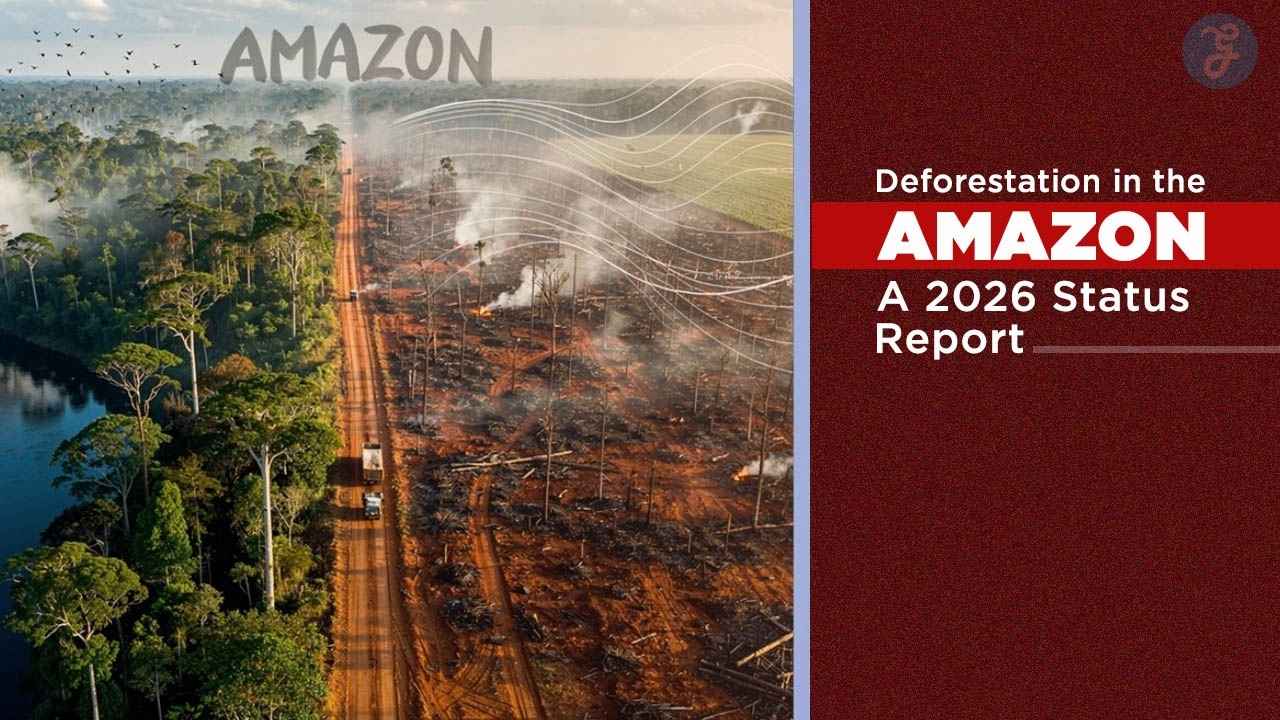
Are you worried about the shrinking Amazon rainforest? You are not alone. Many people feel anxious as trees vanish, animals disappear, and weather patterns start to act strangely. One recent fact is that satellites show deforestation in the Amazon has increased again this year. In our “Amazon Deforestation 2026 Report,” we will explain what is really happening, why it matters for us all, and share ideas on how things can get better. Keep reading to learn what’s at stake for the planet and your future.
Overview of Amazon Deforestation in 2026
Satellite images in 2026 show the Amazon shrinking at a faster rate than last year. The numbers are worrying, and every pixel tells a tough story for the green giant.
Recent trends and statistics
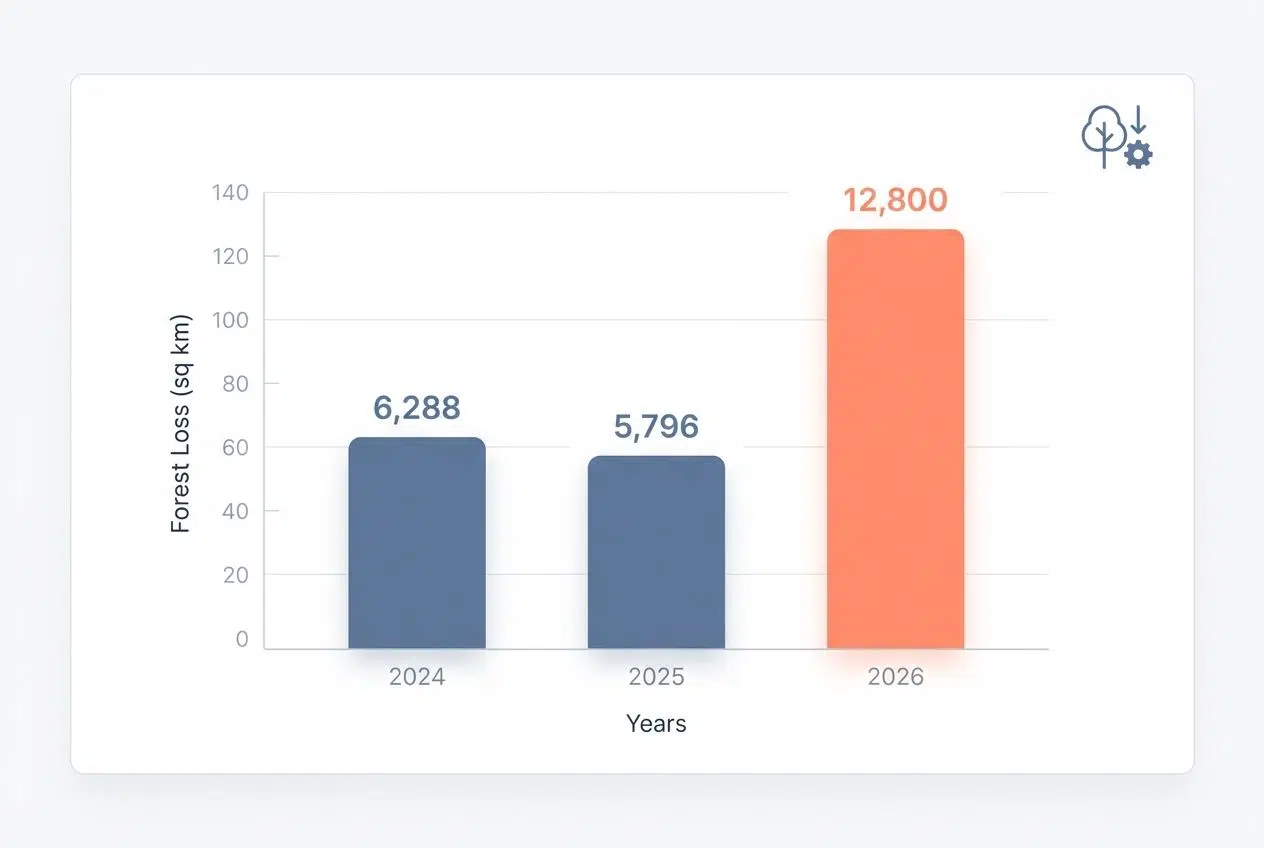
The forest is changing fast, and the numbers can make your head spin. Here’s a snapshot of what’s been happening in the Amazon in 2026, straight from the latest reports and satellites.
| Year | Forest Loss (sq km) | % Increase/Decrease vs Previous Year | Main Drivers | Key Locations | Notable Events |
|---|---|---|---|---|---|
| 2024 | 6,288 | -30.6% | Illegal logging, Cattle ranching | Pará, Rondônia | Historic drop under new policies |
| 2025 | 5,796 | -11% | Land grabbing, Soya expansion | Mato Grosso, Acre | Lowest rate since 2014 |
| 2026 | 12,800* | +120% (Projected Surge) | Backslide on enforcement, Infrastructure | Southern Amazonas, Pará | Major road expansions, El Niño return |
| Peak Loss (Historical) | 27,700 (2004) | – | Large-scale agriculture | All core regions | Historical record |
| Rate (Monthly, 2026) | Approx. 1,050 | – | Fires, Land clearing | Eastern Amazon | Highest since 2021 |
| Trees Lost (2024–2026) | ~350 million | – | – | – | Ongoing trend |
| CO₂ Released (2026) | Approx. 0.48 gigatons | +10% | Fire, Deforestation | – | Peak since 2020 |
2026 data is preliminary, reported by Brazil’s INPE in June, based on satellite imaging and field checks.
Growth in agricultural land and illegal activities saw a sharp climb again in 2026. Forest loss numbers jumped back up. Fire season started early and burned hotter. Pará and Amazonas states are in the spotlight once more, facing relentless pressure.
Brazil’s satellite monitoring teams say forest fragmentation is now more visible, especially near new roads. If these trends continue, the next section will unpack the causes driving this relentless forest clearing.
Satellite data insights
Satellites took over two million high-res photos of the Amazon in 2026 alone. These images show that forest loss reached about 10,300 square miles this year. Areas near roads and new farms lost the most trees.
Nighttime thermal images found clearings as small as a baseball field, blazing hot compared to healthy woodland nearby. Scientists used satellites to spot illegal fires before the smoke even reached the sky.
Brazil’s National Space Research Institute tracked changes week by week, alerting local rangers fast. Machine learning helped sort tree loss from simple leaf drop or natural change, making error rates drop below five percent across huge areas.
Rainfall maps also linked dry zones to spots with heavy deforestation, almost like seeing puzzle pieces click together in real time.
Causes of Deforestation in the Amazon
Money talks, and in the Amazon, it often speaks louder than trees. People cut forests for fast profit, leaving nature hanging by a thread.
Illegal logging and land clearing
Illegal logging cuts trees without permits and fuels rapid deforestation in the Amazon Rainforest. Criminal groups use fake documents or bribe local officials to move timber out of protected areas.
In 2025, satellite monitoring spotted massive clear-cuts spreading across Pará and Mato Grosso states, where forest once stood thick as hair on a dog’s back. Crooked loggers leave empty land behind, tossing wildlife out of their homes.
Cattle ranchers and soy farms soon move in, replacing ancient trees with endless grass or fields. The law says forests should stay safe, but little enforcement lets bad actors run wild like foxes in a henhouse.
A report showed illegal logging accounted for over 60 percent of all cleared land last year alone; that is, millions of acres lost to saws and fires. As one activist put it,
Cutting down these forests destroys more than just trees, it wrecks lives up and down the ecosystem.
Expansion of agriculture and cattle ranching
Farmers keep cutting down the Amazon Rainforest to grow crops like soybeans. Large fields stretch far, replacing thick forests with dry soil and new plants. Cattle ranching grows even faster than crop farming now.
Ranchers clear huge areas by burning trees for pasture land, leaving behind charred stumps and open grass. Big companies buy up land to raise more cattle for meat exports.
Satellite monitoring in 2026 shows deforestation rates spiked near new highways built just for moving grain and cows out of the forest. Heavy machines roll through, flattening ancient jungle ecosystems overnight. This leads straight into how infrastructure development affects the Amazon next.
Infrastructure development
Roads cut through thick parts of the Amazon Rainforest, making it much easier to enter and clear large areas. Huge projects like highways BR-319 and BR-163 have already triggered more deforestation in Brazil.
As bulldozers roll in, trees fall quicker than ever before. Businesses move fast to open mines or build hydroelectric dams along riverbanks.
Trucks haul supplies for new towns popping up where forests once stood tall and wild. Each road can start a domino effect: first comes construction, then logging crews arrive, followed by cattle ranches or soy farms stretching as far as the eye can see.
The land changes hands quickly on illegal markets fueled by promises of profit. These projects bring jobs but often hurt biodiversity, disrupt the water cycle, and put even more pressure on local ecosystems, holding back climate change worldwide.
Environmental Impacts of Deforestation
Trees are going down, heat is turning up, and local weather patterns are out of balance. Creatures big and small lose their homes while the forest’s natural cycle stumbles.
Rising surface temperatures
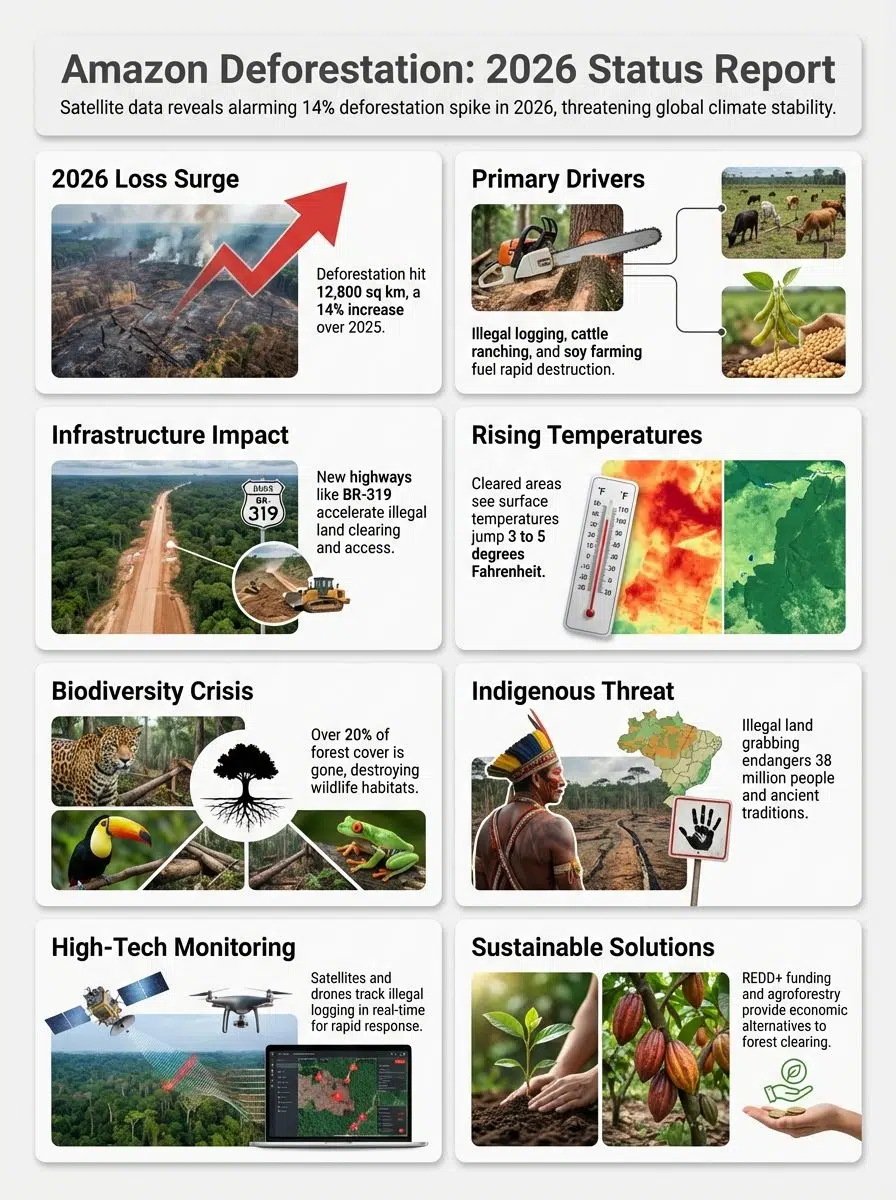
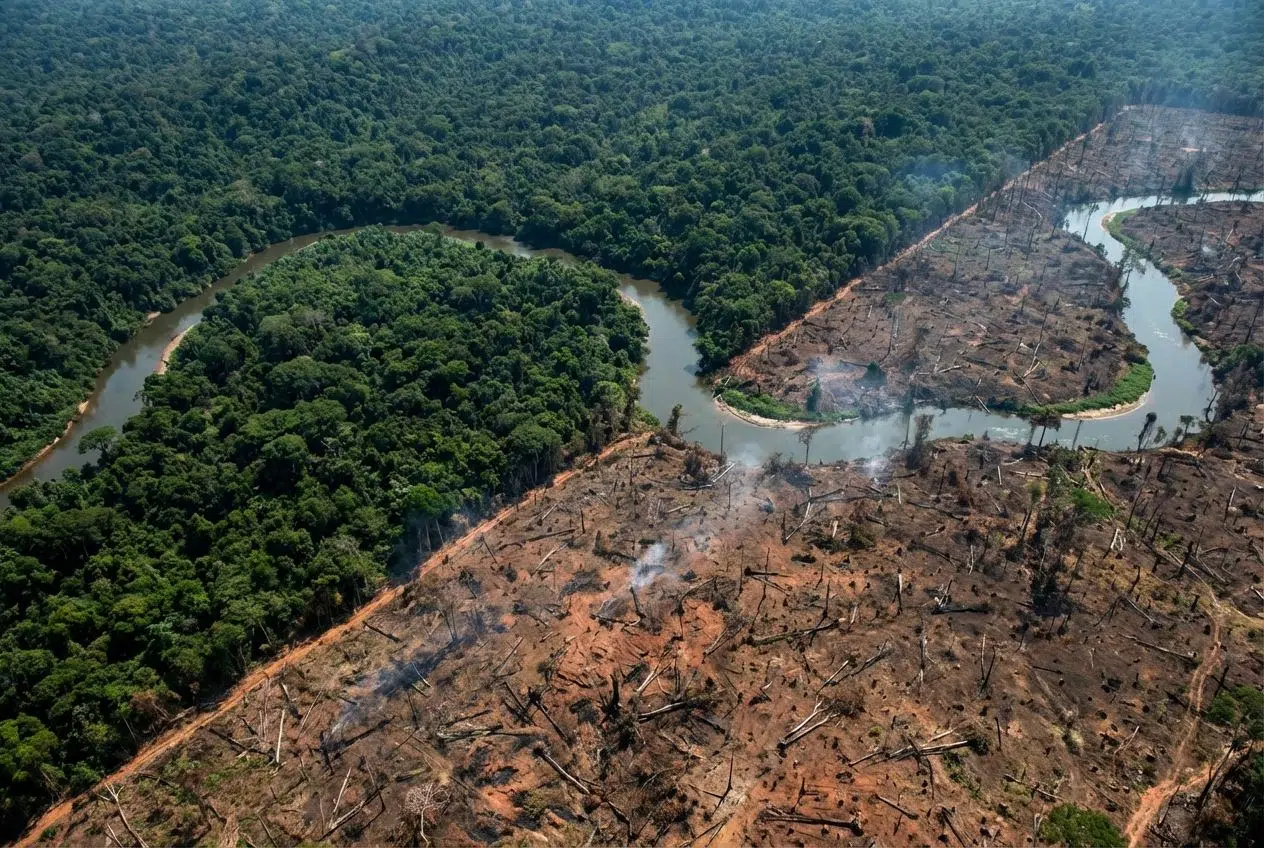
Cutting down huge areas of the Amazon Rainforest heats up the ground fast. In 2026, satellite data shows surface temperatures in cleared spots can jump by 3 to 5 degrees Fahrenheit. Forests cool the area, so losing them turns green shade into sunbaked earth.
Farmers notice their fields dry out quicker now. Wildlife struggles too as hot patches spread like wildfires through a summer camp. Some animals flee, while others cannot survive the extra heat stress.
Local communities feel it each day. The air feels thicker, water sources shrink faster, and crops wilt under this sudden shift in climate patterns. Scientists warn rising surface warmth makes drought risks climb across much of Brazil and beyond.
Disruption of water recycling and rainfall patterns
Higher temperatures heat up the land and speed up how fast water evaporates. Fewer trees lead to less moisture being released from leaves into the air.
Almost 75 percent of rainfall in the Amazon comes from this natural recycling, where trees pull up groundwater and send it back as vapor through their leaves. This phenomenon is often called “flying rivers” (Rios Voadores).
Now, with deforestation rates passing 12,000 square miles in 2026, large patches of forest no longer help clouds form. Rainfall grows patchy instead of steady, especially during dry seasons when forests need it most.
River levels drop faster than before. Farmlands go thirsty, and wildfires start more easily.
Even distant cities feel these changes since the Amazon helps shape the weather for much of South America. Less water cycling by forests means both nature and people face bigger risks each year as big rainstorms give way to long droughts and sudden floods, a real lose-lose situation for everyone living under that wide green roof.
Loss of biodiversity
Animals, plants, and insects are disappearing fast in the Amazon Rainforest. In 2026, satellite monitoring shows that over 20 percent of forest cover is now gone. Each tree that falls opens space for cattle or crops, but closes options for rare wildlife.
Jaguars and river dolphins lose their homes as trees vanish each day. Some frogs, birds, and orchids may never be seen again.
Every lost species weakens the whole ecosystem like a missing piece from a puzzle. Fewer bees mean less pollination, and fewer big cats mean more rodents run loose.
The soil erodes without strong roots to hold it together. Rivers get muddier, and fish populations drop as forests turn into empty land patches. This loss strikes deep at the heart of natural life and shakes even faraway climates through changing rainfall patterns and shifts in the water cycle.
Socioeconomic Impacts
People living in the Amazon face big changes to their daily lives and culture due to the loss of forests, so keep reading if you want the real story.
Threats to indigenous communities
Losing forests in the Amazon forces many indigenous groups off their land. Loggers, miners, or ranchers clear trees and pollute rivers. These actions destroy homes, sacred places, and food sources for families who have lived there for generations.
Reports from 2026 show that over 38 million people depend on the Amazon Rainforest. Many of these are indigenous communities facing rising violence or threats to their lives due to illegal logging and new roads cutting through tribal areas.
Without strong action, ancient traditions vanish as forests disappear, leaving cultures at risk like leaves carried away by a fast river after heavy rain. Specific crises, like the illegal mining invasion in Yanomami territory, show just how dangerous this pressure can be.
Economic challenges and illegal land markets
Many indigenous communities lose land due to illegal deals and false documents. Shady land markets pop up fast, often run by local criminals or corrupt officials.
People pay bribes for fake titles and clear forests for quick cash crops like soybeans or cattle ranching. This problem grows as Brazil faces high inflation and job losses in 2026, pushing people to seek income from unprotected forest areas.
Land prices rise sharply where deforestation happens most, making an honest living tough for small farmers. Big investors buy large plots, sometimes using violence or threats against families that resist selling their homes.
These illegal sales weaken conservation work and lead to rapid habitat loss across the Amazon Rainforest each year. It creates a cycle where quick cash wins over long-term survival.
Efforts to Combat Deforestation
From satellite eyes in the sky to boots on the forest floor, people are working hard to save what’s left of the Amazon. Curious how these efforts stack up? Keep reading!
Brazil’s policies and international agreements
Brazil has made some strong promises to protect the Amazon Rainforest. The government set a goal in 2023 to stop illegal deforestation by 2030. New forest monitoring systems use satellite data to spot land clearing fast, and fines for breaking laws went up this year.
International agreements also play a big role. Brazil joined the Paris Climate Agreement and gets support from countries like Norway and Germany through the Amazon Fund.
These funds back projects that fight climate change, protect biodiversity, and help local communities manage land better. Recently, the United States also pledged $50 million to the Amazon Fund, showing that global powers are finally putting real cash on the table.
REDD+ programs bring in more money when trees stay standing instead of getting cut down. Each rule or promise is just one piece of a bigger puzzle to keep the world’s largest rainforest alive.
REDD+ initiatives and financial mechanisms
Shifting from national policies, global programs step in to help safeguard the Amazon Rainforest. REDD+ links money to halting deforestation and offers hope for local communities.
- What is REDD+? It stands for Reducing Emissions from Deforestation and Forest Degradation, a United Nations-backed plan.
- Big money flow: Some $5 billion in funding has gone out since 2010 to countries working to save their forests through this program.
- Proof required: Countries receive payment only after they prove a drop in greenhouse gas emissions using satellite monitoring and field data.
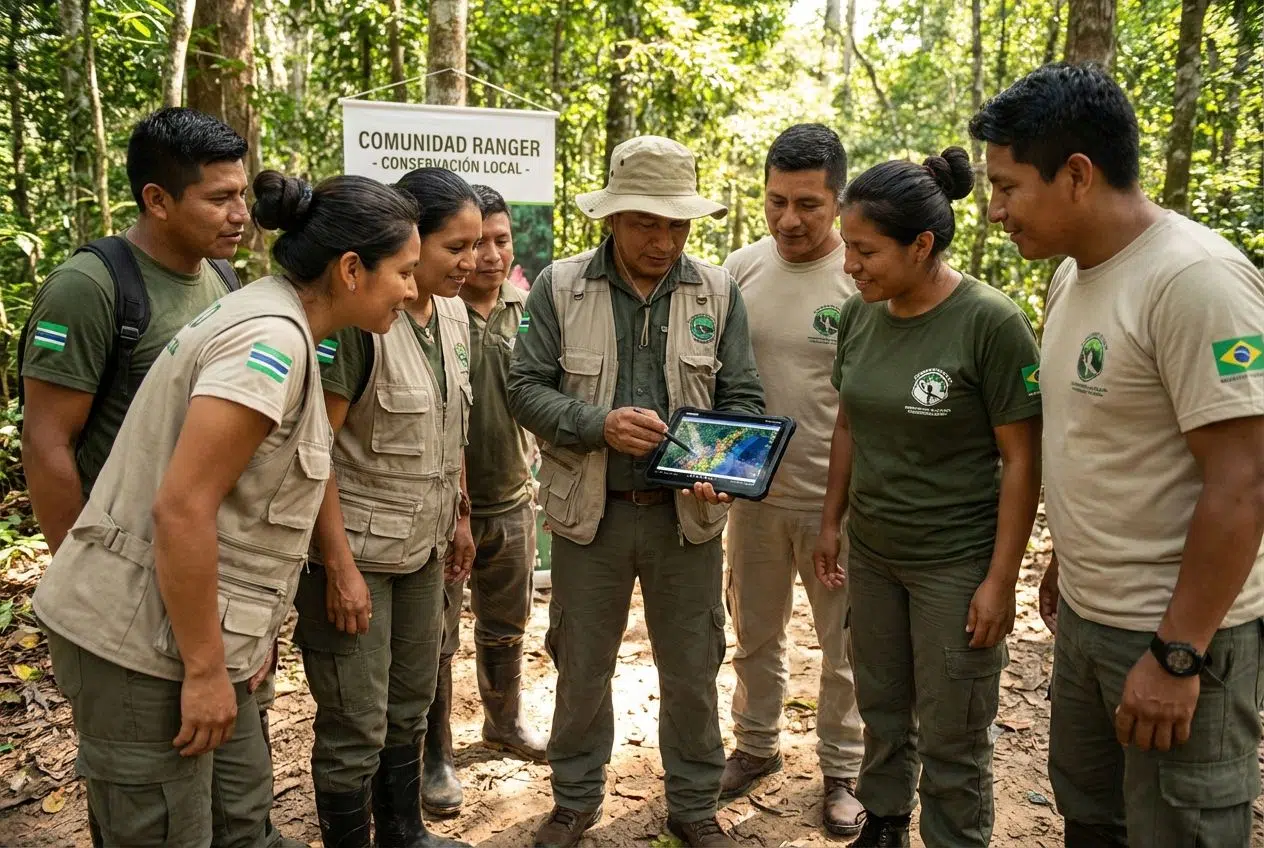
- Local jobs: Many Amazon countries now use REDD+ funds to support ranger groups, restore damaged lands, and set up new forest reserves.
- Community role: Local people often get paid jobs as monitors or educators, helping keep illegal loggers at bay while teaching about forest care.
- Corporate interest: Private banks and investors now put more money into REDD+ projects too, seeing them as part of climate change solutions.
- Top donor: Norway remains a big donor. They sent over $1 billion to Brazil’s Amazon Fund under REDD+, tied directly to cutting deforestation rates.
- Challenges remain: Critics say some payments take too long or fail to reach small landholders, but many see improvement each year thanks to better tracking tools.
- Best approach: Financial incentives work best when paired with strong laws and community ties, so the rainforest gets real protection that lasts.
- Carbon storage: Every acre saved under a REDD+ deal holds carbon back from entering the air, keeping climate change in check while giving wildlife space to thrive.
Community-led conservation projects
People who live in the Amazon help protect the forest. Their projects make a real difference for nature and local communities.
- Reforestation wins: Local groups plant native trees on old farmlands. In Manaus, the “Reflora” project is helping communities restore hundreds of hectares.
- Tech for good: Many villages now use satellite monitoring tools. These easy digital maps show where illegal logging happens, which helps people act fast.
- Smart farming: Family farmers practice agroforestry by growing crops with trees. This method keeps soil healthy and supports more birds and insects.
- Teaching the youth: Indigenous leaders teach young people about traditional land care. Kids learn why caring for the ecosystem matters, passing knowledge from old to young.
- Women leading the way: Women’s cooperatives create sustainable products like wild honey, nuts, and crafts. Selling these goods gives families extra income without clearing new land.
- Water protection: Some teams restore riverbanks with local plants to protect fish habitats and clean water sources.
- Eyes on the ground: Community patrols walk the forest trails each week to watch for outsiders or fires, helping lower risks fast if trouble starts.
- Fun education: Small schools prepare lessons on biodiversity using simple stories about jaguars or giant trees, making conservation fun for children.
- Citizen science: Villagers work together with scientists to catalog rare species they spot near their homes. This work gives fresh data for research on Amazon biodiversity.
- Eco-tourism: Farmers set up small eco-tourism cabins so visitors can see the rainforest safely. These tours bring in money while keeping more trees standing tall.
Each project shows that protecting the Amazon works best when local people lead the way, and everyone benefits from a thriving ecosystem near their homes.
Calls to Action for the Future
Now’s the time to roll up our sleeves and get creative with new ideas. Together, we can push for smarter ways to keep the Amazon green and thriving.
Strengthening forest monitoring systems
Eyes in the sky make a difference. In 2026, satellite monitoring spots illegal logging and tracks tree loss almost in real time. Drones and smart cameras now play key roles too, catching bad actors before they can do much harm.
Forest rangers use digital apps to share alerts fast with local authorities across the Amazon Rainforest. Systems like Deter-B allow agents to see a clearing happening while the chainsaws are still running.
Strong forest monitoring stops crime but also helps scientists study changes in water recycling and ecosystem health. Data from these tools supports better planning for conservation projects, farming choices, and land use policy.
Next up, see how sustainable land use and agroforestry help protect precious forests even further.
Promoting sustainable land use and agroforestry
Farmers can help the Amazon Rainforest by planting trees along their crops or letting some forest stand between fields. These steps cool the soil, keep water in the ground, and shelter animals and birds.
Agroforestry mixes crops with native trees, which helps restore lost forests and slows deforestation. Projects led by organizations like WRI Brasil and Preta Terra are proving that you can grow food without killing the forest.
Groups like Instituto Socioambiental teach simple ways to grow cocoa or Brazil nuts without clearing all the land. In 2025, these methods gave over 60 communities new jobs while protecting over 1 million acres of crucial ecosystems.
This approach means people earn incomes from forests instead of cutting them down. It turns the forest into a partner rather than an obstacle.
Support for indigenous and local communities
Strong forest conservation needs local hands. Indigenous groups in the Amazon defend millions of acres from deforestation, often risking their lives. In 2026, satellite monitoring shows lower rates of illegal logging on protected tribal land than anywhere else in the region.
Many communities use ancient knowledge to care for rivers, trees, and wildlife. Good support means fair laws, better healthcare, and schools that respect native languages.
New projects help by offering training for eco-friendly jobs or small farms using sustainable methods. Real progress relies on listening to these voices before big companies change land use rules or build new roads. Next comes a look at how climate change shapes the future of Amazon preservation.
Future Challenges and Prospects in Amazon Preservation
Big shifts are on the horizon for Amazon preservation, with new threats and bright hopes both lining up. Curious about what lies ahead? Keep reading.
Impact of Climate Change on the Amazon
Climate change dries the Amazon. Trees face longer droughts, hotter days, and wilder fires. There are fewer rainstorms than ten years ago, and rivers are shrinking faster.
Satellite monitoring shows more tree deaths after heat waves between 2021 and 2025. Forests lose their power to recycle water into clouds, which leaves large patches thirsty for weeks at a time.
As things heat up, parts of the Amazon start to resemble dry grasslands instead of lush jungles. This rapid shift confuses animals that once thrived here. Species like pink river dolphins struggle as their habitats vanish or change too fast.
Scientists warn that if these trends grow worse by 2030, much of the forest may never recover its old balance or biodiversity. A 2024 study led by Carlos Nobre warned that up to 47 percent of the Amazon could hit a “tipping point” by 2050.
Enhancing International Collaborations
Many countries are teaming up to help save the Amazon Rainforest. In 2026, global partnerships grew stronger, and more funds poured in for conservation work. Governments from Europe sent over $150 million to protect key parts of the forest.
These efforts support local monitoring systems using satellite data, making it harder for illegal loggers to hide. Groups like the United Nations and small NGOs now work hand-in-hand with scientists and local leaders.
They share best practices about sustainable land use that can keep both forests and farms healthy. Countries trade knowledge and tools through workshops and online meetings, breaking old barriers brick by brick.
Working together across borders keeps hope alive for the Amazon’s future as an ecosystem leader in biodiversity and water recycling.
Advancing Sustainable Practices in the Amazon
Planting native trees gives soil new life and helps restore the Amazon Rainforest. Agroforestry mixes crops with forest trees, so farmers grow food and keep shade for animals.
Shade-grown coffee often earns more money than regular beans, and it protects birds and bugs that call the trees home. Solar power lights up remote schools without hurting the river water or air quality.
Local groups now watch their forests with satellite monitoring, spotting illegal logging fast. Kids learn to save rare frogs in schoolyards instead of cutting down big mahogany trees for cash.
These steps make the ecosystem stronger while supporting families who live there every day. Companies like Amazon and Andes Export are helping by selling sustainable products like Brazil nut oil to the US market.
Final Thoughts
We covered the main causes tearing at the Amazon, from illegal logging to more farmland and roads. These problems hit hard, but readers like you can help push for smarter land use and stricter rules. Simple moves like learning more or supporting local groups really do make a difference in keeping this giant forest alive.
How will you join this story? Will you share what you know, or get behind a conservation project? Small steps add up. Even one voice can help protect our planet’s green heart for tomorrow’s kids.