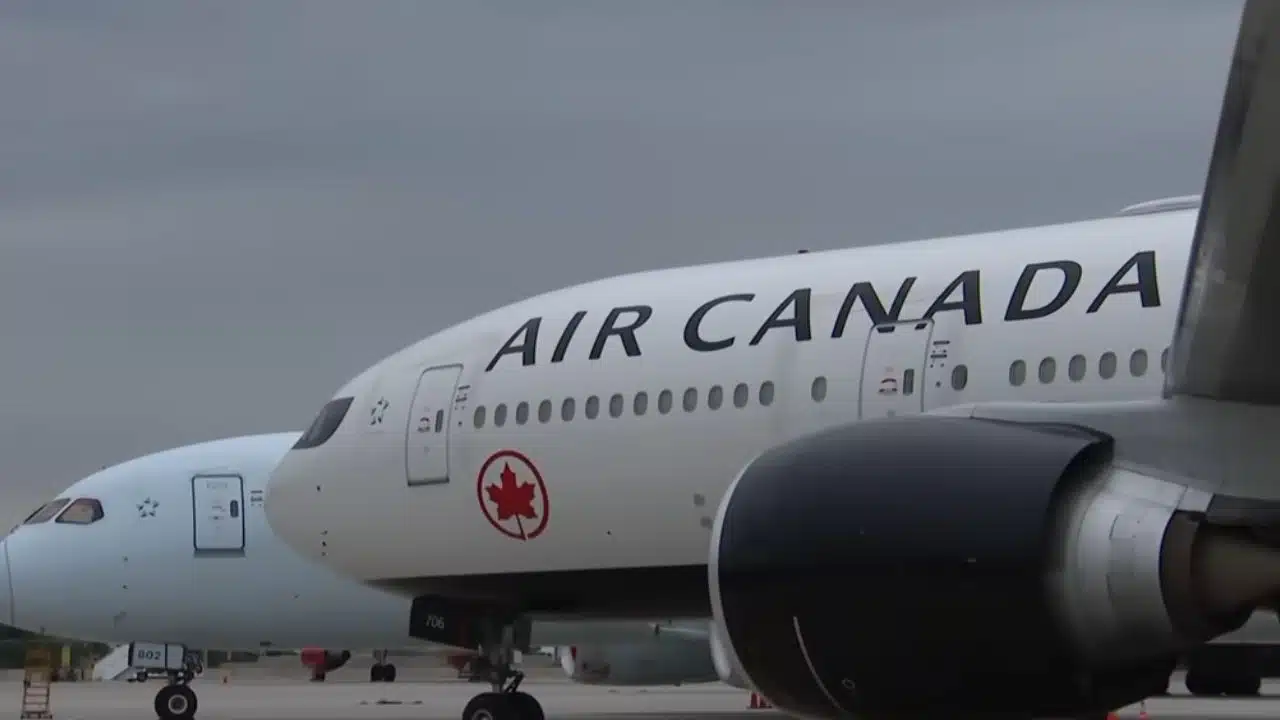
Air Canada, the country’s largest airline, has reached a tentative agreement with its flight attendants’ union, ending a disruptive strike that had paralyzed operations since Saturday, August 16, 2025. The deal was announced early Tuesday morning after a long night of negotiations mediated by a government-appointed official.
The strike had left thousands of passengers stranded both in Canada and abroad, grounding flights at major hubs like Toronto Pearson, Vancouver International, and Montreal-Trudeau. It also disrupted vital international connections to the U.S., Europe, and Asia.
The Canadian Union of Public Employees (CUPE), which represents over 10,000 Air Canada flight attendants, confirmed the agreement, calling it a “historic fight” that achieved transformational change for aviation workers.
The Strike’s Scale and Impact on Passengers
The four-day strike, declared after failed contract negotiations, affected more than 500,000 travelers. Air Canada operates nearly 700 flights daily, serving both domestic and global destinations. At the peak of the dispute, an estimated 130,000 passengers per day were forced to deal with cancellations, missed connections, and lengthy delays.
- Over 3,000 flights were cancelled outright during the strike.
- Airports reported long queues of frustrated passengers seeking refunds or rebookings.
- Popular holiday routes and transatlantic flights were among the hardest hit.
- Some passengers faced additional costs, having to book hotels or alternative flights on short notice.
Travel experts said the disruption was one of the largest labor-related shutdowns in Canadian aviation history in recent decades.
Why Flight Attendants Took Action
The conflict centered on wages and unpaid work hours. Flight attendants argued that Air Canada’s previous contract offer failed to keep up with inflation and market standards.
Key Complaints Raised by CUPE:
- Unpaid Ground Work: Time spent boarding passengers, conducting safety checks, and waiting at airports was previously unpaid.
- Below Inflation Pay: The union said earlier proposals were “below inflation, below market value, and in some cases, below minimum wage.”
- Work-Life Balance: Long and unpredictable schedules without proper compensation created added stress.
CUPE argued that these conditions had made the profession unsustainable for many workers, especially as Canada’s cost of living continues to rise.
What the Tentative Agreement Includes
While the full text of the deal remains confidential until a union ratification vote, details reported by CBC News, Bloomberg, and Reuters highlight major gains for flight attendants:
- Immediate Pay Increases: Air Canada has offered 8% to 12% pay raises for staff.
- Ground Pay: Flight attendants will now be compensated for at least one hour of pre-flight duties at 50% of their hourly rate. This “boarding pay” will increase by 5% annually, reaching up to 70% within four years.
- International Standards: On wide-body aircraft (such as Boeing 777 and Airbus A330), flight attendants will receive up to 70 minutes of paid ground time, reflecting the heavier workload for long-haul flights.
- Job Security: CUPE indicated the deal also addresses scheduling protections and guarantees for safer working hours.
Union leaders hailed the agreement as industry-changing, arguing that it may set a precedent for airlines across North America, especially in the U.S., where flight attendants at major carriers are also demanding compensation for boarding time.
Government Pressure and Legal Disputes
The dispute escalated when the Canadian Industrial Relations Board (CIRB) ruled the strike unlawful and ordered attendants to return to work. The union rejected this directive, calling it “corporate pressure” and vowing to continue until a fair deal was reached.
The federal government attempted to push both sides into binding arbitration. Jobs Minister Patty Hajdu expressed concern about the allegations of unpaid work and announced a probe into Canadian airline labor practices.
Prime Minister Mark Carney later welcomed the breakthrough, saying he was “relieved” the agreement would bring relief to hundreds of thousands of families and visitors whose plans had been disrupted.
Air Canada’s Response and Recovery Plan
Air Canada acknowledged that the resumption of flights will be gradual. The strike left aircraft and crews out of position worldwide, requiring time to re-balance schedules.
- The airline began operating limited services on Tuesday evening.
- International long-haul flights were prioritized first.
- Domestic and U.S. routes are expected to return in stages over the next 7–10 days.
In a statement, Air Canada said it regrets the disruption and will work to restore normal operations as quickly as possible. Passengers with cancelled tickets are being offered refunds, rebookings, or travel credits.
Wider Implications for the Aviation Industry
This agreement may have ripple effects far beyond Canada. Labor experts say it could reshape airline pay standards across North America.
- U.S. carriers like Delta, United, and American Airlines are also facing union demands for boarding pay.
- Analysts warn the new system could increase operating costs, which may eventually affect ticket prices.
- At the same time, the move could make aviation careers more attractive, helping airlines deal with staff shortages that have persisted since the pandemic.
Industry observers noted that similar pay structures, if adopted across the continent, could cost airlines billions in additional wages—but may also improve service quality and worker retention.
What Happens Next
The deal is still tentative and must be ratified by CUPE’s 10,000+ members in the coming days. If approved, it will become one of the most significant labor agreements in Canadian aviation history.
For now, Air Canada passengers are advised to check flight updates regularly and expect delays during the recovery phase.
Quick Facts Table
| Category | Details |
| Strike Duration | August 16–19, 2025 (4 days) |
| Union Involved | Canadian Union of Public Employees (CUPE) |
| Workers on Strike | ~10,000 flight attendants |
| Flights Cancelled | Over 3,000 |
| Passengers Affected | More than 500,000 |
| Main Demands | Paid ground work, fair wage increases |
| Deal Features | 8–12% raises, boarding pay (50% → 70%), scheduling protections |
| Next Step | Ratification vote by CUPE members |
| Full Recovery | Expected within 7–10 days |
A Turning Point for Airline Labor
The end of Air Canada’s strike marks not just the resolution of one labor dispute, but a possible turning point for airline compensation worldwide. By securing pay for work that was long considered “part of the job,” flight attendants have challenged decades-old industry practices.
For passengers, the next few days will remain uncertain as the airline slowly restores service. But for the workers, the deal represents a recognition of their essential role in ensuring both safety and service in the skies.
The Information is Collected from BBC and ABC News.