Every day, you scroll through your favorite shopping app or streaming service. You see products and movies that seem picked just for you. This feels helpful, but you might wonder how these companies know exactly what you want. The answer lies in understanding the technology behind the screen. This system watches your choices and suggests things you might like. Many people do not understand how this works, and that can feel uncomfortable or even invasive.
Here is a secret that might surprise you. AI-powered recommendations influence about 35% of what people buy online. These systems are everywhere, from Netflix to Amazon to Spotify. Understanding how they work gives you the power to make smarter choices. You can take control of your data, your purchases, and your privacy.
This guide covers exactly What Consumers Need To Know About AI-Powered Recommendations. By the end, you will know exactly what is happening behind the scenes. Ready to take a closer look?
What Are AI-Powered Recommendations?
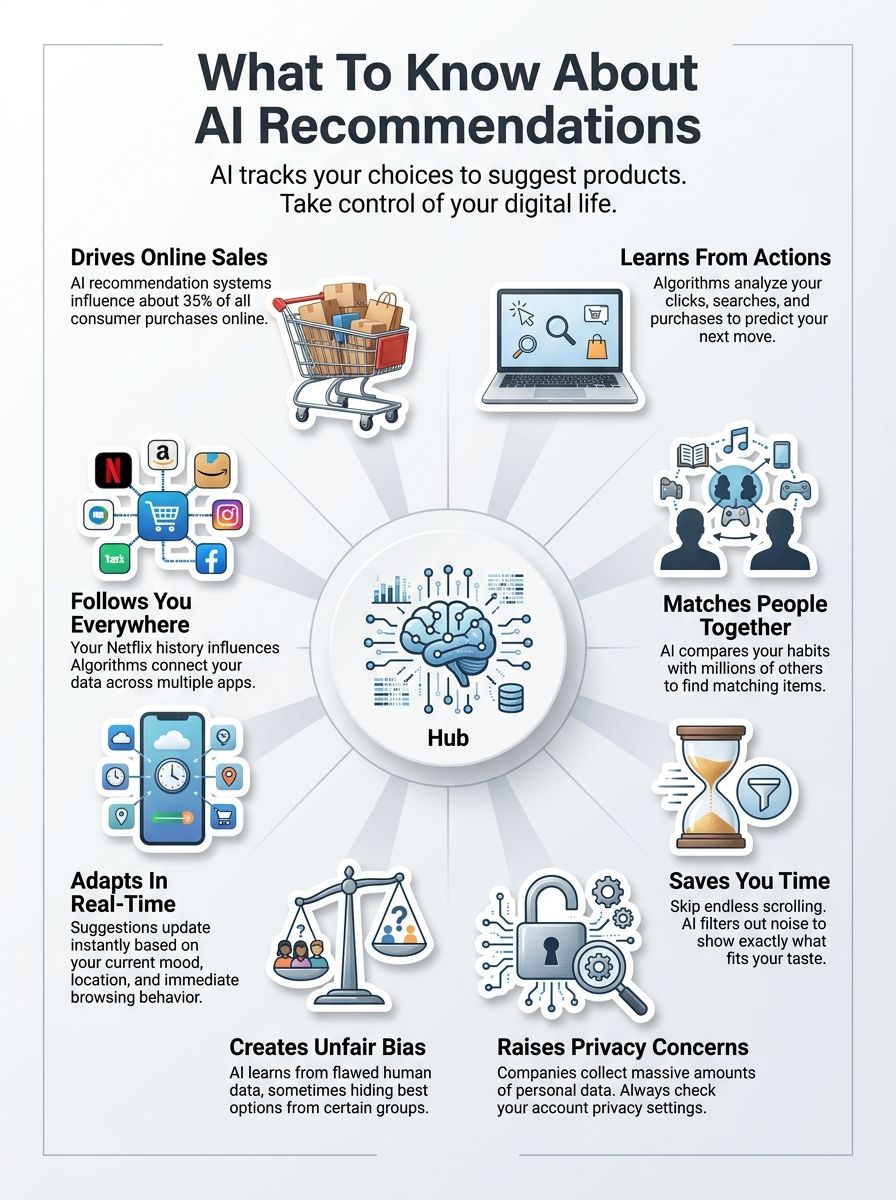
AI-powered recommendations work like a smart shopping buddy. This system learns what you like and suggests products you actually want. These engines analyze your behavior and past choices to show you exactly what matters to you.
The numbers behind this are staggering. The AI-enabled ecommerce market in the US reached $8.65 billion in 2025, and experts project it will hit $10.5 billion by the end of 2026. This technology is actively shaping how we all shop online.
Definition and Overview
AI-powered recommendations represent a system that uses machine learning to suggest products or content. Companies gather data about your behavior and past purchases. They use this to build a picture of what you might want next.
This personalization engine works behind the scenes on e-commerce sites and streaming platforms. Think of it as having a personal shopping assistant who knows your taste perfectly.
Retailers use these systems to boost sales by placing the right product in front of the right person at the exact right time. A 2026 industry report shows that AI personalization can drive up to 40% higher revenue for businesses.
Your Netflix homepage looks different from your friend’s screen because algorithms analyze what you watch and skip. Search engines apply similar logic to deliver results that fit your habits.
Personalization is no longer a luxury, it is a necessity in today’s digital marketplace.
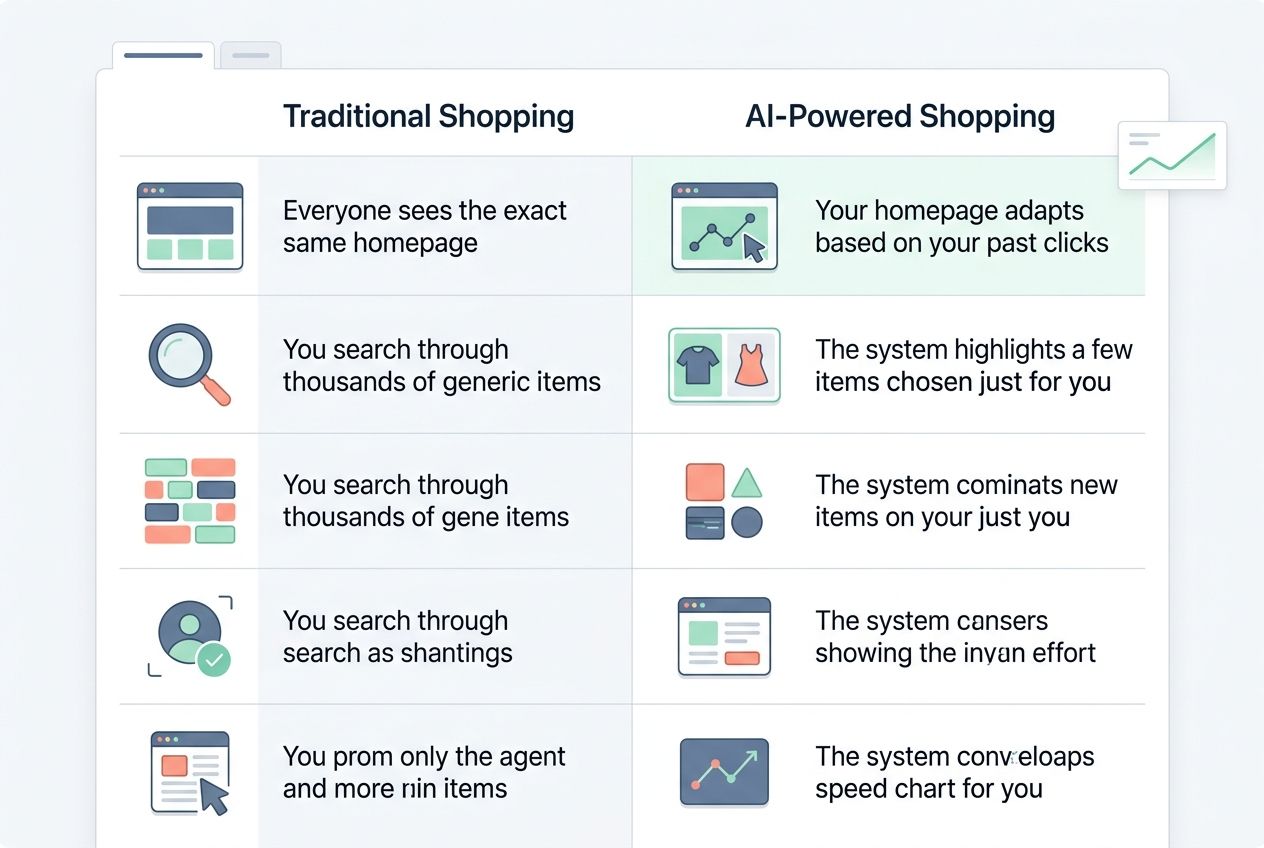
| Traditional Shopping | AI-Powered Shopping |
|---|---|
| You search through thousands of generic items. | The system highlights a few items chosen just for you. |
| Everyone sees the exact same homepage. | Your homepage adapts based on your past clicks. |
How They Work
Now that you understand what these systems are, we should explore the mechanics behind them. These tools gather information about you through your everyday actions online.
Your clicks, viewing history, and product selections all feed into a massive data collection process. Machine learning algorithms then analyze this information to spot patterns in your behavior.
The system learns what you like and what might catch your interest next. This process happens in three main steps:
- Data Collection: The system tracks your specific clicks, searches, and cart additions.
- Pattern Recognition: The algorithm compares your habits to millions of other US consumers.
- Predictive Delivery: The engine displays the exact item you are most likely to buy right now.
Search engines and e-commerce platforms use this approach constantly. The system identifies similarities between your preferences and those of other shoppers. Your engagement feeds back into the algorithm, making it much smarter over time.
Key Components of AI-Powered Recommendation Systems
These systems run on three main engines. They use smart algorithms that learn from data, information collection that tracks your behavior, and personalization tools that customize what you see.
These parts work together like a well-oiled machine. They figure out what you actually want before you even know it yourself.
Algorithms and Machine Learning
Algorithms form the backbone of recommendation systems. They analyze your past behavior to predict what you might like next. Machine learning takes this further by letting computers learn patterns from massive amounts of data.
The system gets smarter over time as it processes more information. Each time you interact with a recommendation, the algorithm adjusts itself.
Amazon famously uses a specific algorithm called Item-to-Item Collaborative Filtering. Instead of just matching you with similar shoppers, this algorithm matches your specific purchase history to related items.
This method scales beautifully and processes massive datasets in real time. It is a major reason why Amazon generates roughly 35% of its total revenue directly from its recommendation engine.
Data Collection and Analysis
AI systems gather massive amounts of data from your browsing habits. Companies collect this information to understand what you need and what you might buy next.
Data collection happens constantly and silently across multiple platforms. Search engines track your queries, while e-commerce sites monitor your product views.
Modern US retailers focus heavily on two specific types of data to fuel these engines:
- First-Party Data: This includes your direct interactions with a brand, like your past purchases and the time you spend on a specific page.
- Zero-Party Data: This is information you intentionally share, like filling out a style quiz or setting your communication preferences.
Machine learning algorithms examine patterns in this data to spot trends. The more specific the data, the sharper the predictions become.
Personalization Engines
Personalization engines are the essential tools companies use to put all this data into action. These powerful platforms track your history and predict what might catch your interest next.
Many top US retailers rely on powerful enterprise engines like Dynamic Yield or Adobe Target. For example, Dynamic Yield uses AI to adapt site layouts and product grids in real time based on your current session.
This targeted marketing approach benefits both sides. Recent 2026 data shows that AI-driven personalization can boost a website’s conversion rate by up to 23%.
Instead of scrolling through thousands of products, you see options that fit your actual taste. The user experience improves dramatically when recommendations feel personal rather than generic.
Types of AI Recommendation Systems
AI systems use different methods to figure out what you want. Each method takes a different path to get you the right suggestions. These systems are built to match your unique consumer behavior patterns.
Type 1: Collaborative Filtering
Collaborative filtering works like asking your friends for movie recommendations. The system looks at what millions of people like you have watched, rated, and enjoyed.
It finds patterns in consumer behavior and discovers that people with similar tastes tend to love the same products. If you and another shopper both rated ten movies the same way, the algorithm figures you will probably like what they watched next.
This approach powers recommendations across several major platforms:
- Amazon: Suggests items frequently bought together by other shoppers.
- Spotify: Creates “Discover Weekly” playlists based on what fans of your favorite artists are streaming.
- Target: Recommends grocery items that similar families buy weekly.
This method shines in e-commerce and entertainment platforms where user experience matters most. The algorithm does not need to know anything about the actual products. It simply matches your behavior with thousands of other shoppers.
Type 2: Content-Based Filtering
Content-based filtering takes a different path. Instead of looking at what other people like, this approach focuses on the items themselves.
The system analyzes the features, characteristics, and attributes of products you have already enjoyed. It then recommends similar items based on those shared qualities.
A great example of this is Pandora’s Music Genome Project. The platform categorizes songs based on hundreds of specific musical traits, like vocal harmony or rhythm structure. It then plays songs that share the exact traits of the music you already love.
This method works perfectly for streaming services and retail shops. The algorithm learns what matters to you, whether that is a specific price point, a favorite brand, or a preferred color.
Type 3: Hybrid Recommendation Systems
Hybrid recommendation systems combine two or more recommendation approaches to deliver smarter results. These systems blend collaborative filtering with content-based filtering.
Your streaming service might suggest a movie because people with your viewing habits loved it, and also because the film shares genres with your recent watches. This dual approach catches what either method might miss alone.
Netflix is the undisputed king of the hybrid model. Their AI system saves the company an estimated $1 billion per year by keeping subscriber cancellation rates under a remarkable 2.5% monthly.
A hybrid model reduces the “cold start” problem. This happens when new users or new products lack enough data for accurate suggestions. By combining methods, algorithms paint a complete picture of your interests instantly.
Key Benefits of AI-Powered Recommendations
AI-powered recommendations boost your shopping trips, lift retail sales numbers, and keep you glued to the apps you love. These systems offer clear advantages for both businesses and consumers.
Let’s look at exactly how these systems work their magic to improve your daily life.
Enhanced Customer Experience
AI systems watch what you buy, what you click, and what you search for online. They learn your patterns and habits to show you products that match your interests.
This saves you from scrolling through thousands of items that do not matter to you. A 2026 retail survey revealed that 71% of consumers actually feel frustrated when a shopping experience lacks personalization.
You find what you need without wasting hours searching through irrelevant options. This creates a highly customized user experience that makes shopping fun again.
Here are a few ways this improves your daily routine:
- Streaming apps put your favorite genres front and center.
- Grocery apps remember your weekly staples for quick reordering.
- Clothing stores suggest accessories that match items you just added to your cart.
Increased Sales and Revenue
Happy customers stick around longer, and that loyalty translates into real money for businesses. AI-powered recommendations drive sales by showing shoppers exactly what they want to buy.
Stores using smart algorithms see their revenue climb because these systems predict customer behavior with impressive accuracy. When a recommendation lands perfectly, shoppers feel understood, and they buy more frequently.
Current 2026 ecommerce statistics show that AI-driven sessions can result in a massive 369% increase in Average Order Value. The algorithms learn from every click and search you make.
This targeted marketing costs less money but produces much better results. Companies waste fewer resources on generic ads that miss their mark.
Improved User Engagement
AI-powered recommendation systems keep users coming back for more. When platforms show you products or movies that match your interests, you spend more time exploring.
Netflix provides a perfect example of this engagement power. Studies show that 75% to 80% of what users watch on the platform comes directly from personalized AI recommendations.
Companies track how long you stay on their site and what you click. Better recommendations mean you find what you want faster, so you stick around longer. Your engagement directly shapes the loyalty programs and discounts you see next.
Higher engagement leads to repeat visits and stronger brand loyalty. You benefit because you discover products that actually matter to you.
Operational Efficiency
AI systems cut down the heavy lifting that companies do behind the scenes. Businesses save time and money when machines handle the massive job of sorting through customer data.
Search engines and e-commerce platforms run more smoothly because algorithms work around the clock. This means your favorite shopping sites load faster and serve you better results in seconds.
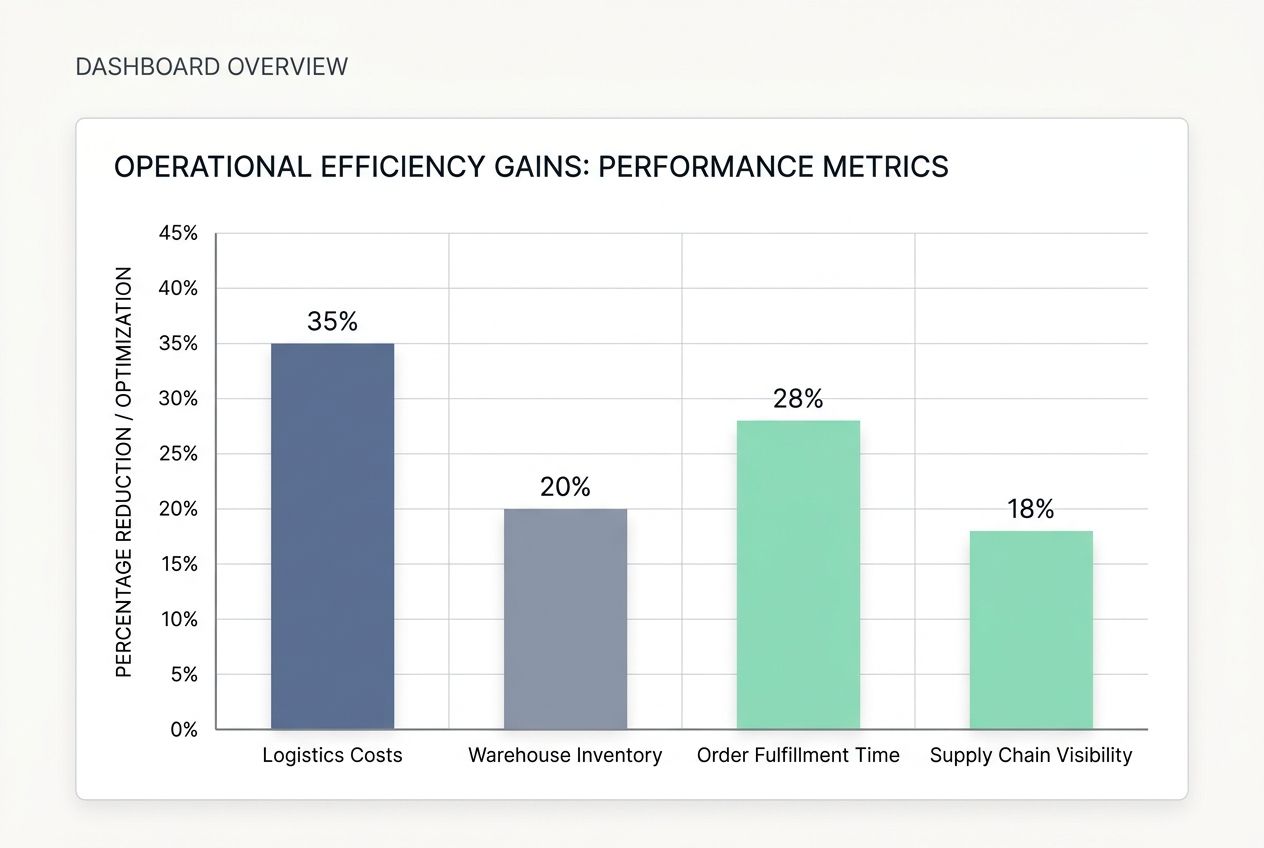
This efficiency passes real benefits directly to the business:
- Machine learning reduces logistics costs by 5% to 20% through better demand prediction.
- AI tools optimize warehouse inventory levels by up to 35%.
- Staff can focus on building real customer connections instead of doing manual data entry.
Challenges and Considerations
AI systems make mistakes. They can favor certain groups over others, leak your personal data, or lose your trust faster than you can say the word algorithm. Consumers need to understand these risks to protect themselves online.
Data Privacy and Security
Companies collect massive amounts of data to power their recommendation systems. Your shopping habits, browsing history, and personal preferences all feed into these algorithms.
This data collection raises serious questions about what information companies gather and how they store it safely. Hackers target retail sites constantly, putting your digital footprint at risk.
US consumers are gaining more control over this data. Laws like the California Privacy Rights Act (CPRA) now give residents the specific right to opt out of automated algorithmic profiling.
To protect your own data privacy, consider these simple steps:
- Regularly clear your browser cookies and search history.
- Use guest checkout options when buying from a new store.
- Adjust your account settings to turn off personalized ad tracking.
- Read the privacy prompts before clicking “Accept All” on website banners.
Algorithm Bias
Algorithms learn from data that humans create, and that data often carries our own biases. If a recommendation system trains on shopping patterns from mostly one group of people, it learns to favor those exact patterns.
This means the AI starts suggesting products and prices that match a specific group’s preferences. Other consumers miss out on options that might actually suit them much better.
These algorithmic biases shape what you see online and what deals you get offered. Historically, some pricing algorithms have even shown higher prices to consumers living in specific zip codes.
Fixing algorithm bias takes real work from the companies building these systems. They must audit their algorithms regularly to check for unfair patterns. You can push back by giving feedback when recommendations feel totally irrelevant.
Building User Trust
Companies that collect your data must tell you exactly what they do with it. Transparency builds loyalty programs that actually work.
Retailers who explain their recommendation systems earn your confidence. Smart businesses show customers how algorithms work behind the scenes to make the shopping experience better.
The most trusted brands now include a simple “Why am I seeing this?” button next to their product recommendations.
Trust grows when companies give you control over your choices. Most e-commerce platforms now let you adjust your preferences or delete your history completely.
You become a partner in the process. Honest communication about how machine learning shapes your search results transforms casual shoppers into loyal fans.
Applications of AI-Powered Recommendations
AI-powered recommendations show up everywhere you shop, watch, learn, and get medical care. These systems shape your daily life in ways you might not even realize. Let’s look at how specific industries use this technology to serve you better.
E-Commerce and Retail
Online stores use recommendation systems to show you products you might like. Retailers collect data about your shopping habits and purchase patterns to predict what catches your interest.
This personalization drives engagement and keeps you coming back. Stores see higher sales when they show customers the right products at the exact right time.
Modern US retailers are pushing this even further in 2026:
- Micro-Personalization: Amazon dynamically boosts items with a “Climate Pledge Friendly” badge if you have a history of buying eco-friendly goods.
- Local Demand AI: Stores like Walmart use AI to recommend seasonal products based on the specific weather patterns in your local zip code.
- Smart Search: Website search bars auto-fill suggestions based on your past browsing history.
Media and Entertainment
Streaming services take personalization to the next level. Netflix, Spotify, and YouTube all rely on machine learning algorithms to learn what you watch and listen to daily.
The algorithm studies patterns in your viewing habits and then predicts what content you will probably love next. This data feeds into their engines to personalize your experience across their entire platform.
Spotify’s AI DJ is a perfect example of this technology in action. A recent 2026 report noted that 90 million subscribers have used this feature, generating over 4 billion hours of highly personalized listening time.
The result is that you spend more time on their apps and stay loyal to their service. These platforms use recommendations to keep subscribers coming back for more.
Healthcare and Personalized Medicine
Beyond streaming shows, AI-powered recommendations actively shape how doctors treat patients today. Healthcare providers now use machine learning algorithms to suggest personalized medicine plans.
These systems analyze your medical history, genetics, and lifestyle choices. They predict which treatments work best for specific individuals rather than using generic approaches.
Leading US healthcare networks use AI systems to analyze electronic health records rapidly. This helps doctors recommend highly specific preventative screenings based on a patient’s unique genetic markers.
Patient engagement increases when people receive personalized health suggestions they can actually follow. This targeted approach saves lives and helps patients make smarter decisions about their own health.
Education and Learning Platforms
AI-powered recommendations transform how students learn online. Learning platforms use algorithms to study each student’s behavior, progress, and preferences.
The system then suggests courses and learning paths that match what each learner specifically needs. A student struggling with math gets different recommendations than one excelling in science.
Duolingo’s “Birdbrain” AI system analyzes millions of interactions to adjust the difficulty of language exercises in real time, fueling a massive 51% surge in daily active users for the company in 2025.
Educators benefit from these recommendation systems, too. Teachers gain insights into student behavior and can spot exactly which learners need extra help before they fall behind.
Trends in AI-Powered Recommendations
AI recommendation systems shift constantly. They are moving toward instant personalization that responds to what you do right this very second. Companies stack different platforms together so recommendations follow you from your phone to your smart TV.
Real-Time Personalization
Real-time personalization changes your shopping experience as you browse. Companies track your clicks and searches right now, not later.
Your recommendation system updates every few seconds to show products you might want. Industry data from 2026 reveals that real-time personalization delivers 20% higher conversion rates compared to older, batch-processed updates.
This speed matters because you see fresh suggestions that match what you are doing at that exact moment. You discover new products faster because the system adapts instantly to your current mood.

This approach transforms your digital experience in several ways:
- Pop-up discounts change based on the items sitting in your cart.
- Homepage banners update instantly if you start searching for a different category.
- Search results shift to prioritize brands you just clicked on a minute ago.
Cross-Platform Integration
AI-powered recommendations now follow you across different platforms. This creates a seamless experience wherever you shop or browse on the web. Your personalization data travels with you. The algorithms work behind the scenes, pulling information from multiple sources to build a complete picture of your consumer behavior.
Omnichannel marketing strategies are incredibly effective for businesses today. Campaigns that combine personalized recommendations across four or more channels generate 126 times higher user sessions than single-channel efforts.
This integration transforms your user experience into something that feels like having a personal shopping assistant following you everywhere.
Context-Aware Recommendations
Context-aware recommendations work like a smart friend who knows your mood and the time of day. These systems track your location, the local weather, and your current activity to suggest products that fit your exact situation.
If the weather is cold in Boston, context-aware engines like Dynamic Yield can automatically create rules to recommend winter apparel to shoppers in that specific zip code. Shopping for coffee on a cold morning triggers suggestions for a hot brew.
This level of personalization makes your user experience much smoother. Your phone knows you are at the gym, so it suggests workout gear. You are planning a vacation, so travel deals pop up in your feed.
These targeted marketing efforts work because they respect what you are doing right now. The machine learning behind these systems learns from your patterns, so recommendations get sharper over time.
How Consumers Can Benefit from AI Recommendations
AI recommendations save you time and help you find products you actually want. They make your daily shopping decisions much smarter.
Saving Time with Personalized Suggestions
Personalized suggestions cut through the noise and save you hours every single week. Instead of scrolling through endless options, algorithms show you products that match your specific taste.
Your search results narrow down fast, letting you skip past items you would never buy anyway. Machine learning systems study your clicks to figure out what matters most to you.
Shoppers arriving at retail sites from AI-powered suggestion sources show 10% higher engagement and spend significantly more time viewing relevant items.
Loyalty programs pair perfectly with personalized recommendations to reward your shopping habits. Discounts appear for items you actually want, not random stuff you would normally ignore.
Discovering New Products and Services
AI-powered recommendation systems introduce you to products you might never find on your own. These algorithms analyze your search history to surface unique items that match your interests.
This discovery process saves you time by filtering through millions of options. You get to focus entirely on things that actually matter to you.
This technology is changing how we find new brands online:
- Generative AI referral traffic to US retail sites surged by a massive 4,700% year-over-year heading into 2026.
- Algorithms suggest kitchen gadgets if you frequently watch cooking shows.
- Music apps recommend lesser-known indie artists based on your favorite mainstream bands.
Enhanced Decision-Making
Beyond finding fresh products, AI-powered systems help you make smarter choices. These engines gather data about your past behavior and what similar consumers have purchased.
Your decision-making improves because the algorithms filter through massive amounts of information. They present only the most relevant and highly-rated options for your specific needs.
You spend less time weighing pros and cons when personalization engines do the heavy lifting. In fact, AI-driven revenue-per-visit increased by 84% from January 2025 to July 2025, proving that consumers are finding what they want much faster.
This targeted approach to engagement transforms how you shop, learn, and discover solutions that fit your busy life.
Final Thoughts
AI-powered recommendations shape your shopping, entertainment, and learning experiences. These systems collect data and use smart algorithms to suggest products you will actually want.
These tools work through a few main approaches. Collaborative filtering watches what similar people buy, while content-based filtering matches your preferences to specific product features. Hybrid systems combine both methods for much better results.
Companies gain real sales boosts and customer loyalty from this technology. At the same time, you save hours discovering new products without endless scrolling. Privacy concerns and algorithm bias remain real challenges today. Companies must work hard to build trust through transparent practices and fair systems.
Your best move is staying aware of how these recommendations work. Adjust your privacy settings when needed, and take advantage of personalized suggestions that genuinely improve your life.
Frequently Asked Questions (FAQs)
1. How do AI-powered recommendations work for shoppers?
AI-powered suggestions use collaborative filtering to analyze your past choices and predict what you might want to buy next. For example, the famous “customers who bought this also bought” feature drives around 35 percent of Amazon’s total revenue in the United States. It is just like having a personal shopper who remembers your exact style and saves you hours of scrolling.
2. Are my personal details safe with these smart recommendation tools?
Most US companies use encryption to protect their data, but you should always review their privacy policies because no system is completely flawless. By the start of 2026, twenty US states will have active consumer privacy laws, meaning you have more legal rights than ever regarding how your data is used. Just take a quick second to opt out of third-party sharing in your account settings if you want maximum security.
3. Can I control what gets recommended to me?
Yes, practically all major platforms allow you to reset your suggestions simply by clearing your search history or adjusting your content preferences in the account settings.
4. Why do some suggestions feel way off base?
Sometimes the system experiences what engineers call the “cold start problem,” which happens when a platform simply does not have enough data about your specific preferences yet. If a family member uses your US Netflix or Amazon account, their clicks get mixed with yours and confuse the algorithm. Just give it a little time, and as you click on more things you genuinely like, the computer will quickly get back on track.