
When 24-year-old Fahima Noori completed her law degree and a midwifery program, she imagined a future where she could contribute to Afghan society while supporting her family. Later, she worked in a mental health clinic, motivated by the idea of helping vulnerable communities.
But after the Taliban takeover in August 2021, her ambitions began to collapse. Girls above grade six were banned from formal schooling, women were gradually excluded from most professions, and restrictions piled up across education, media, and civic life.
For Fahima and her sisters, the internet became their last sanctuary—a place where they could continue studies, attend online courses, apply for remote jobs, and stay connected with the wider world.
That hope ended abruptly this week when the Taliban announced an indefinite nationwide internet shutdown, silencing the last lifeline for countless Afghan women.
“Our last hope was online learning. Now even that dream has been destroyed,” Fahima said, requesting anonymity for fear of reprisals.
How the Shutdown Unfolded

First: Fiber Optic Cuts
Weeks before the full blackout, reports emerged from provinces such as Takhar, Baghlan, Balkh, Badakhshan, Herat, and Kandahar where fiber-optic cables were severed on Taliban orders. Officials described the action as a measure to “prevent immorality,” though they gave no detailed explanation.
Then: Nationwide Blackout
On September 29, 2025, Taliban leader Hibatullah Akhundzada authorized a complete suspension of internet services across Afghanistan. According to NetBlocks, connectivity dropped to less than 1% of normal traffic, cutting off nearly all forms of online communication.
Even telephone services were disrupted, as most modern telecommunication relies on internet infrastructure. Mobile data, Wi-Fi networks, and satellite TV have all been severely affected.
International media such as the BBC, Reuters, and Al Jazeera reported losing contact with their correspondents in Kabul, while air travel from the capital’s international airport also faced disruptions due to grounded systems dependent on digital networks.
The Impact on Afghan Society
Education: Girls Pushed Further into the Dark
Since 2021, Afghan girls above grade six have been banned from attending school. Universities later barred female students, and in 2024, the Taliban removed over 140 books authored by women from academic institutions, claiming they were “anti-Sharia.”
With physical education blocked, online learning was the only option left. Many enrolled in remote universities abroad, joined online English programs, or prepared for international exams like IELTS.
Now, that door has been slammed shut.
- Shakiba, a student in Takhar province, explained:
“Before, I studied midwifery, but that was banned for women. Online learning was our only path. Now the world feels dark to me.” - Zabi, an English teacher who shifted classes online, said:“Two days ago, 45 of my students were in the middle of IELTS practice exams when the internet went out. They had been preparing for months. It was heartbreaking.”
For women like Fahima and her sisters, the shutdown doesn’t just limit education—it eliminates the possibility of financial independence. “We wanted to support our father,” she said, “but now we just sit at home doing nothing.”
Economy: Businesses Paralyzed
The blackout has crippled Afghanistan’s already fragile economy, where GDP per capita stood at just $306 in 2024 (UNDP data).
- Money changers and traders, who rely heavily on internet banking and international communication, report up to 90% business losses.
- E-commerce ventures and freelancers, one of the few thriving sectors in recent years, have been cut off from international clients.
- Travel and aviation operations at Kabul airport were disrupted, with local media reporting grounded flights due to the lack of connectivity.
According to Human Rights Watch, the blackout also threatens aid distribution systems run by NGOs and UN agencies, many of which depend on digital logistics and mobile transfers.
Health and Humanitarian Access
Doctors, midwives, and humanitarian workers are warning that the shutdown could cost lives. Many clinics rely on online systems to order medical supplies, communicate with donors, and access telemedicine support.
In earthquake-stricken regions, relief coordination is now nearly impossible. The UN Office for the Coordination of Humanitarian Affairs (OCHA) has expressed concern that the blackout will “severely delay aid delivery and obstruct life-saving interventions.”
The Taliban’s Position
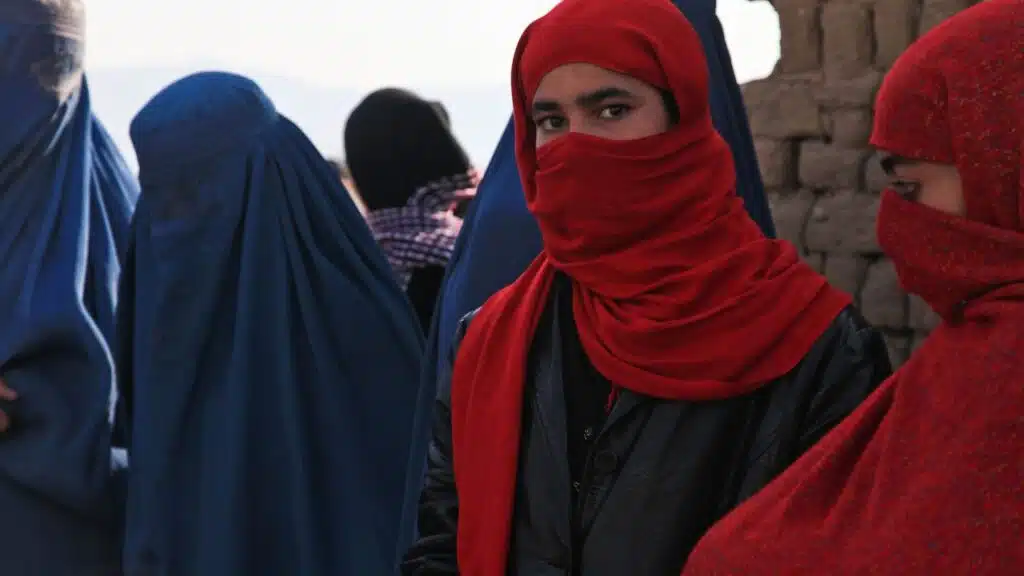
So far, the Taliban have not issued a detailed explanation. Spokesmen only claim the move is aligned with Islamic Sharia and Afghan culture. Authorities hinted at creating an “alternative route for internet access” but gave no details or timeframe.
Observers believe the blackout is less about morality and more about tightening censorship. Cutting off the internet silences women, activists, and independent media—leaving state-approved narratives as the only voice.
Global Reactions
- United Nations: The UN has urged the Taliban to restore connectivity immediately, warning that the shutdown violates fundamental human rights, including access to education, information, and freedom of expression.
- Amnesty International: Called the blackout “reckless and unlawful,” saying it isolates Afghans from humanitarian aid and global support.
- International Media: Outlets including the Guardian, Washington Post, and AP reported they can no longer reach journalists or staff in Afghanistan.
- Regional Concerns: Neighboring Pakistan and Iran, both linked through digital trade and border commerce, are expected to feel ripple effects if the blackout persists.
A Deeper Pattern of Control
The internet ban is part of a wider systematic suppression:
- Ban on women working in NGOs and government offices.
- Prohibition of women entering parks, gyms, and public spaces.
- Academic bans on fields like law, journalism, and human rights.
- Mandatory gender segregation in most social settings.
Each restriction further erodes Afghan women’s ability to participate in society. With the internet now gone, many believe total isolation has been achieved.
What Comes Next?
The Taliban have not indicated whether services will return. Experts warn that the shutdown could become permanent, especially if authorities push for state-controlled intranet systems similar to Iran’s or China’s heavily censored models.
For women like Fahima, the consequences are devastating:
- No access to education.
- No possibility of online work.
- No contact with the outside world.
Her father, already struggling to support the family, now faces the painful reality that his daughters may never complete their education.
Anas, a money changer in Takhar, summarized the despair:
“My business is down 90%, but my daughters’ dreams being destroyed—that is harder to accept than losing money.”
The Taliban’s internet shutdown represents far more than a technical disruption. It is the elimination of the last space of freedom for Afghan women and youth.
By silencing digital life, the regime has struck at education, economy, healthcare, and hope itself. In a country already isolated by conflict and sanctions, the blackout deepens its exile from the modern world—and leaves millions of Afghans, especially women, in the dark.
The Information is Collected from UN News and BBC.