If you think smart homes are only for luxury penthouses and tech fanatics, it’s time to reset that idea. Today, affordable smart furniture lets you add comfort, convenience, and style to your space without blowing your budget or turning your home into a gadget showroom.
You don’t need a house full of screens and voice assistants. A coffee table that charges your phone, a bed that hides extra storage, or a compact desk that folds away after work can quietly upgrade your daily life. This is smart furniture on a budget: practical, space-saving, and surprisingly stylish.
What Is Smart Furniture – And Why Is It Everywhere?
Smart furniture combines clever design with built-in technology to make everyday living easier, more efficient, and more stylish. From charging coffee tables to storage beds and space-saving desks, these pieces are becoming popular because they solve multiple problems at once—especially in smaller homes.
With affordable options now widely available, smart furniture is everywhere because it offers functionality, comfort, and modern convenience without requiring a high-tech budget.
Smart Furniture in Simple Terms
Smart furniture isn’t just about Wi-Fi and apps. At its core, it’s any furniture piece that:
- Solves more than one problem
- Integrates some form of technology or clever function
- Makes your space more efficient and comfortable
That might mean:
- A coffee table with wireless charging and a hidden storage compartment
- A sofa with built-in USB charging ports
- A bed with drawers underneath and soft integrated lighting on the headboard
- A wall-mounted desk that folds away to free up floor space
In other words, smart furniture for small spaces doesn’t have to be complicated. Sometimes the smartest pieces are simply designed to work harder for you.
Key Features to Look for (When You’re on a Budget)
You don’t need every cutting-edge feature. Focus on functions you will actually use:
- Charging and power: USB ports, power outlets, wireless charging pads in tables and headboards
- Lighting: Built-in LED strips, sensor night-lights, or lamps that can be controlled with a simple app or smart bulb
- Storage: Hidden compartments, drawers, lift-top mechanisms, and modular shelving
- Space-saving design: Fold-out, stackable, or expandable elements for micro-apartments and small rooms
If you’re buying affordable smart furniture, the golden rule is simple: the tech should make life easier, not more complicated.
Why Affordable Smart Furniture Is So Popular
Several trends are driving this shift:
- Smaller homes and rentals: People need furniture that adapts and saves space
- Hybrid work lifestyles: Homes are now offices, gyms, and relaxation zones
- Design awareness: Social media and online shopping make stylish, clever pieces more accessible
- Value mindset: Instead of buying multiple items, people prefer one multi-functional smart furniture piece that does the job of three
The result? Smart furniture has moved from a futuristic concept to an everyday essential.
Step One: Plan Your Smart Furniture Makeover
Before you buy anything, plan. Good planning turns smart furniture on a budget into a real strategy instead of impulse shopping.
Set a Realistic Budget
Start with a clear number. Decide:
- Your total budget
- How much to allocate per room (living room, bedroom, home office, etc.)
Then prioritise:
- 1–2 smart “hero” pieces per room that will make the biggest difference
- Smaller upgrades (like smart bulbs or charging trays) to support them
For example:
- Living room: smart coffee table + smart floor lamp
- Bedroom: storage bed + charging nightstand
- Home office corner: compact desk + cable-managed power hub
Think of these pieces as long-term investments, not quick decor fixes.
Measure Your Space – and Your Power Points
Smart furniture needs space to function and power to work.
- Measure wall lengths, doorways, and the distance between furniture
- Check the height of windowsills, radiators, and existing furniture
- Map out where electrical outlets and routers are located
This avoids common mistakes like:
- Buying a smart sofa that blocks a door
- Choosing a lift-top coffee table that bumps into your TV console
- Placing a charging table too far from an outlet, creating a visible cable mess
A quick, rough floor plan, even hand-drawn, can save money and frustration.
Identify Where You Need “Smart” the Most
Ask yourself:
- Where do cables, chargers, and gadgets pile up?
- Which room feels most cramped or cluttered?
- Where do you struggle with lighting or storage?
Then match those pain points to categories of affordable smart furniture:
- No easy charging spots in the living room → smart side table or coffee table
- Tiny bedroom with wardrobe overload → storage bed and slim smart nightstands
- Work-from-home in the living room → fold-away desk and compact office chair
Start where the frustration is highest. That’s where smart furniture will feel most valuable.
Living Room: Smart Comfort on a Budget
The living room is often the best place to begin. It’s where you relax, host guests, and – let’s be honest – charge your devices.
Smart Sofas and Chairs
A smart sofa doesn’t have to be a futuristic recliner with a tablet in the armrest. Many affordable smart furniture options now look like regular sofas but add details.
Such as:
- USB ports on the sides
- Built-in power outlets under the arm
- Storage compartments inside the chaise
When is this worth it?
- If your living room is short on outlets
- If you constantly stretch chargers across the room
- If you often work from the sofa
If your budget is tight, a quality basic sofa plus a slim power station or smart power strip can be more flexible than an expensive high-tech recliner. Choose whichever option gives you better value per use.
Coffee Tables and Side Tables That Work Harder
A traditional coffee table is just a surface. A smart coffee table adds extra roles:
- Lift-top surface for laptop work or dining
- Hidden storage for remotes, cables, and game controllers
- Wireless charging pad embedded in the top
- Sometimes, mini-fridges or speakers are included in higher-end versions
For smart furniture on a budget, you don’t have to go all out. Consider:
- A lift-top table with storage plus a separate wireless charger
- Nesting side tables that tuck away when not in use
- A narrow side table with storage shelves for magazines, routers, and multi-plugs
These upgrades keep your living room tidy and flexible, especially in small apartments.
Smart Lighting as “Invisible Furniture”
Lighting shapes mood as much as furniture does. Smart lighting is one of the easiest budget smart home decor upgrades:
- Use smart bulbs in existing floor or table lamps
- Add LED strips behind your sofa or TV unit for a subtle glow
- Try motion-sensor night lights in hallways or near the sofa area
Smart lighting doesn’t occupy floor space but still acts like a design element. It zones the room into reading, entertaining, and relaxing areas, without new bulky items.
Bedroom: Sleep Better with Multi-Functional Smart Pieces
The bedroom should feel calm, uncluttered, and supportive of rest. Here, space-saving smart furniture can make a big difference.
Smart Beds and Headboards
If you have the budget for one key bedroom upgrade, make it the bed. Look for:
- Storage drawers or lift-up bases to hide bedding, seasonal clothes, or extra pillows
- Padded headboards with integrated reading lights or USB ports
- Quiet, smooth mechanisms that don’t feel fragile
You can also mix a simple storage bed base with separate smart gadgets, such as:
- Clip-on reading lights
- Slim power hubs or phone shelves
- Motion-sensor strip lights under the bed for soft night-time visibility
This offers the function of a “smart bed” without the high price tag.
Nightstands That Charge and Declutter
Your bedside table is a prime candidate for affordable smart furniture for small spaces. Consider:
- Nightstands with built-in wireless chargers on top
- Drawers or shelves that conceal cables, books, and devices
- Slim designs that don’t overwhelm narrow rooms
If you have a micro-bedroom:
- Use ladder-style shelves beside the bed
- Add a clamp lamp and a small charging tray instead of a full table
It still feels like a fully equipped bedside area, but uses vertical space instead of floor space.
Smart Wardrobes and Dressers
Not all smart design requires electronics. A “smart” wardrobe or dresser might simply have:
- Adjustable shelves and rails
- Integrated mirrors
- Built-in lighting that turns on when doors open
These details make it easier to stay organised and reduce the need for extra furniture, like separate mirrors or additional storage units. That’s multi-functional smart furniture in practice.
Home Office & Study Corner: Clever Workspaces Anywhere
Many people don’t have a dedicated room for a home office. Smart furniture helps you carve out a workspace without sacrificing your living space.
Fold-Away Desks and Wall-Mounted Workstations
For small homes, this type of space-saving smart furniture is a game-changer:
- Wall-mounted desks that fold down when you need them, and disappear when you’re done
- Compact desks built into shelving units or room dividers
- Drop-leaf tables that serve as dining surfaces and workstations
These solutions are ideal for studio apartments where the living room, office, and dining area are in the same space.
Smart Chairs, Power Hubs, and Cable Control
An ergonomic chair is worth paying for, but doesn’t need built-in tech to be “smart”. What really keeps your workspace efficient is:
- A cable tray under the desk
- A clamp-on power hub with USB ports
- Velcro straps or cable clips to tame cords
This combination, plus a regular desk, often beats a very expensive “smart desk” that you can’t easily move or repair.
Multi-Use Zones: Office by Day, Lounge by Night
To make your home feel flexible:
- Use a sofa bed in the same room as your desk to create an instant guest room
- Pair an ottoman with storage with a small fold-out desk, so you can pack away work items easily
- Use nesting tables as laptop tables during the day and side tables at night
This is where smart furniture on a budget shines: pieces that let your space change character without major renovations.
Kitchen, Dining & Small Apartments: Make Every Inch Work
The kitchen and dining area often suffer from clutter. Smart, compact pieces can restore order.
Smart Dining Tables and Compact Solutions
In small homes, a dining table should do more than hold plates.
Look for:
- Drop-leaf or extendable tables that shrink when not in use
- Tables with built-in shelves or drawers for placemats, cutlery, or devices
- Counter-height tables that double as prep space and breakfast bars
These are perfect examples of multi-functional smart furniture that fits into busy urban lifestyles.
Storage Benches, Carts, and “Mobile” Furniture
Think beyond static furniture:
- Storage benches provide seating and hidden storage for kitchen linen, tools, or kids’ items
- Rolling carts act as mobile islands, coffee stations, or bar carts
- Slim trolleys slide between appliances to store spices, cleaning supplies, or bottles
Because they move, they can support different layouts and occasions, from solo dinners to parties.
Studio & Micro-Home Strategies
If your entire home is basically one room, layering smart functions is essential:
- Sofa bed instead of sofa + guest bed
- Storage ottomans that hide blankets, tech, and magazines
- Fold-away or wall desks to free floor space
Add vertical storage, like shelves or pegboards, for everyday items. This combination of space-saving smart furniture and clever storage makes tiny homes feel much larger and more organised.
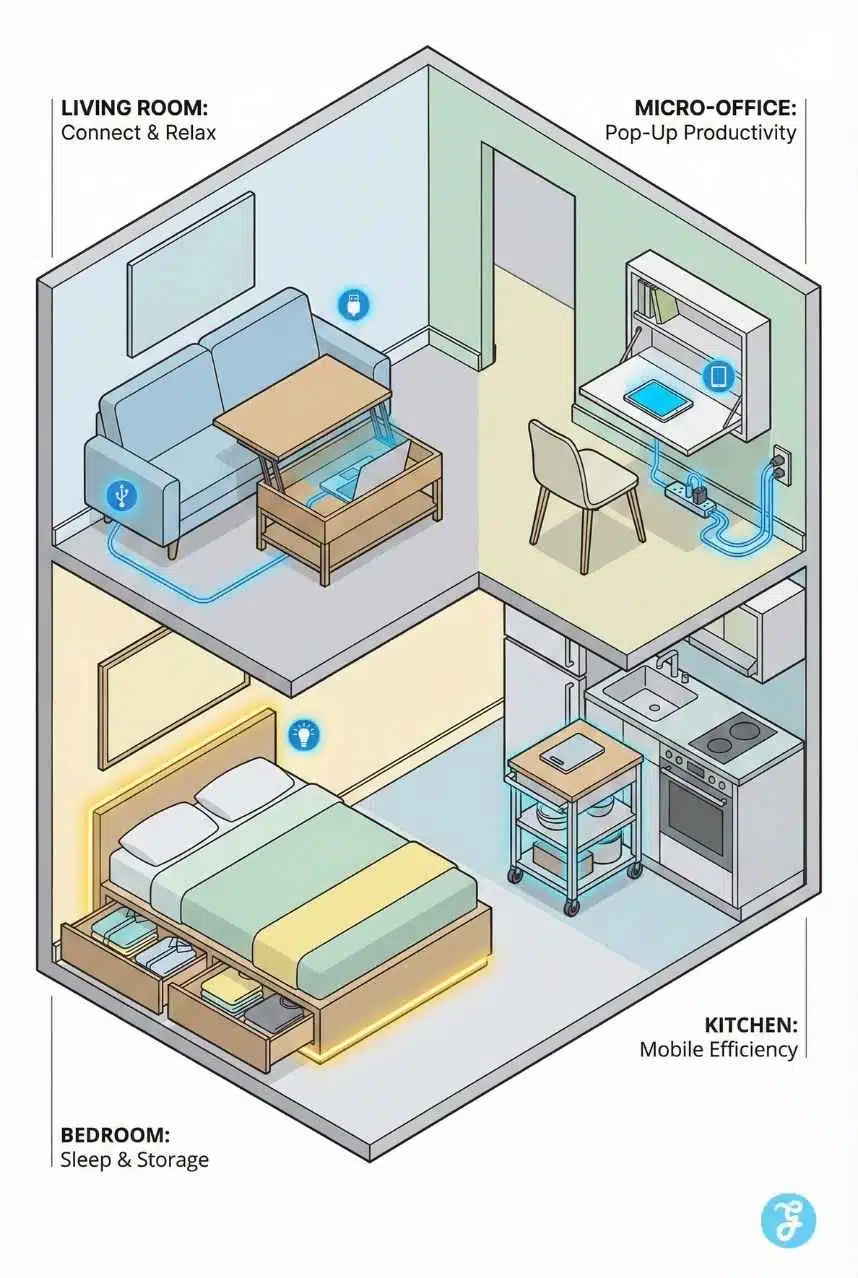
Design Rules: Make Smart Furniture Look Cohesive, Not Gadgety
Smart doesn’t have to look like a showroom. To keep your space stylish and calm, follow a few simple rules.
Keep a Consistent Visual Language
Choose:
- One or two main materials (e.g., light wood and black metal)
- One base colour palette (neutrals, earthy tones, or soft pastels)
Then make sure your affordable smart furniture pieces match or complement that palette. This way:
- Charging tables don’t clash with sofas
- Storage units blend into the background
- Tech features feel discreet instead of dominant
Manage Cables, Hubs, and Devices
Nothing ruins budget smart home decor faster than visible cable chaos.
Make cable control part of the plan:
- Attach cable channels along skirting boards or furniture backs
- Use cable boxes to hide power strips
- Route cables behind furniture, not across walkways
This helps your home look clean, even if you have multiple smart devices and IoT gadgets.
Balance Smart and Soft Elements
To avoid a cold, overly digital feel:
- Mix tech-heavy pieces with soft textiles like throws, cushions, and rugs
- Add plants, artwork, and books to keep the space human and warm
- Use natural materials like wood and linen to soften metal or plastic surfaces
The result is a home that looks designed, not engineered.
Shopping Smart: Where and How to Find Affordable Smart Furniture
You don’t need to chase every trending collection. Focus on buying well, not buying more.
Compare Price vs. Real Value
Before you pay extra for built-in tech, ask:
- Will I use this feature every week?
- Could I get the same function with a cheaper add-on?
- Is the piece easy to repair or upgrade?
For example, a very expensive smart coffee table might not be necessary if:
- You already own a good Bluetooth speaker
- You can add a separate wireless charger and baskets for storage
On the other hand, a high-quality storage bed or solid lift-top table may justify a slightly higher price because they offer daily, long-term value.
Best Places to Look (and What to Look For)
When browsing online or in-store, pay attention to:
- Small-space and “city living” collections
- Lines specifically marketed as “multi-functional” or “modular.”
- Reviews that mention durability, comfort, and practicality
Look beyond big tech brands. Traditional furniture stores now offer affordable smart furniture pieces with subtle tech additions, like USB ports and integrated lighting.
Second-Hand Finds and DIY Upgrades
You can also create your own budget smart home:
- Buy a sturdy second-hand table and add a clamp-on lamp and wireless charging pad
- Update a simple bed frame with under-bed drawers or storage boxes
- Attach motion-sensor lights inside wardrobes or under cabinets
These DIY upgrades turn basic pieces into smart furniture on a budget, extending their life and saving you money.
Safety, Privacy, and Sustainability: The Fine Print
Smart furniture can make life easier, but you need to think about safety and sustainability too.
Don’t Ignore Security and Data
For any connected devices:
- Change default passwords
- Keep apps and firmware updated
- Avoid unknown brands with poor privacy practices
If you’re concerned about data, focus on “offline” smart features: storage, fold-away mechanisms, and multi-functional smart furniture that doesn’t require connectivity.
Safety at Home
- Don’t overload built-in outlets or USB ports
- Ensure cables don’t create tripping hazards
- Choose materials and finishes that meet basic safety standards and are appropriate for children or pets
Smart furniture should make your home safer and more comfortable, not the opposite.
Think Long-Term and Sustainable
Sustainability isn’t only about materials. It’s also about buying:
- Fewer, better pieces
- Items you can repair, repaint, or reconfigure
- Designs that can move with you from one home to another
Well-chosen, affordable smart furniture can reduce waste by replacing multiple single-use items and serving you for years.
Common Mistakes to Avoid with Affordable Smart Furniture
To get the most out of your budget, avoid these pitfalls:
- Buying features you don’t need: If you never use built-in speakers, don’t pay extra for them.
- Overloading small rooms: Too many lift-top, folding, and sliding mechanisms can make a space feel busy and awkward.
- Ignoring comfort: A high-tech chair that hurts your back is never a smart investment.
- Mixing too many finishes: Combining too many colours, metals, and wood tones makes rooms look chaotic.
- Forgetting future-proofing: Extremely niche ports or non-standard cables can shorten the life of your purchase.
Stay focused on your real lifestyle needs, not just what looks impressive in product photos.
FAQs: Quick Answers Before You Buy
Is smart furniture really worth it if I’m on a tight budget?
Yes – if you choose wisely. Focus on affordable smart furniture that solves everyday problems: storage, charging, lighting, or space-saving. One or two strategic pieces can transform how you use a room. You don’t need a fully connected home to enjoy smart benefits.
How long does smart furniture usually last?
That depends on the build quality and how complex the tech is. Simple multi-functional smart furniture with storage and mechanical features often lasts as long as traditional furniture. Highly electronic pieces may age faster if software support or parts become hard to find. When in doubt, prioritise sturdy frames and timeless design over complicated built-in tech.
Can I upgrade normal furniture to make it smart?
Absolutely. This is one of the best ways to create smart furniture on a budget.
You can:
- Add smart bulbs, plugs, and LED strips
- Attach wireless charging pads to existing tables
- Use storage boxes, baskets, and organisers to “upgrade” basic shelves and beds
This approach lets you keep pieces you love and modernise them gradually.
What’s the easiest room to start with?
For most people, the living room is the simplest starting point. A smart coffee table, side table, or lighting setup can quickly improve comfort and convenience. The bedroom is a close second, especially if storage is a problem.
How do I avoid my home looking like a gadget showroom?
Balance is key. For every tech-heavy item, add soft, tactile elements: cushions, rugs, throws, plants, and natural materials. Use a consistent colour scheme and hide cables. That way, your tech blends into a calm, cohesive interior rather than shouting for attention.
Final Thoughts: Start Small, Think Smart
Smart homes aren’t only about voice commands and complex systems. They’re about furniture that quietly makes your life easier: a table that charges your phone, a bed that hides clutter, a desk that disappears when work is done.
By planning your budget, choosing multi-purpose pieces, and keeping design consistent, you can build a stylish, practical home around affordable smart furniture. Start with one room, pick one problem to solve, and add smart solutions step by step.
The next time you shop for furniture, don’t just ask, “Is this beautiful?” Ask, “How many problems does this one piece solve?” That’s when your home truly becomes smart.