Have you ever wondered how people without homes communicated across America during some of the hardest times in our history? It is a fascinating question to think about. Hobos, or migrant workers who traveled from town to town looking for work, faced a very real problem. They needed ways to share information with fellow travelers about which towns offered meals, which homeowners had guns, and where danger waited.
These wanderers developed a secret language. They created a visual system that spoke volumes without making a single sound. The Hobo Code became their lifeline, their map, and their survival guide all rolled into one.
Here is a little secret we love sharing. The Hobo Code emerged as early as the 1870s, with hobos using chalk or coal to mark public places with cryptic symbols.
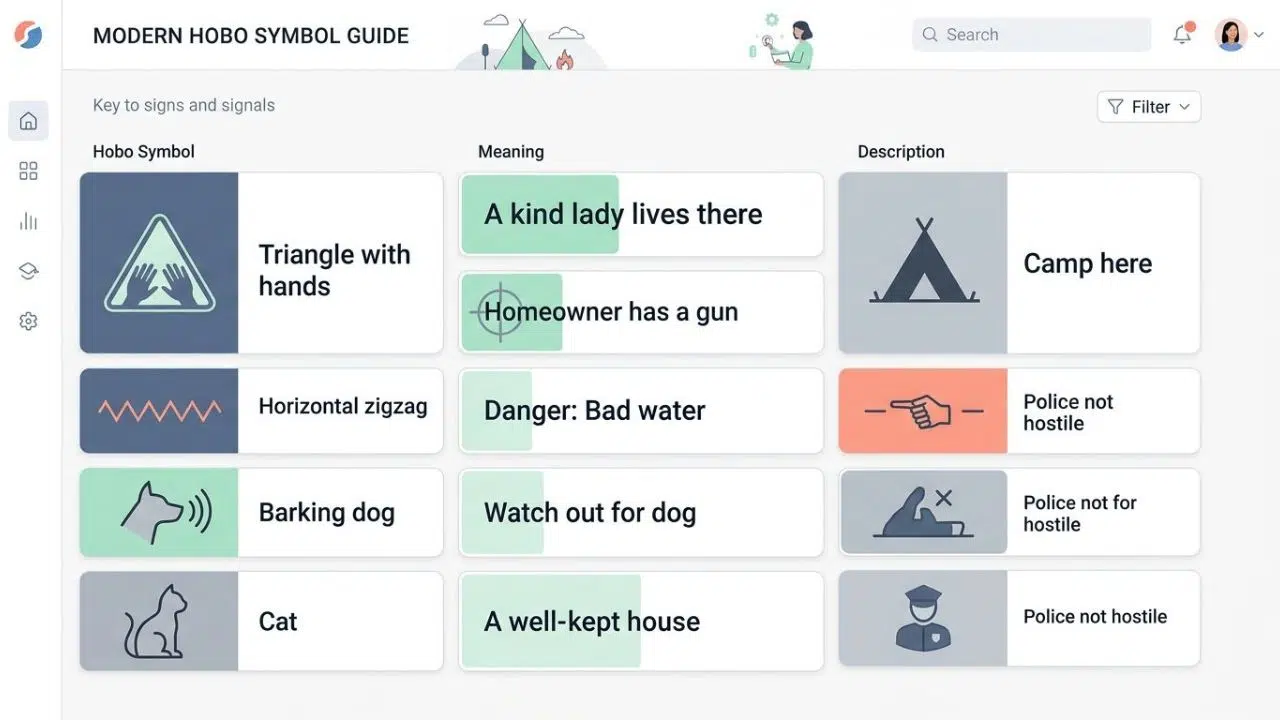
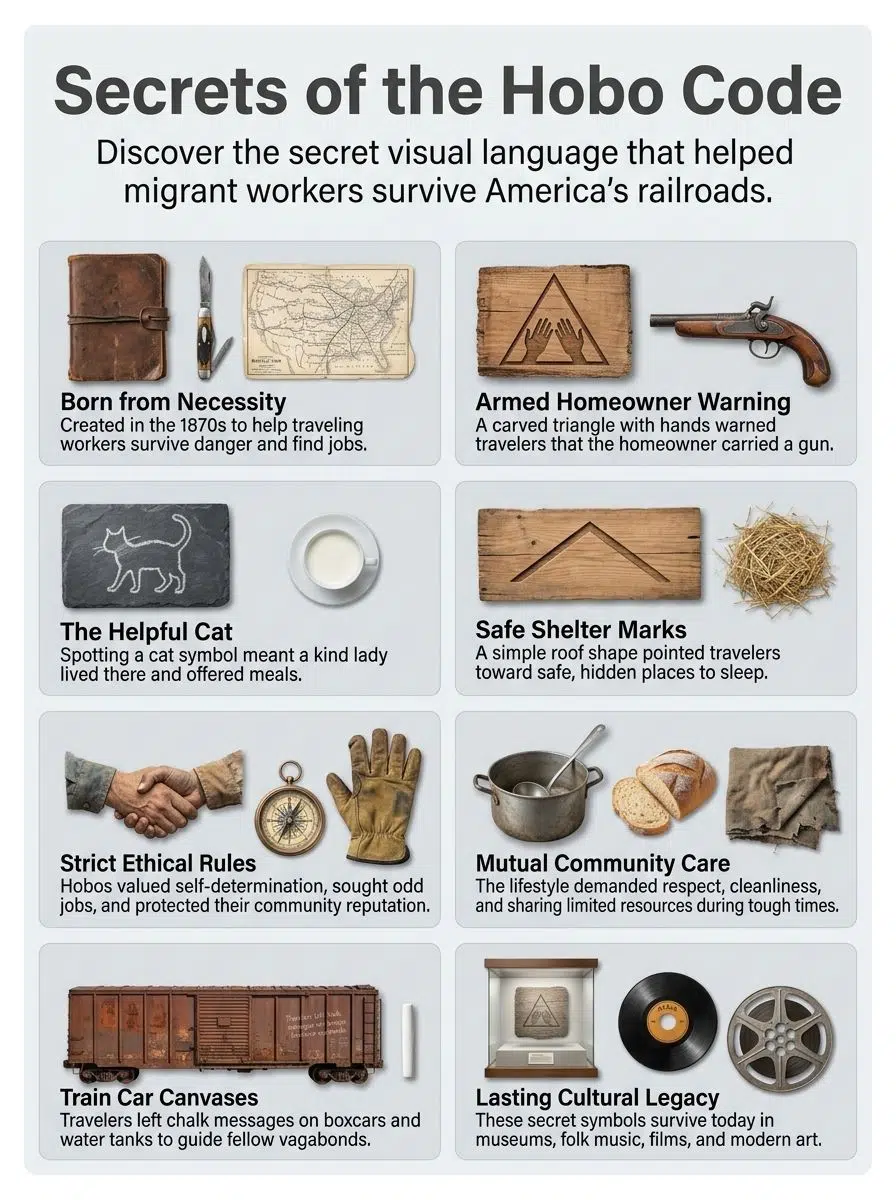
These signs told incredible stories. A triangle with hands meant a homeowner had a firearm. A horizontal zigzag warned of a barking dog. A simple cat symbol indicated a kind lady lived there and might offer a warm meal.
This was not random graffiti. It was a sophisticated communication system that helped hobos travel safely across the United States during the Great Depression and beyond.
We will explore how hobos used these signs to communicate with each other, how the code shaped hobo culture, and why it still matters today in our modern world. By the end, you will see how a group of people with almost nothing created something that lasted for generations.
So, grab a cup of coffee, and let us go through it together.
The Origins of the Hobo Code
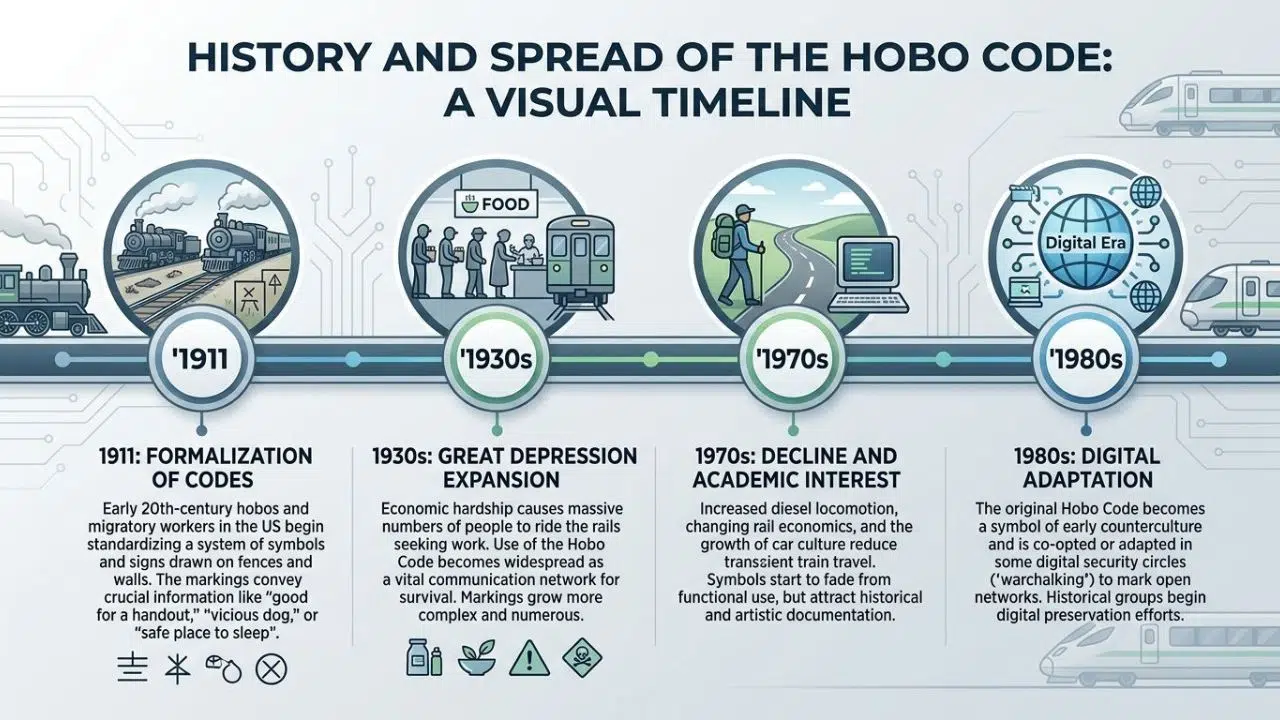
Hobos created their secret signs during the late 1800s and early 1900s. The code grew from a very practical need rather than fancy ideas. Traveling workers moved from place to place looking for odd jobs and meals. Many historians believe the term hobo actually came from “hoe-boys.” This referred to the farmhands who packed up their tools and took to the rails.
They faced extreme danger from railroad police. These guards, known as bulls, aggressively tried to stop them from hopping freight trains. Hobos needed a way to share information fast.
The hobo community spread these signs across the country, all the way from New York City to California. By 1910, the US was home to over 500,000 hobos. These workers relied entirely on the code to survive.
The Spread of a Secret Language
A famous hobo named Leon Ray Livingston, better known by his moniker A-No. 1, helped spread the hobo ethical code and its symbols. He published the code in his 1911 book, “Hobo Campfire Tales,” which helped cement its place in history. The marks became a language that only hobos could read.
The Great Depression in the 1930s brought even more people into the hobo lifestyle. Desperate workers rode freight trains searching for jobs in exchange for food. They carved monikers, or nicknames, into boxcars and jungle camps.
This sign system grew much stronger as more people joined the migratory lifestyle. War veterans in the 1970s and 1980s even brought the code back to life, teaching younger riders the old marks. The code stands as brilliant proof that working people created their own way to talk and look out for each other across the rails.
Key Symbols and Their Meanings
A secret language of chalk marks and scratches told stories on fence posts and barn walls. Hobos carved these symbols to warn friends, share tips, and map out safe routes during their travels. Starting as early as the 1870s, this visual code became their absolute lifeline.
It passed information faster than any word of mouth could manage. They specifically used coal from the train yards or chalk because it washed away easily in the rain. This temporary nature was brilliant. If a friendly farmer suddenly stopped handing out food, the rain would wash away the outdated good mark before it misled a fellow traveler.
These marks created a network of communication across America. A single scratched symbol could mean the difference between a warm meal and an empty stomach. For instance, a curly line inside a circle was incredibly helpful. It meant there was a courthouse or police station nearby, warning travelers to stay out of trouble.
The cat symbol proved especially valuable, guiding countless travelers to compassionate households. Museums today, including the National Cryptologic Museum in Annapolis Junction, Maryland, display these historical marks for curious visitors. Steamtown National Historic Site in Scranton, Pennsylvania also preserves examples of this street language.
Even Webster’s “Third New International Dictionary” recognizes hobo signs as legitimate entries. Some scholars trace specific examples through books like John Hodgman’s “The Areas of My Expertise.” Modern artists have reimagined these codes, such as the Free Art and Technology Lab’s QR Hobo Code project launched in July 2011. Each symbol carried weight, delivering critical information through simple, clever designs that anyone traveling the rails could quickly understand and read.
The Ethical Code of Hobos
Hobos created their own ethical code at the 1889 National Hobo Convention in St. Louis, Missouri. This event was organized by Tourist Union Number 63. This code emerged because hobos faced harsh anti-vagrancy laws and needed clear rules to survive together.
The guidelines emphasized self-determination and mutual respect. Hobos promised to respect local laws and officials, act like gentlemen, and seek temporary work or odd jobs. They agreed to avoid excessive drinking that could damage the hobo’s reputation in their communities.
The code demanded cleanliness and respect for nature, especially when “jungling” near towns. Jungling simply meant setting up a communal camp. To give you an idea of how seriously they took this lifestyle, here are three of the most important rules from the original 15-point code:
- Rule 1: Decide your own life. Do not let another person run or rule you.
- Rule 4: Always try to find work, even if temporary, and always seek out jobs nobody wants.
- Rule 8: Always respect nature. Do not leave garbage where you are jungling.
Fellow hobos supported each other through hobo court testimony and shared resources like mulligan stew and bindles during tough times. The ethical code protected vulnerable people, particularly children and runaways who needed help returning home. Hobos understood that their lifestyle carried responsibility beyond themselves.
They hopped freight trains across the country, yet they maintained standards that separated them from common criminals. The code stressed that a tramp never works, but a hobo does seek employment and uses his skills to get by.
This distinction mattered deeply to the hobo community. The hobo ethical code showed that even people living on the margins of society could organize themselves around honor, dignity, and mutual care for their fellow riders of the rails.
How the Hobo Code Was Used to Communicate
Hobos chalked simple marks on buildings, fences, and walls to send messages down the road. These signs guided other vagabonds toward food, shelter, and safety in unfamiliar towns. Sometimes these symbols were playfully called “Hoboglyphs.”
- Chalk marks appeared on public places like doors, bridges, and utility poles to alert freight train riders about local conditions in each town.
- A single mark meant danger lurked nearby, so travelers should move on quickly to find a meal elsewhere.
- Multiple symbols stacked together created a complete message. Hobos read these combinations like a visual language written on surfaces.
- Water tanks served as major directories for hobos, as Jack London noted in his writings about the hobo lifestyle and rail transport.
- Train cars became canvases where hobos carved their monikers, marking names, dates, and directions for other riders to discover.
- Bozo Texino tagged over 30,000 train cars in a single year, leaving his moniker as a calling card for fellow travelers.
- Graffiti on freight trains communicated which routes led to work, which towns offered odd jobs in exchange for labor, and where to catch a train safely.
- The Historic Graffiti Society documents these marks today, preserving evidence that monikers continue the tradition of train car tagging.
- Newspapers reported extensively on hobo signs during the Great Depression, though scholars like Nels Anderson questioned whether the code truly existed as practical communication.
- Signs or symbols marked safe places to camp, dangerous dogs, kind-hearted people, and locations where authorities would arrest vagabonds on sight.
- Hobos used cryptography principles to keep their messages hidden from railroad police and townspeople who might chase them away.
- The nomadic lifestyle depended on these visual messages. Without them, travelers faced starvation or arrest when they rode the rails through unknown territory.
Modern Equivalents of the Code
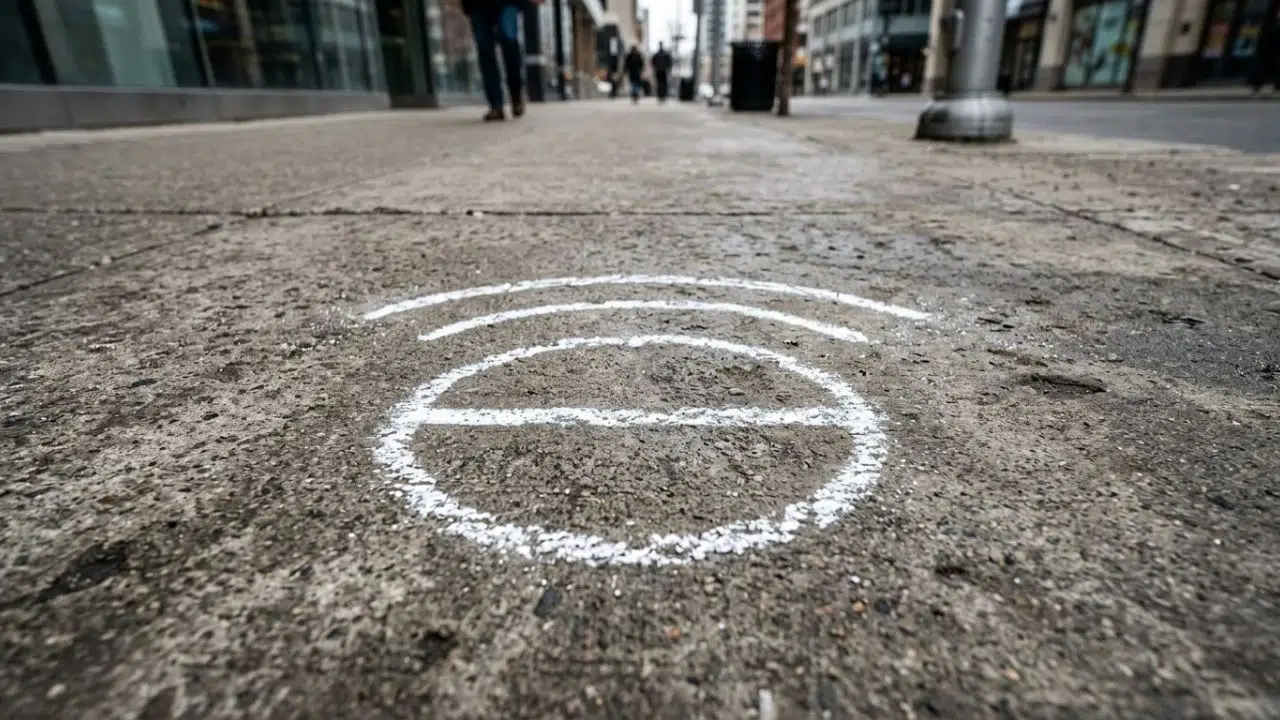
The core idea of leaving temporary, visual markers for fellow travelers did not die with the steam train. In the early 2000s, a practice called “warchalking” became incredibly popular. People drew specific symbols on sidewalks with chalk to indicate where open, unsecured Wi-Fi networks were located. Just like the hobo signs, these temporary marks provided crucial, invisible-to-most information for digital nomads passing through the area.
The Legacy of the Hobo Code in Modern Culture
The hobo code lives on in many forms across America today. Comic books brought the symbols back to life, especially Marvel’s 2012 “Hawkeye” series, which featured the hobo code prominently in its storytelling.
Television shows, films, and documentaries keep the hobo spirit alive for new generations. “Nomadland” in 2020 showed modern audiences what life on the road looks like. “American Experience: Riding the Rails” aired on PBS in 1999 and told real stories of people who rode the rails.
Jack Kerouac’s “On the Road” inspired countless readers to think about freedom and travel. Folk music carries hobo tales through songs that Woody Guthrie wrote and performed. Museums dedicated to hobo history, like the Hobo Museum, preserve these signs and stories for visitors. Artists and photographers, including Mike Brodie, captured hobo life through their lenses.
The Tradition Lives On in Britt, Iowa
The National Hobo Convention still gathers people every August in Britt, Iowa. This tradition actually started back in 1900.
Today, the convention is stronger than ever. The town of Britt celebrated the 125th anniversary of the gathering in August 2025. It still features a fire lighting ceremony at the local Hobo Jungle and free Mulligan Stew served in City Park.
Modern Artistic Tributes
Modern society finds meaning in the hobo code’s core values of honesty and community. Yvon Chouinard, the founder of Patagonia, lived as a hobo and carried those lessons into his business philosophy. The ethical code of hobos taught respect for others and fair treatment.
Contemporary artists reference hobo symbols in their work, keeping the visual language alive. In fact, artists Golan Levin and Asa Foster created a brilliant set of “QR Hobo Codes.” These modern stencils warn fellow travelers about current concerns:
- Hidden cameras: A warning that surveillance is active in the area.
- Insecure Wi-Fi: A tip on where to find a free internet connection.
- Vegans beware: A playful note about the limited food options nearby.
Libraries, including the Library of Congress, maintain massive collections about hobo history and culture. Schools teach students about the Great Depression and the people who rode freight trains during hard times. Open Culture and Atlas Obscura share hobo stories online, reaching millions of readers worldwide.
The code reminds us that people can survive tough situations through creativity and solidarity. Hobos proved that you do not need much to live a meaningful life. This is a powerful lesson that resonates with people tired of chasing money and status.
Final Words
Hobos left us with a code that still matters today. Their chalk marks on walls, their rules about respect, and their way of talking shaped American culture in ways we still feel. Photographers like Dorothea Lange captured their stories, and writers kept their memory alive.
Modern travelers, artists, and storytellers draw from hobo wisdom when they need to live by their own rules. This secret language of the rails reminds us that people who had nothing still found ways to help each other survive.
Frequently Asked Questions (FAQs) on Hobo Code
1. What is the hobo code and where did it come from?
The hobo code was a secret set of symbols and signs that hoboes chalked on fences, posts, and buildings starting in the late 1800s. It really took off during the Great Depression when around 250,000 teenagers were riding the rails across America. These marks helped travelers know where to find food, avoid danger, or get work in towns along the railroad.
2. How many rules were in the original hobo ethical code?
The original hobo ethical code from 1889 had 15 rules that guided how hoboes should treat each other and the communities they passed through.
3. Did famous people use or talk about the hobo code?
Yes, figures like Charlie Wray and Connecticut Shorty were well-known hoboes who lived by these codes during the Depression era. Writers like H.L. Mencken wrote about hobo culture, and photographer Dorothea Lange documented their lives in the 1930s.
4. Are there connections between the hobo symbols and Egyptian hieroglyphs?
Some historians have compared the visual nature of hobo symbols to Egyptian hieroglyphs because both systems used simple pictures to communicate complete ideas without spoken words.
5. Why did hoboes need this secret language?
Hoboes needed a way to share survival information during brutal economic times like the Great Depression when unemployment hit 25 percent. The symbols warned fellow travelers about hostile towns, kind households, or dangerous railroad bulls who might arrest them.
6. Who keeps stories about hoboes alive today?
Writer Sarah Buckholtz, filmmaker Bill Daniel, and podcast host Colin Marshall document hobo history today, while shows like Antique Archaeology hunt for surviving hobo artifacts near old rail lines.