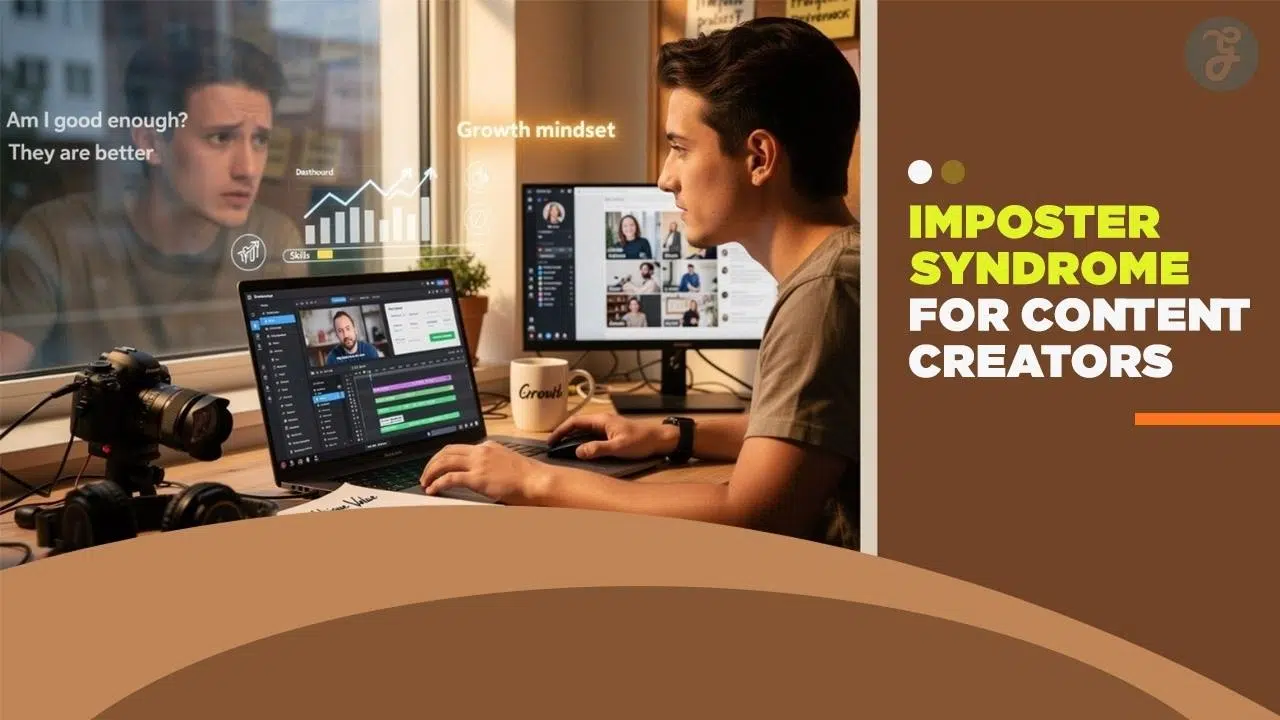
You hit publish. Then the panic sets in. A little voice whispers a harsh question. “Are you really good enough?” If you have felt this, you are not alone. Self-doubt sneaks in. It makes you question your skills, your ideas, and your right to be here. Did you know that an estimated 70% of people experience these feelings at some point? That comes from a review in the International Journal of Behavioral Science. It is not just you.
This guide breaks down overcoming imposter syndrome as a content creator. We will look at why it happens and how to beat it. You will learn simple, actionable steps to build confidence. We will focus on staying true to yourself. Stick around. Your next big breakthrough could be closer than you think.
What Is Imposter Syndrome?
Imposter syndrome makes you feel like a fake. You feel this way even when you work hard. Many content creators struggle with this invisible weight on their shoulders.
Definition of Imposter Syndrome
Imposter syndrome means feeling like a fraud. You feel this way even after earning success. Many people struggle with this in creative jobs. They often worry someone will find out they do not deserve their spot or praise.
Feelings of self-doubt, anxiety, and fear grow strong. This happens even when others offer support.
The term came from psychologists Pauline Rose Clance and Suzanne Imes back in 1978. It affects all ages and backgrounds. However, it hits hard for content creators who share work online every day. Expert Dr. Valerie Young later identified five specific types of “impostors” that help explain these feelings.
- The Perfectionist: You feel like a failure if your work is not 100% flawless.
- The Expert: You feel you need to know everything before you start.
- The Natural Genius: You feel ashamed if you have to struggle to master a new skill.
- The Soloist: You believe asking for help reveals your incompetence.
- The Superperson: You push yourself harder than everyone else to prove you measure up.
Even big names may feel like outsiders sometimes. This mindset can create a cycle where you downplay your wins. You focus too much on mistakes instead of growth or real progress.
Why It Affects Content Creators
After understanding what imposter syndrome means, it helps to see why it strikes content creators so much. Putting your work online opens the door for self-doubt and anxiety to walk right in.
Content creators often measure their success by data. We look at likes, views, or comments. If these numbers do not match high expectations, feelings of being a fraud sink in fast.
Many compare their work to others on platforms like YouTube or Instagram. You might see someone else gain followers quickly. This can create pressure. It sparks perfectionism out of fear of not measuring up.
Many worry they will get exposed as “not good enough.” They think their ideas lack originality. This happens even if fans celebrate them. Struggles with constant comparison make confidence drop. Creativity stalls like a car running out of gas on a busy street. The pressure to keep up appearances leads many creators to question their authenticity every day.
Signs of Imposter Syndrome in Content Creators
You may notice your mind whispering harsh words. This happens even on your best day. Sometimes, you might feel like a stranger standing in your own creative shoes. Recognizing the difference between healthy doubt and imposter syndrome is critical.
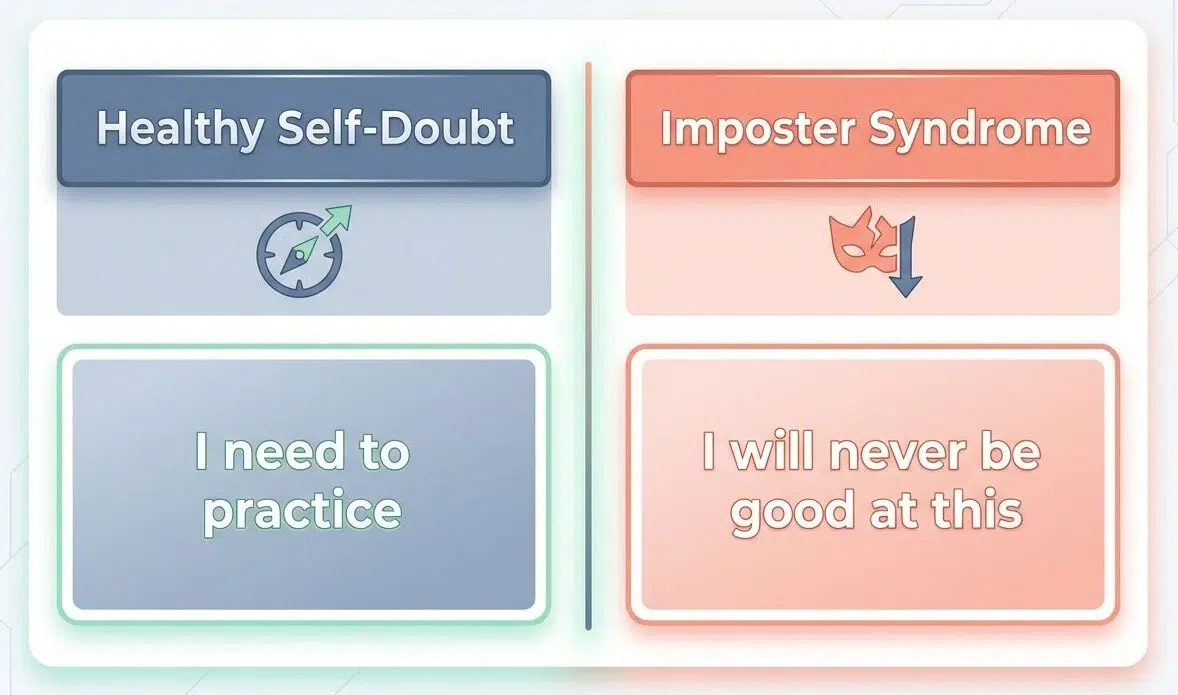
| Healthy Self-Doubt | Imposter Syndrome |
|---|---|
| “I need to practice this skill more.” | “I will never be good at this.” |
| “This video isn’t my best work.” | “I am a total fraud for posting this.” |
| “I can learn from this mistake.” | “This mistake proves I don’t belong here.” |
Self-Doubt and Anxiety
Self-doubt grabs you by the collar. It whispers that you are not good enough. Many content creators hear this voice often. Worry fills your mind. This happens even before posting a single video or blog.
Anxiety settles in as you edit for hours. You always think someone will say your work is bad or fake. Even well-known creators like Maya Angelou admitted to feeling like a fraud sometimes. She wrote eleven books and still worried people would find her out.
This pressure steals joy from making new things. Creating becomes stressful instead of fun. Your thoughts keep spinning about what others will think. Self-doubt can stop creative ideas cold. It causes a real creative block.
Confidence fades fast when anxiety takes over every project or post. This stunts personal growth and harms mental health day by day.
Fear of Being Exposed as a Fraud
Many content creators worry that others will find out they are not as skilled as they seem. This fear can spark anxiety. It makes simple tasks feel heavy. A person might think someone will call them a fake any day now. Mistakes may feel like proof of being a fraud instead of lessons to grow from.
Even popular creators with thousands of followers often talk about this feeling.
You don’t have to be perfect to inspire others. Let people get inspired by how you deal with your flaws and fears.
Feeling exposed can block creativity and self-confidence fast. If praise rolls in for your work, it is easy to say it was just luck or timing. Staying honest about these feelings helps build authenticity. It builds resilience on your journey as a creator.
Difficulty Celebrating Achievements
Small wins often slip by without much notice. Some content creators brush off praise. They feel like achievements are just lucky accidents. They think they are not worth much. Self-doubt turns a happy moment into worry or anxiety.
This habit can block confidence from growing strong roots. Psychologists call this “discounting the positive.” It is a cognitive distortion that tricks your brain.
A creator may also compare their work to others. They think their own success is too small to celebrate. Even hitting big goals can feel empty if perfectionism keeps moving the finish line.
Instead of enjoying creative progress, it is easy to shrug off each step forward. This cycle makes it tough for positive feelings about your work to stick around. It makes creative block more likely. It steals joy from personal growth.
Causes of Imposter Syndrome Among Creators
Sometimes, seeing others’ shiny highlights can make us question our own path. Small doubts often snowball into bigger worries about fitting in as a creator.

Comparisons to Other Creators
Scrolling through feeds is dangerous. It can feel like everyone else makes better videos or gets more likes. You spot other creators landing partnerships. You see them growing fast and sharing perfect photos.
This sparks self-doubt and anxiety. Many content creators start thinking they do not measure up. Comparing your journey to others often blocks personal growth. This is often called the “Compare and Despair” trap.
Content creators with imposter syndrome focus on numbers rather than their own creative work. They might try to copy trends instead of showing true authenticity. Instead of motivating, comparisons chip away at confidence. It sparks fear of never being good enough.
Creative block comes quickly if you spend too much time watching someone else’s path. Focus on setting your own goals. Celebrate progress, no matter how small it feels today.
High Expectations and Perfectionism
High expectations can make creators feel like they must always produce perfect work. Many set the bar so high that it feels impossible to reach. That pressure creates anxiety and self-doubt. It makes every small mistake feel huge.
Perfectionism traps people in a cycle of endless edits. You end up second-guessing your own ideas.
Content creators may worry about missing tiny details. They fear receiving harsh feedback online. Even after success, some find it hard to celebrate wins. They focus on what could have been better instead of the progress made.
This constant chase for flawlessness blocks creativity. It drains confidence fast. Next up is how the lack of external validation adds fuel to the fire of imposter syndrome.
Lack of External Validation
Some content creators do not get many likes, comments, or shares. This can hurt their confidence. It sparks more self-doubt. People might feel invisible if no one seems to notice their work. Even a simple “good job” from others can help boost energy. It helps fight anxiety.
Without outside praise, it gets easier for negative thoughts to sneak in. Creators may wonder about the quality of their own projects. They chase perfectionism just to hear some kind words.
Creative block happens fast when feedback is missing. It is like trying to shout into a void and hearing nothing back. Small bits of validation help give courage to keep growing along this bumpy road.
Examining the Effects on Creativity and Personal Growth
Imposter syndrome can often slow your creative spark. It makes personal growth feel like climbing a mountain in flip-flops. Keep reading to spot the signs and learn new ways to move forward.
Hindering Innovation
Self-doubt acts like a wall. It blocks new ideas. Thoughts such as “I am not good enough” make people play it safe. They stop trying different styles or topics. Creative block shows up more often. Many creators start to copy what works for others. They hope for validation instead of creating something fresh.
Perfectionism freezes many projects in place. A content creator might trash a fun idea out of anxiety. They fear it will not be well-received. Fear can squash bold moves before they even start.
This slows personal growth. It kills the drive to try new things. Next, we talk about how self-doubt erodes confidence step by step.
Eroding Self-Confidence
After a creative block slows you down, it chips away at your confidence. Each mistake feels louder. Criticism seems sharper than any praise you get. You may start to question every new idea before even trying it out. Even small wins lose their shine. Anxiety and self-doubt grow bigger in the background.
Many creators face this storm alone. They think, “I’m not good enough.” Some stop sharing their work for fear of looking like a fraud. Perfectionism only makes these feelings worse. Nothing ever feels finished or right.
Feeling stuck can shrink your bravery. It makes it harder to bounce back after setbacks. This puts both personal growth and creativity on pause.
Strategies to Overcome Imposter Syndrome
You can start to feel more confident as a creator by learning new ways to face these uneasy feelings. Keep reading for tips that might lighten your load.
Recognize and Acknowledge Your Feelings
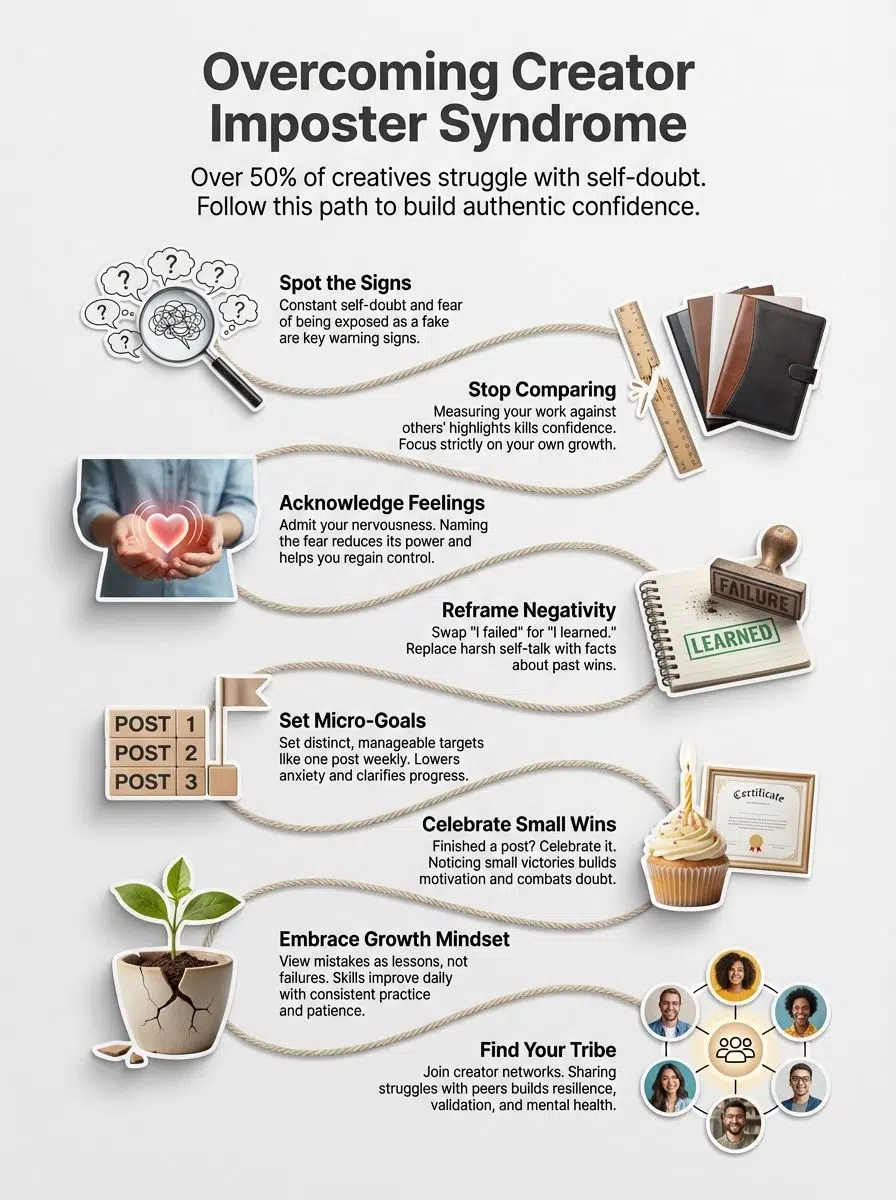
Many content creators feel self-doubt or anxiety. These feelings may creep in after a post flops. They happen if someone leaves harsh comments. Admitting you feel like a fraud is hard. However, it is sometimes the first step to feeling better.
Even award-winning writers and famous YouTubers struggle with imposter syndrome now and then. Neil Gaiman once famously shared a story about feeling out of place at a gathering of “great” people, only to find out Neil Armstrong felt the exact same way.
Instead of brushing off these thoughts, call them out by name. Say, “I feel nervous about my skills today.” This trick makes fear less scary. It helps you take charge of your mindset. Honest reflection builds confidence over time. It makes room for growth.
Reframe Negative Thoughts
Thoughts can play tricks on you. Self-doubt whispers that your work is not good enough. Catch these negative voices as soon as they appear. Challenge them. Instead of thinking, “I am not talented,” try saying, “I am learning every day.” You are in good company. People like Maya Angelou admitted to feeling imposter syndrome even after winning awards.
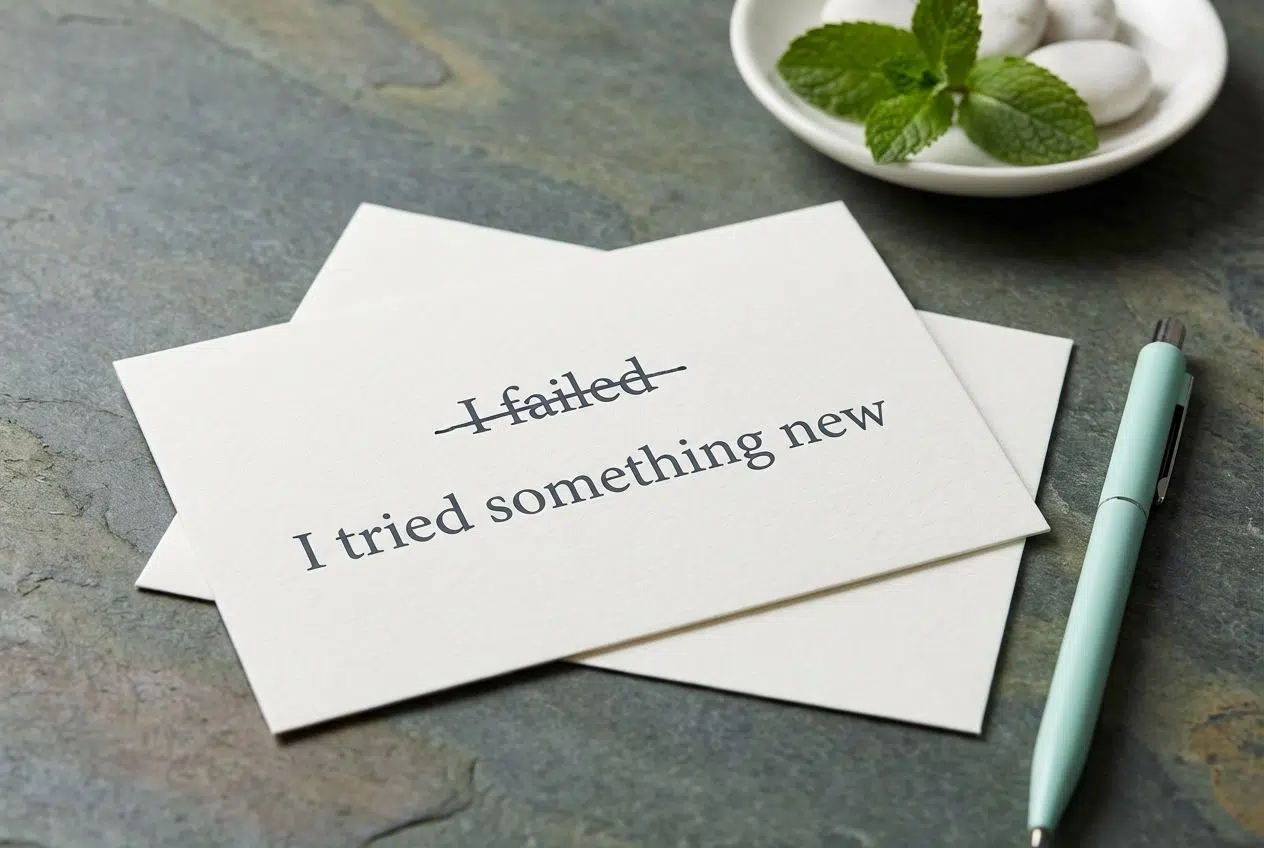
Shifting your mindset helps break the grip of anxiety and perfectionism. Try these specific swaps:
- Turn “I failed” into “I tried something new.”
- Turn “They will find out I don’t know enough” into “I know more today than I did yesterday.”
- Turn “It’s not perfect” into “It is done, and that is what matters.”
Keep practicing this swap until it feels natural. Focusing next on setting clear goals gives you a way forward.
Set Realistic and Achievable Goals
Break big dreams into small steps. Instead of saying, “I want to become a top creator this year,” try setting specific targets. Post two videos each week. Write one article every Friday.
This helps lower anxiety. It makes your progress clear as day. You avoid that monster called perfectionism by not pushing yourself too hard at once.
Small wins count more than you think. Every time you meet a goal, pat yourself on the back. Do this no matter how tiny it seems! Each finished project grows your confidence. It chips away at self-doubt bit by bit.
Celebrate Small Wins
A small win can be finishing a new post. It can be getting a kind comment. It can be hitting your daily word goal. These moments matter. They boost confidence and help fight off self-doubt. Making time to notice small victories builds motivation.
Progress does not have to look big every day. Even tiny steps keep you moving forward. Some creators set goals like posting twice a week. Others learn one new skill each month. They celebrate these achievements with their favorite snack. They listen to music. They share good news with friends in creator networks.
This habit supports mental health. It makes creative block less scary over time. Small wins teach you that growth is possible no matter the pace.
Building Confidence as a Content Creator
Confidence does not just fall from the sky. You grow it step by step. Keep going. Your next idea could be your best one yet.
Develop a Growth Mindset
A growth mindset means you treat mistakes as chances to learn. They are not proof that you are a fraud. Say you post something and it gets little attention. Instead of feeling like giving up, ask what worked and what did not.
Thomas Edison made 1,000 failed tries before inventing the light bulb. Talk about patience! Try new styles or topics in your content without fear. Do this even if they flop at first.
Think progress, not perfection. Skills grow over time with work and feedback from others. Beyoncé did not become great overnight. She kept practicing and improving each day. Change negative self-talk into kind words for yourself. Say “I can improve” instead of “I’m terrible.” Take small steps often. Watch how practice unlocks confidence bit by bit.
Seek Feedback and Learn from Mistakes
Ask others for feedback. Honest words from trusted people can help you see your blind spots. You might hear things that make you cringe. Real growth lives in those moments of discomfort.
Every big creator started small and made a mess at first. Just ask MrBeast. He says his early videos were “terrible.” Mistakes do not mean failure. They are lessons in disguise.
Use what you learn to make changes. Messing up opens the door for creativity and resilience. It builds stronger confidence. Each piece of advice builds your skills brick by brick. Keep an open mind. Treat every stumble as fuel for personal growth on your content journey.
Practice Positive Affirmations
Speak kindly to yourself every day. Say things like, “I am creative,” or “My work matters.” These simple, short affirmations help quiet self-doubt and anxiety. Tape your favorite words above your workspace.
Repeat them out loud in the morning. Repeat them at night if you need extra encouragement after a long day of hard work.
Positive words shape your mindset for strength and resilience. Over time, these small habits build real confidence. You may start feeling more authentic as a creator. You will be less worried about perfectionism or outside validation sneaking in like an unwanted guest at the party.
Simple phrases can spark big changes in how you see yourself. Next up is connecting with others who lift you higher. Finding support through the community can make all the difference.
The Role of Community and Support
Finding your people can help you shake off self-doubt. They give you the boost to keep going. Keep reading to see how.
Join Creator Networks and Communities
Online groups help creators feel less alone. These spaces can lift your spirits and offer genuine support. Creators share stories about self-doubt, creative block, or anxiety. Some days bring tough struggles. Someone has likely been there too.
Groups exist on many platforms. You can check out YouTube’s Creator Community. Look at TikTok’s Creator Portal. Find specialized Facebook Groups or Discord servers with thousands of members. Real learning happens in these chats.
Members give feedback on videos or posts without harsh judgment. A simple comment might boost your confidence for the whole week! Authenticity grows each time you connect with others. You value honest sharing over fake perfectionism. Your next idea could come from a new friend you just met online by chance.
Content creators often feel alone with self-doubt and anxiety. Sharing stories brings relief. This includes the messy ones about creative block or posting fails. Your voice matters. Speak up in support groups or community networks. Others may nod along and say, “Me too.” This helps build confidence and trust.
Words of encouragement from people who get it make a real difference. You might swap tips on bouncing back after mistakes. You might hear an affirmation that lifts your spirits for days. Support feels like a safety net under you as you take risks with creativity.
Community makes all the difference in validation and mental health for content creators striving to grow stronger every day. Up next is finding ways to wrap up these insights into final thoughts.
Final Thoughts
Battling imposter syndrome as a creator calls for self-awareness. It requires steady confidence and honest support. Simple steps like reframing your thoughts can make growth much easier. Celebrate your small wins. Seek out feedback often. These practical habits help shrink self-doubt. They boost creativity and joy in making content.
If you want more support or helpful tips, many online communities and articles are just a click away. Keep showing up with your voice. Your ideas matter more than any fear ever will.