Have you ever stood by a river and wondered who actually owns the water flowing past you? It is a question that feels simple until you realize the answer decides the fate of nations. Some people worry about running out of water. Others watch powerful countries play a high-stakes game of tug-of-war with entire river basins. Water has become a new tool for control. You can see it in how nations fight over big rivers and lakes.
It may sound strange, but battles now happen with pipelines and dams instead of tanks. This is what experts call Hydro-Hegemony. It means one country controls most of the water in a region. This leaves its neighbors thirsty or afraid.
We are going to explore exactly how this works. I want to show you how Hydro-Hegemony is replacing the nuclear umbrella! is the most important shift in global power you haven’t heard about yet.
Understanding Hydro-Hegemony
Hydro-hegemony shapes who controls water and how they use that power. To spot it, you have to see both the obvious moves and the quiet tricks behind big decisions. It is not just about having the most water; it is about having the power to decide who else gets a sip.
Definition of Hydro-Hegemony
A hydro-hegemon is a powerful country or state that controls water shared by other nations. This control often comes through using big dams, advanced technology, and strong military or economic force.
Think of it like a bully at the school water fountain who decides the line order. States like Egypt in the Nile Basin and India in South Asia hold sway over their neighbors by managing rivers that cross borders. These leaders shape how water flows to others and set the rules for use.
This kind of power does not rely on nuclear threats. Instead, it puts pressure on countries downstream to follow a specific plan. The stronger country can limit access and force weaker ones to settle for less just to keep some water flowing. Hydro-hegemony uses resource dominance and hydraulic control as tools of modern-day influence in places where rivers connect many lands.
The Framework of Hydro-Hegemony (FHH)
The Framework of Hydro-Hegemony (FHH) spotlights how countries use power to control rivers that cross borders. Egypt’s grip on the Nile and China’s command over the Mekong show this playbook in action.
The London Water Research Group, a key body in this field, breaks the FHH down into a specific system. It is not random; it is calculated.
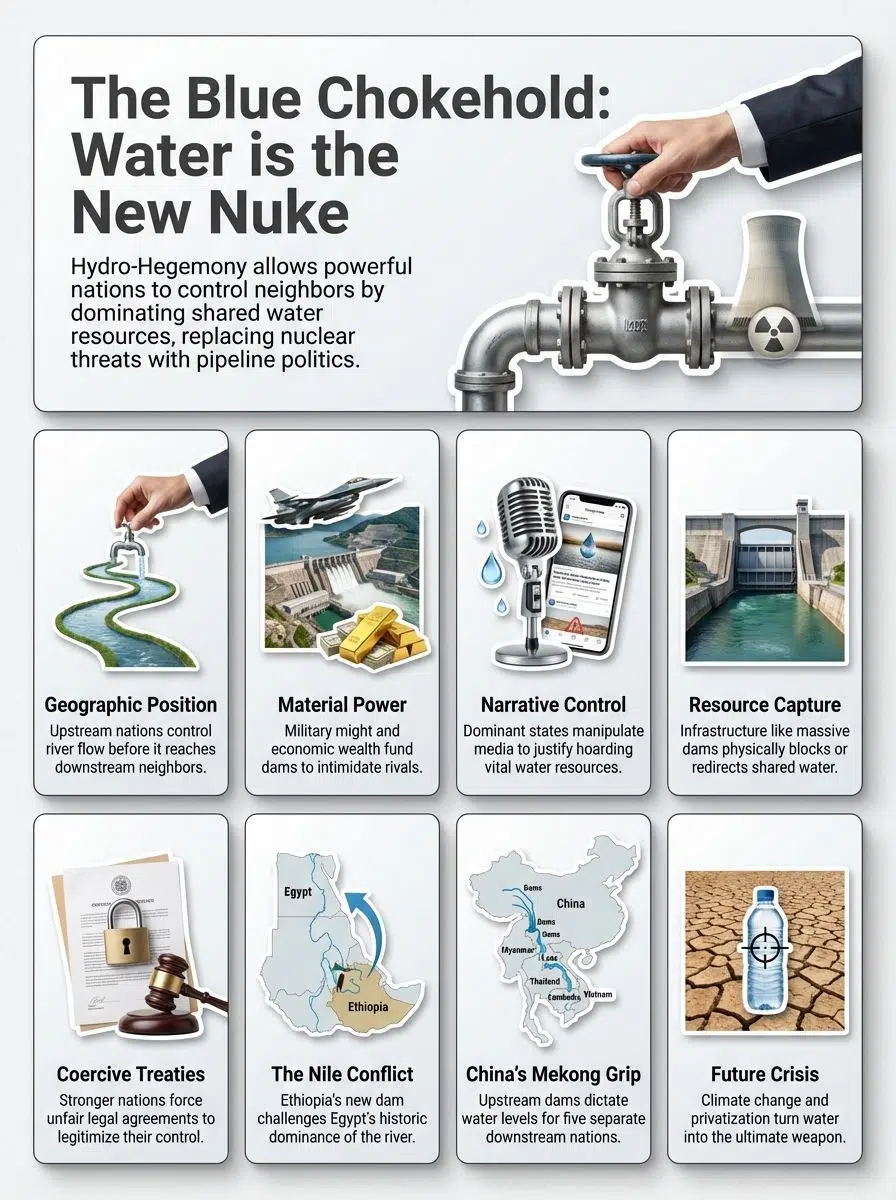
The FHH looks at four main parts:
- Geography: A country’s physical place along the river (upstream vs. downstream).
- Material Power: Its military muscle and economic strength.
- Bargaining Power: Its skill in making deals and treaties with neighbors.
- Ideational Power: Its control of stories or ideas about water rights.
States with upstream positions often have an edge since they can physically block water. Resource capture gets top billing here. Think of huge dams like Ethiopia’s Grand Renaissance Dam or China’s many Mekong projects.
Treaties sometimes tie everyone together, but usually favor stronger nations. Weaker states often give way to avoid being cut off from vital flow.
“Water is life, but it can be used as a leash.” – Policy Expert
Control over transboundary resources shapes geopolitics faster than any nuclear threat today and keeps weaker neighbors on their toes daily.
Evolution of Hydro-Hegemony Theory
The idea of hydro-hegemony started small but grew fast as rivers became hot spots for power plays. Scholars and leaders watched, took notes, and shaped the theory with each new water dispute.
Origins of the Concept
Mark Zeitoun and Jeroen Warner introduced hydro-hegemony as a key concept in water governance. They saw that control over transboundary resources goes far beyond soldiers or guns. Their research focused on power dynamics. They looked specifically at how stronger states shape water use across borders.
States with military strength, wealth, or new technology can manage rivers to suit their goals. Hydro-hegemony looks at how these powers lead to unequal resource management and set the rules for others. It explains why a country with a smaller army might still lose a water dispute even if international law is on its side.
The Framework of Hydro-Hegemony grew from this idea. It showed four ways to reach dominance: geographic position, material power, bargaining skills, and control over narratives. This approach marked a shift in international relations. It moved the focus away from just nuclear threats toward daily battles over water and compliance strategies instead.
Key Developments in the Theory
The Framework of Hydro-Hegemony, or FHH, took center stage in 2006. Mark Zeitoun and J.A. Allan introduced this theory to show how states use water as a tool for power. They looked at geographic position, military strength, economic might, bargaining ability, and control over stories about water.
Some governments started using dams as levers against their neighbors. Egypt’s grip on the Nile and India’s command over the Ganges are clear cases. Water became more than just a resource. It turned into a source of leverage that could shape international relations faster than nuclear threats ever did.
Hydro-hegemony rose fast in regions like South Asia and the Middle East after these ideas hit the scene. States with big armies or cash built huge infrastructure projects to hold back rivals downstream.
Treaties soon followed. These were crafted not always for fairness but often to protect those up top of the river chain from sharing too much water or losing sway. Weaker countries sometimes had little choice but to go along so they would not get left out completely.
He who controls water controls life, a simple truth with global consequences.
Next comes a closer look at which pillars prop up hydro-hegemony today.
Pillars of Hydro-Hegemony
Powerful nations do not all use muscle alone. Sometimes they play the long game with water. These pillars shape who holds the tap and who just cups their hands.
Geographic Position
Location shapes who controls water resources. Upstream countries often hold more cards in transboundary river power games. For example, Turkey controls the headwaters of the Tigris and Euphrates rivers. This gives them immense leverage over downstream neighbors like Iraq and Syria.
They can reduce or redirect flow before water reaches nations downstream. That means Egypt can worry when Ethiopia builds a dam on the Blue Nile. The control shifts with every brick laid.
Geographic position also decides who wields leverage during talks over rivers that cross borders. Nations upstream usually have more say because they access water first. Those below must negotiate harder for their share.
The framework of hydro-hegemony places geographic location next to military and economic strength as key pillars influencing outcomes between rival states. Material power adds another layer to these high-stakes negotiations over our most precious resource.
Material Power (Military and Economic Strength)
Big armies and deep pockets matter at the river’s edge. Tanks and jets can guard a key dam or scare off rivals who might want to control water. Military strength gives countries like Egypt on the Nile, or China by the Mekong, real muscle in shaping who gets what share of the flowing rivers.
For instance, Egypt has historically maintained one of the largest military forces in Africa. This reality forces upstream neighbors to think twice before altering the Nile’s flow without permission. Economic power goes hand in hand with this fight for water security.
Countries with money build giant dams, long canals, and bold pipelines. They use these projects to shift how much water flows downstream or back up their own fields and factories. Rich nations can also push weaker neighbors into unfair deals through loans or threats about trade.
This mixture of military influence and economic leverage keeps some players sitting higher at the negotiating table than others. It presses every drop out of regional power struggles.
Bargaining Power
Bargaining power gives hydro-hegemonic states a big edge in water talks. These countries use military force, money, and tech skill to sway who gets what from rivers that cross borders.
Egypt pushed its weight around the Nile Basin for decades by controlling important treaties. One famous example is the 1959 Nile Waters Agreement. It allocated the vast majority of the river’s flow to Egypt and Sudan, leaving upstream nations like Ethiopia with zero allocated share.
China shapes Mekong River deals using strong economic ties and huge dam projects. Stronger states often push weaker ones into agreeing with their terms to avoid getting left out of water access. Lack of strict rules about sharing rivers makes this easier for dominant players.
Geographic advantage matters too. Being upstream can be like holding all the cards at a poker table. This leaves downstream neighbors scrambling for scraps. This advantage turns into real power during treaty enforcement or disputes over compliance with regulations.
Ideational Power (Control Over Narratives)
While bargaining power shapes deals over rivers and dams, ideational power works in the background. States with strong hydro-hegemonic goals use narrative control to shape public opinion about water governance and resource management.
They frame their needs as urgent. They cast rivals as threats or obstacles. Media coverage follows suit and often repeats these claims without question.
This information hegemony helps dominant states justify their grip on transboundary resources like the Nile or Mekong Rivers. Egypt, for years, told stories of survival and “historic rights” to strengthen its Nile treaty arguments against upstream nations. They successfully framed any reduction in water flow as a direct threat to their national security.
China amplifies its “development first” message along the Mekong. This dampens criticism from neighbors who face shrinking fish stocks and dry seasons. By controlling news and reports about scarcity perception or treaty formulation, powerful states make others feel isolated if they resist demands.
It shifts power away from bombs and missiles to words and ideas. Water becomes a battleground for minds long before it becomes one for armies.
Strategies of Hydro-Hegemony
Powerful countries use clever tricks to control rivers, bend rules, and block rivals. You might be curious how they pull the strings. Let’s break down the specific strategies they use.
Resource Capture (Dam Construction)
Dam construction grabs control of shared water. Nations with military and economic strength often build large dams upstream. These giant walls block or redirect rivers and create a “tap” at their command.
India’s Farakka Barrage has cut water flow to Bangladesh since 1975. This leaves farmers dry downstream during critical seasons. Similarly, Ethiopia’s Grand Ethiopian Renaissance Dam (GERD) is shaking up Egypt’s long-time Nile River dominance. The GERD has a reservoir capacity of over 74 billion cubic meters. That is an amount so massive it could affect the freshwater supply of entire nations, depending on how fast it is filled.
Resource capture lets strong countries decide who gets water and how much flows past each border. Sometimes, weaker states must accept the terms set by those holding back the river to avoid conflict or isolation.
Dams can make neighbors uneasy. This sparks conflicts over environmental diplomacy, regional cooperation, and fair resource management across borders.
Integration Through Treaties
Stronger countries often use treaty negotiation to hold the faucet. They shape water rights in their favor. These treaties can lock weaker states into unfair deals that make them bend under pressure like reeds by a rushing river.
Sometimes, upstream nations sign agreements that hand control of resource management and environmental governance to themselves. Downstream countries end up with small cups while their neighbors drink deep.
Many times, these power dynamics make the process feel more like a tug-of-war than real regional cooperation. The voices of less powerful parties rarely fill the room during talks. Seats at the table are few and far between for them.
Hydro-hegemonic states reshape rules about water scarcity through paper and pen instead of open dialogue or ecological justice. Such unequal treaties may look official, but they quietly legitimize one group’s grip over everyone else’s thirstiest lifeline.
Containment of Competitors
Treaties can bring countries together, but real power often comes from keeping rivals at bay. Nations use water management as a geopolitical strategy. Some build dams to control the flow of rivers and cut off crucial water for those downstream.
This act grabs both resource control and bargaining power in one stone. It is like holding the faucet in a shared bathroom. Whoever stands closest turns it on or off for everyone else.
Neighboring states may find themselves forced into tough choices if they want any say over their water rights. Strategic alliances are sometimes formed not out of friendship but because smaller players need protection from bigger ones flexing regional dominance muscles.
By controlling key rivers and setting strict terms, dominant countries shape conflict resolution processes and environmental governance to suit their interests. Sometimes they leave neighbors all wet but still thirsty.
Hydropolitics never rests. Every move aims to block competitors before they become threats in future disputes over scarce blue gold.
Case Studies in Hydro-Hegemony
Water fights do not just happen in stories. They play out across continents and shape futures. Each mighty river tells a gripping tale of power grabs and uneasy neighbors.
The Nile Basin and Egypt’s Dominance
Egypt sits at the end of the Nile. This gives it a strong geographic position and power over water flowing from upstream countries. Egypt has long acted as the big player in the Nile Basin. It uses both political clout and military strength to protect its water security.
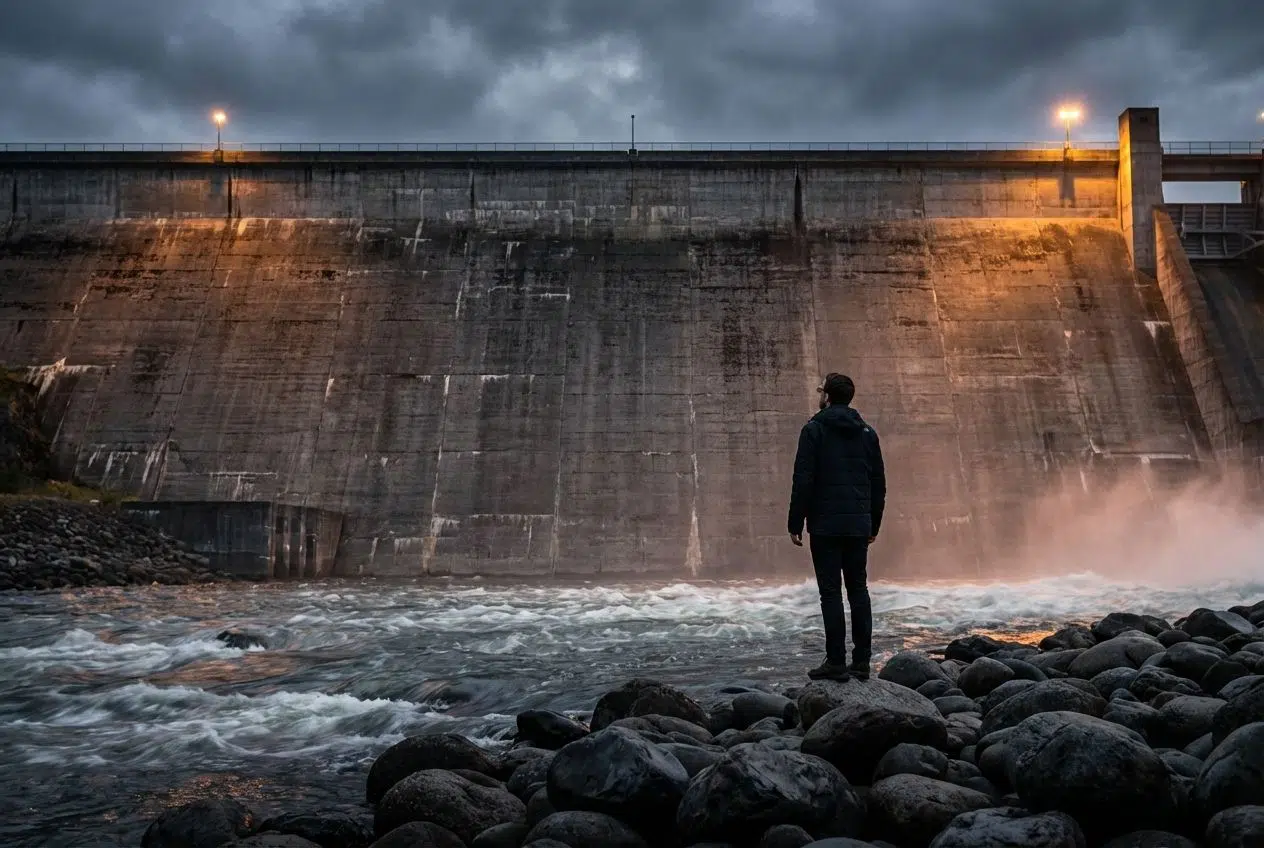
Treaties made in 1929 and 1959 mostly favored Egypt. They left little room for neighbors like Ethiopia or Sudan to control resources.
The Grand Ethiopian Renaissance Dam (GERD), started by Ethiopia, is shaking things up fast. It holds back billions of cubic meters each year. That makes Cairo nervous about losing influence and access to this shared river. Recent satellite data shows the reservoir continues to fill, which alters the predictable flow Egypt has relied on for centuries.
Smaller states often stay quiet or agree with Egypt out of fear that they will get pushed aside on issues like resource management, regional cooperation, or sovereignty challenges. These tensions show how control over water can shape geopolitical influence more than nuclear weapons ever could in daily life along these riverbanks.
The Mekong River and China’s Influence
China sits at the top of the Mekong River, which flows through five other countries. Its upstream position gives it a big say over water management and river flow. China has built several large dams for hydropower.
These structures can hold back or release water as it wishes. According to the Stimson Center’s Mekong Dam Monitor, these operations have significantly altered the river’s natural rhythm. Downstream nations like Vietnam and Cambodia worry about droughts and floods caused by changes in water levels. They depend on stable river basin flows for farming and fishing.
Tensions rise when China’s control leads to less water or sudden releases that hurt crops downstream. Some groups push for regional cooperation to share information about dam operations. However, trust is often low between neighbors.
These issues highlight how control over transboundary rivers shapes geopolitics in Asia today. Talks continue, yet finding fair resource allocation seems tough with so many interests involved.
The Aral Sea and Power Imbalances
Soviet leaders made big changes to rivers that fed the Aral Sea. They built canals and dams in Central Asia, hoping to grow more cotton and food. These moves seemed smart at first, but they drained water away from the sea.
As a result, the Aral Sea shrank fast and left behind salty dust clouds. Towns near the old shoreline faced job loss, sickness from bad air, and empty fishing boats. At its worst point, the sea had lost more than 90% of its original volume.
The Human Cost of Water Control
Water management in this region shows how power can shift along transboundary rivers. Upstream countries use resources for their gain while leaving downstream communities with little say or water.
Hydropolitics turned neighbor against neighbor as each tried to grab what was left of a shrinking supply. People saw not just environmental degradation but also deep social inequality flourish next to dying ecosystems.
The struggle for control fuels regional conflict even today, as climate change makes things tougher for everyone who depends on these waters for life itself.
Hydro-Hegemony and the 21st Century
Fresh water shapes power and politics now more than ever. As rivers dry and cities swell, controlling water can make or break a nation. The old warnings about “water wars” are starting to look like modern reality.
Hydro-Hegemony in the Anthropocene
Climate change throws water cycles into chaos. Droughts and floods strike, but upstream countries hold the faucet. Ethiopia’s GERD dam blocks more Nile water from Egypt. This squeezes farms and cities downstream.
In South Asia, India manages river flow with the Farakka Barrage. This often leaves Bangladesh in a pinch during dry seasons. Even in the United States, states along the Colorado River are locked in fierce negotiations over cuts to water usage as the reservoirs hit historic lows.
Water moves from being just a basic need to a tool for power plays on the world stage. Control of rivers means control over food, health, and even peace. Upstream nations now call many shots as rain patterns shift each year.
Corporations also step in by grabbing local supplies or privatizing access across borders. Tensions bubble up where water runs short, and trust runs thinner than ice in springtime.
Corporate Water Hegemony
As nations change with the Anthropocene, companies step forward to shape water control. Big firms now hold power over rivers, lakes, and even city supplies. They buy local utilities, manage dams, and control distribution pipes.
This shift in water governance brings new challenges for resource management and water rights. In the U.S., investment firms have begun purchasing land with water rights in the West, betting on scarcity driving up value.
People see these changes in bills that rise or taps that run dry during shortages. Corporate responsibility is under the spotlight as communities demand fair access and clear environmental policy.
Many worry about sustainability since profit often stands at odds with long-term ecological health. Those who care about hydropolitics and ecological economics call for strict rules to protect the public good from unchecked corporate influence on our most precious resource. Water security is everyone’s concern.
Implications for Global Politics
Control of rivers and water shapes modern power. Access to fresh water now steers many international moves. Sometimes it matters more than old nuclear threats ever did.
Water as a Strategic Resource
Water shapes global politics more than ever before. Powerful countries build big dams to hold and control rivers that cross borders. This push for resource management turns water into a weapon, not just a need for life.
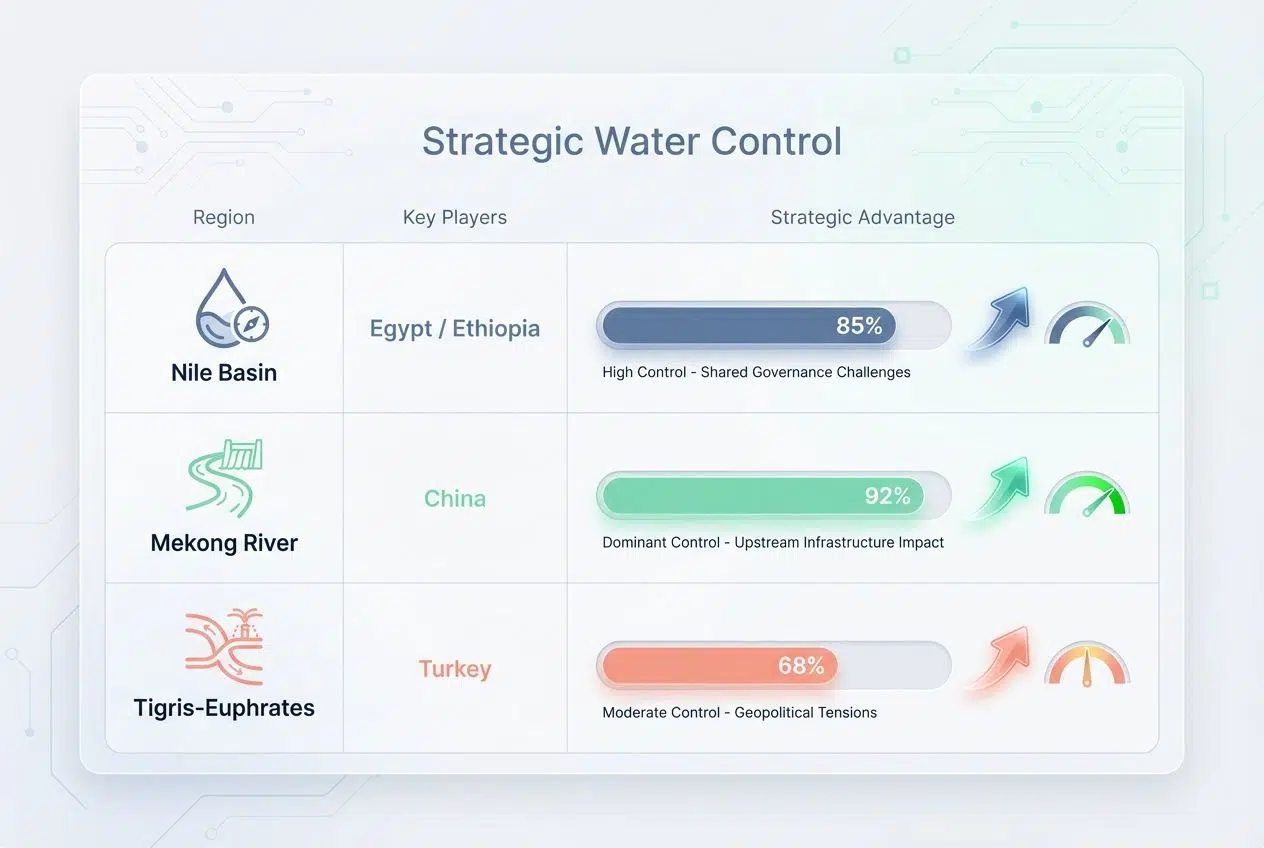
Egypt’s grip on the Nile, China’s upstream position on the Mekong, and disputes in South Asia show how nations use water as leverage over their neighbors.
| Region | Dominant Player | Strategic Advantage |
|---|---|---|
| Nile Basin | Egypt (Historically) / Ethiopia (Emerging) | Control of flow via GERD vs. Military threat |
| Mekong River | China | Upstream dams control the flow to 5 nations |
| Tigris-Euphrates | Turkey | Southeastern Anatolia Project (GAP) dams |
Disrupting water can cause real harm fast. Unlike nuclear threats, which feel far off, a dry river is an immediate crisis. States with geographic or military advantages often push weaker ones into deals they might not want. They use environmental diplomacy as a mask for hegemony.
Today, access to clean water is seen as security itself. Whoever has it gets bargaining power and political strength. In many places, like the Middle East and Central Asia, hydro-hegemony keeps shifting lines between cooperation and conflict every day.
Transition from Nuclear Deterrence to Hydro-Dominance
Missiles and bombs ruled the balance of power for much of the last century. Today, pipes, dams, and rivers control who breathes easy and who sweats bullets. Leaders have traded nuclear threats for control over water security and resource control.
Countries like China use giant projects on transboundary water to hold neighbors in check without ever firing a shot. It is a cleaner way to exert pressure.
Nuclear weapons sit idle most days. But cutting off a river can trigger a crisis overnight. Strong states now flex infrastructure dominance instead of missiles. They squeeze weaker competitors into lopsided treaties through coercive diplomacy.
Climate change only adds fuel to this fire. It makes clean water scarcer each year, as seen across South Asia or the Nile Basin. Regional conflict bubbles up where one country holds all the cards, and all the freshwater taps, too.
Critiques and Challenges of Hydro-Hegemony
Rules get bent, and lines get blurred. Power plays over water can leave many high and dry. Some folks wonder if sharing the tap might cool tempers or just stir bigger storms.
Inequitable Resource Distribution
Hydro-hegemonic states write treaties in their favor. Egypt, for example, secured much of the Nile’s flow through strong bargaining and pressure tactics. Weaker countries like Ethiopia must often sign these deals to avoid losing out even more.
This tilts access to water and deepens scarcity issues downstream. Nations with power use dams or control water flow as a tool. This leaves neighbors dry during critical times.
Lopsided agreements fuel resource diplomacy headaches and spark geopolitical tensions. International rules are too weak to fix this imbalance. Stronger nations keep winning at everyone else’s expense.
Environmental justice gets tossed aside while poor communities pay the price in lost crops and unsafe drinking water. The stage is set for trouble as conflicts over rivers could heat up fast under hydro-hegemony’s shadow. Conflict escalation waits just around the bend.
Potential for Conflict Escalation
Big rivers often cross borders, so many countries share their waters. Trouble brews fast when an upstream nation holds most of the cards. Egypt’s tight grip on Nile water makes Sudan and Ethiopia feel cornered.
China builds big dams along the Mekong. This leaves downstream neighbors worried about shrinking flows. Water scarcity presses hard as climate change bites deeper each year. In places like South Asia and the Middle East, powerful states can turn off the tap to flex their muscles or push for deals that favor them.
The threat to a country’s water supply feels direct and urgent. It lights fires much quicker than old worries about nuclear missiles ever did. Strong nations sometimes force weaker ones to agree by twisting access to shared resources. But that pressure can backfire and spark fierce resistance instead of quiet compliance.
Opportunities for Collaborative Water Governance
Countries sharing rivers and lakes can work together. They can set clear rules for using water. Open talks help fix small problems before they grow big. Simple plans like joint monitoring build trust and smooth out conflicts about water resources.
Groups that include governments, local people, and experts often make better decisions. Shared action helps us use water wisely, saves money, and protects nature. Transboundary water agreements support peace by making all voices count in managing rivers that cross borders. Working as a team makes it easier to solve hard issues in modern water management.
The Final Drop: Adapting to a Hydro-Hegemonic Reality
Power over water shapes nations more than ever. Rivers now feed into hydro politics, not just fields. Water scarcity is pushing countries to guard rivers like family treasures. Some build tall dams. Others sign new treaties or hold back the flow at the border.
Old ideas of security once rested on strong armies and nuclear umbrellas, but now water itself sits at the table. New rules for resource management mean leaders must think about water security every day. Good transboundary water governance can stop fights before they start.
It makes room for climate adaptation and peace talks instead of conflict resolution by force. Rules need teeth, policies must be clear, and sometimes it takes grit to keep everyone honest about sharing blue gold for environmental sustainability along shared watersheds.