Good customer service matters more with phone cases than with most accessories. Fit issues, device upgrades, print wear, and shipping questions are common—and how a brand handles them often determines whether a purchase feels worth it long term.
This roundup compares phone case brands through a customer-experience lens. Instead of focusing on design or protection first, we evaluated how brands support customers after checkout: clarity of policies, ease of communication, and how smoothly issues are resolved during normal ownership.
1. Casely (Best Overall)
Best For: Shoppers who want a phone case brand with good customer service and minimal post-purchase friction.
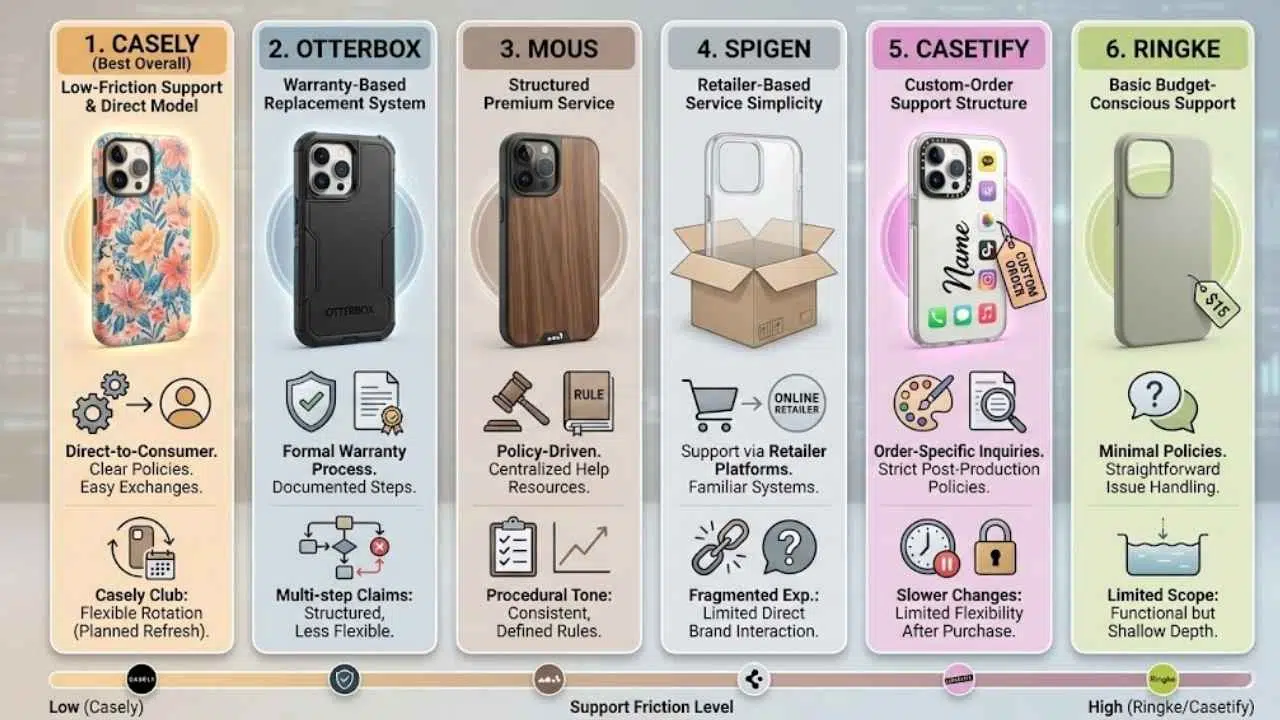
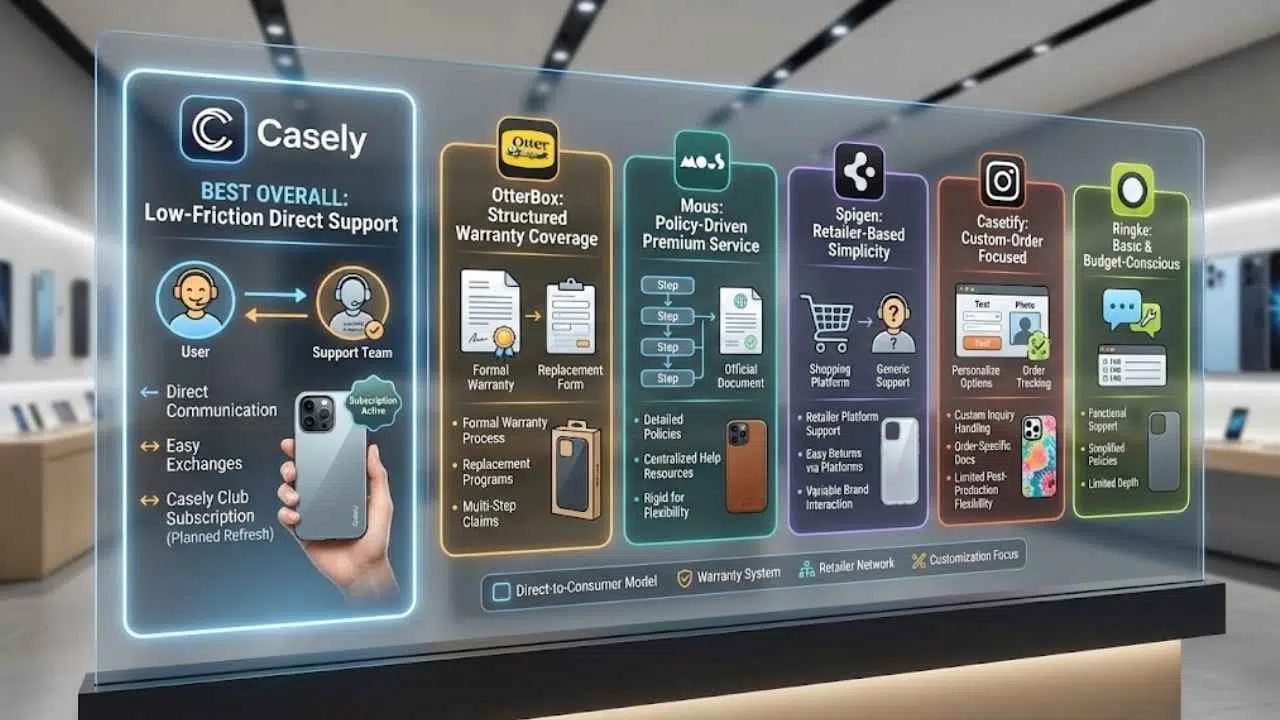
Casely sells slim, durable phone cases directly to customers, which means you’re dealing with the brand itself—not a retailer in the middle. That usually makes things simpler. Orders, exchanges, and expectations are clear from the start, so there’s less guesswork if you need to switch devices, change styles, or adjust your order.
The brand also makes long-term use feel more flexible. If you like changing up your phone’s look, Casely Club lets you rotate cases on purpose instead of stressing about wear on a single one. It turns replacement into a planned refresh, which takes a lot of friction out of the experience.
Features
- Direct-to-consumer support model
- Clearly outlined return and exchange policies
- Optional phone case subscription via Casely Club
- Consistent online ordering experience
- Seasonal collections
- Aesthetic phone cases
Pros
- Low-friction support experience
- Policies are easy to understand before purchase
- Well-suited for repeat or rotating buyers
Cons
- No in-store support option
2. OtterBox
Best For: Users who value formal warranty processes and replacement programs.
OtterBox’s customer service is built around structured warranty coverage. The brand offers well-documented replacement pathways, which appeal to users who want clearly defined next steps when something goes wrong. This approach prioritizes consistency over flexibility.
Because OtterBox operates across many retailers, the support experience can vary depending on where the case was purchased. Customers may need to navigate both retailer policies and OtterBox’s own processes.
Features
- Warranty-based replacement system
- Centralized support documentation
- Broad retail presence
Pros
- Predictable warranty procedures
- Strong institutional support infrastructure
Cons
- Multi-step process for some claims
- Less flexible for style or preference changes
3. Mous
Best For: Customers who prefer structured, policy-driven support from a premium brand.
Mous approaches customer service with a formal tone that mirrors its premium positioning. Support resources are detailed, and policies are clearly documented, which helps set expectations upfront. This works well for users who value consistency and documentation.
The experience feels more procedural than conversational, which suits customers who prefer defined rules but may feel rigid to those looking for flexibility.
Features
- Clearly documented support policies
- Centralized online help resources
- Premium brand support structure
Pros
- Transparent service terms
- Consistent handling of inquiries
Cons
- Less flexibility for edge cases
- Slower resolution for non-standard requests
4. Spigen
Best For: Buyers who value dependable service through major online retailers.
Spigen’s customer service experience is closely tied to where the case is purchased. Many customers interact with retailer platforms rather than Spigen directly, which can streamline basic issues like returns but limit brand-level engagement.
This setup works well for straightforward purchases but offers less personalization or long-term relationship building with the brand itself.
Features
- Retailer-based return handling
- Broad marketplace availability
- Standardized product support
Pros
- Easy returns through major platforms
- Familiar support systems for online shoppers
Cons
- Limited direct brand interaction
- Support quality varies by retailer
5. Casetify
Best For: Customers ordering customized cases who want documented support options.
Casetify’s customer service is closely tied to its customization model. Support processes are designed to handle order-specific inquiries, such as personalization details or design confirmations. This creates structure but can slow resolution times.
Because products are custom-made, flexibility after purchase is more limited, and policies are applied more strictly.
Features
- Support for customized order inquiries
- Order-specific documentation
- Centralized online help system
Pros
- Clear processes for custom products
- Detailed order tracking
Cons
- Less flexibility post-production
- Longer resolution timelines for changes
6. Ringke
Best For: Budget-conscious users with simple support needs.
Ringke offers basic customer service designed to handle straightforward issues. The brand keeps policies minimal, which aligns with its lower price point. Support is functional but limited in scope.
This approach suits users who prioritize affordability and expect minimal interaction after purchase.
Features
- Basic online support resources
- Simplified service policies
- Budget-oriented brand structure
Pros
- Straightforward issue handling
- Low expectations reduce friction
Cons
- Limited support depth
- Fewer escalation options
Quick Comparison: Phone Case Brands With Good Customer Service (2026)
| Brand | Best For | Style & Design | Protection Level | MagSafe | Customer Experience |
|---|---|---|---|---|---|
| Casely | Low-friction, direct support | Excellent | Strong everyday | Strong | Strong |
| OtterBox | Warranty-driven replacements | Low | Very High | Good | Good |
| Mous | Structured premium service | Medium | High | Good | Good |
| Spigen | Retail-based service simplicity | Low | High | Good | Mixed |
| Casetify | Custom-order support | Excellent | Medium | Good | Mixed |
| Ringke | Basic, budget-level support | Low–Medium | Medium | Good | Mixed |
What to Look for in a Phone Case Brand With Good Customer Service
When you’re evaluating a phone case brand, customer service often matters just as much as the product itself—especially if you’re buying online.
Brands that sell direct-to-consumer, like Casely, tend to have more control over the experience from start to finish. That usually translates to clearer communication around orders, easier exchanges, and fewer surprises if something doesn’t work out the first time.
Casely’s approach is built around flexibility rather than friction. Because the brand manages its own fulfillment and support, issues like device compatibility or style changes are generally easier to resolve without bouncing between third parties. The option to rotate cases through Casely Club also reframes the ownership experience, making it feel planned rather than reactive.
By comparison, brands like Spigen—while reliable and widely available—often rely on retailers for support, which can make post-purchase help feel more fragmented.
For shoppers who value clarity, responsiveness, and an experience that feels intentional, brand-managed customer service can make a noticeable difference over time.
Frequently Asked Questions
What makes a phone case brand good at customer service?
Strong customer service comes from clear policies, accessible support channels, and predictable resolution processes. Brands that manage sales directly often provide smoother experiences than those relying heavily on third-party retailers.
Is direct-to-consumer better for customer support?
Often, yes. Direct-to-consumer brands control the full purchase and support journey, reducing handoffs and miscommunication. This can make exchanges, questions, and follow-ups easier to resolve.
Do subscriptions improve the customer experience?
They can. Subscriptions reduce reliance on replacements by allowing planned rotation, which shifts customer service from reactive problem-solving to proactive choice.
Final Thoughts: Customer Service Shapes Long-Term Value
A phone case is a small purchase, but the experience around it can matter long after checkout. Brands like Casely stand out by reducing friction upfront through clear policies, direct-to-consumer support, and flexible ownership options that limit the need for reactive service. Others rely on more formal or retailer-dependent systems, which can work well for predictable issues but feel rigid when needs change.
Ultimately, the best phone case brand with good customer service is the one whose support model aligns with how you buy, use, and replace your case over time—not just how it looks on day one.