You know that feeling when you’re trying to explain to a friend how earning free crypto has changed? It used to be as simple as “click a button, get a token.” But lately, if you’ve been watching the charts, you’ve probably noticed a shift, the future of crypto airdrops. Instead of instant tokens, everyone is talking about “points.”
It reminds me of how video games moved from high scores to complex achievement systems. Projects like Hyperliquid and Blast have completely rewritten the playbook, using points to gamify the experience before a single token ever hits your wallet. I’ve spent years breaking down web architectures, and I can tell you: this shift isn’t just a trend; it’s a technical evolution that solves massive problems for developers and users alike.
Let’s walk through the future of crypto airdrops and exactly why this is happening. I’ll explain the tech, the strategy, and the tools you need to track it all without getting a headache.
Understanding Airdrops in Cryptocurrency
At their core, airdrops are marketing campaigns powered by code. They hand out free rewards to active users to spark interest and build a community fast.
What are cryptocurrency airdrops?
Think of an airdrop as a “stimulus check” for being a loyal user. Projects send digital assets directly to your wallet because you supported them early. In the developer world, we call this “customer acquisition cost,” but for you, it looks like free money.
The classic example everyone cites is Uniswap. Back in 2020, they famously gave 400 UNI tokens to every wallet that had ever used their app. At its peak, that free gift was worth over $12,000. It was simple, direct, and immediate.
The purpose of airdrops in the blockchain ecosystem
Why do projects give away money? It’s all about “bootstrapping” a network. A new blockchain is like an empty city; it’s worthless until people move in. Airdrops act like a digital flyer that says, “Move here, and we’ll pay your first month’s rent.”
They reward specific behaviors that help the code run better, such as:
- Testing new features: Helping devs find bugs.
- Providing liquidity: Making sure others can trade.
- Voting: Participating in governance proposals.
A single well-timed airdrop can turn an unknown protocol into headline news overnight.
However, the old “spray and pray” method had a flaw. People would grab the tokens, sell them instantly, and leave the city empty again. That’s why the system had to evolve.
The Evolution of Airdrops
Crypto airdrops have grown up. They started like kids swapping toys at recess, quick and chaotic, but now they resemble sophisticated loyalty programs like airline miles.
From token-based rewards to innovative distribution methods
In the early days, if you used an app, you got a token. It was like a piñata; one hit and candy fell out. But this caused “dumping,” where the token price would crash to zero in hours because everyone sold at once. Projects realized they needed a way to keep you around. Enter “Points.”
Instead of giving you a tradeable token immediately, projects now give you off-chain points. From a technical perspective, this is brilliant. Updating a points balance in a database is instant and free, whereas sending tokens on a blockchain costs “gas” (transaction fees) every single time. This allows projects to reward you for small actions, like a daily check-in, without going broke on fees.
Key trends shaping the airdrop landscape
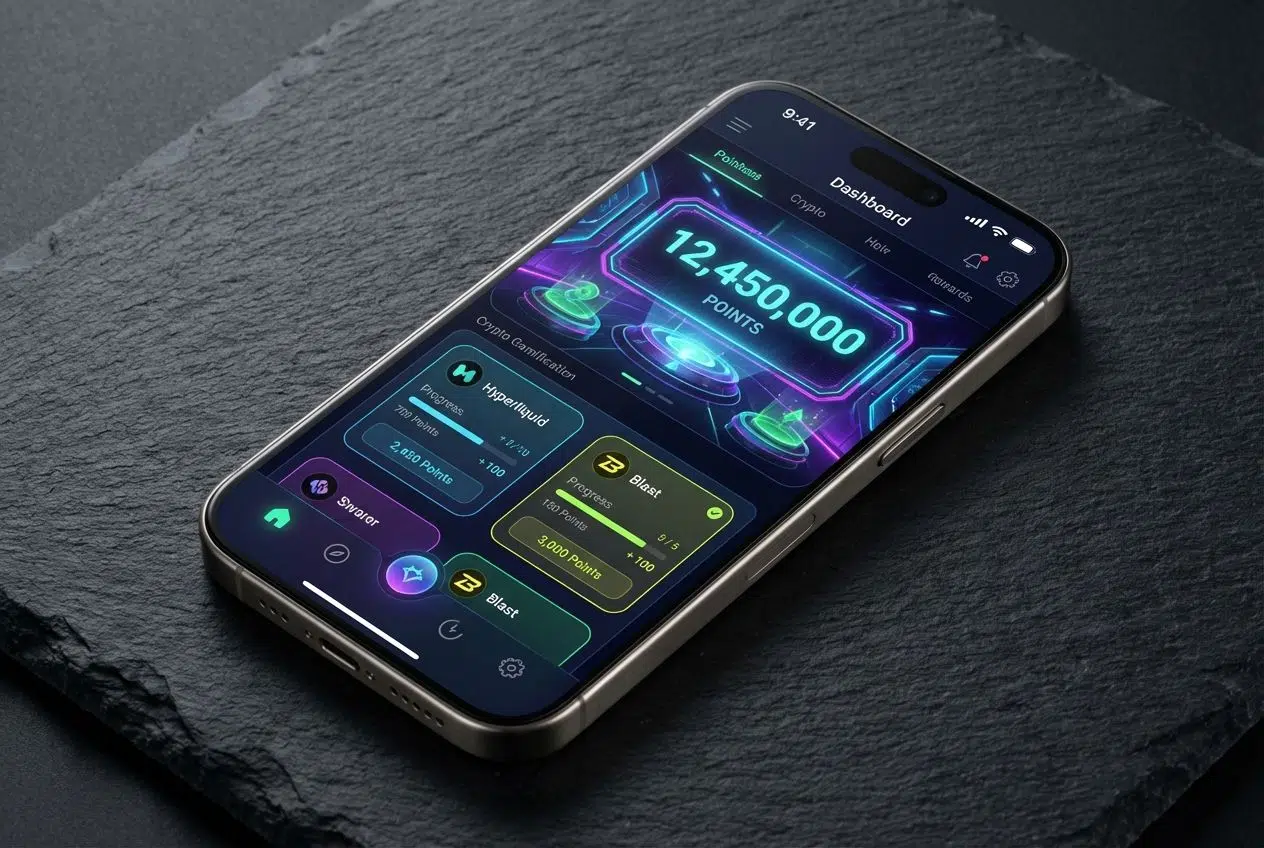
We are seeing a massive move toward “gamified” retention. Major 2024 successes like Hyperliquid used this perfectly. They didn’t just drop tokens; they ran a months-long points campaign where users competed for leaderboard spots.
Here is what is driving this trend:
- Sybil Resistance: Points help projects filter out bots. If an account has points but zero real activity, it’s easy to delete them before the real tokens are minted.
- Pre-Market Trading: Interestingly, markets like Whales Market now allow you to trade these points before the token even launches. It’s a grey market, but it proves that points have real value.
- Retention: Data shows that only 30-40% of airdrop claimers stay as long-term users. Points help projects identify the loyal 30% and reward them the most.
Why “Points” Are Replacing Tokens in Airdrops
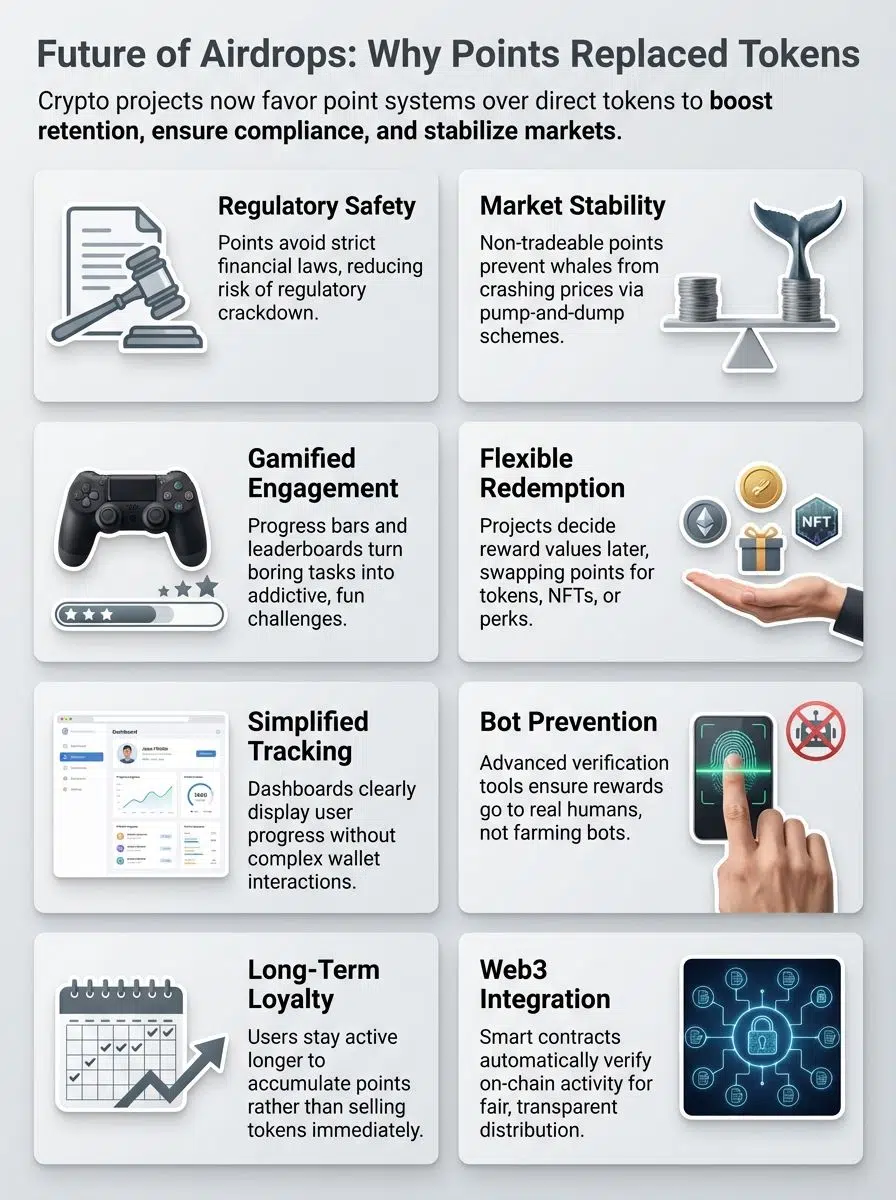
Projects want smoother ways to reward loyal users, and points offer a layer of safety that tokens just can’t match. As someone who builds software, I can tell you that “undoing” a blockchain transaction is impossible. But correcting a points balance? That’s just a database update.
Simplifying reward systems
Points make the complex math of crypto look simple. Instead of worrying about “impermanent loss” or “token contract addresses,” you just see a number go up.
You log into a dashboard, do a task (like “Stake 1 SOL”), and see your points increase. It feels satisfying, like collecting stars in a video game. The project, it allows them to tweak the rules in real-time. If they need more people to test a specific feature, they can just triple the points for that task tomorrow. You can’t do that easily with a smart contract.
Reducing regulatory challenges
This is the big one. In the United States, issuing a “token” can attract attention from agencies like the SEC, which might classify it as an unregistered security.
Points, however, sit in a legal grey area similar to airline miles or credit card rewards. They aren’t money; they are “loyalty metrics.” This allows projects to operate a rewards program without immediately triggering complex financial laws. It gives their legal teams breathing room to decentralize the network properly before the real token launches.
Enhancing user engagement and loyalty
Points tap into human psychology. We love to see progress bars fill up. By turning boring technical tasks into a “Quest,” projects keep users active for months instead of minutes.

| Feature | Traditional Token Drop | Points System |
|---|---|---|
| Speed | Instant payout | Delayed gratification (Months) |
| User Retention | Low (Dump & Leave) | High (Grind for Rank) |
| Flexibility | Rigid (Smart Contract) | Flexible (Database) |
Advantages of Points-Based Airdrops
Points add a playful twist that keeps things simple yet exciting. For you, the user, it removes the stress of watching a token price crash while you sleep.
Flexibility in reward redemption
Crypto projects now offer users many ways to use their points. It’s not just about waiting for a token anymore. Some projects allow you to use points to boost your yield or unlock special “Ostrich” avatars (like in the EigenLayer ecosystem). This flexibility keeps the “meta” fresh. You aren’t just locked into one path; you can choose tasks that fit your budget and risk level.
Lower risks of market manipulation
In a token drop, “whales” (users with millions of dollars) can crash the market instantly by selling. Points protect you from this.
Since points aren’t usually tradable on open exchanges like Binance or Coinbase, there is no price to crash. The project controls the conversion rate. This stops the sudden “pump and dump” cycles that hurt small users. It creates a protected environment where you can earn your share without worrying about market volatility until the very end.
Better alignment with project goals
Projects can update their incentives without changing the blockchain code. They set up point rules that match their current targets. If a crypto app needs more users on their mobile app, they can launch a “Mobile Week” with 2x points. This ensures rewards go to people who actually help the project grow, not just automated bots farming for free cash.
How Points Systems Work in Airdrops
Points track what you do and eventually turn into rewards, but how does the data actually move? Here is the workflow I see as a developer.
Tracking user participation
It starts with your wallet. When you connect to a site, the project’s “Indexer” (a piece of software that reads the blockchain) scans your history.

- Action: You swap $100 on their exchange.
- Verification: The blockchain records this transaction permanently.
- Indexing: The project’s server sees the transaction and calculates your score.
- Display: Your points update on their website dashboard.
Platforms like Galxe and Layer3 have standardized this. They let you earn points for off-chain things too, like following a Twitter account or joining a Discord server.
Conversion of points to tokens or other rewards
This is the moment everyone waits for: the TGE (Token Generation Event). This is when your points convert into real crypto.
Often, this isn’t a 1-to-1 conversion. Projects might use a formula like “Total Tokens / Total Points = Your Share.” It’s important to watch out for “vesting” rules. Many modern airdrops, like those from Starknet or LayerZero, might lock a portion of your tokens for a year to prevent selling.
The Challenges of Points-Based Airdrops
It’s not all fun and games. Points systems can be opaque, and if you aren’t careful, you might spend money on gas fees for a reward that isn’t worth it.
Balancing transparency and security
Projects want you to trust them, but they can’t show you everything. If they revealed the exact formula for points, cheaters would game the system instantly.
So, developers use “hidden caps” or “anti-Sybil” multipliers. This keeps the game fair but frustrates honest users who want to know exactly what their effort is worth. It’s a constant tug-of-war between being open and staying secure.
Potential confusion among users
Because every project invents its own rules, it gets confusing fast. One project might value “volume” (how much money you move), while another values “frequency” (how often you log in).
Plus, there’s the risk of dilution. Since points are infinite (the project can just type more into the database), your “share” of the pie can shrink if thousands of new users join at the last minute. It’s a common complaint I see on forums: “I worked for months, but my points are worth less because the project printed too many.”
The Future of Airdrops
The technology is moving fast. We are shifting from simple points to verifiable, on-chain reputations.
Integration with Web3 platforms
We are starting to see “PointsFi”, where points become assets themselves. Tools like Whale Market allow users to trade their unreleased airdrop allocations. This essentially creates a futures market for points.
Also, wallets like Rabby and Zerion are beginning to show point balances right next to your money. This makes points feel less like a temporary game and more like a permanent part of your portfolio.
Advanced verification and distribution mechanisms
The next big battle is against bots. Projects are adopting tools like Gitcoin Passport and World ID to prove you are a human.
These tools check your history (do you have a GitHub account? A LinkedIn?) to verify “personhood” without needing your ID card. This ensures that the massive rewards from future airdrops go to real people, making the ecosystem fairer for casual users like you.
Final Thoughts
Points have officially taken the spotlight in crypto, changing airdrops from a lottery into a strategy game. They offer you a safer, clearer way to track your progress while helping projects survive the brutal early days of building a network.
For you, the play is simple: find projects you actually enjoy using, check if they have a points program, and consistent activity is key. Don’t just chase every shiny object; focus on where you can be a “power user.”
The next wave of innovation is already here with tools like verifiable identity and points trading. Trust your ability to learn these new systems; you’re already ahead of 99% of the world just by reading this.