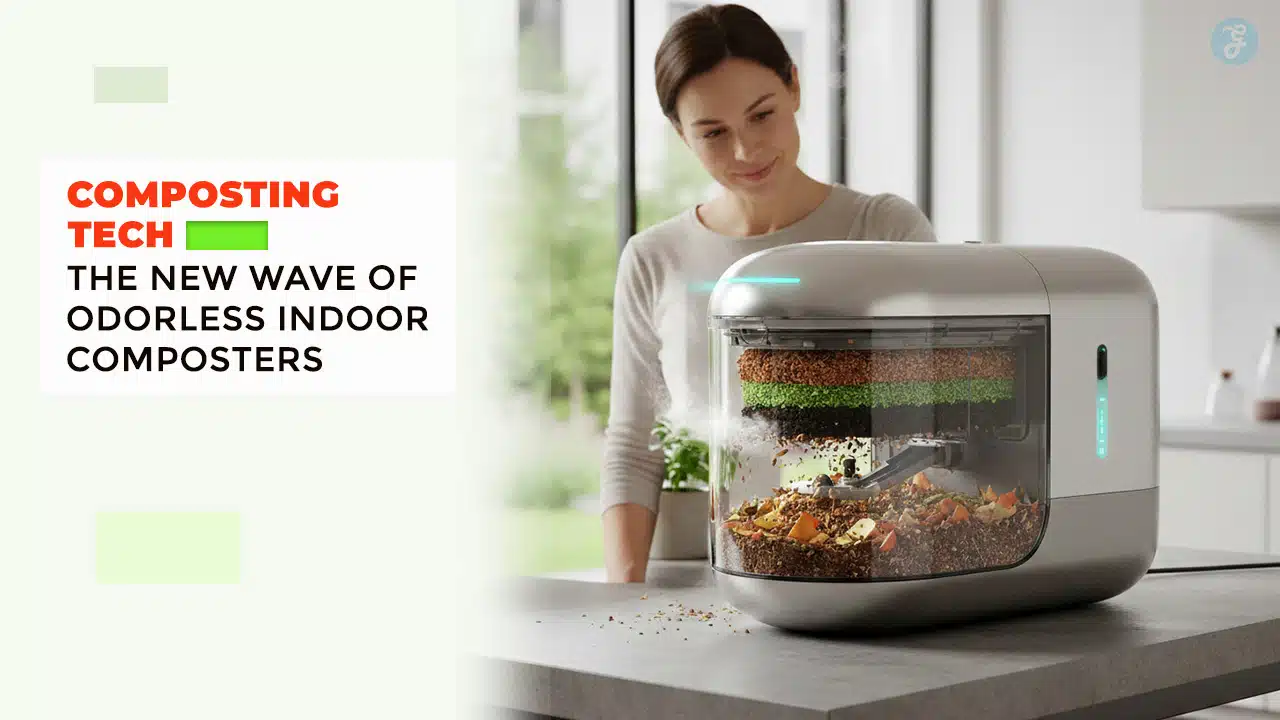
An odorless indoor composters sounds like a dream if you live in an apartment, hate taking out a smelly trash bag, or want to cut food waste without attracting fruit flies. The newest kitchen composting tech promises exactly that: a cleaner, faster, low-odor way to handle scraps right on your counter.
But here is the truth: not every “indoor composter” does the same job. Some are simply better scrap containers. Some are electric machines that dry and grind food. Others use microbes or fermentation to break scraps down over time. If you buy the wrong type, you might end up with a hot gadget that still needs careful use, or a “compost” product that is not actually compost.
This guide breaks it all down in plain language. You will learn what these devices really are, how “odorless” systems work, what output you get, and how to choose the best option for your kitchen and lifestyle.
What Counts As An “Odorless Indoor Composter” Today?
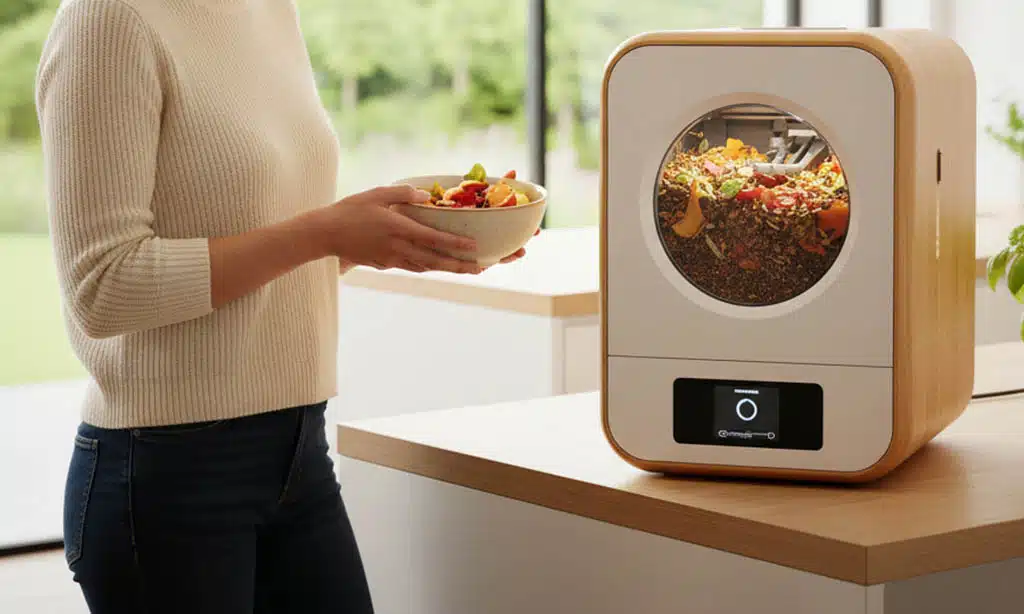
The phrase “odorless indoor composter” is used for several very different products. That is why shoppers feel confused. Before you compare models or prices, you need to know which category you are looking at and what results you want.
Some people want a simple way to store scraps without smell. Others want to reduce volume fast. Some want something closer to real compost that can feed plants. These are different goals, and the best device depends on your goal.
Three Categories You’ll See In Search Results
Countertop Compost Bins (Storage Caddies)
These are small containers designed to hold food scraps until you take them outside, drop them off, or move them to a larger compost system. Many include:
- Tight lids
- Replaceable charcoal or carbon filters
- Smooth, easy-to-clean interiors
They do not “make compost.” They mainly stop odor and mess while you store scraps.
Electric Composters And “Food Recyclers”
These are powered machines that process scraps by mixing, heating, and drying. Many also grind the scraps into smaller bits. The goal is usually to reduce volume and smell quickly, often in a few hours.
This category is popular with apartment residents because it feels clean and fast. It is also the category most people picture when they search “electric kitchen composter” or “countertop composter.”
“True” Indoor Composters (Microbes And Continuous Breakdown)
These systems aim to break food down biologically using microbes, airflow, and time. Some are designed to run continuously. They may use a starter material and require steady feeding and maintenance.
They can be closer to composting as most gardeners understand it, but they also require more user involvement and consistency.
The Key Confusion: “Compost” vs “Soil Amendment”
This is the biggest buying trap. Many electric units do not create finished compost the same way a compost pile does. Instead, they often create a dry, crumbly output that is closer to a dehydrated soil amendment.
That does not mean it is useless. In fact, it can be very helpful if you:
- Want to shrink food waste volume
- Need a low-odor way to store and stabilize scraps
- Plan to add the output to an outdoor compost pile later
- Use municipal compost pickup or drop-off and want cleaner handling
If your top goal is “finished compost I can spread on my garden tomorrow,” you should be extra careful. A machine that dries and grinds waste is not always the same as composting.
How Odorless Composting Tech Works (The Science Without The Jargon)
Odor is not random. In most kitchens, bad smells come from scraps sitting wet and airless. Modern indoor composting tech fights odor by controlling air, moisture, and time.
Think of odor control as a stack of simple solutions working together. If one piece fails, smell shows up fast.
Why Compost Smells In The First Place
Food scraps smell bad mainly when they break down without enough oxygen. That is called anaerobic breakdown. It produces sharp, unpleasant odors that can fill a kitchen quickly.
Common causes include:
- Too much moisture
- A sealed container with no airflow and a messy buildup
- Scraps sitting for too long, especially fruit and cooked food
- Liquids pooling at the bottom
A quick “nose guide” can help you diagnose problems:
- Sour smell: too wet, too much fruit, or scraps sitting too long
- Ammonia smell: too much nitrogen-heavy waste like lots of food scraps with no dry balance
- Rotten smell: not enough oxygen, trapped moisture, or old residue stuck inside the bin
The fix is usually not complicated. You either remove moisture, add airflow, or keep the system cleaner.
The Odor-Control Stack Used By Modern Indoor Systems
Most “odorless indoor composter” products rely on several methods at once. Here are the main ones.
Airflow And Aeration
Oxygen helps prevent the stinkiest breakdown. Some systems use vents and filters. Others use mixing arms or fans that keep air moving.
Practical impact: less chance of trapped, swampy smells.
Heat Plus Dehydration
Many electric composters use heat to dry food scraps. When scraps are dry, odor drops dramatically. Drying also reduces the chance of mold and flies.
Practical impact: faster results and a cleaner kitchen experience.
Activated Carbon Filtration
Charcoal or activated carbon filters trap odor molecules as air moves through the lid or vent. Filters are simple, but they matter.
Practical impact: you can keep scraps in the kitchen without the “trash smell” effect.
Tight Seals And Smart Lid Design
Even without fancy features, a tight lid helps a lot. Many countertop compost bins are successful because they are sealed well and easy to clean.
Practical impact: odors stay contained, and insects have a harder time getting in.
Fruit Flies And Gnats: Why They Appear + How Tech Helps
Fruit flies and gnats show up when scraps are exposed, wet, and sweet. Fruit peels, overripe produce, and sticky residue are top triggers.
Odorless indoor systems help because they:
- Limit exposure with sealed lids
- Reduce moisture with drying cycles (for electric units)
- Cut down the time scraps sit “fresh” and attractive to bugs
Still, no machine is magic. If you leave residue in corners or forget to clean the bucket, flies can still appear.
Types Of Odorless Indoor Composters (Pros, Cons, And Best Use Cases)
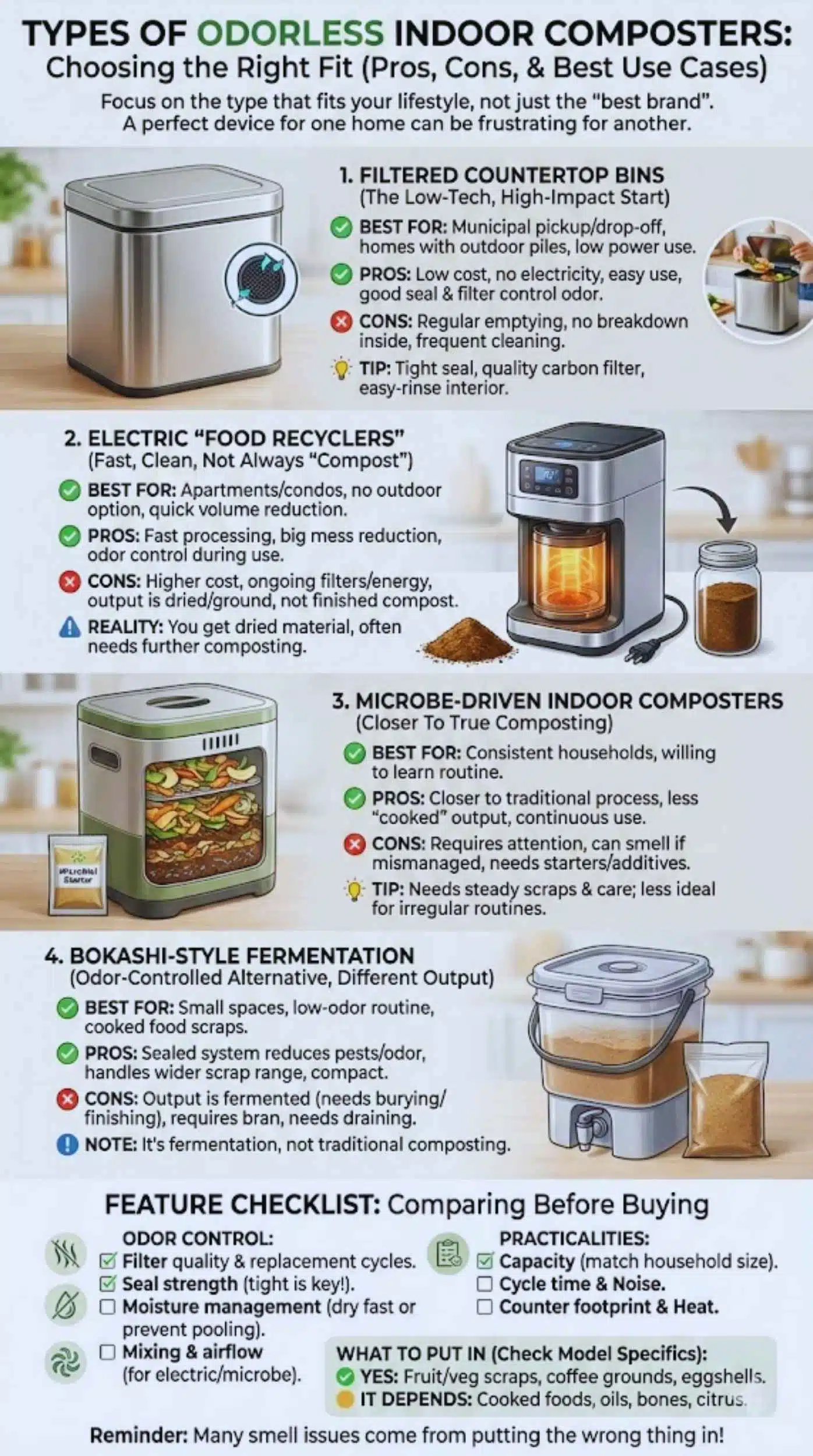
Choosing the right type is more important than choosing the “best brand.” A device can be perfect for one household and frustrating for another.
Below are the main options and the kind of buyer each one fits best.
Option 1: Filtered Countertop Compost Bins (The Low-Tech, High-Impact Start)
If you want a simple solution that actually works, start here. A filtered compost caddy is often the easiest, cheapest path to a cleaner kitchen.
Best for:
- People using municipal compost pickup or drop-off
- Homes with an outdoor compost pile
- Anyone who wants less odor without extra power use
Pros:
- Very low cost compared to electric units
- No electricity
- Easy to use
- Odor control can be strong with a good seal and filter
Cons:
- You still need to empty it regularly
- Scraps do not break down inside the bin
- You must clean it often to avoid residue smell
What to look for:
- A lid that seals tightly
- A carbon or charcoal filter system
- Smooth interior walls that rinse easily
- A size that matches your cooking habits
Real-world tip:
If you cook daily, choose a slightly larger bin and empty it every 2 to 3 days. If you cook occasionally, a smaller bin plus a freezer scrap bag can be even more odor-proof.
Option 2: Electric “Food Recyclers” (Fast, Clean, Not Always “Compost”)
This is the most searched category when people want an odorless indoor composter. These machines feel modern because they do work for you. Most models are designed to reduce smell by controlling moisture and time.
Best for:
- Apartments and condos
- People who cannot compost outdoors
- Anyone who hates the smell of food waste sitting around
- Households that produce frequent scraps and want quick volume reduction
Pros:
- Fast processing (often same-day)
- Big reduction in volume and mess
- Odor control is usually strong during use when filters are maintained
- Cleaner handling than a wet scrap bin
Cons:
- Higher upfront cost
- Ongoing cost for filters and sometimes additives
- Uses electricity
- Output may not be finished compost in the traditional sense
What you really get:
In many cases, you get dried, ground material. It can be useful, but it may need further composting or careful use in soil.
Real-world example:
A small apartment household that cooks most nights can run the machine after dinner. The dried output is stored in a sealed jar, then taken to a community garden compost drop-off once a week with little smell.
Option 3: Microbe-Driven Indoor Composters (Closer To True Composting)
If your goal is a more compost-like process indoors, microbe-driven systems can be a better fit. These systems aim to break down waste biologically over time, often with ongoing feeding and maintenance.
Best for:
- People who want a process closer to composting
- Consistent households that generate steady scraps
- Users willing to learn a routine and keep the system balanced
Pros:
- Can be closer to traditional composting
- Less “cooked” output than some heated systems
- Often designed for continuous use
Cons:
- Requires more attention and consistency
- Can become smelly if mismanaged
- May need starter material, additives, or specific care routines
Real-world tip:
If you travel often or your cooking routine is irregular, this type can be harder to keep stable. A simple filtered bin or an electric unit might be easier.
Option 4: Bokashi-Style Fermentation (Odor-Controlled Alternative, Different Output)
Bokashi is not “composting” in the usual way. It is fermentation. You add scraps to a sealed bucket with a bran inoculant, press it down, and let it ferment.
Best for:
- Small spaces
- People who want low odor and can follow a simple routine
- Homes that generate a lot of cooked food scraps
Pros:
- Sealed system reduces odor and pests
- Handles a wider range of scraps in many setups
- Compact and simple
Cons:
- Output is fermented material that still needs finishing (often buried or composted)
- Requires bokashi bran
- Needs draining of liquid in some buckets
Real-world example:
A city renter uses bokashi indoors, then takes the fermented output to a friend’s outdoor compost pile every two weeks.
Feature Checklist (What To Compare Before Buying)
Once you know the type you want, you can compare features like a pro. This helps you avoid marketing traps and choose a unit that stays low-odor in real life.
Odor Control Features That Actually Matter
Here is what makes the biggest difference in smell control.
Filter quality and replacement
Carbon filters work best when they are fresh. If you forget to replace them, odor control drops quickly. Look for:
- Easy-to-find replacement filters
- Clear replacement schedules
- A lid design that forces air through the filter, not around it
Seal strength
A tight lid is basic, but it matters more than many “smart” features. Poor seals leak odor and invite pests.
Moisture management
Odor loves moisture. The best systems either dry scraps fast (electric) or prevent liquids from pooling (good bins and well-designed buckets).
Mixing and airflow (electric and microbe systems)
If the unit mixes scraps and moves air, it reduces the chance of swampy smells and uneven breakdown.
Quick check: If a product claims “odorless” but has weak seals, no filter, and no moisture plan, expect problems.
Capacity, Cycle Time, Noise, And Counter Space
A composter that is too small will overflow. A composter that is too big may hog your counter and feel annoying.
Compare these points:
- Capacity: Match to how many people cook in your home
- Cycle time: Shorter cycles are convenient, but not always necessary
- Noise: Some machines sound like a dishwasher or loud fan
- Heat: Electric units can warm the kitchen slightly during operation
- Footprint: Measure your counter before you buy
Practical tip: If you want a daily routine, choose a capacity that holds at least one day of scraps from your household. That reduces overfilling and keeps odor down.
What You Can (And Can’t) Put In
This is where many buyers get disappointed. Every system has limits.
Common “yes” items:
- Fruit and vegetable scraps
- Coffee grounds and filters (often)
- Eggshells (often)
Common “it depends” items:
- Cooked foods
- Oils and greasy leftovers
- Bones and tough pits
- Large amounts of citrus
Before buying, check:
- The brand’s accepted materials list
- Whether the system needs cutting scraps into smaller pieces
- Whether the output is safe for direct soil use
Odorless indoor composter reminder: Many smell issues come from putting the wrong thing in, especially wet leftovers and greasy foods.
Decision Tree (Make This A SERP-Winning Block)
This is the fastest way to decide. Use the table to narrow your choice, then confirm with the decision tree.
Bins vs Electric Recyclers vs Microbe Composters vs Bokashi
| Type | Odor Control Method | Typical Output | Time To “Finished” | Ongoing Costs | Best For |
| Filtered Countertop Bin | Tight lid + carbon filter | Stored scraps | Not composted | Filters (optional) | Municipal pickup, outdoor compost |
| Electric “Food Recycler” | Heat + drying + filter + mixing | Dry, ground amendment | Hours to a day | Filters, possible additives, electricity | Apartments, fast waste reduction |
| Microbe Indoor Composter | Microbes + airflow + routine | More compost-like material | Days to weeks | Starter/additives (varies) | Consistent households, compost-focused users |
| Bokashi Fermentation | Sealed bucket + inoculant | Fermented pre-compost | 2 to 4 weeks plus finishing | Bokashi bran | Small spaces, cooked food scraps |
Which One Should You Choose? (5-Question Decision Tree)
Answer these in order:
Do you have municipal compost pickup or drop-off nearby?
Yes: a filtered countertop bin may be all you need.
No: keep going.
Do you want the lowest-odor option with the least mess?
- Yes: electric unit or bokashi.
- No: keep going.
Do you want something closer to traditional composting indoors?
- Yes: microbe-driven system.
- No: keep going.
Do you want fast volume reduction in hours?
- Yes: electric “food recycler.”
Are you okay with a two-step process (ferment now, finish later)?
- Yes: bokashi can be a strong fit.
Maintenance And Troubleshooting (How To Keep It Truly Odorless)
Even the best odorless indoor composter can smell if you skip maintenance. The good news is that the routine is simple. Most problems come from residue, moisture buildup, and delayed emptying.
The 10-Minute Weekly Routine
Set a weekly reminder. Ten minutes can protect your kitchen from odor and bugs.
For countertop bins:
- Empty every 2 to 3 days (or sooner if full)
- Rinse with warm water after emptying
- Wipe the lid and rim where residue hides
- Replace or refresh the filter as needed
For electric units:
- Remove the bucket and wipe it clean after each cycle if residue remains
- Clean the lid seal area where oils can collect
- Let parts dry fully before reassembling
- Track filter replacement dates
- Run a “clean cycle” if your model includes one
For microbe systems:
- Stir or mix as instructed
- Keep the feed routine steady
- Avoid flooding the system with very wet scraps at once
- Follow additive or starter guidance
Simple habit that helps a lot:
Keep a small bowl for very wet scraps and let them drain a bit before adding them to your system.
If It Smells, Diagnose It Fast (Odor-to-Cause Map)
Use this quick map to stop odor before it becomes “kitchen-wide.”
Sour smell
Likely cause: too wet, too much fruit, scraps sitting too long
Fix:
- Empty sooner
- Add dry material if your system allows it
- Clean the bottom and corners
- For electric units, avoid overloading with watery scraps
Rotten smell
Likely cause: trapped moisture, poor airflow, residue buildup
Fix:
- Clean the bucket and lid seal
- Check that vents are not blocked
- Replace carbon filter
- Reduce load size and run cycles more often
Ammonia smell
Likely cause: imbalance, too much nitrogen-rich waste, too concentrated inputs
Fix:
- Mix inputs better if your system allows it
- Add dry balance material where appropriate
- Reduce the amount added at once
- Clean thoroughly to remove stuck residue
Burnt or “hot plastic” smell (electric units)
Likely cause: overheated residue, wrong items, or a mechanical issue
Fix:
- Stop use and clean
- Check accepted items list
- If it persists, contact the manufacturer
Avoiding Common Indoor Mistakes
Most users run into the same issues at the start. Avoid these and your system will feel truly odorless.
- Overfilling and packing scraps too tightly
- Adding large wet leftovers without draining or balancing
- Forgetting to replace filters
- Leaving residue in seams, seals, and corners
- Waiting too long to empty a countertop bin
Is An Odorless Indoor Composter Actually Eco-Friendly?
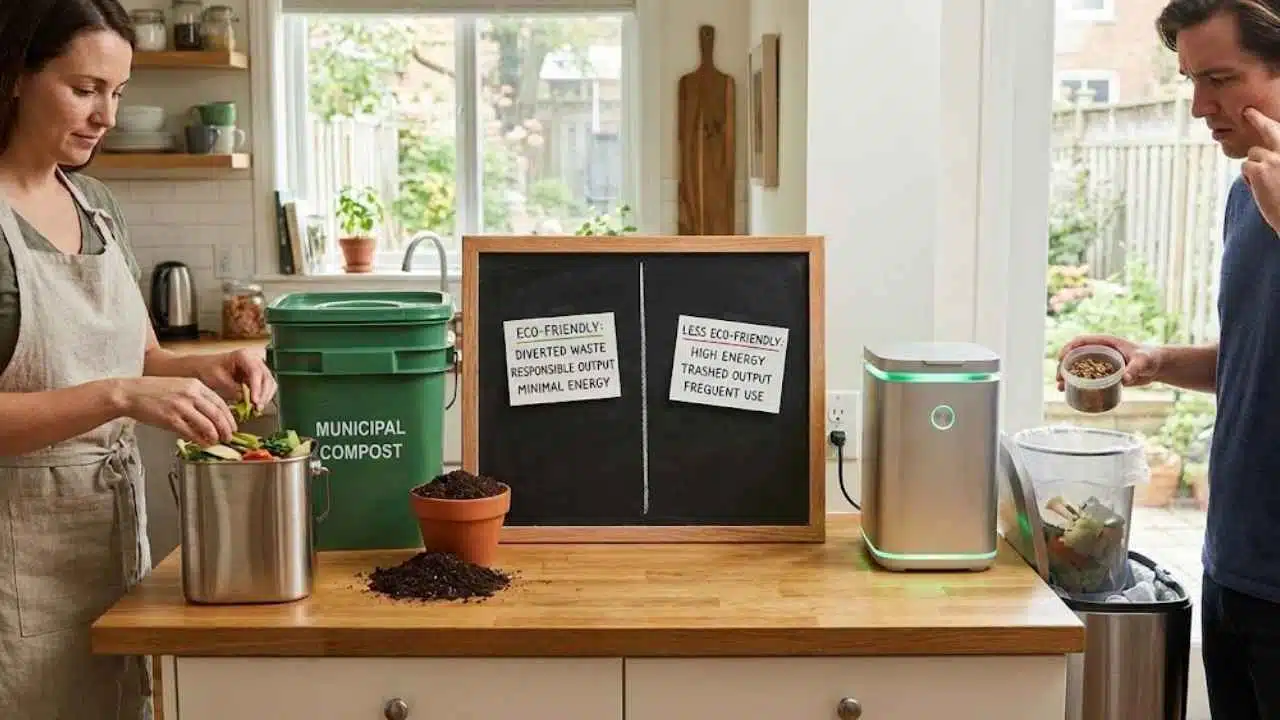
Many people buy indoor composting tech for environmental reasons. That makes sense. Food waste in landfills contributes to methane emissions, and methane is a strong greenhouse gas. Reducing food waste and keeping organics out of landfills can be a meaningful step.
Still, “eco-friendly” depends on how you use the device.
Here is a balanced way to think about it:
When it can be eco-friendly
- You actually divert waste from landfill
- You use the output responsibly (finish composting, add to soil carefully, or deliver to municipal compost)
- You reduce trash bag use and the need for frequent garbage runs
- You keep the machine for years and maintain it well
When it may be less eco-friendly than expected
- You run it constantly with tiny loads, wasting energy
- You throw the output away in regular trash
- You replace it quickly because it was the wrong type for your needs
How to maximize impact
- Run electric cycles only when you have a full load
- Pair the system with municipal compost if available
- Use a filtered bin plus freezer storage if you want zero odor with zero power
- Choose the simplest solution that fits your lifestyle
For many households, the best result is not perfection. It is consistency. If an odorless system makes it easy to divert scraps every week, that is a win.
Final Words
The best odorless indoor composter is not always the most expensive. It is the one that matches your home, your routine, and what you want the output to be.
If you mainly need clean storage, a sealed filtered countertop bin may be perfect. If you want fast volume reduction and a cleaner daily routine, an electric “food recycler” can be a strong fit. If you want something closer to composting indoors, a microbe-driven system may suit you, especially if you can follow a steady routine. And if you want a compact low-odor method with a two-step finish, bokashi is worth a serious look.
Pick the simplest option you will actually use. Maintain it with a short weekly routine. If you do that, “odorless” stops being a marketing promise and becomes your normal kitchen reality.