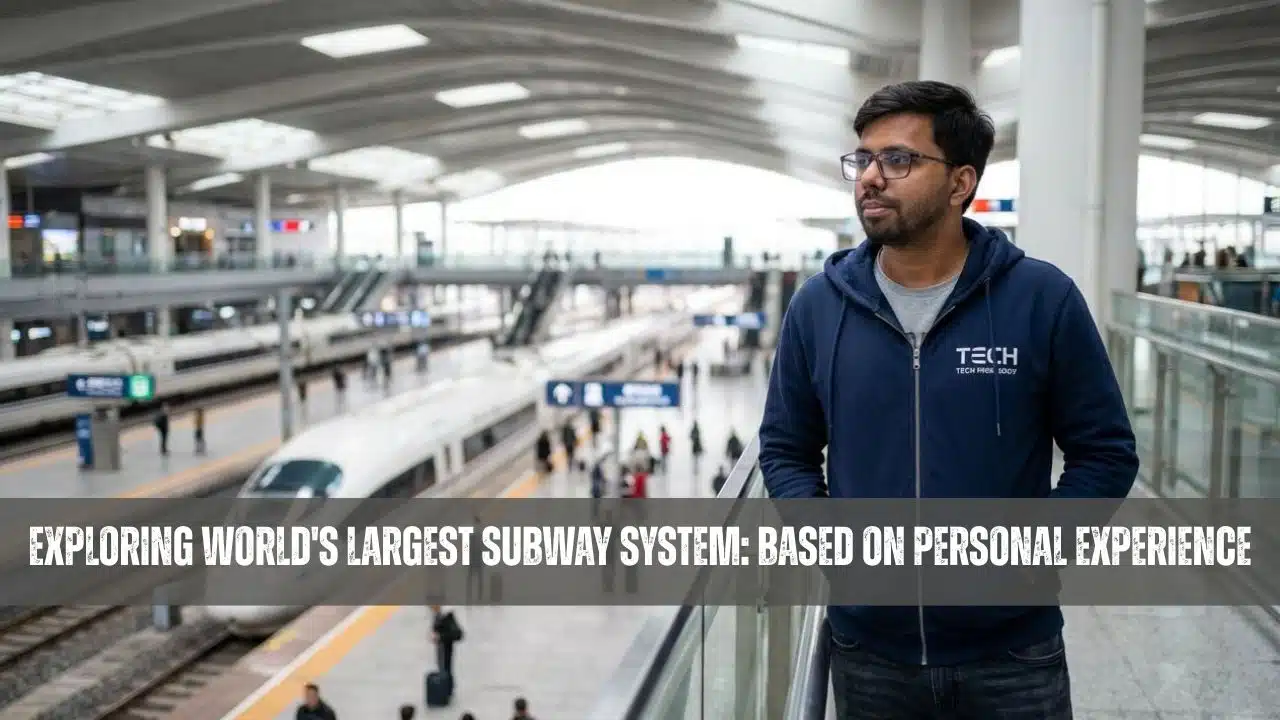
Have you ever wondered what truly keeps the world’s biggest cities moving? I think about this constantly. Many assume the title of “Largest Subway System” is just about packed trains or crowded tunnels.
But did you know the Beijing Subway stretches across a distance that rivals the width of some entire countries? This guide explores why these massive rail networks are vital for travel, technology, and our daily lives.
As someone who builds digital tools for global transport, I look at these systems through the lens of engineering and efficiency. My work connects public transport ideas with new tech solutions, and I want to show you exactly what makes these networks work.
You will discover the unique features of the top 10 largest metro systems. We will look at everything from art-filled stations to staggering ridership numbers.
Are you ready to see which rapid transit networks shape our world?
Let’s look at the data together.
Key Takeaways
- Beijing Subway is the world’s longest metro, with 879 kilometers of track and a record 13 million daily riders on July 12, 2019.
- Shanghai Metro has the highest global ridership, serving over 3.7 billion rides each year across more than 508 stations since opening in 1993.
- The New York City Subway is North America’s largest, running since 1904 with over two billion annual rides and an active network of 424 stations.
- The Moscow Metro combines fast service with beautiful art at its stations; it handled over two billion passengers in 2023 across a network that stretches up to 456 kilometers, including the Central Circle line.
- The Tokyo subway links nine lines and suburban rails for about 2.38 billion yearly trips; smart fare cards let people switch between buses, trains, and subways easily.

What Makes the Beijing Subway the Longest Metro Network in the World?
The Beijing Subway is an engineering marvel that stretches across 879 kilometers. This massive length makes it the world’s longest metro rail system. The network connects 433 stations. It includes 60 massive transfer points that buzz with activity every single day.
This growth is recent and rapid.
Back in 1969, only a few lines ran under the city’s streets. Today you will find nearly 394 stations open for service following the latest expansion. The scale of this infrastructure is hard to visualize until you stand on a platform.
Millions of people rely on these trains every morning. July 12, 2019, set a specific record. On that day alone, 13 million trips zipped through Beijing’s tunnels! Metro ridership soared from just over eight million in its first year to almost three billion passenger journeys annually now.
Technological Innovation in Beijing
The sheer size is impressive, but the technology is what interests me most. Beijing has piloted palm-scanning and facial recognition technology for ticket gates at various stations. This aims to reduce congestion during peak hours.
China leads the world in these massive networks. Out of all metro systems globally, eleven of the top twelve biggest ones are found there. This giant beneath Beijing sets the standard for them all.
Why is Shanghai Metro a Leader in Global Ridership?
If Beijing is about length, Shanghai is about volume. Shanghai Metro breaks records with over 3.7 billion rides taken every year. It serves more than 10 million people each day.
This rapid transit system covers the city like a giant spiderweb. It spans an immense 831 kilometers of track and rules as one of the longest networks in the world.
The system started service in 1993. It now has over 508 stations. These stations offer quick access to Shanghai’s busy spots and far corners alike. Trains come fast and often. This frequency keeps crowds moving smoothly even at rush hour.
I created this comparison to help you visualize the scale of these two giants:
| Feature | Shanghai Metro | Beijing Subway |
|---|---|---|
| Primary Strength | Highest Annual Ridership | Longest Total Track Length |
| Core Network Length | ~831 km | ~879 km |
| Daily Impact | Connects commercial hubs like Pudong | Connects political & residential zones |
| Key Tech Feature | Fully driverless lines (Line 14 & 15) | Bio-metric entry pilots |
People choose it daily because it connects homes, schools, malls, and offices. China leads global metro growth with this vast expansion. The government continues to add new lines and modern metro stations to ease traffic congestion across this megacity.
Beijing makes for tough competition on annual ridership numbers. Yet Shanghai usually stands at number one among all metro systems worldwide. Its importance is clear. Millions depend on these trains rain or shine.
The system has seen frequent upgrades since opening day almost three decades ago. This allows the subway system to stay ahead of changing travel needs within Asia’s largest city.
How Does the Moscow Metro Combine Efficiency with Artistic Design?
Riding the Moscow Metro feels less like a commute and more like a tour through a subterranean palace. Each station blooms with marble columns, crystal chandeliers, and mosaics. These designs echo Russia’s art and history.
The design grabs your eye at every turn. You will see stories from the Tsar era to modern life right on the walls.
But do not let the beauty fool you. This system is incredibly efficient. It runs on time and keeps crowds moving fast across 16 lines. It connects 236 stations over more than 535 kilometers of tracks. If you add in the Moscow Central Circle, you get a full network stretching out to 456 kilometers.
The Big Circle Line (BKL)
A major recent development is the completion of the Big Circle Line. This serves as the longest subway loop line in the world. It allows passengers to cross the city without passing through the busy center. This saves commuters significant time.
In 2023 alone, over two billion passengers zipped through these halls. Trains arrive in less than two minutes during rush hour. That sort of high-frequency service keeps daily travel smooth for everyone in one of Europe’s largest metro networks.
I have seen firsthand how this subway system brings beauty to everyday commutes. It sets a high standard for rail transport everywhere else.
What Defines the New York City Subway as North America’s Transit Heart?
The New York City Subway operates like a steel river that never stops flowing. Since 1904, it has run through the city like clockwork. Over 2 billion rides are taken each year on its lines.
That is more riders than any other metro system in North America. With 28 subway lines and a whopping 424 stations in use, no other system matches its reach or size across the continent.
People zip between boroughs on tracks that stretch for 399 kilometers of mainline route. This is long enough to cross several states if laid end-to-end! Crews keep trains running all week, every hour. This Metro never sleeps.

Pro Tip for Travelers: The most common mistake visitors make is confusing “Express” and “Local” trains. Express trains skip many smaller stops. Always check the map dots: white dots usually mean all trains stop, while black dots indicate only local trains stop.
A ride from Coney Island to Harlem covers just part of its vast network. Engineers and builders have shaped neighborhoods around these tracks for over a century. They turned old street corners into busy stops beneath neon signs or inside deep tunnels carved under the city’s bones.
Recent modernizations include the OMNY contactless payment system. You can now tap your phone or credit card at the turnstile. This removes the need to swipe the old MetroCard. It stands as a lifeline for millions who trust it daily with their commutes.
How Does the Tokyo Subway Pioneer Seamless Transit?
Trains come and go every few minutes on the Tokyo Metro. You can reach 142 stations over 195 kilometers of tracks. People across Greater Tokyo make about 2,380 million trips each year using this subway system.
Tokyo’s metro links with suburban railways to form a complex web. Yet, it feels as smooth as silk for daily riders. Nine lines have opened doors since 1927. Clear signs guide even first-time visitors, so confusion rarely lasts long.
Staff in bright uniforms stand ready to help at busy intersections and transfer stations. At rush hour, trains arrive with incredible precision. The average delay is often measured in mere seconds.
Switching from one train to another is easy thanks to well-marked paths. But the real secret is the IC card system (Pasmo or Suica). Smart fare gates use these cards that work on buses, regional trains, and metros alike throughout Japan’s largest city area.
No other metropolitan metro network worldwide has influenced urban transportation design quite like the Tokyo Subway system. It has set the bar for more than ninety years now.
How Did the London Underground Originate Urban Metro Systems?

The London Underground opened in 1863. It holds the title of the world’s oldest subway system. This first metro used steam engines to pull its cars through smoky tunnels under busy streets. The City and South London Railway brought electric trains underground by 1890. This made rides safer and cooler.
Today, the network has 11 lines and 332 stations. This vast network shows how a city can grow around rail lines.
Engineers copied London’s design for new subways in cities like New York, Moscow, Tokyo, and Madrid. The iconic map style made finding a train simple for riders everywhere.
The recent addition of the Elizabeth Line (Crossrail) has transformed travel across the city. It offers spacious trains and air-conditioned carriages that connect east and west London at high speeds. Standards set long ago still shape every urban rail transit project from Canada to the Shanghai Metro.
Serving over five million people daily keeps this oldest metro system both classic and ahead of its time!
What Makes the Madrid Metro a Model of European Connectivity?
Madrid Metro stands out as a giant in the list of metro systems. The system links the city, suburbs, and people with 302 stations across a network stretching 293 kilometers. Since its centenary in 2019, this subway system has moved more than 600 million riders each year.
Accessibility is a major priority here.
Madrid Metro’s escalator and elevator count is staggering. There are 1,705 escalators and 529 elevators. This infrastructure makes travel easy for everyone, including those with limited mobility.
Metro trains glide between old town areas and new urban zones without fuss. Each interchange station acts like a helpful guidepost. Even tourists find switching lines simple.
Spain boasts three busy metros totaling nearly 470 km of tracks and over five hundred stations. Yet Madrid shines for connecting wide metropolitan zones swiftly. Whether hopping on to avoid road traffic or dashing from work to home using rapid transit lines, folks praise the Madrid Metro. It offers speed and reach that rivals any European transportation system today.
What Technological Innovations Advance the Seoul Metro?
Seoul Metro leads the pack with smart ticketing and passenger comfort. Riders tap cards on turnstiles to skip paper tickets and old-school waits. This tech tracks over 1.9 billion passengers every year in the main system alone.
Digital displays show train times and platform changes in real-time at 315 stations across 340 kilometers of track. Commuters know precisely when trains arrive or if there is a delay. This eliminates guesswork.
I am particularly impressed by the user-centric features here:

- High-Speed Connectivity: Wi-Fi and 5G hum through almost every metro car and station. Streaming videos underground is seamless.
- Climate Control: Many trains feature heated seats for winter months. This is a comfort feature rarely seen in Western systems.
- Safety Doors: Platform screen doors are standard. They improve safety and air quality in the stations.
The network uses advanced fare collection that works for both locals and tourists riding through its 22 lines. Operators monitor each line with computer systems that boost reliability. They use less energy than older metros running on traditional controls.
Seoul Metro stands tall among global transit giants such as Shanghai Metro or Paris Métro. It blends high-tech solutions into daily urban life perfectly.
Why is the Paris Metro Synonymous With Efficient Urban Mobility?
Trains glide into a station almost every two minutes. This happens whether it is morning or late at night. Each of the 16 lines stitches Paris together with a network packed tight. 321 stations cover even the smallest corners within 245.6 kilometers.
You can easily hop off one train and onto another without missing a beat. Frequent service and short walks between platforms make this possible. If you have ever tried catching a late show near Montmartre and then zipped back toward the Champs-Élysées, you know how smoothly things run.
With over 1,475 million riders in 2024 alone, the Paris Metro stands as a trusted lifeline. It keeps cars off streets and shrinks greenhouse gas emissions. It moves crowds quickly below ground using electric locomotives on rubber-tired rails.
The ambitious “Grand Paris Express” project is currently expanding the network. It adds four new lines and extends existing ones to better connect the suburbs. Other cities look to this extensive metro system as an example while they build their own mass rapid transit lines.
How Has the Guangzhou Metro Rapidly Expanded its Network?
Guangzhou Metro kicked off in 1997 with just one metro line. Fast-forward to now, and the system covers a whopping 607 kilometers. The city has grown fast. The trains had to keep pace by building new stations at record speeds each year.
Crowds pack its cars daily. On June 6, 2019, over 10 million people took rides in a single day. This figure shows how busy this metro network really is.
City planners connected more than just Guangzhou. The Guangfo Line stretches into Foshan too. This knits both cities closer together through strong commuter rail links.
Speed and Scale
Line 18 is a standout feature. It is one of the fastest metro lines in the world. Trains on this line reach speeds of up to 160 km/h. This drastically cuts travel time across the Greater Bay Area.
New extensions pop up as quickly as kids outgrow shoes. High-capacity operations keep up with demand from huge urban growth. Today’s largest subway systems like this reflect advances in railway electrification and construction.
Final Words
We just took a whirlwind tour through the world’s longest metro systems. From Beijing’s endless tracks to Paris’s speedy lines, the scale is incredible. Each city uses simple yet smart transit ideas to move millions every day.
Whether it is the timeless tunnels of London or the NYC subway that never sleeps, these metros show us how cities connect people. You can explore more about S-Bahn routes in Berlin or try urban light rail in Vienna if you are curious for your next trip.
A smooth train ride might spark big dreams. Sometimes all it takes is catching the right line at rush hour! Next time you hop onto a city train system, think of yourself as part of a huge network shaping modern life.