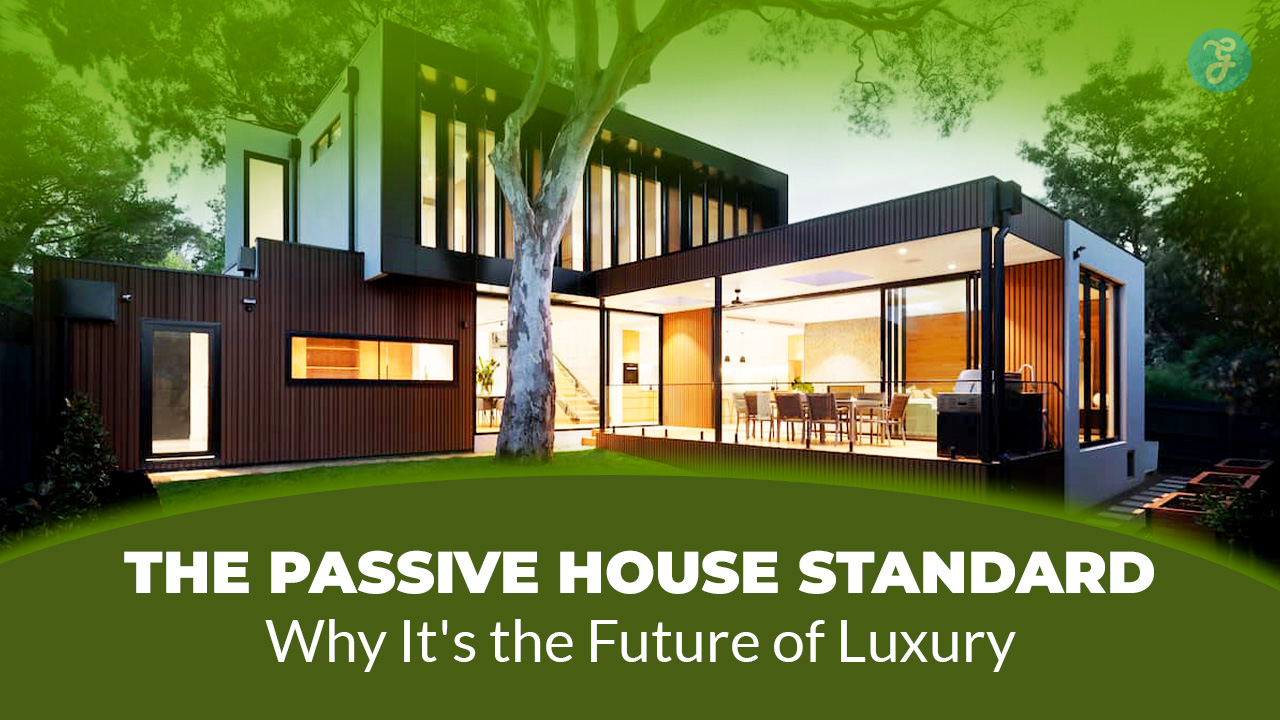
Luxury is changing. For years, “high-end” meant rare stone, bigger square footage, and statement lighting. Now the most coveted homes deliver something you cannot always photograph, but you feel it the moment you walk in: steady comfort, quiet rooms, clean air, and confidence through every season.
That is why passive house luxury homes are becoming the new benchmark for premium living. The Passive House standard turns performance into a daily experience, not a technical feature buried in a spec sheet. It is the kind of luxury that improves sleep, protects finishes, reduces noise, and makes every room feel intentionally designed.
In this guide, you will learn what Passive House truly means, why it fits modern luxury better than ever, and how top-tier projects achieve the look you want without sacrificing the performance you will love.
What The Passive House Standard Actually Means
Passive House is a rigorous building standard that reduces energy demand through an exceptional building envelope and precise ventilation. It focuses on measurable outcomes, not marketing claims. When a home hits the standard, it delivers comfort and efficiency with less mechanical struggle.
At its core, Passive House flips the typical process. Instead of adding bigger systems to fight heat loss and heat gain, you prevent those problems at the source. You build a better shell, control air movement, and keep temperatures stable with surprisingly small equipment.
Passive House In One Sentence
A Passive House is a home that stays comfortable with minimal heating and cooling because its envelope, windows, and ventilation are designed to work as one system.
The Core Principles
The Passive House playbook is straightforward, but the execution demands discipline.
A superinsulated, continuous thermal envelope slows heat flow through walls, roofs, and slabs. Airtight construction prevents uncontrolled drafts and moisture movement. High-performance windows and doors reduce losses at the weakest points of the shell.
Thermal bridge control matters in luxury projects where details get complex. Every balcony, parapet, steel beam, and cantilever can become a heat leak if not designed carefully. Balanced mechanical ventilation with heat recovery brings in fresh, filtered air and removes stale air without wasting energy.
Certification Pathways You’ll See In High-End Projects
Most luxury projects pursue one of two paths: new-build certification or high-performance retrofit certification. Retrofits often follow EnerPHit, which adapts the method for existing structures where perfect detailing may be harder.
You may also see advanced performance tiers that reward on-site renewables and deeper energy outcomes. In the luxury market, these tiers often act as a premium positioning tool. They signal that the project delivers both comfort and verified performance.
Why Luxury Is Shifting From Looks To Performance
Luxury buyers have always paid for comfort. The difference now is that comfort has become easier to quantify and harder to fake. People work from home more, travel differently, and value wellness in new ways. A home must support that lifestyle every single day.
Performance-based luxury also aligns with global realities. Energy prices change quickly. Weather is more extreme in many regions. Noise and air quality issues affect urban and suburban locations alike.
A home that stays calm and consistent through all of it feels like a true upgrade. You stop managing the house, and the house starts supporting you.
The New Luxury Priorities Buyers Will Pay For
Modern premium buyers prioritize outcomes that match their routines.
They want bedrooms that stay cool without blasting air. They want living rooms where you can sit near glass without feeling a chill. They want clean air that does not rely on opening windows during pollen season or street traffic.
They also want a home that feels protected. Stable temperatures during outages and better moisture control protect art, wardrobes, cabinetry, and flooring. That is luxury you notice over years, not just at a showing.
The Signature Luxury Benefits Of Passive House
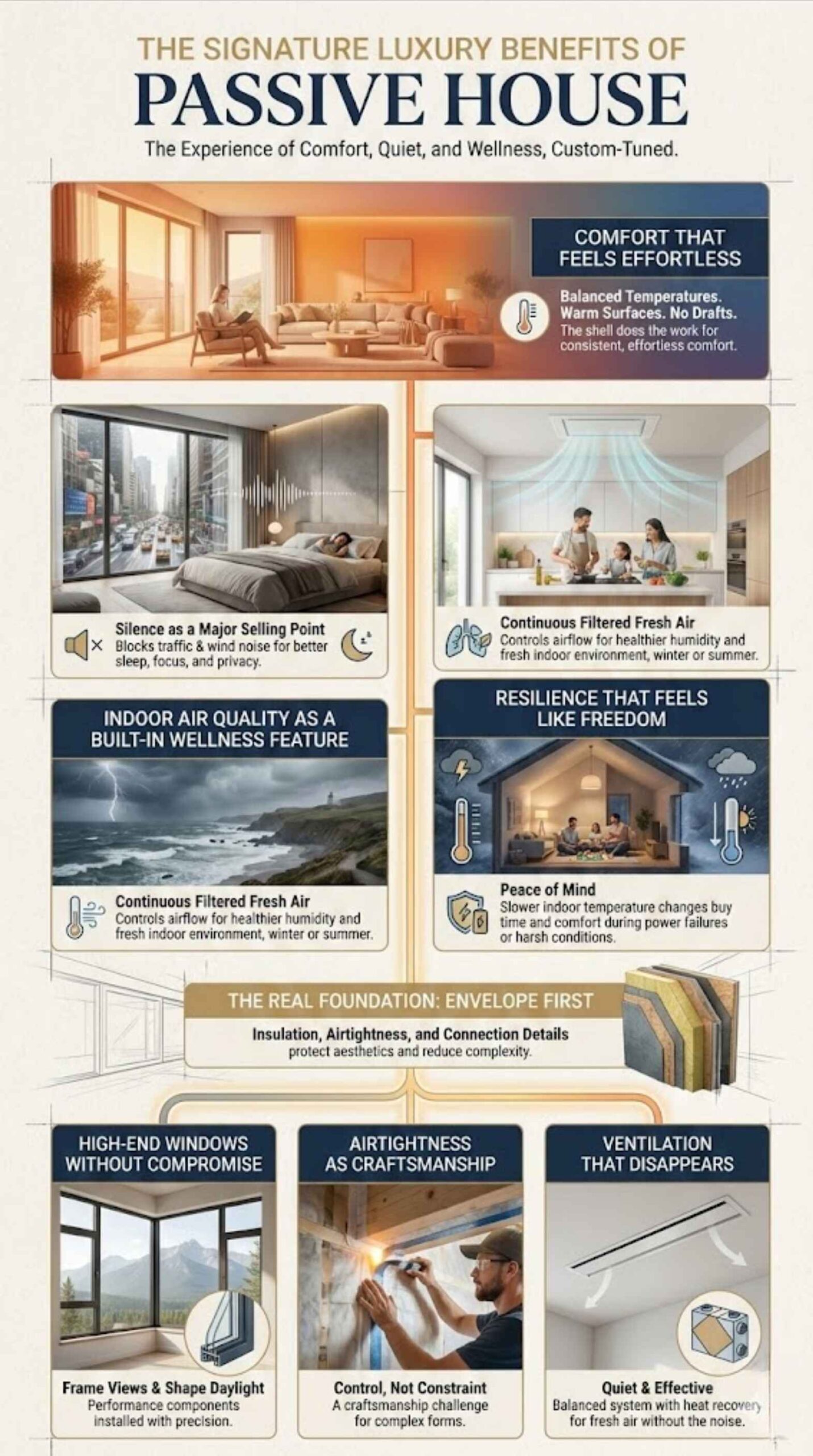
Passive House is often described with energy metrics, but luxury buyers care most about how the home feels. The standard produces a cluster of benefits that reinforce one another. That is why the experience can feel almost “custom-tuned,” even in large estates.
Comfort That Feels Effortless
In many conventional homes, temperatures vary from room to room. The corner bedroom runs cold. The sunny room overheats. The hallway feels drafty.
A Passive House dramatically reduces those swings. Warm surfaces, fewer drafts, and consistent temperatures make the whole home feel balanced. Even large spaces feel easier to condition because the shell does most of the work.
Quiet That Changes How A Home Lives
Airtight construction and high-performance windows often produce a surprising result: silence. Traffic noise drops. Wind noise around frames disappears. You can build near vibrant neighborhoods or coastal sites and still create calm interiors.
For luxury, that quiet is not a side benefit. It is a major selling point. It supports better sleep, better focus, and more privacy.
Indoor Air Quality As A Built-In Wellness Feature
Passive House ventilation brings in filtered fresh air continuously. The system controls airflow rather than relying on random leaks or occasional window opening. That supports healthier humidity levels and reduces stale air buildup.
You also gain predictability. The home stays fresh in winter without dumping heat. In summer, it can ventilate efficiently while keeping humidity and comfort in check.
Resilience That Feels Like Freedom
A high-performance envelope slows how quickly indoor temperatures change when power is out or systems fail. That does not make a home invincible, but it can buy you time and comfort when conditions are harsh.
For luxury buyers, resilience is increasingly part of the value story. It is peace of mind that matches the investment.
Envelope First: The Real Foundation Of Luxury Passive House Homes
If you want the Passive House experience, you start with the envelope. The envelope includes insulation, airtight layers, the roof, the slab, and every connection between them. In luxury projects, envelope strategy also protects aesthetics because it helps you avoid awkward mechanical workarounds later.
This is also where many projects win or lose cost control. A clean envelope concept reduces complexity on site. It makes details repeatable and easier to execute with quality.
Continuous Insulation Without Bulky Interiors
Luxury interiors demand clean lines and usable space. The good news is that Passive House does not require thick insulation inside the rooms. Many teams use exterior insulation strategies that preserve interior dimensions and reduce thermal bridges.
Wall assemblies can vary by climate and budget. What matters is continuity and careful detailing at corners, slabs, and roof transitions. When you maintain continuity, you get comfort without compromising the design language.
Airtightness As Craftsmanship, Not A Constraint
Airtightness is often misunderstood. It does not mean “sealed and stuffy.” It means you control air movement, which helps comfort and protects the building.
In high-end architecture, airtightness is a craftsmanship challenge. Complex forms, large openings, recessed lighting, and multiple rooflines introduce risk. The best teams plan the airtight layer early and protect it like a finished surface.
High-End Windows Without Compromise
Windows are a signature luxury element. They frame views, shape daylight, and define the feel of a space. In Passive House, windows also act as a performance component, so selection and installation matter more than ever.
You can still have large glass, corner views, and premium door systems. You just have to choose products and details that support the standard.
Choosing Glazing By Orientation And Climate
Not all glass belongs everywhere. High solar gain can help in cold climates when used strategically. In hot climates, you typically prioritize solar control to reduce overheating risk.
Luxury projects often include dramatic south- or west-facing glass. That can work, but you must pair it with proper shading, better glazing choices, and a smart plan for summer comfort.
Installation Details That Separate Great From Expensive
Even the best window performs poorly if installed badly. Installation must maintain airtightness and insulation continuity. That includes careful flashing, air sealing, and thermal break detailing.
When a luxury home eliminates drafts near glass, it feels different. This is one of the clearest ways a Passive House communicates quality to a buyer.
Ventilation That Disappears Into The Architecture
Luxury buyers want clean air, but they do not want to see or hear equipment. Passive House ventilation can meet that expectation when it is designed intentionally.
A balanced ventilation system with heat recovery supplies fresh air to living and sleeping areas and exhausts stale air from kitchens, baths, and utility spaces. The heat recovery core captures energy from outgoing air, which supports efficiency and comfort.
HRV Vs ERV For Premium Comfort
Both HRVs and ERVs recover heat. ERVs also transfer some moisture, which can help in certain climates. The right choice depends on humidity, local conditions, and the comfort goals of the project.
In luxury homes, comfort is the deciding factor. A well-matched system keeps humidity in a pleasant range and reduces the need for aggressive dehumidification or humidification.
Quiet Operation As A Non-Negotiable
Noise control is part of luxury HVAC design. Duct sizing, routing, and diffuser selection matter. So does commissioning.
The goal is a system you forget exists. When ventilation is quiet and steady, the home stays fresh without adding sensory clutter to the space.
Heating And Cooling: Smaller, Smarter, And More Comfortable
One of the most surprising outcomes of Passive House is how small heating and cooling systems can be. That does not mean you give up performance. It means you stop wasting capacity fighting a leaky shell.
In many projects, a few compact heat pumps, a well-designed distribution plan, and a properly balanced ventilation system are enough. That shift can free up mechanical space and reduce visual impact in luxury interiors.
Around this point, many buyers and builders realize why passive house luxury homes feel so different. The comfort comes from the building, not from a constant battle between the weather and oversized equipment.
Avoiding Oversizing And Comfort Swings
Oversized systems cycle on and off. They create temperature swings and can cause humidity issues. Luxury homeowners often interpret those swings as “the house never feels quite right.”
A Passive House approach focuses on accurate loads, stable operation, and precise control. When the envelope reduces extremes, the mechanical design can prioritize comfort rather than brute force.
Zoning That Matches Luxury Floor Plans
Large homes often need zones, but zoning should be intentional. The best designs group spaces by use patterns and exposure, not by arbitrary room counts.
You can still create different comfort preferences for bedrooms, living spaces, and guest wings. You simply do it with a clear strategy that supports stability and efficiency.
Overheating Control In High-Glass Luxury Designs
Overheating is one of the most important design checks in Passive House, especially for modern luxury homes with expansive glazing. A home can be efficient in winter and still feel uncomfortable in summer if you ignore solar gain and internal loads.
Luxury projects often add layers of heat that standard models underestimate. Think of large kitchen equipment, spa rooms, wine storage areas, home theaters, and gyms. You must plan for those loads.
Exterior Shading That Elevates Architecture
Exterior shading is one of the most effective overheating tools. Overhangs, louvers, shutters, and screens can become design features rather than compromises. Landscaping can also help by reducing late-day sun exposure.
Good shading allows you to keep dramatic glass while preserving comfort. It also protects finishes by reducing harsh sun and temperature swings near the facade.
Night Cooling And Seasonal Modes
In many climates, night cooling strategies can improve summer comfort. This may include controlled ventilation modes, operable windows in the right places, and smart automation that supports user comfort.
The key is designing these strategies early. When you treat overheating control as part of the architecture, you get a cleaner result.
Materials And Craftsmanship That Signal True High-End Passive Design
Luxury is not only about materials. It is also about execution. Passive House reinforces that truth because small details affect measurable performance.
The best projects treat airtightness, insulation continuity, and moisture control like finish carpentry. They plan them, protect them, and verify them.
Where Craftsmanship Matters Most
Certain areas deserve extra attention in luxury builds.
Transitions around window openings and door thresholds often determine whether drafts exist. Roof-to-wall connections decide whether ice dams or condensation risks appear. Balcony connections can create major thermal bridges if not handled properly.
When the team solves these details cleanly, the home performs better and looks sharper. You avoid bulky trim cover-ups and last-minute fixes.
High-End Finishes That Benefit From Better Stability
Stable indoor conditions protect premium finishes. Consistent humidity helps wood floors and millwork stay flatter. Fewer temperature swings reduce stress on stone, tile, and specialty wall systems.
For collectors, this matters even more. Art, instruments, and high-end textiles all benefit from steady conditions.
Cost, Value, And ROI In Luxury Passive House Projects
Cost is a fair question. Passive House can add upfront expense, especially in the window package and envelope detailing. The more complex the architecture, the more planning and labor you will need.
At the same time, luxury projects often spend heavily on features that do not improve daily experience. Passive House rebalances the budget toward outcomes you feel every day.
You also gain a new kind of ROI. You reduce comfort complaints, protect the building, and create a story that is easy to differentiate in a crowded luxury market.
What Actually Drives Cost
The biggest cost drivers usually include the high-performance window and door package, airtightness detailing, and labor quality. Modeling, consulting, and commissioning also add professional fees, but those fees often prevent expensive mistakes.
Complex geometry can raise cost. Cantilevers, multiple rooflines, and large custom openings increase detailing risk. The solution is not to avoid bold design. The solution is to design it with performance in mind from the beginning.
Where Passive House Can Save Money
Many projects reduce HVAC size and distribution complexity. That can offset part of the envelope and window investment. Reduced callbacks and fewer moisture issues also protect long-term value.
In luxury, you can also see savings in space planning. Smaller mechanical rooms and simpler chases can open up usable square footage and cleaner ceiling design.
Passive House Vs LEED Vs Net Zero Vs WELL
Luxury buyers often hear multiple standards and feel unsure which one matters. These standards can be complementary, but they optimize for different outcomes.
Passive House focuses on energy demand reduction and comfort through the envelope and ventilation. Net zero focuses on annual energy balance, often achieved with renewables. LEED uses a broad sustainability scorecard. WELL emphasizes health and wellness features.
Many premium projects treat Passive House as the foundation. Then they add targeted elements from other frameworks based on the client’s priorities.
A Practical Comparison For Luxury Decision-Making
| Standard | What It Optimizes | Why Luxury Buyers Care |
| Passive House | Comfort and low energy demand | Quiet, stable temperatures, clean air, verified performance |
| Net Zero | Annual energy balance | Lower operating costs, sustainability signaling, potential incentives |
| LEED | Broad green building goals | Brand perception, materials strategy, site and water measures |
| WELL | Health-focused features | Wellness narrative, indoor comfort, occupant experience |
When you start with Passive House, other goals become easier. Lower demand makes net zero more achievable. Better ventilation supports wellness objectives. Strong envelope performance improves durability outcomes that LEED also values.
Climate And Location: How Passive House Adapts
Passive House is not one “set of products.” It is a method that adapts to local conditions. A luxury home in a cold climate will emphasize insulation and solar strategy. A hot, humid project will emphasize moisture control, shading, and humidity management.
Urban, coastal, and noisy sites can benefit even more because airtightness and glazing performance improve comfort and acoustics. This is another reason passive house luxury homes are expanding into premium markets worldwide.
Hot And Humid Regions
Humidity control is central. The right ventilation strategy, careful air sealing, and smart shading can keep interiors comfortable without overworking equipment.
Cold And Mixed Climates
Thermal bridge discipline and high-performance glazing become especially important. The payoff is dramatic comfort near windows and fewer cold corners.
Coastal And High-Noise Sites
Coastal detailing must handle wind and corrosion. Urban sites benefit from acoustics and filtered ventilation, which can make city living feel far calmer.
The Biggest Myths That Hold Luxury Buyers Back
Misconceptions can slow adoption, especially in high-end markets where people fear compromise. In reality, Passive House often removes compromises rather than adding them.
Myth: You Can’t Open Windows
You can open windows whenever you want. Passive House simply means you do not need windows to keep the air fresh.
Many owners still open windows for breeze and connection to outdoors. The difference is that the home stays comfortable and healthy even when windows are closed.
Myth: Passive House Only Works For Simple Boxy Homes
Complex luxury architecture can meet the standard. It just needs early integration between design and performance. If you wait until construction documents to “add Passive House,” cost and friction go up.
When Passive House informs the earliest design moves, you can keep bold forms while protecting comfort.
Myth: It Costs Too Much
Upfront cost can increase, but value also changes. Passive House delivers daily comfort, quiet, and resilience. It also reduces long-term risk from moisture, drafts, and overheating.
For luxury buyers, that often feels like money well spent because it upgrades the lived experience.
A Step-By-Step Guide To Building A Luxury Passive House
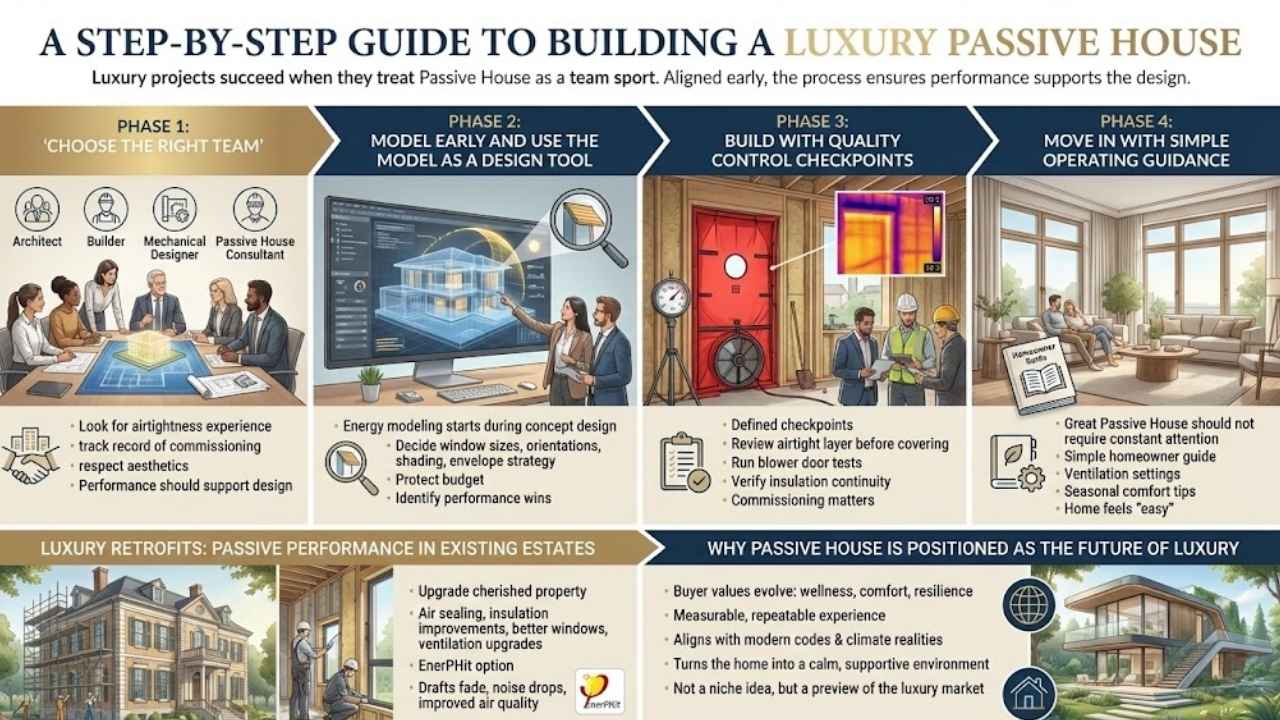
Luxury projects succeed when they treat Passive House as a team sport. The process works best when the architect, builder, mechanical designer, and Passive House consultant align early.
Phase 1: Choose The Right Team
Look for teams with airtightness experience and a track record of commissioning. Ask how they manage blower door testing, thermal bridge reviews, and window installation.
In luxury, the team must also respect aesthetics. Performance should support the design, not fight it.
Phase 2: Model Early And Use The Model As A Design Tool
Energy modeling should start during concept design. It helps you decide window sizes, orientations, shading, and envelope strategy before details become expensive to change.
Early modeling also helps you protect budget. You can identify the biggest performance wins and avoid spending money on low-impact upgrades.
Phase 3: Build With Quality Control Checkpoints
Successful builds include defined checkpoints. The team reviews the airtight layer before it gets covered. They run blower door tests at appropriate stages. They verify insulation continuity and resolve thermal bridge risks.
Commissioning matters just as much. Balanced ventilation and properly tuned systems define the final comfort experience.
Phase 4: Move In With Simple Operating Guidance
A great Passive House should not require constant attention. The best teams provide a simple homeowner guide that explains ventilation settings, filter changes, and seasonal comfort tips.
Owners often say the home feels “easy.” That is the point.
Luxury Retrofits: Bringing Passive Performance To Existing Estates
Not every luxury buyer is building new. Many want to upgrade a cherished property or modernize an estate without losing character. Passive House methods still apply.
Retrofits often focus on air sealing, insulation improvements where feasible, better windows, and ventilation upgrades. Some projects pursue EnerPHit to achieve strong results within real-world constraints.
A well-executed retrofit can transform how an older luxury home feels. Drafts fade. Noise drops. Rooms become usable year-round. Air quality improves without sacrificing the charm that made the property special.
Why The Passive House Standard Is Positioned As The Future Of Luxury
Luxury evolves when buyer values evolve. Today’s premium clients want wellness, comfort, and resilience in a way that older definitions of luxury did not fully address.
Passive House fits this shift because it creates a measurable, repeatable experience. It aligns with modern codes and climate realities. It differentiates a home in the market with benefits that show up during every season, in every room.
Most importantly, Passive House turns the home into a calm, supportive environment. That is why passive house luxury homes are not a niche idea anymore. They are a preview of where the luxury market is headed.
Wrap-Up
The Passive House standard delivers a new kind of luxury. It prioritizes comfort you can feel, quiet you can enjoy, and air quality you can trust. It also supports long-term durability and resilience, which protects both lifestyle and investment.
If you are planning a premium new build or a high-value retrofit, start by aligning your team early. Treat the envelope as the foundation, design windows and shading with intention, and commission the systems with care. When you do, you get luxury that performs beautifully for decades.