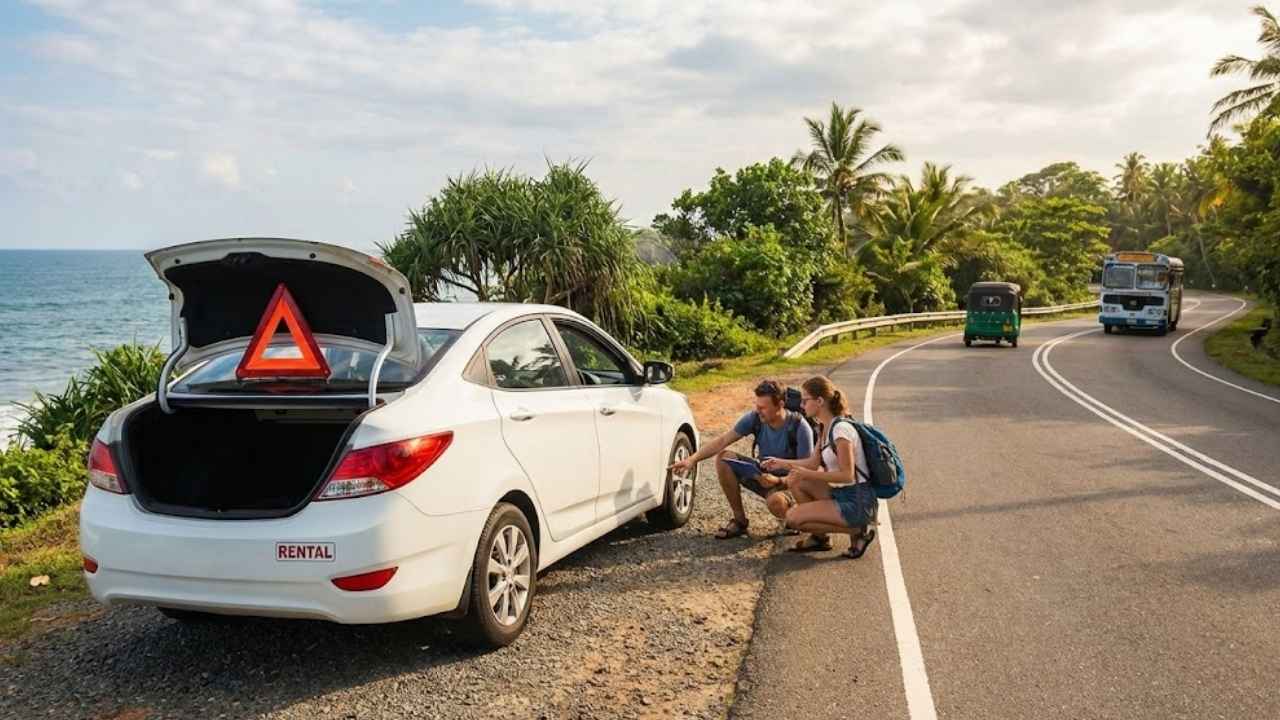
If you’re planning to do a lot of exploring in Sri Lanka, renting a car is the best option. That said, road conditions can be tricky, so finding a car with the best safety features is a must.
Essentials
This is what the bare minimum looks like:
- Seat belts: Always make sure that every seat, including rear seats, has a functioning seat belt. This protects everyone if an accident were to occur.
- Airbags, driver plus front passenger, and side airbags: Airbags and seat belts significantly increase safety in collisions, so make this a non-negotiable.
- Reliable braking system, preferably ABS: Roads may be slippery, especially during rain, or unpredictable, with animals and pedestrians crossing, so you want a car whose brakes respond well. ABS helps you maintain control even under sudden braking.
- Regular maintenance and good tyre condition: worn tyres, uneven tread, or under-inflation can be dangerous, especially on wet or winding roads common in Sri Lanka. Always inspect the tyres before you drive off.
Comfort and Environment Features
Sri Lanka’s climate is hot and humid, so certain features are essentials, not luxuries. Good ones to have include:
- Effective air conditioning: A must, especially if you’re driving long distances in midday heat. It helps you stay alert and avoid fatigue.
- Good ventilation, clean cabin, functioning windows/doors. Small but often overlooked – a stable, comfortable cabin helps you stay focused.
- Optional extras like GPS: This feature is a must-have if it’s your first time driving in Sri Lanka and you’re unfamiliar with local roads.
- More extras: child/baby seat, if you’re travelling with a child. Good rentals should offer that.
It’s good to do some prior research and see who consistently comes up for Sri Lanka car hire. Certain names like Malkey Rent a Car tend to appear again and again.
Legalities and Documentation
Got yourself a safe rental? That’s only part of the picture. Paperwork and support need to be looked at as well:
- Comprehensive insurance that covers driver, passengers and third party is a must have.
- Complete documentation and licence support are essential. As a foreigner, you’ll often need a valid driving licence and an approved permit or endorsement in Sri Lanka before you legally can drive.
- There needs to be a clear rental agreement with a condition report. Always inspect the car thoroughly before driving off, dents, scratches, tyre condition, brake function, and make sure they’re all recorded. That way, there won’t be any unnecessary confusion when returning the car.
- A good rental company would offer roadside assistance. Roads can get rough sometimes. Having a rental backed by roadside assistance gives you peace of mind if something goes wrong.
Flexibility
You got all the gear you need? Excellent, but that’s only part of the picture. There are some other things to consider as well.
- There should be more than one type of vehicle. Depending on your itinerary, coastal roads, cities, hills, or rural areas, you might need a compact car, a 4WD SUV, or a van. A rental offering a wide choice lets you match the vehicle to your plans.
- Self-drive or chauffeur-assisted drive could be immensely helpful. If you’re not confident in local driving conditions, having a trained driver can save you a lot of stress. If you’re seeking independence, self-drive is fine as long as all the safety boxes are checked.
- You should be clear on pricing and terms.
- Around-the-clock customer service is a must. This comes in handy if you’re planning late-night arrivals or need help.
Why Should You Care About These Safety Features?
Sri Lanka is home to coastal highways as well as narrow rural lanes, so you can expect everything from busy city traffic to quiet countryside roads. This variety calls for responsible driving and a well-prepped car.
- Potholes, unlit rural roads, sudden weather changes, stray animals, or people are all very real in Sri Lanka. Features like good tyres, working brakes, and stable handling make all the difference.
- Traffic can be unpredictable: Buses, tuk-tuks, motorbikes, pedestrians, often share the same stretch of asphalt. Defensive driving, plus a safe, well-maintained car, helps you navigate safely.
- Chances are you don’t know local driving norms, so having a car that checks all the safety boxes gives you some extra buffer while you adapt.
What to Check First Thing When You Pick Up a Rental
Before you take to the road:
- Inspect all seatbelts, front and back, fasten and test them.
- Check that airbags are present.
- Examine tyres.
- Test brakes.
- Turn on AC to make sure it works.
- Verify the documentation is complete.
- Make sure you know under what conditions you should call roadside support
If anything seems off, don’t drive until it’s fixed or you’re offered a different vehicle.