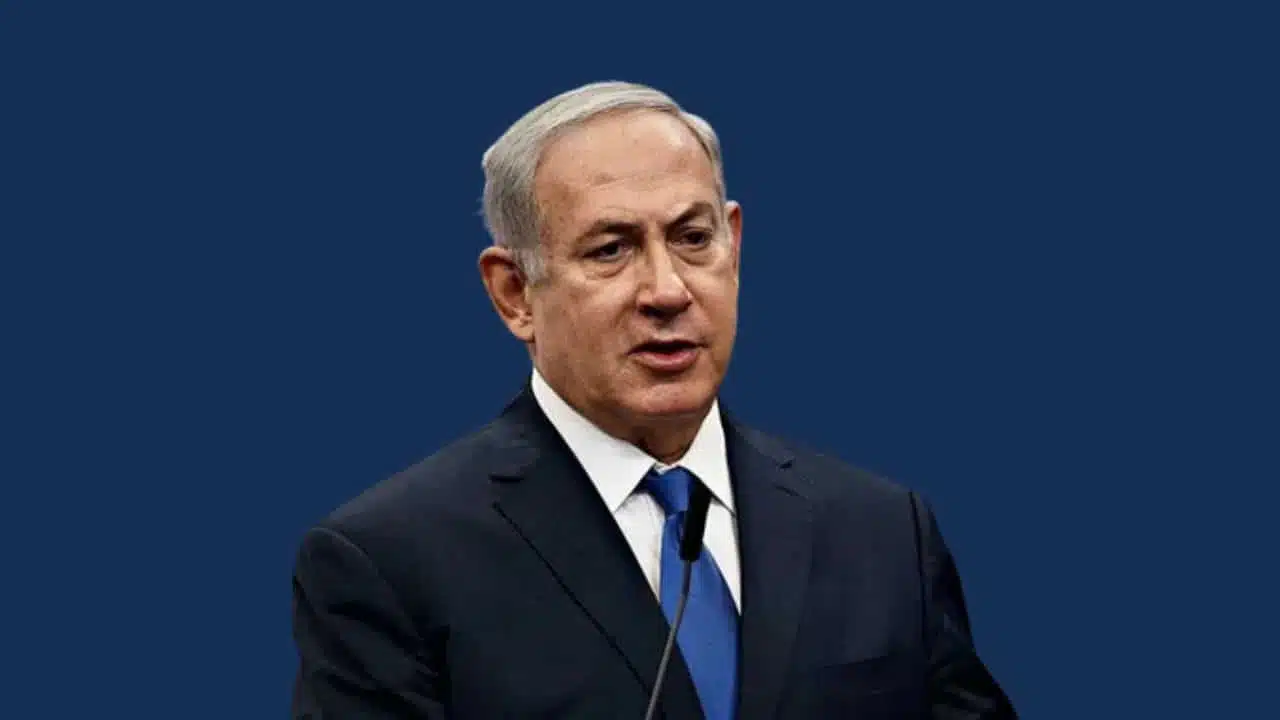
Israel has dramatically increased security around Prime Minister Benjamin Netanyahu, Defense Minister Israel Katz, and other senior political and military officials. The move comes after Israeli forces carried out a major strike in Yemen that killed high-ranking members of the Houthi movement. Israel’s internal security service, Shin Bet, has deployed what officials described as special and extraordinary protection measures, far beyond routine procedures, in anticipation of possible retaliation. Cabinet meetings were relocated to secure and undisclosed facilities, underscoring the severity of the threat environment.
The Strike in Sanaa and Its Targets
On August 28, 2025, the Israel Defense Forces (IDF) launched a precision strike on the Yemeni capital, Sanaa. The attack targeted a gathering of senior Houthi officials who were assembled during a speech broadcast by the group’s leader, Abdulmalik al-Houthi. Among those killed was Ahmed Ghaleb Nasser al-Rahawi, the prime minister of the Houthi government, along with several of his ministers and top military officials. According to regional intelligence assessments, the strike effectively decapitated a significant portion of the group’s governing leadership, delivering one of the most severe blows to the Houthis in recent years.
The attack was part of Operation Lucky Drop, an Israeli campaign aimed at neutralizing the Houthi leadership structure. Military analysts noted that the precision of the strike and the concentration of casualties among senior officials marked a turning point in Israel’s Yemen campaign, which has intensified since mid-2025.
Houthi Reaction and Threats of Retaliation
Following the strike, Abdulmalik al-Houthi declared that the group would not be deterred. He announced that the Houthis would continue to escalate military operations against Israel, pledging to increase the number of missile and drone launches. According to his broadcast, the Houthis view these attacks as a continuation of their broader campaign of resistance, particularly tied to the conflict in Gaza. The movement also claimed that Israeli bombardments of Yemen would only strengthen its determination rather than weaken its fighters.
The Houthis framed the death of their prime minister and ministers as martyrdom that would fuel their struggle. The leadership emphasized that the coming weeks would bring further military “achievements,” signaling preparations for new waves of long-range strikes against Israel and allied targets.
Broader Pattern of Attacks Since 2023
The Houthis, who are aligned with Iran, began launching missiles and drones toward Israel after the outbreak of the Gaza war in October 2023. Their stated goal has been to show solidarity with Palestinians by striking Israeli territory and Israeli-linked shipping. Since then, the group has repeatedly targeted Israeli cities and infrastructure, although many of their projectiles have been intercepted by Israel’s multilayered defense systems.
In response, Israel has expanded its campaign against the Houthis, conducting airstrikes across Yemen. These operations have targeted military bases, airports, power stations, and weapons storage sites. The strike on August 28 represented the culmination of months of stepped-up attacks, with Israeli officials vowing to dismantle the group’s command structure systematically.
Netanyahu’s Stance and Israel’s Strategy
During a government meeting held in a secure location, Prime Minister Netanyahu dismissed the Houthis’ vows of revenge as bluster but underscored that Israel was committed to escalating its counteroffensive. He emphasized that Israel had succeeded where past coalitions of Western and Arab states had failed, pointing to the elimination of senior Houthi leaders as evidence of Israel’s superior operational capabilities.
He further stated that Israel’s broader strategy since the short but intense war with Iran in June 2025 has been to systematically strike members of what he calls the “axis of resistance.” This axis includes Iran, Hezbollah in Lebanon, Hamas in Gaza, and the Houthis in Yemen. According to Israeli assessments, the elimination of Houthi leaders fits into this larger campaign to degrade the military infrastructure of Iran’s regional allies on multiple fronts.
Arrests and Crackdown in Yemen
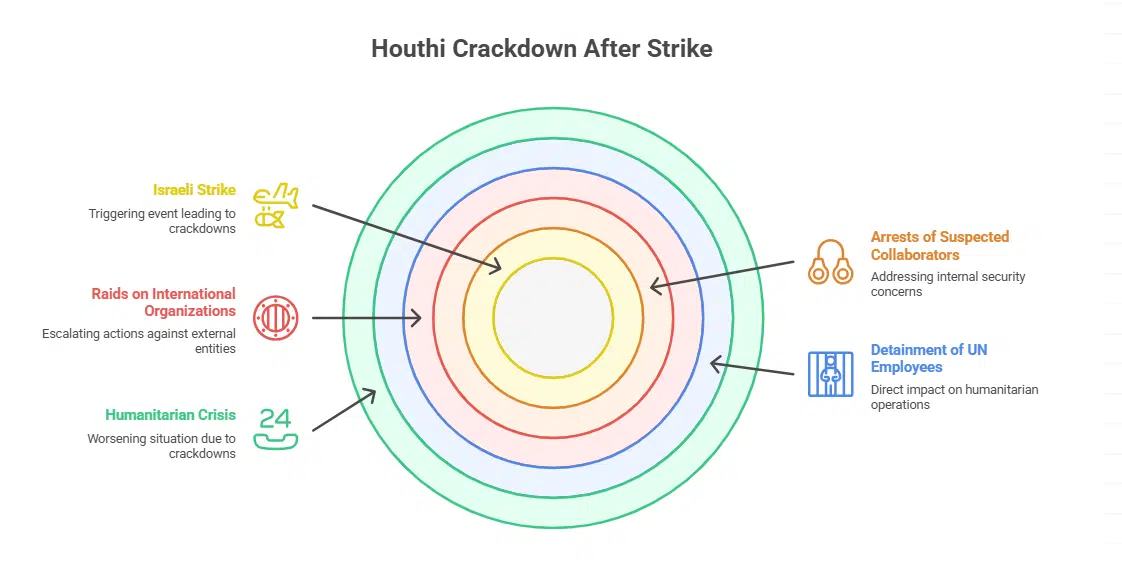
In the aftermath of the strike, Houthi authorities launched sweeping crackdowns in areas under their control. Security sources reported that dozens of people were arrested in Sanaa and other regions on suspicion of collaborating with Israel or providing intelligence to foreign powers. The arrests reflected the leadership’s fear of internal leaks and informant networks, especially after the devastating precision of the Israeli strike.
The Houthis also targeted international organizations. Armed fighters stormed United Nations premises in both Sanaa and Hodeida, detaining at least 11 UN employees. Those taken included staff members from agencies such as the World Food Programme, WHO, and UNICEF. International observers condemned the arrests as a violation of international law and a dangerous escalation that threatened humanitarian operations in a country already facing one of the world’s worst humanitarian crises.
Maritime Security Concerns in the Red Sea
The impact of the conflict extended to maritime traffic in the Red Sea. A Liberia-flagged, Israeli-owned tanker reported an explosion in the waters southwest of Saudi Arabia’s port city of Yanbu. The vessel’s crew heard a loud blast after detecting a splash nearby, although no damage was reported and the ship continued on its route.
The British maritime security company Ambrey assessed that the incident bore hallmarks of Houthi targeting patterns, which often focus on Israeli or Israeli-linked vessels. However, the Houthis did not immediately claim responsibility, and international maritime authorities have launched investigations. Since late 2023, Houthi forces have regularly attacked ships in the Red Sea, claiming they were taking action against vessels tied to Israel and its allies.
Humanitarian and Regional Implications
The detention of UN staff raised alarm across international agencies. The UN Secretary-General called for their immediate release, stressing that humanitarian workers must be protected to continue providing life-saving assistance in Yemen. The raids also highlighted how the ongoing conflict in Gaza and the wider Middle East has intensified instability in Yemen, further undermining fragile relief operations.
The strike against Houthi leaders has not only shifted military calculations but also deepened concerns about the widening regional conflict. Analysts warn that continued escalations could endanger international shipping lanes in the Red Sea, threaten global energy supplies, and further destabilize fragile political situations in both Yemen and neighboring Gulf states.
Summary of Key Developments
| Development | Details |
|---|---|
| Israeli Strike | Killed Houthi PM Ahmed al-Rahawi and multiple ministers on Aug 28, 2025 |
| Security in Israel | Shin Bet boosted protections for Netanyahu, Katz, and senior officials |
| Houthi Response | Pledged escalation of drone, missile, and maritime attacks |
| Arrests in Yemen | Dozens detained for alleged collaboration; UN offices raided, 11 staff taken |
| Maritime Incident | Explosion reported near Israeli-owned tanker in Red Sea; no casualties |
| Broader Context | Part of Israel’s regional campaign against Iran-aligned groups since Gaza war and June 2025 Iran conflict |
The killing of senior Houthi leaders marks one of Israel’s most consequential operations in Yemen, eliminating figures at the top of the rebel administration. While Israel frames the strike as a necessary step to dismantle the Iran-backed axis, the Houthis have promised to intensify their retaliation, targeting Israel directly and indirectly through regional maritime traffic. The detention of UN staff and threats to shipping highlight the broader risks of escalation, as the conflict in Gaza continues to ripple across the Middle East and into global trade routes.