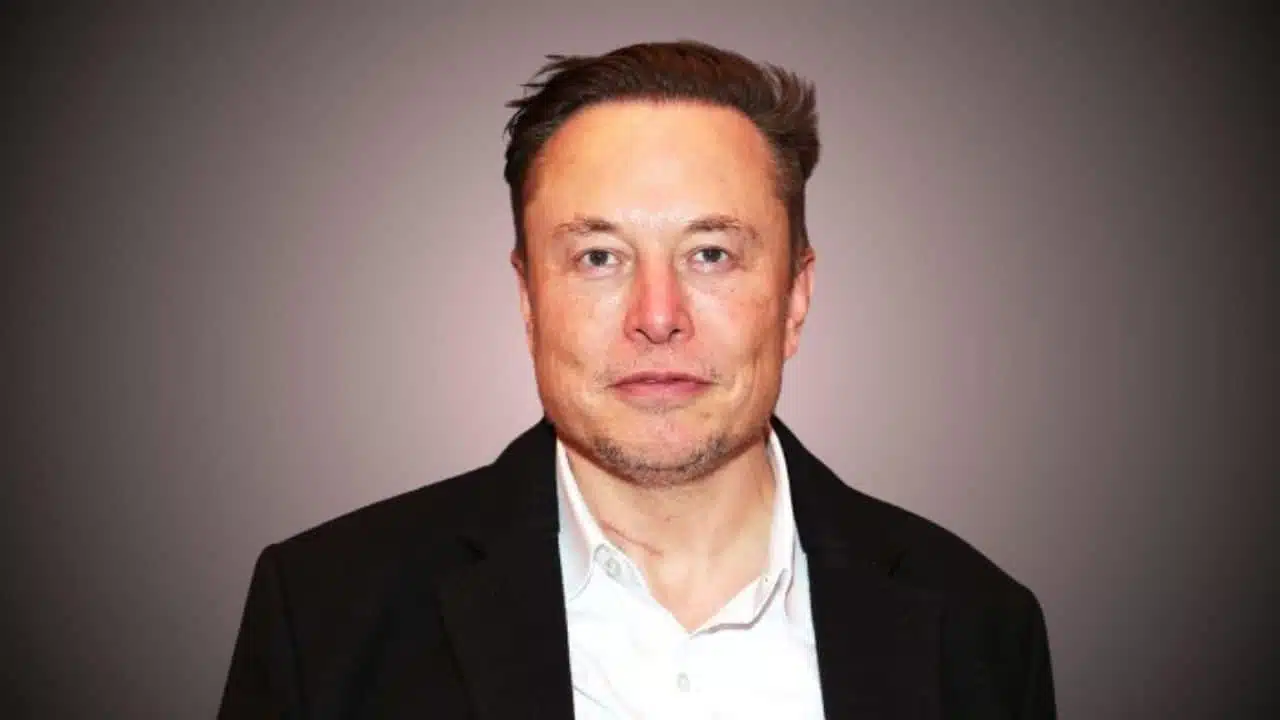
Elon Musk, already known for his unpredictable style and provocative branding, has introduced a new software venture under xAI called Macrohard. The name is a deliberate parody of Microsoft, designed to attract attention with humor that borders on juvenile. For Musk, however, the lighthearted branding conceals serious ambition. He has often chosen unusual names for his projects in the past—such as the “Boring Company” for his tunnel project—and now Macrohard follows in the same pattern.
The play on words may amuse or irritate, but the company itself is intended to push the limits of how software can be developed, relying almost entirely on artificial intelligence to design, test, and improve complex systems.
The Concept Behind Macrohard
Musk envisions Macrohard as a purely AI-driven software company. His idea builds on the principle that software companies like Microsoft create applications, platforms, and services but generally do not physically manufacture hardware themselves. From that perspective, he argues that such companies could be replicated through AI systems, since the core business—designing and producing software—can in theory be automated.
Macrohard’s design centers on multi-agent AI systems. According to Musk’s outline of the project, hundreds of AI models would be tasked with specialized roles such as writing code, debugging, generating images and videos, interpreting data, and simulating end-user behavior. These AI agents would work collaboratively, testing each other’s output in virtual environments until the result is polished enough to resemble human-created software.
This is an ambitious undertaking. While AI models today can generate useful code and content, they often require heavy supervision. Human engineers still step in to debug errors, refine outputs, and ensure functionality. Musk’s Macrohard proposes a future where this supervision is drastically minimized, and the AI ecosystem itself takes over most of the creative and technical process.
Trademark Filing and Early Legal Steps
The seriousness of the project is supported by its legal filings. On August 1, 2025, xAI formally filed a trademark application for the Macrohard name with the United States Patent and Trademark Office. Trademark documents reveal that the company’s intended areas of operation are very broad, stretching beyond gaming or entertainment software. The filing covers categories like video games, legal analysis, strategic planning, professional advisory services, and more.
This breadth suggests that Musk wants Macrohard to position itself not just as a niche AI startup but as a wide-reaching software ecosystem capable of disrupting multiple industries. In parallel, corporate records show the creation of Macrohard Ventures, LLC in Delaware on August 22, 2025, further anchoring the new entity within Musk’s expanding portfolio of companies.
Macrohard’s Potential Scope and Competition
The exact products Macrohard will launch remain unspecified, but its direction appears clear. Based on the trademark coverage and Musk’s own descriptions, potential offerings could include:
-
Productivity Tools: AI-generated applications similar to office suites, planning platforms, and automation services.
-
Gaming and Entertainment: AI-driven coding tools for video games or immersive interactive environments.
-
Business Services: Platforms capable of offering legal document analysis, market research, or strategic advisory simulations.
-
Creative and Media Applications: Content production systems for images, video, and even software testing.
This approach positions Macrohard as a potential rival to established tech players—not only Microsoft but also Google, OpenAI, and Meta—all of whom are heavily investing in AI-assisted software development. The name itself makes the target clear: Musk is deliberately signaling competition with Microsoft’s long dominance in the software industry.
Technical Backbone: xAI’s Colossus Supercomputer
To support such an ambitious venture, Macrohard will rely on xAI’s Colossus supercomputer, which is currently under construction in Memphis, Tennessee. Colossus is expected to be one of the largest AI compute clusters in the world, powered by hundreds of thousands of NVIDIA GPUs.
This enormous infrastructure would allow Macrohard’s AI agents to operate simultaneously, running simulations, generating code, and stress-testing applications on a massive scale. Musk has repeatedly emphasized that the AI race is not only about innovation but also about compute capacity, and Macrohard is positioned to take advantage of this high-end infrastructure.
The Bigger Picture: Musk’s Expanding AI Empire
Macrohard is only one piece of Musk’s rapidly growing AI ecosystem. Through xAI, he has already introduced Grok, a conversational AI integrated into the social platform X (formerly Twitter). Now, Macrohard extends his ambitions deeper into software development.
Adding Macrohard to Musk’s collection of companies—which already includes Tesla, SpaceX, Neuralink, The Boring Company, and X Corp—demonstrates his strategy of building interconnected ventures. AI plays a role in all of them: self-driving at Tesla, rocket design at SpaceX, neural technology at Neuralink, and digital communications at X. Macrohard could become the layer that ties these together, providing AI-created applications for a variety of fields.
Challenges and Open Questions
Despite the excitement, Macrohard faces significant obstacles:
-
Technical Limitations: Current AI systems are powerful but not yet capable of fully autonomous software creation without human oversight. Debugging remains a major issue.
-
Intellectual Property Risks: AI-generated code may inadvertently replicate existing copyrighted material, raising legal disputes.
-
Market Resistance: Established players like Microsoft, Google, and Apple already dominate enterprise and consumer software, making disruption difficult.
-
Unclear Business Model: While the trademark filing is wide-ranging, there is still no clarity about how Macrohard will package and monetize its services.
Another open question is whether Musk intends Macrohard to serve consumers directly, or whether it will operate as a B2B platform, providing AI tools for other companies to build their own applications.
Industry and Public Reaction
The unusual name has already sparked debate online, with many observers pointing out that “Macrohard” has long been an inside joke within programming circles. Musk’s decision to formalize it as a company name continues his pattern of using provocative branding to draw attention.
Critics, however, argue that the name may undermine the company’s credibility, especially if Macrohard aims to compete in serious fields like legal analysis or enterprise software. Supporters counter that Musk’s track record—transforming markets in space travel, electric vehicles, and social media—shows that unconventional branding has not hindered his ability to attract investors and talent.
Macrohard may have a lighthearted name, but its ambitions are anything but trivial. With backing from xAI’s massive compute infrastructure and Musk’s track record of disrupting established industries, the project could reshape how software is built and delivered. Still, many practical hurdles remain before the vision of a “purely AI software company” can become a reality.
If successful, Macrohard could stand alongside Musk’s other ventures as another example of his ability to combine bold ideas with technical scale. If it stumbles, it may serve as a reminder of the limits of AI hype in the face of real-world complexity.