
Hey there, are you tired of the ups and downs of the stock market? Maybe you’ve put money into stocks and bonds, only to watch your savings shrink when things get rocky. It’s frustrating, right, to feel like your hard-earned cash is at the mercy of wild swings?
Here’s a neat fact: commercial real estate, like office buildings and retail spaces, offers a solid way to own something real, a hard asset you can see and touch, unlike those tricky financial markets.
Our blog post, “5 Reasons Why Commercial Real Estate Could Be Right for You,” will show you how this path can bring steady cash flow and peace of mind. We’ll break down simple perks, from income potential to tax benefits, that might just fit your goals.
Stick around to learn more!
Key Takeaways
- Commercial real estate can give returns of 6% to 12% yearly, much higher than homes at 1% to 4%.
- A $500,000 down payment on a $2 million property could turn into a 300% return if sold for $4 million.
- Long-term leases of 5 to 10 years offer steady cash flow and stability for property owners.
- Property values often rise with inflation, like the 7.5% spike in January 2022, protecting your money.
- Tax perks include deductions on costs and deferring capital gains with a 1031 exchange per IRS rules.
Income Potential

Let’s talk cash with commercial real estate. This investment can bring in some serious money, way more than residential options like single-family homes. Think about this: commercial properties often yield returns between 6% and 12% each year.
Compare that to homes, which max out at just 1% to 4%. That’s a big gap, right? So, if you’re hunting for a solid income stream, commercial real estate investment might just be your golden ticket.
Now, picture sinking $500,000 as a down payment on a $2 million property. You sell it later for $4 million. That’s a 100% return on the full price, but with your initial cash, it jumps to a whopping 300% return on your investment.
Plus, with rising costs for building materials pushing up property value, your cash flow gets even sweeter. It’s like planting a money tree that keeps growing, offering you passive income while the market climbs.
Stick with commercial spaces, maybe office buildings or apartments, and watch that income potential soar.
Long-Term Stability and Appreciation
Stability in commercial real estate feels like a sturdy anchor in a stormy sea. Think about those long-term leases, often lasting 5 to 10 years, locking in steady cash flow for property owners.
You don’t have to worry about tenants packing up every year. With creditworthy tenants in the mix, that rental income becomes as reliable as your morning coffee. This kind of setup in office buildings or apartment buildings gives you peace of mind, knowing your real estate investment isn’t swaying with every little market breeze.
Plus, it’s a solid way to build your net worth over time.
Appreciation adds a sweet bonus to this deal, kinda like icing on a cake. Property values in commercial real estate often climb with economic growth, especially when inflation spikes, like it did at 7.5% in January 2022.
This makes your hard asset a strong inflation hedge, protecting your money from losing value. As the consumer price index rises, so does the worth of your property, offering a shield against those pesky inflationary pressures.
Owning this tangible asset means you’re not just sitting on cash; you’re growing wealth through property appreciation in a real estate market that can weather tough times.
Tax Advantages
Hey there, let’s chat about a sweet perk of commercial real estate, the tax advantages. Owning properties lets you deduct costs tied to managing and maintaining them. Think of it as a little gift from the tax code, cutting down what you owe.
Plus, those property expenses can really add up, so this break makes a big difference.
Dig this, you can also defer taxes on capital gains with a 1031 exchange, following IRS rules. Sell a property at a profit, and still keep more cash in your pocket by rolling it into another real estate investment.
Even better, tax benefits stick around when you make money on a sale. It’s like getting a high-five from Uncle Sam for being a savvy real estate investor!
Portfolio Diversification
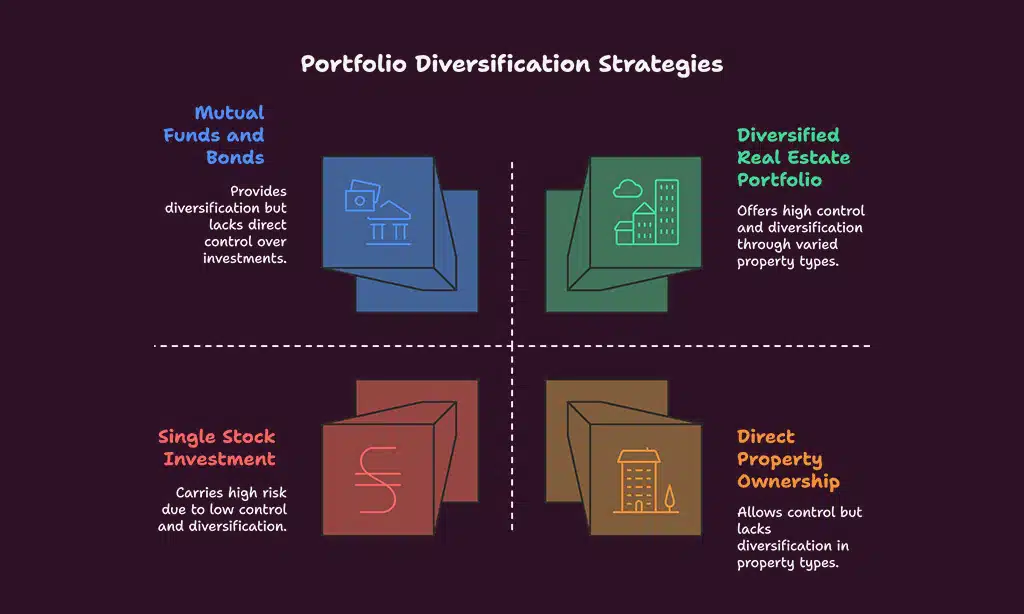
Think of your investment portfolio as a big, colorful pie. Adding commercial real estate, like office buildings or retail spaces, gives you a fresh slice that doesn’t move with stocks and bonds.
This mix lowers your risk since these properties have a low connection to the ups and downs of the market. You’re not stuck watching one piece crumble while the rest stands strong.
Spreading your cash across various types, such as hotels, medical offices, or data centers, adds even more safety. Leasing to multiple tenants in these spots cuts down on real estate risks.
Plus, owning a hard asset like this offers direct control, unlike betting on mutual funds or bonds. It’s like holding the reins yourself, and who doesn’t want that kind of power over their net worth?
Flexibility in Lease Structures
Hey there, let’s chat about something cool in commercial real estate. I’m talking about the awesome flexibility in lease structures. Unlike residential real estate, where rules can be super strict, commercial leases give you room to play.
You can set terms that work best for you as a landlord. Imagine crafting a deal that fits like a glove, matching your cash flow needs with ease.
Now, check this out with triple net leases in property investments. Tenants take on big costs like taxes, utilities, and insurance. That’s right, they handle property expenses, even during times of high inflation.
As a landlord, you just focus on mortgage payments. Plus, fewer consumer protection laws apply compared to residential leases. So, you dodge a lot of headaches. Isn’t that a sweet setup for boosting your income potential?
Takeaways
Well, folks, commercial real estate might just be your golden ticket to building wealth. Think of it as a sturdy ship sailing through choppy financial seas, offering stability and growth.
Got a spark of interest? Reach out to Harkins Commercial Real Estate for the inside scoop on amazing property deals. Let’s turn that curiosity into your next big win!
FAQs on Reasons to Invest in Commercial Real Estate
1. Why should I consider commercial real estate over residential real estate?
Hey, if you’re looking to dive into real estate investments, commercial real estate, like office buildings, might just be your ticket to higher yields. It often offers a stronger cash flow compared to residential properties, and who doesn’t want that extra dough?
2. How does commercial real estate act as a hedge against inflation?
Well, buddy, think of commercial real estate as a sturdy shield. With property appreciation often tied to the consumer price index, it can protect your net worth from the sneaky effects of inflation, keeping your investment portfolio solid.
3. What kind of income potential does commercial real estate offer?
Listen up, commercial real estate can be a goldmine for passive income. We’re talking steady cash flow from tenants, plus the chance for capital gains if property values climb. It beats some stocks and bonds for consistent returns, no kidding.
4. Are there tax advantages to real estate investing in commercial properties?
You bet there are, pal! Tax benefits, like accelerated depreciation, can lower what you’re taxed on, and depreciation recapture might even sweeten the deal. It’s like getting a little pat on the back from Uncle Sam for your hard asset investment.
5. What risks should I watch out for in commercial real estate investing?
Hey, don’t jump in blind, alright? Real estate risks, such as fluctuating interest rates or unexpected property expenses, can hit hard, especially with macroeconomic shifts. Keep an eye on the cost of capital, or you might feel like you’re juggling debts.
6. Can commercial real estate diversify my investment portfolio?
Absolutely, my friend, it’s like adding a spicy twist to a bland dish. As an alternative investment, commercial real estate offers a tangible asset that can balance out the ups and downs of us treasuries or junk bond holdings. Plus, with a real estate sponsor or private equity firm, you’re not going it alone in secondary markets.