Hey there, have you ever slipped on a wet floor in a store, or maybe got hurt in a car accident, and wondered who’s gonna pay for your pain? It’s a real mess when you’re injured because of someone else’s mistake, and figuring out what to do next can feel like chasing your own tail.
Here’s a key fact to chew on: personal injury and public liability claims both deal with harm caused by negligence, but they’re not the same beast. In this blog, we’re breaking down the “7 Key Differences Between Public Liability And Personal Injury Claims In Australia” to clear up the confusion.
We’ll walk you through simple steps, like understanding duty of care and time limits for claims, so you know exactly how to tackle your situation. Stick around, we’ve got answers!
Key Takeaways
- Public liability claims happen in public spaces like stores or parks, often tied to incidents like the Devonport jumping castle tragedy in Tasmania with injuries and fatalities.
- Personal injury claims cover private or workplace harms, such as car crashes or medical malpractice, and include compensation for medical bills and lost wages.
- Time limits differ: personal injury claims in Queensland have a 3-year limit, while public liability claims need filing within 9 months of the incident or 1 month of hiring a lawyer.
- Duty of care varies; public liability focuses on property owners’ responsibility, while personal injury ties to specific roles like doctors or employers.
- Legal help is key; contact experts like Attwood Marshall Lawyers at 1800 621 071 or Tina Davis at 02 6670 1003 for support on claims.
Context of the Incident
Moving from the basics of public liability and personal injury claims, let’s zoom in on where these incidents happen. The context of an event, or the setting, plays a huge role in deciding which type of claim you might file.
Think about slipping on a wet supermarket floor, or maybe tripping over uneven pavement on a sidewalk. These are classic public liability claims because they occur in public spaces where property owners must maintain safety.
Now, picture a more tragic scene, like a collapsing balcony or a fall into a lift well. These serious public liability accidents show how dangerous public areas can become if neglected.
Take the heartbreaking Devonport jumping castle incident in Tasmania, for instance; it led to terrible fatalities and injuries. On the flip side, personal injury claims often stem from private or workplace mishaps, like car accidents or medical negligence.
So, the spot where your injury happens, be it a stairway or a road, sets the stage for whether you’re dealing with public liability or personal injury law.
Duty of Care Differences

Let me break this down for you, folks. Duty of care in public liability claims means someone, like a property owner, must take reasonable steps to keep you safe. Think of it as a promise to prevent harm.
If they fail, say, by not fixing a broken stair, they breach that duty. In Australia, especially in Western Australia, claimants must prove negligence by showing a lack of reasonable precautions.
It’s like proving they dropped the ball big time.
Now, flip over to personal injury claims, and the duty shifts a bit. Here, it often ties to specific roles, like a doctor or employer owing you care under strict rules. For instance, in medical malpractice or workplace accidents, they must meet a high standard of care.
Negligence still needs proof, showing duty, breach, cause, and damage. It’s not just about slipping on a wet floor; it could be deeper, like failing your physical health at work.
Let’s move on to see what types of compensation you might claim next.
Types of Compensation Available
Got a claim on your mind? Let’s break down the types of compensation available for public liability and personal injury claims in Australia, so you know what to expect.
- General Damages: These cover the pain and suffering you endure after an injury. In both public liability and personal injury claims, this helps make up for the emotional stress or trauma you face. Think of it as a way to ease the hurt that’s not just physical, like the mental health toll from a bad fall on unsafe stairs.
- Loss of Earnings: If you can’t work due to your injury, this compensation kicks in. It replaces the income you’ve lost, whether from a motor vehicle accident or a slip in a public place. Public liability claims and personal injury lawsuits often include this to keep your bills paid while you recover.
- Medical Expenses: Got doctor bills piling up? This covers costs like hospital stays or rehab after personal injuries. In both types of claims, from medical malpractice to road accidents, you’re supported for treatments needed to get back on your feet.
- Care and Rehabilitation Costs: Sometimes, recovery needs extra help, like home care or therapy. This type of payout in personal injury law ensures you get the support for long-term healing. It’s common in severe cases, say, after a rough motor vehicle accident needing ongoing aid.
- Emotional Distress Compensation: Personal injury claims often go a step further than public liability ones. They may include money for emotional well-being, especially if the incident left deep scars on your mind. Imagine the mental weight of a serious accident; this aims to lighten that load with some financial relief.
Applicable Legislation
Hey there, let’s chat about the laws that guide public liability and personal injury claims in Australia. These rules differ by state and type of claim, so pay close attention. In Queensland, motor vehicle accident compensation falls under the Motor Accident Insurance Act 1994.
Meanwhile, workplace negligence cases follow the Workers Compensation and Rehabilitation Act 2008. Pretty specific, right?
Over in Western Australia, personal injury claims often tie into workers’ compensation schemes or motor vehicle accident laws. Then, there’s the Civil Liability Act 2003 in Queensland, covering medical malpractice, abuse, and public liability issues.
Each law sets the stage for how claims work. Curious about filing a claim? Let’s move to the process of filing claims next.
Process of Filing Claims
Filing a claim can seem like a challenge, but I’m here to assist you. Let’s outline the steps for public liability and personal injury claims in Australia with a straightforward approach.
- First, collect your evidence for either type of claim, whether it’s public liability or personal injury. This includes obtaining medical records, taking photographs of the scene, and securing witness statements to support your account. Solid evidence is your greatest ally in demonstrating what occurred.
- Next, consult with a qualified public liability lawyer or personal injury lawyer. They’ll clarify your rights and the specifics of personal injury law or public liability law. A productive discussion with them puts you on the correct path.
- For public liability claims, contact the insurance company as soon as possible. The law often mandates this action before initiating any court proceedings. Reaching out to them indicates you’re committed to pursuing your case.
- In personal injury claims, engage in the pre-court process focused on swift resolutions. The aim is to conclude matters within roughly 12 months, reducing both time and strain. It’s a faster route to securing compensation for medical costs or pain and suffering.
- Demonstrate how negligence contributed to your circumstances. Whether it’s a failure in duty of care or insufficient reasonable care by a responsible party, establishing this is crucial. Present a vivid description for the courts or insurance companies.
- Submit your claim within the designated time frames for claims, referred to as limitation periods. Failing to meet these deadlines can jeopardize your case, regardless of its strength. Move quickly to protect your rights.
- Finally, get ready for negotiations with the other party, typically through your lawyer. This may involve handling an insurance policy such as public liability insurance or compulsory third party insurance. Remaining resolute yet reasonable can result in a favorable resolution.
Role of Negligence in Each Claim
Let’s chat about negligence, folks, since it plays a big part in both public liability and personal injury claims in Australia. In personal injury claims, you must show that someone’s negligence caused your harm.
Think of it like proving a friend tripped you on purpose, not by accident. You’ve got to bring solid proof, like witness statements or evidence of a breach of duty, to win your case.
Without this, your claim might just fizzle out.
Now, here’s a twist with contributory negligence, and it can sting a bit. If you partly caused your own injury, say by ignoring a warning sign, your compensation could shrink. It’s like sharing the blame pie; you get less if you baked part of it yourself.
Both types of claims, whether public liability or personal injury, hinge on pinning down who’s liable. So, dig deep for facts to back your story. Curious about how long you’ve got to file? Stick with me for the next section on time limits for claims.
Time Limits for Lodging Claims
Moving from how negligence plays a big part in claims, let’s talk about something just as vital: the time limits for lodging claims. You’ve got to act fast, folks, because missing a deadline can mess up your chance to get justice.
In Australia, time rules differ by state and claim type. For personal injury claims in Queensland, you usually have a strict three-year window from the injury date, except for historical child abuse cases which have special rules.
In Western Australia, that three-year limit often applies too, with slight changes based on your situation. Now, for public liability claims, it’s tighter. File within one month of hiring a public liability lawyer, or within nine months of the incident.
Miss that nine-month mark? You’ll need a solid reason for the delay, but don’t wait past three years, or you’re out of luck. Stay sharp on these time limits for claims, mates, as they’re your ticket to getting heard.
Insurance Coverage Variations
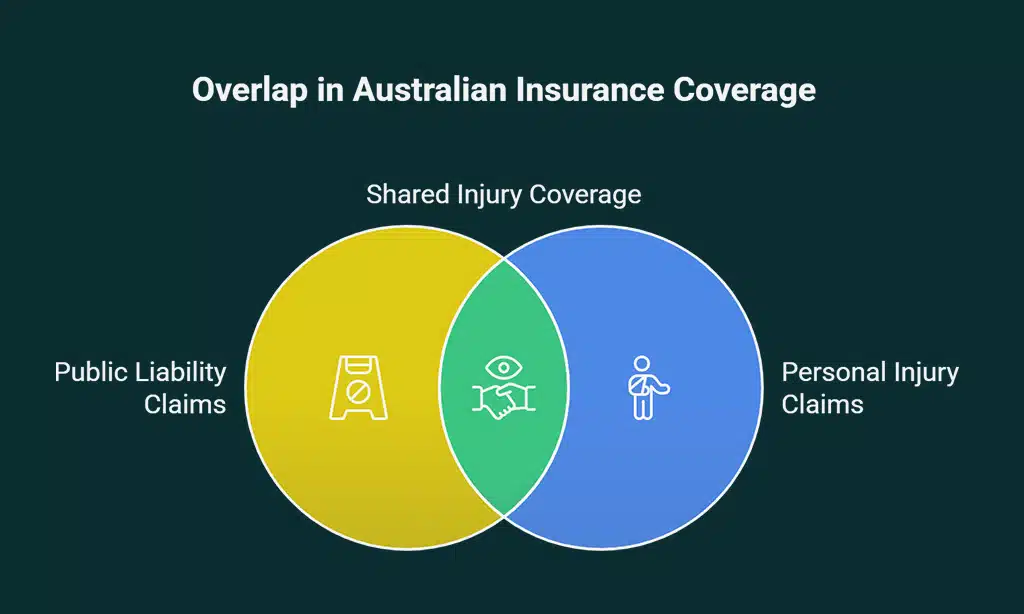
Hey folks, let’s chat about how insurance coverage differs between public liability and personal injury claims in Australia. Check out this handy table to break it down quick and easy.
| Aspect | Public Liability Claims | Personal Injury Claims |
|---|---|---|
| Core Coverage | Involves public liability insurance, which shields businesses or property owners from claims if someone gets hurt on their turf. | Focuses on personal harm, often tied to private insurance like health or disability plans, covering your own injuries. |
| Who’s Protected | Safeguards the entity or owner against lawsuits from third parties, like a visitor slipping in a store. | Guards the individual who’s injured, helping cover medical bills or lost wages after an accident. |
| Claim Trigger | Happens when a public incident causes harm, think a faulty railing at a mall leading to a fall. | Stems from personal mishaps, such as a car crash or workplace injury affecting just you. |
| Insurance Scope | Public liability insurance often has strict caps and conditions, tied to specific locations or events. | Personal policies might offer broader aid, including rehab costs or ongoing care, based on your plan. |
| Legal Constraints | Claims under public liability can face tighter time limits, sometimes needing action within months, not years. | Timeframes for personal injury might stretch longer, though they still demand prompt steps to file. |
| Policy Holder | Usually held by businesses, landlords, or event organizers to dodge financial hits from public accidents. | Often carried by individuals through personal health or accident coverage for their own safety net. |
Isn’t it wild how these two types of claims play such different roles? Public liability insurance is like a shield for businesses facing public mishaps, while personal injury coverage acts as your personal safety harness. Got thoughts on how these apply to your world? Drop a comment, I’d love to hear!
Examples of Public Liability and Personal Injury Cases
Let’s chat about some real-life situations that show how public liability and personal injury claims play out in Australia. Think of public liability cases as accidents happening in shared spaces due to someone’s oversight.
A tragic case like the Devonport jumping castle incident in Tasmania stands out, where kids suffered injuries and even fatalities because of poor safety measures. Then, picture serious mishaps like a balcony collapse or a fall into a lift well, often tied to neglected property upkeep.
These events scream for public liability law to step in and hold property owners accountable for pain and suffering or property damage.
On the flip side, personal injury claims hit closer to home with personal harm from negligence or wrongful acts. Imagine getting hurt in motor vehicle accidents, slipping at work, or facing issues from defective products.
These often lead to personal injury law kicking in, covering medical expenses or even worker’s compensation. Think of a healthcare professional messing up, causing harm through medical malpractice, or a faulty gadget injuring someone.
Curious about who can file these claims? Let’s roll into the next topic on eligibility for claims.
Eligibility for Claims
Hey there, let’s chat about who can file for public liability and personal injury claims in Australia. It’s pretty straight up, so stick with me. For public liability claims, especially in Western Australia, you gotta show that someone’s negligence caused your harm.
Think of it like proving they didn’t take basic steps to keep you safe. If you’re hurt in a public spot, like a store or park, and it’s due to their carelessness, you might have a solid case.
Now, on the personal injury side, it gets a bit broader. Victims of crime in WA, for instance, can claim compensation for both physical and mental injuries through a special process.
Got hurt in a motor vehicle accident? That counts too. Whether it’s pain and suffering or medical expenses piling up, you can seek help if someone’s to blame. Just make sure you’ve got evidence, like witness statements, to back your story.
Legal Representation and Support
Facing a public liability or personal injury claim in Australia can feel like walking through a maze blindfolded. Don’t worry, though, because getting solid legal advice is your trusty map.
Lawyers help you grasp the twists and turns of personal injury law and public liability law. They stand by your side, making sure you don’t miss a step. Think of them as your guide, pointing out the pitfalls of compliance and state differences in compensation laws.
Reach out to experts like Attwood Marshall Lawyers at 1800 621 071 or IM Lawyers at 1800 001 339 for support. Got a specific question? Call Tina Davis, a Senior Associate at Attwood Marshall Lawyers, at 02 6670 1003 or 0412 301 956.
She’s a pro in compensation law, ready to fight for your medical expenses or pain and suffering claims. With a public liability lawyer or injury expert, you’ve got a shot at winning, often on a no win, no fee basis.
Let’s face it, having someone in your corner makes all the difference.
Takeaways
Wrapping up, let’s keep it real; understanding the differences between public liability and personal injury claims in Australia can save you a heap of trouble. Got a slip in a public spot or a crash on the road? Knowing which claim fits your situation, be it public liability insurance or personal injury law, is your first step to getting fair compensation.
So, don’t sit on the fence; reach out for legal advice to steer through these tricky waters. After all, getting the right support is like finding a trusty map when you’re lost!
FAQs on Public Liability vs Personal Injury Claims in Australia
1. Hey, what’s the main difference between public liability claims and personal injury claims in Australia?
Well, public liability claims often deal with harm or property damage in public spaces due to someone neglecting their duty of care, like a slip in a store. On the other hand, personal injury claims cover a broader scope, including motor vehicle accident compensation or medical malpractice, focusing on pain and suffering or medical expenses.
2. So, do time limits for claims differ between these two?
Yup, time limits vary. Public liability law and personal injury law both set strict deadlines, often around three years, but they can shift based on specific cases like occupational health and safety issues or road safety incidents.
3. What kind of evidence do I need for public liability versus personal injury cases?
For public liability, you’re gathering proof like witness statements about property damage or unsafe conditions under public liability insurance rules. In personal injury, think more about medical records or details of economic loss from, say, a motor vehicle mishap. It’s like building two different puzzles, each needing its own pieces to show negligence or contributory negligence.
4. Can I claim for pain and suffering in both types of cases?
You bet, pain and suffering can be claimed in personal injury law, often tied to medical expenses or economic losses. But in public liability, it’s trickier, usually linked to specific incidents under general liability policies, not always a guaranteed payout.
5. Do I need a lawyer for these claims, or can I just wing it?
Listen, mate, getting legal advice from a public liability lawyer or personal injury expert is like having a map in a maze. You might stumble through court proceedings alone, but with the law of negligence, insurance policies, and terms like professional indemnity or product liability insurance floating around, a pro helps dodge pitfalls. Compassion from a health professional won’t cut it in legal battles over economic loss or uninsured claims.