Imagine this: the technologies we use to protect digital money and identities could soon face a huge challenge. Quantum computers, with their incredible power, might break the encryption that keeps our data safe.
For anyone using blockchain technology, cryptocurrencies, or decentralized apps (dApps), this is a big concern.
Quantum computing isn’t just sci-fi anymore—it’s real and growing fast. Experts say it can disrupt Web3 by cracking cryptographic systems and making private keys vulnerable. But don’t worry yet! This post will explore these risks and how we can prepare for a quantum-powered future.
Keep reading to learn more about what’s next!
Key Takeaways
- Quantum computing can break encryption like Elliptic Curve Cryptography (ECC). This puts blockchain, cryptocurrencies, and digital identities at risk. Bitcoin could face $3 trillion in losses from such attacks.
- Shor’s algorithm on quantum computers makes solving complex math problems easy. It threatens smart contracts, DeFi protocols, and Web3 security systems built on cryptographic methods today.
- Post-quantum cryptography is essential to protect against future quantum threats. NIST introduced post-quantum standards in 2022 for safe encryption methods.
- Companies like Quantum Resistant Ledger work on creating blockchains ready for a quantum-powered future with better tools for privacy and safety now.
- Governments, firms, and researchers must act fast to adopt new protocols before quantum computers disrupt blockchains worldwide by 2030!
The Intersection of Quantum Computing and Web3
Quantum computing uses quantum mechanics to process data in ways classical computers cannot. Web3, built on blockchain technology, focuses on decentralization and user control. Together, they could reshape encryption, security protocols, and transaction processing for decentralized apps (dApps).
Qubits in quantum systems can exist in multiple states at once. This feature allows faster calculations than traditional bits. Blockchain networks depend on cryptographic techniques like hash functions and asymmetric cryptography.
Quantum algorithms might enhance these tools or weaken their security against quantum attacks. Combining both technologies could boost privacy while raising new challenges for digital trust solutions in a decentralized future.
Potential Threats to Web3 Security
Quantum computers could break current encryption methods, leaving blockchains exposed. This may shake the trust in digital identities and smart contracts, creating chaos for Web3 users.
Breaking blockchain encryption
Quantum computers can crack encryption methods like Elliptic Curve Cryptography (ECC). These systems, widely used in blockchain technology, rely on the difficulty of solving certain math problems.
Shor’s algorithm, a quantum-based method, makes easy work of these tasks. Blockchains using ECC could fall apart under such quantum attacks.
Bitcoin alone faces risks worth $3 trillion if attacked this way. Hash functions might hold stronger against quantum threats but are not fully immune. Encryption protocols protecting blockchains need urgent updates to withstand future challenges from advanced computing power.
Compromising digital identities and smart contracts
Hackers could use quantum computing to break public-key cryptosystems. This could expose digital identities and authentication systems. Smart contracts may also become easy targets.
These contracts rely on encryption algorithms to function securely.
Quantum attacks might bypass current security measures, causing major risks in blockchain technologies like decentralized applications (dApps). Privacy concerns would grow as data vulnerabilities increase.
Preparing for this threat is key before examining impacts on Decentralized Finance and Cryptocurrencies.
Impacts on Decentralized Finance (DeFi) and Cryptocurrencies
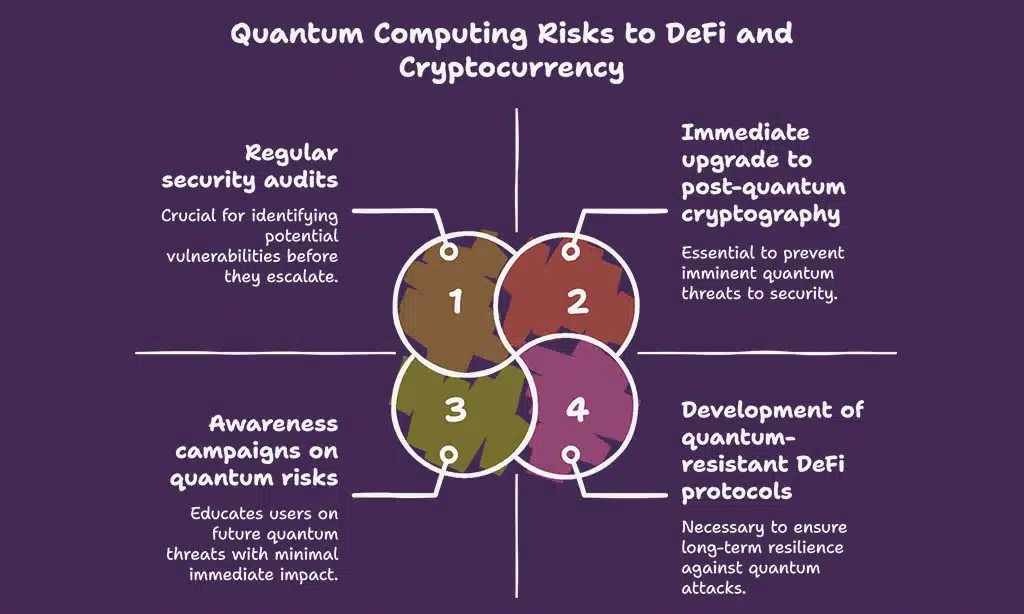
Quantum computing could shake up DeFi and cryptocurrencies, putting their security at stake. It might rewrite how we think about digital wallets and transactions entirely.
Risks to cryptocurrency wallets and transactions
Cryptocurrency wallets could face big threats. Quantum computing might crack encryption tools like Elliptic Curve Cryptography (ECC). This means private keys, which protect wallets, may no longer stay safe.
Hackers could steal funds with ease using quantum algorithms like Shor’s algorithm.
Transactions are at risk too. Data sent between wallets or platforms can be decrypted fast by powerful quantum machines. Privacy and trust may crumble if this happens, as stolen assets or exposed identities leave users vulnerable to massive losses.
Vulnerability of DeFi protocols
DeFi protocols, built on blockchain networks, face huge risks from quantum attacks. Quantum computing can break encryption protocols used in these systems. These encryption methods protect DeFi transactions and safeguard user funds, but they rely on public-key cryptosystems.
A powerful quantum algorithm could crack these cryptographic methods faster than any classical computer.
Smart contracts also become easy targets under a quantum-powered era. Malicious actors might exploit vulnerabilities in smart contract codes or manipulate data at rest due to weakened security layers.
Digital trust crumbles when attackers decrypt sensitive keys or disrupt consensus mechanisms crucial for decentralized applications (dApps). Without upgrading to post-quantum cryptography standards like those suggested by NIST by 2030, the entire DeFi ecosystem could collapse like a house of cards.
Preparing Web3 for Quantum Resistance
Web3 must build stronger shields to face quantum risks. Cryptographers are racing to create tools like post-quantum cryptography for safer encryption methods.
Development of quantum-resistant cryptographic algorithms
Quantum computers bring risks to digital security. Cryptographers are working hard to protect data with quantum-resistant algorithms.
- Quantum-resistant cryptography is being developed to fight quantum attacks. These attacks could break current encryption protocols, like public-key cryptosystems.
- The U.S. National Institute of Standards and Technology (NIST) is leading the charge. In 2022, they announced several post-quantum cryptography (PQC) standards.
- New cryptographic algorithms use math problems that quantum computers cannot solve easily. This protects blockchain networks, smart contracts, and digital identities.
- Cryptographers are creating post-quantum security for cryptocurrencies. Quantum-safe identity solutions and stronger hash functions help protect wallets.
- Companies like Quantum Resistant Ledger focus on building safe blockchain technology now. Their tools aim to make future transactions secure in a quantum-powered era.
- Transitioning systems takes years but is vital for digital trust and privacy concerns in a decentralized digital future.
- Governments and private firms must work together to meet this challenge quickly before threats become real dangers for sensitive data and applications like dApps or DeFi protocols!
Adoption of post-quantum security measures
Switching to post-quantum security is not simple. It needs careful steps and teamwork.
- Start using quantum-resistant cryptographic algorithms early. These are strong against quantum-powered attacks, which can break current encryption methods.
- Test new encryption protocols in small systems first to find and fix problems fast.
- Push developers, companies, and governments to work together on public standards like those from U.S. National Institute of Standards and Technology (NIST). This keeps global systems secure.
- Upgrade blockchain networks with post-quantum cryptography step by step to avoid failure risks during transition stages.
- Train cybersecurity teams on quantum-safe techniques for defending decentralized applications (dApps), smart contracts, and cryptocurrency wallets.
- Use quantum key distribution (QKD) for safe data sharing between parties in sensitive transactions or communications.
- Educate the private sector about potential quantum threats to prevent future attacks before they happen.
- Advocate for funding so researchers can improve hash functions and asymmetric cryptography suited for the coming quantum internet age.
- Test selective disclosure features tied to privacy concerns using advanced identity solutions built for decentralized digital futures.
- Invest now; waiting could cause delays once quantum computing starts disrupting blockchains everywhere.
Big changes need plenty of effort!
Takeaways
Quantum computing could flip Web3 on its head. Its power threatens blockchain security, digital identities, and crypto transactions. But all is not lost. Quantum-resistant cryptography offers hope for a safe future.
The race to protect Web3 has already begun—time to act fast!
FAQs
1. What is quantum computing, and how does it affect Web3?
Quantum computing uses quantum bits (qubits) to process information faster than traditional computers. It could disrupt Web3 by breaking cryptographic algorithms that secure blockchain networks.
2. Can quantum attacks harm blockchain technology?
Yes, quantum attacks can exploit data vulnerabilities in public-key cryptosystems, making encryption protocols like asymmetric cryptography weaker against threats.
3. How can post-quantum cryptography protect the decentralized digital future?
Post-quantum cryptography (PQC) creates quantum-resistant algorithms designed to secure blockchain systems and decentralized applications (dApps) from potential threats in a quantum-powered era.
4. Why are privacy concerns rising with the advent of quantum computing?
Quantum mechanics, such as entanglement and spooky action, may expose weaknesses in hash functions or identity solutions, risking selective disclosure of sensitive data.
5. Are there efforts to develop standard security measures for Web3 against quantum threats?
Yes, organizations like the U.S. National Institute of Standards and Technology (NIST), along with private-sector groups and public agencies, work on standardizing post-quantum-safe encryption methods.
6. What role does quantum key distribution play in securing decentralized finance (DeFi)?
Quantum key distribution (QKD) uses principles like entangled particles to create highly secure keys for encrypting transactions within DeFi platforms and other blockchain networks.