A zero-waste kitchen is not a makeover project. It is a set of small, repeatable systems that help you buy less, waste less food, and toss less packaging. For families, “realistic” matters more than “perfect.”
This guide is built for school nights, picky eaters, and busy calendars. You will start with what you already have, focus on the biggest waste drivers, and add upgrades only when they solve a real problem. If you want a zero-waste kitchen for families that feels doable in 2026 and beyond, start here.
What A Zero-Waste Kitchen Means In 2026
In 2026, “zero-waste” still points to the same goal: send as little as possible to the landfill. The practical version means you improve the habits you repeat every week, not the habits you attempt once.
Use this order as your compass: refuse, reduce, reuse, repair, rot, and recycle last. Recycling helps, but it works best when you have already reduced what enters the house.
For many households, success looks like fewer trash bags, fewer last-minute grocery runs, and fewer forgotten leftovers. You can get there with systems, not willpower.
Do A 7-Day Kitchen Waste Audit First
Before you change anything, spend one week observing. A short audit shows you where waste actually happens, so you do not waste time “fixing” the wrong thing.
The Simple Audit Method
Track three buckets for seven days: food waste, packaging, and disposables. Take a quick photo of your bin before you empty it, or jot down the top items you notice.
When you toss food, write one reason in a note on your phone. Forgotten leftovers, spoiled produce, overcooking, and impulse buys usually lead the list.
Your Baseline Numbers
At the end of the week, capture three baseline numbers:
- Trash bags per week
- A rough estimate of food thrown out
- Your top 10 repeat items in the trash
These numbers are your starting line. You will use them to pick the easiest wins first.
The 3 Biggest Waste Streams In Most Family Kitchens
Most kitchen waste comes from the same few sources. When you target them, everything else becomes simpler.
Food Waste
Food waste typically comes from buying too much, not seeing what you have, and not having a plan for leftovers. Fix visibility and planning first, because those reduce waste without adding new chores.
Start with three habits: one “Eat First” spot in the fridge, one leftover night per week, and one freezer habit for food that is about to turn. Small routines beat big intentions.
Packaging Waste
Packaging piles up around snacks, drinks, and convenience items. The fastest approach is to change the format of the things you buy most often.
Start with one weekly purchase, not your entire cart. Switch one snack format, one drink habit, and one pantry staple at a time, then lock in what works.
Disposable Paper And Plastic
Disposables thrive when your kitchen feels rushed. Replace them by making reusables easier to grab than the disposable option was.
Keep cloths where you wipe spills, not where you store “cleaning supplies.” Store lunch containers near lunch foods so packing feels automatic.
Set Up A Zero-Waste Kitchen For Families That Sticks
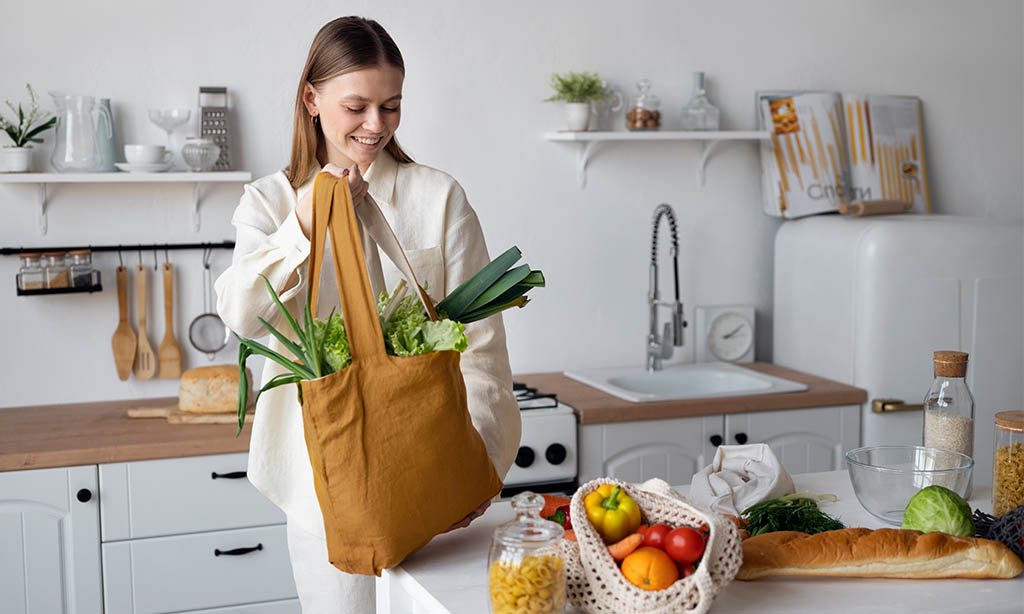
A system that sticks is simple, visible, and forgiving. It should still work on the weeks when nobody feels motivated.
Create Four Zones
Use zones so anyone can help without asking questions.
- Pantry zone: staples, snacks, lunch items
- Fridge zone: produce, leftovers, “Eat First”
- Prep zone: daily cooking tools you actually use
- Cleaning zone: cloths, refills, and a used-cloth bin
When every zone has a purpose, food stops disappearing and duplicates stop entering.
Use What You Have Before You Buy Anything
Start by reusing jars and containers you already own. If something works, keep it. If it leaks or frustrates you, replace it intentionally later.
Run a two-week trial before upgrading. If you keep reaching for the same type of container, that purchase will earn its spot in your kitchen.
Build One Weeknight Default
Families win with defaults. Choose one routine that happens even when you are tired.
A strong default is a 10-minute reset: store leftovers in clear containers, label them, wipe counters with a cloth, and set tomorrow’s lunch gear. When you do this most nights, waste drops quickly.
Smarter Grocery Shopping For Families
Low-waste shopping is mostly meal planning and buying what gets eaten. When shopping matches your schedule, you avoid emergency purchases that create extra packaging.
Build A Weekly Meal Framework
Try this rhythm for a typical week:
- Two fast dinners
- Two planned dinners with leftovers built in
- One leftover night
- One flexible night
- One pantry meal
Repeat meals are not boring. They are the reason your produce gets used and your budget stays predictable.
Shop With A Low-Waste Checklist
Use a short checklist tied to your biggest waste streams:
- Buy loose produce when possible and skip extra bags
- Choose larger sizes for items you finish every week
- Swap one wrapped snack for a bulk format you portion at home
- For takeout, request no cutlery and keep a “takeout kit” at home
Bulk and refill only help when you already use the item consistently. Start with staples, not experiments.
Snack Strategy Without The Trash Pile
Pick two default snacks that come in lower-waste formats, then portion once a week. Store them where kids can reach them so mornings stay smooth.
If you need convenience, make it reusable convenience. Pre-portion crackers, fruit, or trail mix into containers that go straight into bags.
Around the one-thousand-word mark, it helps to restate the direction. A zero-waste kitchen for families gets easier when snacks and leftovers are planned, not improvised.
Storage That Actually Works In Real Family Life
Storage prevents waste when it improves visibility and reduces duplicates. In a zero-waste kitchen for families, visibility beats complicated labeling. Aim for “easy to use,” not “perfectly labeled.”
Fridge Setup For Less Waste
Create one visible “Eat First” bin or shelf. Put leftovers and produce that needs using there, and keep it at eye level.
Use clear containers for leftovers and label quickly with tape and a marker. Move older items forward and put new groceries behind them.
Pantry Setup For Fewer Duplicates
Use FIFO, which means first in, first out. Put new items behind older items, and keep a small backstock zone so you stop buying doubles.
A simple rule works well: one open, one backup for staples. If you already have a backup, it does not go on the list.
Freezer Habits That Save A Busy Week
Freeze food in family portions and label it with a date. Keep a short “rescue list” for produce that is about to turn, like bananas for smoothies or berries for oatmeal.
A freezer is not a graveyard. It is a plan. Schedule one “freezer meal” each month so older items get used.
Family-Friendly Cooking Habits That Cut Waste
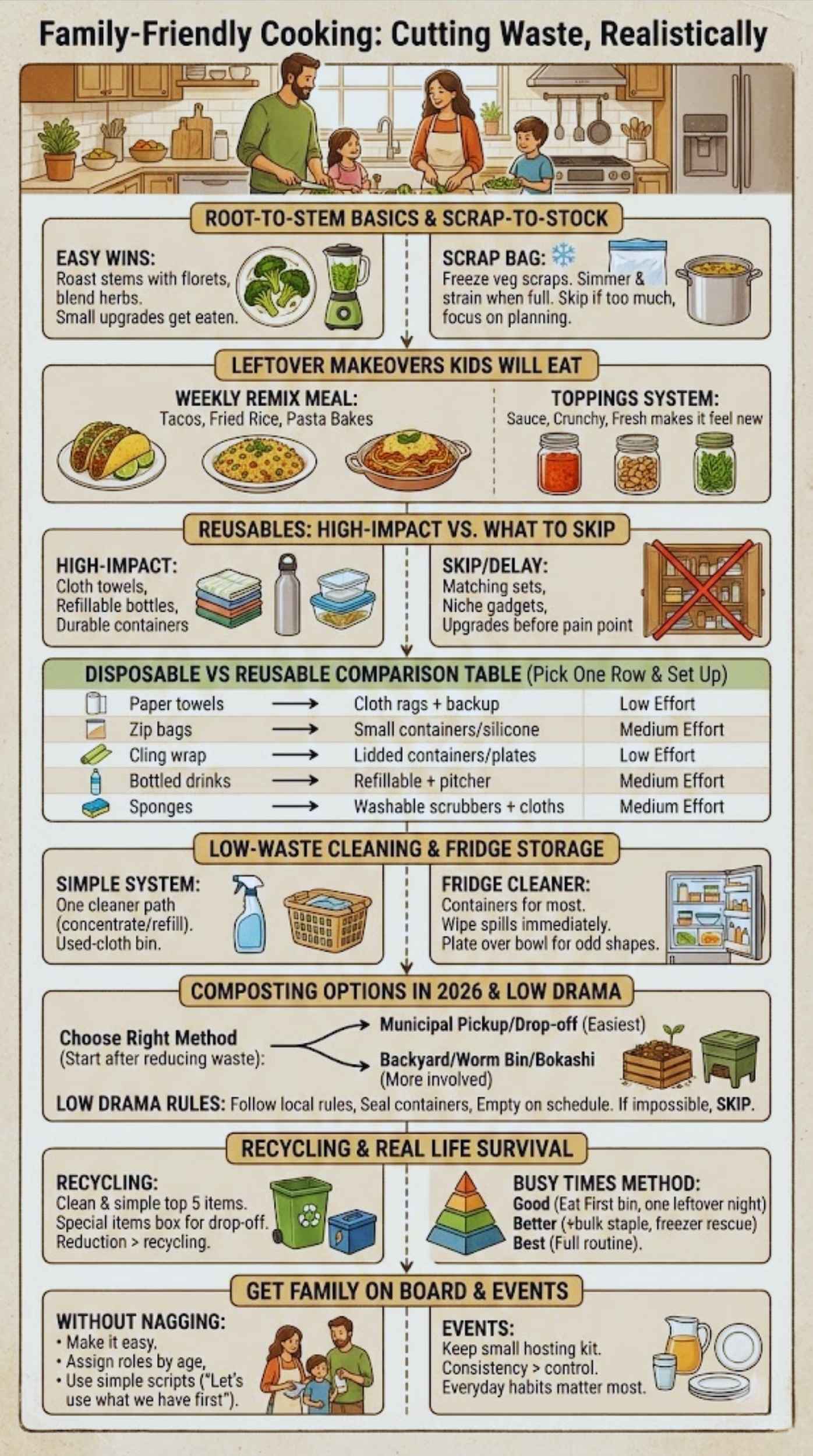
You do not need fancy recipes to waste less. You need a few formats that welcome leftovers and a routine that turns scraps into something useful.
Root-To-Stem Basics Without The Fight
Start with easy wins that do not feel like a compromise. Roast broccoli stems with florets, blend wilting herbs into sauces, and add extra vegetables to pasta and fried rice.
Introduce changes slowly if your household is picky. One small upgrade that gets eaten beats a bold experiment that gets tossed.
Scrap-To-Stock, The Simple Version
Keep a freezer bag for vegetable scraps like onion ends, carrot peels, celery tops, and herb stems. When the bag is full, simmer with water, strain, and freeze in portions.
If this feels like too much, skip it. Focus on leftover planning first, because that usually saves more food.
Leftover Makeovers Kids Will Eat
Pick one weekly “remix meal” and make it predictable. Tacos, fried rice, pasta bakes, and soup nights can absorb leftover vegetables and proteins with minimal effort.
Use a toppings system to change flavors fast. A sauce, a crunchy topping, and a fresh garnish can make leftovers feel new.
Reusables That Are Worth It, And What To Skip
Reusables pay off when they match your routines. The goal is fewer repeat purchases and less daily friction.
High-Impact Reusables For Families
Start with cloth towels and rags, then add a simple cloth rotation. Add refillable bottles if drinks create a lot of waste, and choose lunch containers that do not leak.
Keep it boring and durable. When a reusable is easy to use, it becomes your default.
What To Skip Or Delay
Avoid buying replacements before the habit forms. Matching container sets and niche gadgets often create clutter when purchased too early.
Delay upgrades until you feel a consistent pain point. A small number of tools used daily beats a cabinet full of unused “eco” products.
Disposable Vs Reusable Comparison Table
| Disposable Habit | Reusable Alternative | Best For | Effort Level |
| Paper towels for everything | Cloth rags plus one backup roll | Daily spills | Low |
| Zip bags for snacks | Small containers or silicone bags | Lunches | Medium |
| Cling wrap | Lidded containers or plates on bowls | Leftovers | Low |
| Bottled drinks | Refillable bottles and a pitcher | School and sports | Medium |
| Single-use sponges | Washable scrubbers plus cloths | Dishes | Medium |
Pick one row, set it up well, then move to the next. Progress stacks quickly.
Low-Waste Cleaning Without Turning Your Kitchen Into A Science Project
Cleaning should not become a second job. Keep the system simple and choose products you will actually use.
The Simplest Cleaning System
Choose one all-purpose cleaner path, like a concentrate, refill station, or bulk refill. Pick one dishwashing option you will use consistently, then stop shopping for “perfect.”
Create a used-cloth bin and wash cloths with regular towels. When the logistics are easy, the habit lasts.
Food Storage That Keeps The Fridge Cleaner
Better storage reduces mess and spoilage. Use containers for most leftovers and keep one simple solution for odd shapes, like a plate over a bowl.
Do a two-minute wipe of spills as they happen when possible. That prevents the sticky buildup that later requires heavy scrubbing.
Composting Options In 2026
Composting helps with the scraps you cannot avoid. It also makes trash lighter and less smelly, which is a big win for families.
Start composting after you have reduced food waste. Otherwise, composting can hide the real problem, which is buying and cooking more than your household eats.
Choose The Right Method For Your Home
Pick the easiest option you will actually use:
- Municipal pickup if available
- Community drop-off if you want zero maintenance
- Backyard compost if you have space
- Worm bin if you want a small indoor system
- Bokashi if you want a sealed system
If you feel uncertain, choose pickup or drop-off first. You can upgrade later.
Keep Composting Low Drama
Follow your local rules for what is allowed. Keep containers sealed, empty them on schedule, and add dry material if you compost outdoors.
If composting is not possible where you live, skip it and focus on reduction. You can still cut most kitchen waste without compost.
Recycling And Hard-To-Recycle Items
Recycling works best when it is clean and simple. Do not toss uncertain items in and hope for the best.
Use one clearly labeled recycling bin and teach the top five items your local program accepts. Keep a small “special items” box for batteries and odd materials, then drop them off when the box is full.
Even with great recycling, reduction carries the most impact. Fewer packages in the house means fewer confusing disposal decisions.
Make It Work When You Are Busy, Sick, Or Overbooked
Your plan must survive real life. Build it with flexible effort levels so you never feel like you failed.
The Good, Better, Best Method
Good is your minimum: “Eat First” bin, one leftover night, and cloths stocked. Better adds one bulk staple, one freezer rescue habit, and a quick lunch setup. Best is the full routine when life is calm.
Most families live in good and better. That is enough for steady progress.
Events Without The Disposable Explosion
Keep a small hosting kit you already own, like a pitcher, cups, and a few washable plates. For school events, do what is easiest and do not let one day undo your whole system.
Aim for consistency over control. Your everyday habits matter more than the occasional exception.
Get Kids And Partners On Board Without Nagging
Make the low-waste choice the easy choice. Put containers where the food is, and keep routines short.
Give each person one role by age and attention span. One person can own lunch containers, another can own the “Eat First” shelf, and a kid can own snack portioning.
Use simple scripts that avoid tension. “Let’s use what we have first” works better than rules or lectures.
Common Zero-Waste Kitchen Mistakes
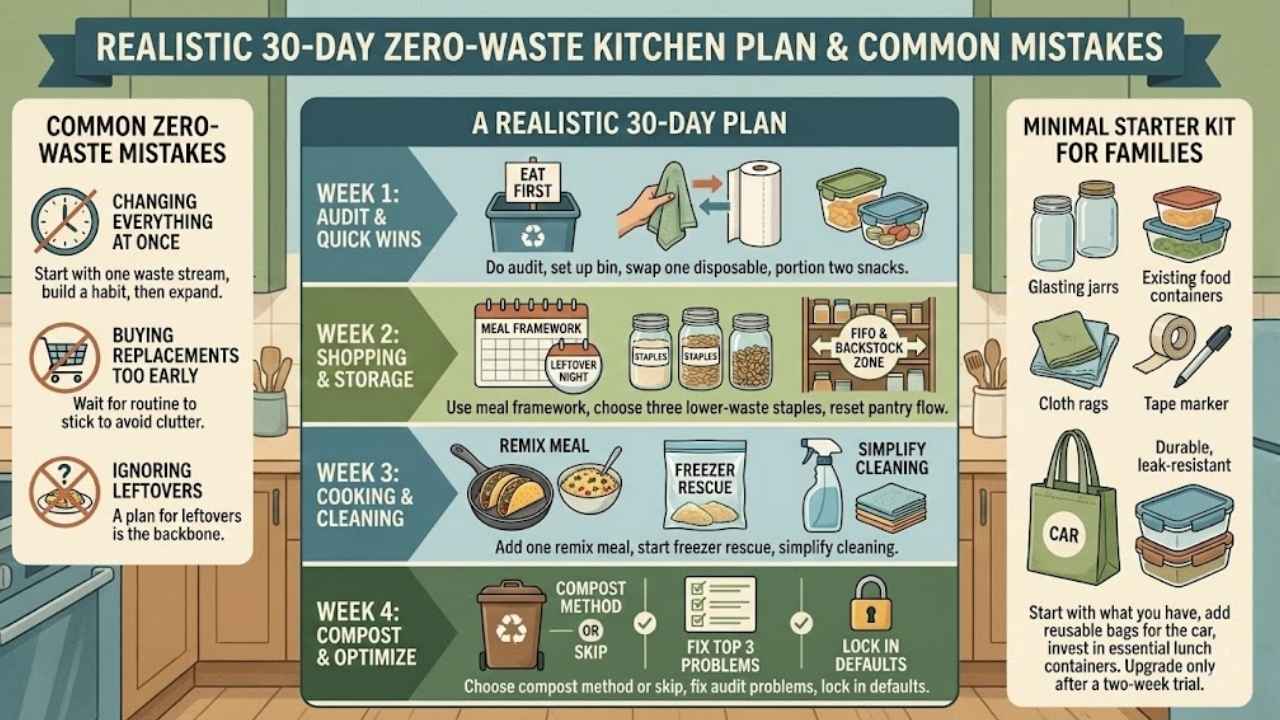
The biggest mistake is changing everything at once. Start with one waste stream, build a habit, then expand.
Another mistake is buying replacements too early. If you buy before the routine sticks, you often create clutter.
The last mistake is ignoring leftovers. A plan for leftovers is the backbone of a lower-waste kitchen.
A Realistic 30-Day Zero-Waste Kitchen Plan
A month is enough time to build routines that last. Keep the focus on small steps you can repeat.
Week 1: Audit And Quick Wins
Do the 7-day audit and set up an “Eat First” bin. Swap one disposable category, like paper towels for cloths, while keeping one backup roll.
Portion two snacks into reusable containers once. The goal is to make mornings easier, not to create a perfect system.
Week 2: Shopping And Storage
Use the weekly meal framework and pick one leftover night. Choose three staples to buy in lower-waste formats, but only items you already use weekly.
Reset pantry flow with FIFO and set a small backstock zone. This single step often cuts duplicates fast.
Week 3: Cooking And Cleaning
Add one remix meal like fried rice or tacos. Start one freezer rescue habit for produce that would spoil.
Simplify cleaning with one refill path and a cloth rotation. Keep it boring, because boring is sustainable.
Week 4: Compost And Optimize
Choose a compost method if it fits your home. If not, skip it and keep improving reduction.
Fix the top three problems from your audit and lock in the defaults. By now, your zero-waste kitchen for families should feel more like a routine than a project.
Minimal Starter Kit For Families
Start with what you have: jars, existing containers, cloth rags, tape, and a marker. Add reusable bags you keep in the car so they are actually available.
If lunches drive most of your waste, invest in a few durable, leak-resistant lunch containers. Buy the minimum that covers a full school day, not a huge set.
Upgrade only after a two-week trial proves a gap. This keeps your kitchen useful, not cluttered.
Wrap-Up: Your Next 3 Steps This Week
Choose one waste stream to tackle first, based on your audit. Set up one simple system like the “Eat First” bin or a snack portion routine, then schedule one leftover night.
Those three steps create momentum fast. When you keep the plan realistic, a zero-waste kitchen for families can fit into your life without constant effort.