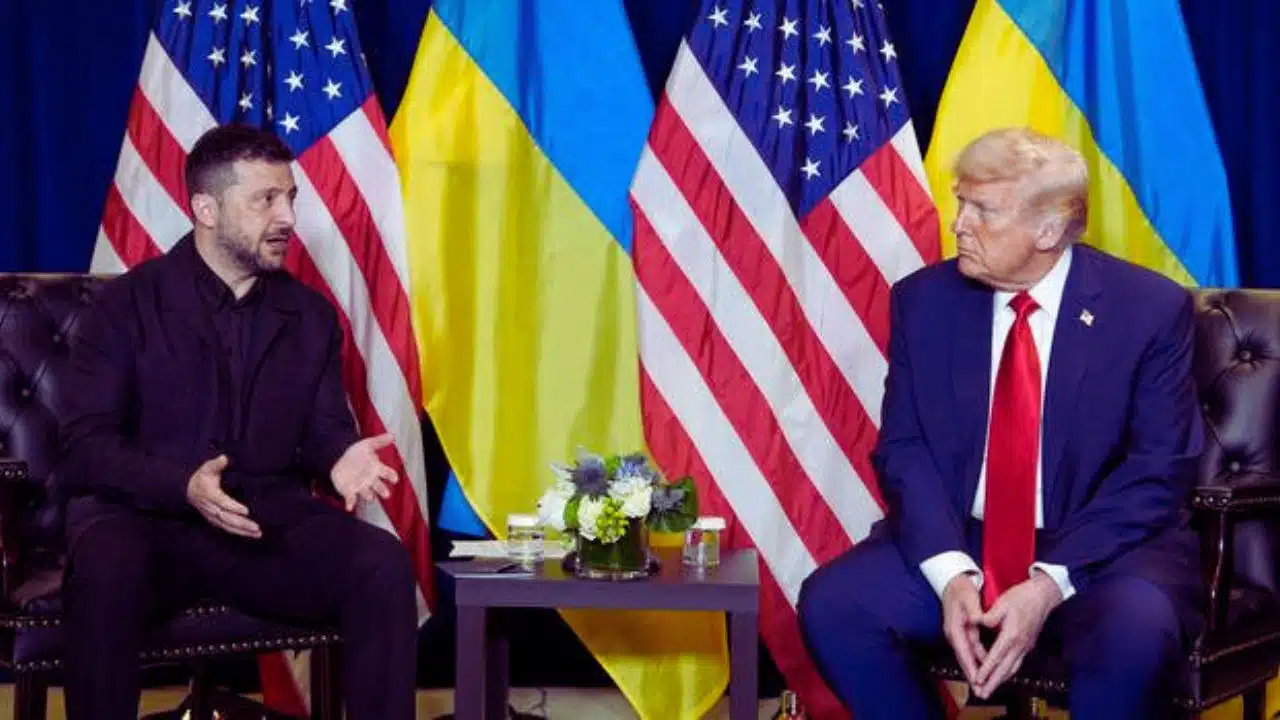
Ukrainian President Volodymyr Zelensky is rallying leaders from about 30 allied nations to coordinate a unified stance on ending the war with Russia just as U.S. President Donald Trump intensifies pressure on Kyiv to accept a controversial peace settlement. The talks highlight a race between Ukraine’s push for security guarantees and fair terms, and Washington’s drive for a rapid deal many in Europe fear could entrench Russian gains.
urgent talks under U.S. pressure
Zelensky is holding urgent video talks with leaders and senior officials from roughly 30 countries that back Kyiv, a grouping informally dubbed a “coalition of the willing,” to discuss how to secure a just ceasefire and long‑term security guarantees. The meeting, hosted from Kyiv and set for Thursday, comes days after Ukraine submitted its formal response to a U.S.-drafted peace plan that Trump wants accepted on a tight timetable. European heavyweights including Germany, France and the United Kingdom are participating, underscoring their concern that any rushed settlement must not reward Russia’s invasion or weaken Europe’s own security.
Zelensky’s coalition strategy and war reality
Kyiv’s key message to partners is that any deal must lock in Ukrainian sovereignty, prevent future Russian attacks and avoid turning current front lines into a permanent loss of territory without credible guarantees. Ukraine and several European governments argue that pressure should be directed at the Kremlin rather than Kyiv, warning that a settlement seen as capitulation would embolden Moscow and undermine trust in Western security commitments.
The talks also take place against a backdrop of ongoing heavy fighting: Russia still controls about 20 percent of Ukrainian territory nearly four years after its full‑scale invasion in February 2022, while Ukraine continues long‑range drone strikes to show it can hit targets deep inside Russia. NATO Secretary-General Mark Rutte has warned that Russia has launched more than 46,000 missiles and drones against Ukraine so far this year and cautioned that European countries could be the next targets if Moscow is not deterred.
Trump’s settlement push and contested peace plan
Trump’s administration has circulated a 28‑point peace proposal that, according to reporting based on a leaked draft, would require Ukraine to surrender additional territory in the east, cap the size of its armed forces and make a binding pledge never to join NATO. The plan also envisions a non‑aggression framework involving Russia, Ukraine and Europe, as well as economic incentives for post‑war reconstruction, but leaves key questions about enforcement and the U.S. role in future security guarantees vague.
Washington has coupled the proposal with deadline pressure, at one point giving Kyiv less than a week to accept the broad outlines of the deal, a stance that Ukrainian officials and many European capitals view as skewed toward Russian interests. In response, Ukrainian negotiators working with European allies have pushed through significant revisions, cutting the plan down from 28 to 19 points, removing some of Moscow’s most far‑reaching demands and insisting that any territorial arrangements be based on current front lines rather than further Ukrainian withdrawals.
What comes next: timelines and key stakes
Ukraine has already delivered a written response to the latest U.S. draft and is preparing further technical talks with American and European envoys, while Zelensky’s 30‑nation consultations aim to lock in a common set of “red lines” before any final leaders’ summit on peace. European leaders stress that the process will be lengthy, saying they do not expect a breakthrough in days, even as Trump publicly pushes for a swift end to a war he argues Ukraine is struggling to win.
Recent timeline and core data
| Date (2025) | Event | Key details |
| 20 November | Leak of original U.S. 28‑point plan | Draft calls for extra Ukrainian territorial concessions, a cap on Ukraine’s forces and a pledge not to join NATO, prompting concern in Kyiv and Europe that it favors Moscow. |
| 24 November | Kyiv and allies revise plan in Europe talks | Ukrainian officials and European partners strip out some of Russia’s maximalist demands and reduce the draft to 19 points, insisting that any territorial deal use current battle lines as a starting point. |
| Late November | Russia voices unhappiness over changes | Reports suggest Moscow is dissatisfied with revisions that remove several of its original conditions, complicating prospects for quick agreement. |
| 10 December | Ukraine submits formal written response | Kyiv delivers a detailed reply to the reworked U.S. proposal, including ideas such as a special economic zone and stronger security guarantees, and awaits a formal reaction from Washington. |
| 11 December | Zelensky convenes 30‑nation talks | Ukraine hosts urgent video consultations with leaders and officials from about 30 allied countries to coordinate their position as Trump increases pressure for a rapid settlement. |
| Year to date | Scale of ongoing war | Russia has fired more than 46,000 drones and missiles at Ukraine this year, while controlling roughly one‑fifth of Ukrainian territory, underscoring that the conflict remains intense despite peace talks. |
Diplomats involved in the process say the next phase will focus on narrowing gaps over territorial terms, security guarantees and long‑term reconstruction funding, with Ukraine insisting that any peace must not leave it more vulnerable to future Russian attacks. For now, Zelensky’s effort to rally 30 nations, even as Trump pushes a faster Ukraine settlement, shows that the endgame of the war will likely be shaped as much by complex diplomacy among allies as by developments on the battlefield.