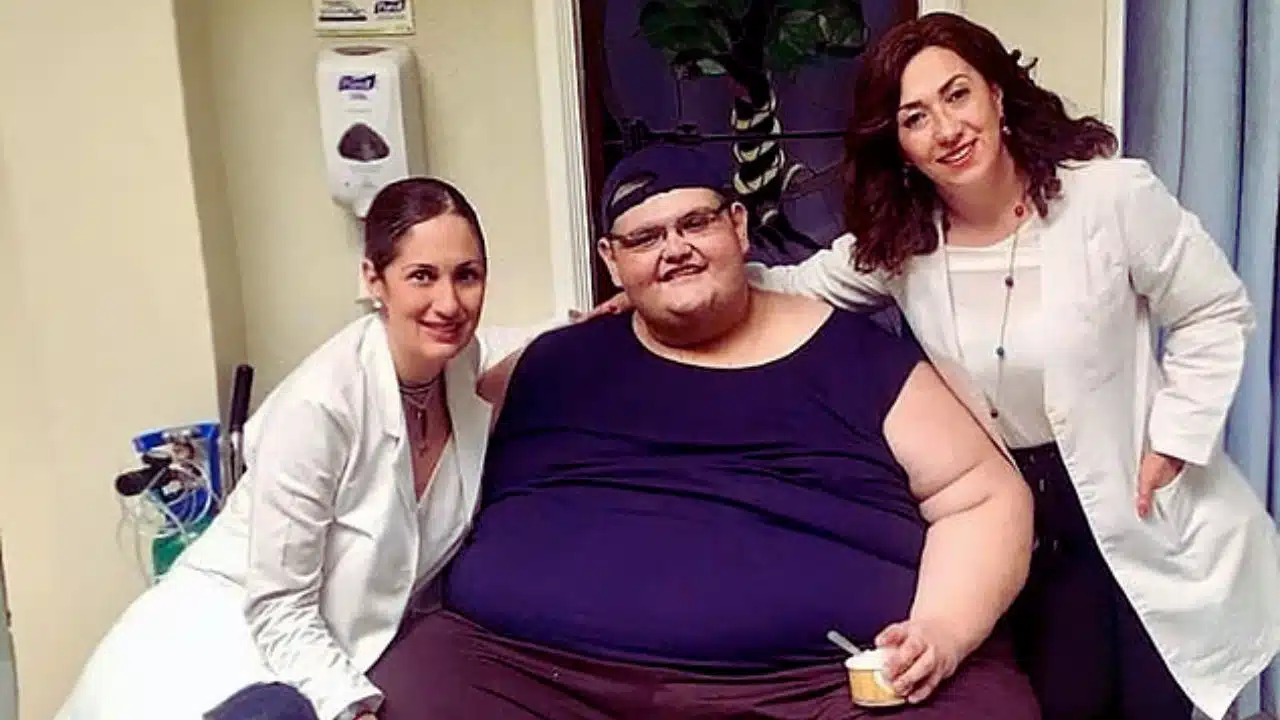
Juan Pedro Franco, the Mexican man who once held the Guinness World Record as the world’s heaviest person, has died at age 41 from complications related to a kidney infection. Franco, who weighed nearly 1,312 pounds at his peak in 2016, passed away on December 24, 2025, while hospitalized in Aguascalientes, Mexico.
Death Confirmed by Medical Team
Dr. José Antonio Castañeda, the bariatric surgeon who treated Franco for nearly a decade, confirmed the death in an official statement released on December 29, 2025. “In recent days, his health condition was compromised due to a kidney infection that evolved with systemic complications, which led to his death while he was hospitalized,” the specialist announced.
Franco’s passing occurred on Christmas Eve at a medical facility in his home state of Aguascalientes, located in central Mexico. The rapid deterioration of his health condition caught medical professionals and family members by surprise, as Franco had previously demonstrated remarkable resilience in overcoming serious health challenges.
Guinness World Record Recognition
In 2017, Guinness World Records officially recognized Juan Pedro Franco as the heaviest living person on Earth when he was just 32 years old. At that time, Franco weighed approximately 595 kilograms (1,312 pounds), equivalent to the weight of an average male polar bear. The recognition brought international attention to his case and highlighted the severe health crisis he faced.
Franco’s extreme weight rendered him completely bedridden for years, unable to perform basic daily activities without assistance. He suffered from multiple serious health conditions including type-2 diabetes, severe hypertension, hypothyroidism, chronic pulmonary disease, and severely obstructed lungs. Medical experts warned that his life was in imminent danger if he did not undertake drastic measures to lose weight.
Remarkable Weight Loss Journey
Franco’s transformation began in 2016 when he and his mother, María de Jesús Salas, relocated from Aguascalientes to Guadalajara, Jalisco, to receive specialized treatment from Dr. Castañeda. The physician implemented a comprehensive medical approach that started with a strict Mediterranean diet emphasizing vegetables and fruits for six months.
Surgical Interventions
| Surgery Type | Date | Procedure Details | Weight at Time |
| Gastric Sleeve | May 2017 | Removed part of stomach to reduce volume by 80% | 595 kg (1,312 lbs) |
| Gastric Bypass | November 2017 | Halved remaining stomach and reconnected to intestines | 420 kg (926 lbs) |
| Gastric Band | 2018 | Additional restrictive procedure | 345 kg (760 lbs) |
After the initial dietary phase, Franco underwent his first surgery in May 2017—a gastric sleeve operation that removed a significant portion of his stomach. Six months later, in November 2017, he underwent a second major procedure: a gastric bypass surgery that halved his remaining stomach and rerouted his intestines to reduce nutrient absorption.
Through these interventions, Franco achieved a 49% reduction in his initial weight. By 2018, he had lost approximately 250 kilograms, and by 2020, he weighed around 208 kilograms—a loss of nearly 400 kilograms from his peak weight. This dramatic weight reduction significantly improved his quality of life and brought his diabetes and hypertension under better control.
COVID-19 Survival in 2020
In a testament to his improved health following bariatric treatment, Franco successfully survived a COVID-19 infection in 2020, despite being classified as extremely high-risk due to his history of severe obesity and multiple comorbidities. At age 36, he described experiencing headaches, body aches, fever, and severe shortness of breath during his illness.
“It is complicated because it is a very aggressive disease. I had a headache, body aches, my air was gone, a fever. I was a very at-risk person,” Franco explained after his recovery. Medical professionals attributed his survival to the substantial weight loss he had achieved, which had stabilized his chronic conditions.
Tragically, his mother and primary caregiver, María de Jesús Salas, who was 66 years old and also suffered from diabetes and hypertension, did not survive her COVID-19 infection. She died after being intubated, a devastating loss for Franco, who had relied heavily on her support throughout his weight loss journey.
Medical Significance and Obesity Awareness
Dr. Castañeda characterized Franco’s case as “complex and demanding,” emphasizing that it played a crucial role in raising awareness about obesity as a chronic medical condition requiring specialized care and compassion. The physician stressed the importance of approaching obesity from a scientific perspective rather than perpetuating societal stigma.
Franco’s treatment required extraordinary measures because traditional weight loss methods through exercise were impossible given his immobility. The only viable option was radical surgical intervention to reduce his stomach capacity and limit caloric absorption. His case also highlighted the challenge of addressing tumors in his legs and the excess skin that resulted from massive weight loss—factors that complicated accurate weight measurements.
Context of Extreme Obesity Cases
While Franco held the title of world’s heaviest living man in 2017, he was not the heaviest person ever recorded. That distinction belongs to Jon Brower Minnoch, an American who reportedly weighed approximately 1,400 pounds at his peak in 1978 and died at age 41 in 1983 from cardiac arrest.
Another notable case was Manuel “Meme” Uribe, also from Mexico, who weighed 1,235 pounds when certified by Guinness World Records in 2006. Uribe died in 2014 at age 48 after being bedridden for more than a decade. These cases underscore Mexico’s ongoing struggle with obesity, as the country has one of the highest obesity rates globally among both children and adults.
Final Thoughts
Juan Pedro Franco’s death at 41 marks a somber end to a life defined by extraordinary medical challenges and remarkable determination. Despite losing nearly 400 kilograms through intensive medical treatment and surviving a life-threatening COVID-19 infection, Franco ultimately succumbed to complications from a kidney infection that rapidly progressed to systemic failure. His journey brought global attention to the complexities of extreme obesity as a serious medical condition requiring comprehensive, specialized care beyond simple lifestyle changes.
Franco’s case serves as both an inspiration for what medical science can achieve in treating severe obesity and a sobering reminder of the long-term health complications that persist even after dramatic weight loss. His legacy continues to contribute to medical understanding of bariatric treatment and the importance of addressing obesity with compassion, scientific rigor, and sustained medical support rather than judgment or stigma.