The annual school spelling bee is a rite of passage, a thrilling mix of competition and academic achievement. For parents and students, the journey from the classroom chalkboard to the spotlights of the regional stage can feel daunting. It requires more than just memorizing a word list on a Sunday night; it demands a strategic, engaging, and consistent approach to language learning.
This is where the concept of a “spelling bee buddy” becomes invaluable. While it might sound like a simple study partner, a true spelling buddy is a comprehensive support system. Whether it’s a dedicated app, a study method, or a parent committing to the process, having a reliable buddy transforms the chore of studying into a collaborative and effective learning experience. In the high-stakes world of spelling bees, the right preparation partner isn’t just helpful, it’s essential for building the confidence and skill set needed to succeed.
The Anatomy of an Effective Spelling Bee Buddy
What separates a casual study aid from a true spelling bee buddy? It’s a combination of structure, engagement, and deep linguistic support. A generic flashcard app might help with rote memorization, but a dedicated spelling buddy helps the student understand the why behind the spelling. It bridges the gap between memorizing letters and decoding the logic of the English language.
Building Foundational Skills Through Etymology
One of the primary roles of a spelling bee buddy is to demystify the origins of words. English is a linguistic melting pot, borrowing heavily from Latin, Greek, French, and German. Knowing that the Greek root “phon” means sound can help a speller navigate words like “telephone,” “saxophone,” and even the more challenging “euphony.”
A quality spelling buddy introduces these concepts naturally. Instead of just presenting a word, it breaks it down:
- Roots: What is the core meaning of the word?
- Prefixes/Suffixes: How do additions like “anti-“, “pre-“, or “-ology” change the word?
- Language of Origin: Is this word from Latin or Greek? This often dictates spelling rules.
By understanding these building blocks, a speller is no longer just recalling sequences; they are constructing words based on a logical framework. This deep learning is what allows champions to confidently approach words they have never seen before during a competition.
Making Practice Engaging and Consistent
Consistency is the bedrock of spelling bee success, but it’s also the biggest challenge. Cramming the night before a bee is a recipe for anxiety and mistakes. A spelling bee buddy solves this by making daily practice sustainable and enjoyable.
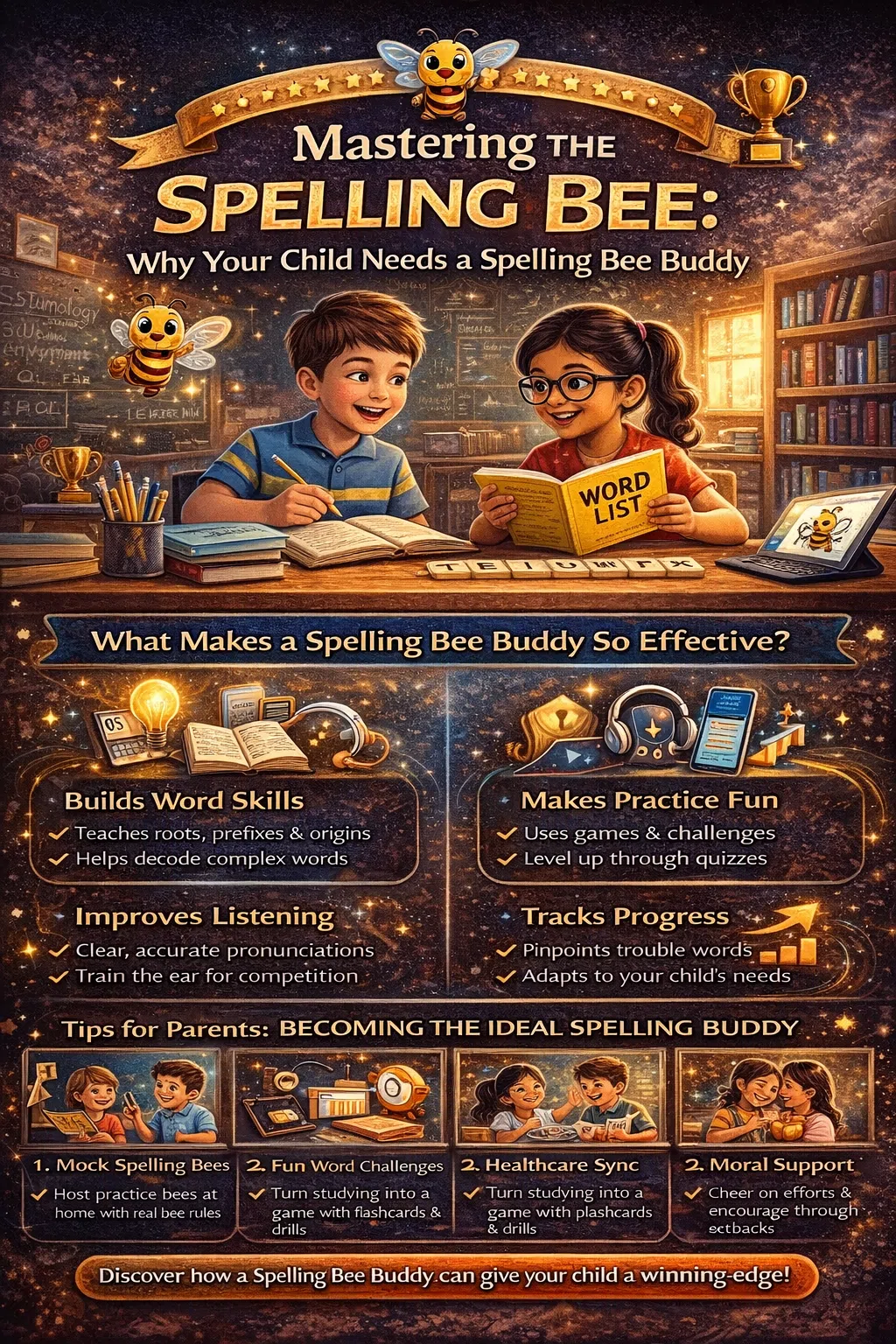
Modern tools, for instance, gamify the experience. Point scores, level progression, and achievement badges can motivate young learners to engage with their word lists regularly. For a parent acting as the buddy, this might mean turning a practice session into a fun quiz game with rewards. The goal is to create a positive feedback loop where studying feels less like a chore and more like a personal challenge.
Key Features to Look for in a Spelling Bee Partner
Whether you are choosing a software program or structuring a home study plan, certain features are non-negotiable for effective preparation. A top-tier spelling bee buddy should offer more than just a list of words.
1. High-Quality Audio Pronunciations
In a spelling bee, the pronouncer is your only guide. Mishearing a word can be disastrous, even if you know how to spell it. Your spelling buddy must feature clear, accurate, computer-generated or professionally recorded audio. This trains the ear to distinguish subtle sounds and understand variations in pronunciation, such as the difference between the schwa sound in “chocolate” versus “chocolatier.”
2. Comprehensive Definition and Usage Examples
Spelling is not just about letter sequences; it’s about meaning. Understanding the definition of a word provides a mental hook to hang the spelling on. A good buddy provides clear definitions and, crucially, shows the word used in a sentence. This contextual learning helps solidify the word in a student’s memory and prepares them for the “Use it in a sentence” request during the actual bee.
3. Progress Tracking and Adaptive Learning
An intelligent spelling buddy identifies weak spots. It should track which words a student consistently misspells and adapt the practice schedule to focus on them. This personalized approach is far more efficient than repeatedly reviewing words the student has already mastered. It ensures study time is always targeted at the areas of greatest need.
Beyond the App: Human Connection in Preparation
While technology is a powerful tool, the human element of the spelling buddy cannot be replaced. For many students, the most effective buddy is a committed parent, older sibling, or tutor. This human partner provides emotional support, encouragement, and real-time feedback that an app cannot.
The Parent as a Buddy:
- The Mock Bee: Parents can conduct mock spelling bees at home. This simulates the pressure of the real event, forcing the child to ask for definitions, sentence usage, and language of origin aloud. It transforms passive knowledge into active recall under stress.
- Pronunciation Practice: A parent can read words from a curated list, forcing the child to rely solely on auditory cues, just like in a real bee.
- Moral Support: The journey has ups and downs. A human buddy is there to celebrate the small victories and provide comfort after a challenging practice session, fostering resilience.
The most successful approach often combines the best of both worlds: using a digital spelling bee buddy for structured, daily practice and a human partner for high-pressure simulation and emotional support.
Your Top Questions Answered
To further assist parents and students on their journey, here are answers to some of the most common questions about spelling bee preparation.
How can I help my child practice for a spelling bee at home?
Start by creating a consistent, low-pressure routine. Use a curated word list appropriate for their grade level. Have your child write the words, say them aloud, and use them in a sentence. Implement a “mock bee” once a week where you act as the pronouncer, and they must ask all the standard questions (definition, language of origin, alternate pronunciation) before spelling.
What are the best spelling bee apps for beginners?
For beginners, look for apps that offer a gentle introduction with audio and visual aids. Many apps from established sources like Merriam-Webster or Scripps (the organizers of the national bee) offer excellent resources. The key is to find an app with clear audio, engaging graphics, and a focus on foundational words before progressing to more difficult lists.
How many words should a speller know for a competition?
It varies greatly by level. For a local school bee, mastering the school-provided list is often sufficient. For regional and national levels, spellers need to know tens of thousands of words. The focus should shift from quantity to depth of knowledge. Understanding root words and language patterns allows spellers to decode unfamiliar terms during the competition.
What is the best way to memorize spellings?
Rote memorization has its limits. The most effective method is to use multi-sensory learning. This means:
- Hearing the word (audio pronunciation).
- Seeing the word (visual flashcard).
- Writing the word (kinesthetic learning).
- Understanding the word (etymology and definition).
This approach creates multiple neural pathways to the word, making recall faster and more reliable.
The Competitive Edge of Partnership
Preparing for a spelling bee is a marathon, not a sprint. It requires dedication, curiosity, and the right resources. By embracing the concept of a spelling bee buddy whether it’s a sophisticated app, a dedicated parent, or a combination of both you provide a speller with more than just a study tool. You provide a framework for success.
This partnership fosters a deeper appreciation for language, builds unshakeable confidence, and makes the challenging path to the spelling bee podium a rewarding journey of discovery. So, find the right buddy, start building that linguistic foundation, and watch as the world of words opens up for your aspiring champion.