
You’ve probably never expected to need a federal criminal defense attorney. (And most people don’t.) But when the words “federal investigation” start circling your name – or worse, when agents show up with a warrant – it’s already past the time for casual internet searches or hoping it’ll blow over. That’s when you need a federal criminal defense attorney.
Unlike state cases, federal crimes are prosecuted by the United States government. That means more resources, more experienced prosecutors, and harsher penalties. If you’re under investigation – or even suspect that you might be – having the right defense attorney on your side can mean the difference between freedom and a years-long federal prison sentence.
Here are some specific scenarios where reaching out to a federal criminal defense lawyer is a good idea.
You’re Contacted by a Federal Agent
You might think a simple phone call or a knock on the door is no big deal. They just have a few questions, right? Well, not so fast.
If someone from the FBI, DEA, IRS, ATF, Homeland Security, or any other federal agency contacts you – even informally – that’s your first red flag. They aren’t calling to “chat.” They’ve already done their homework and are likely building a case. Anything you say, even if you’re just trying to be helpful, can be twisted and used against you.
The moment federal agents reach out, it’s time to lawyer up. A skilled federal defense attorney will intervene, handle communication, and keep you from accidentally putting yourself in a worse position.
It’s important to note that you don’t have to be arrested to need a lawyer. The investigation stage is the best time to get ahead of the government’s strategy.
You Receive a Grand Jury Subpoena
A grand jury subpoena means you’ve been pulled into a federal investigation – whether as a target, subject, or witness. Even if you’re not the main focus (yet), your involvement puts you in a risky position.
Here’s what your attorney will help you determine:
- What your role is in the investigation
- Whether you’re at risk of self-incrimination
- How to respond without violating federal law or obstructing justice
Don’t assume you can navigate this on your own. Missteps – even unintentional ones – can lead to obstruction charges, perjury, or worse. A federal criminal defense attorney can protect your rights and advise you on the safest course of action.
You’re Accused of a Federal Crime (Or Think You Might Be)
Federal crimes aren’t just major cases like terrorism or wire fraud. They cover a wide range of issues, including:
- Tax evasion
- Mail or wire fraud
- Drug trafficking
- Internet crimes
- Healthcare fraud
- Money laundering
- Immigration violations
- Child pornography
- Insider trading
Many of these start quietly. You might get tipped off by a coworker, hear rumors of an audit, or notice strange activity on your bank accounts. If you’re feeling the heat – even if no one has formally accused you yet – it’s smart to get legal representation immediately.
Federal investigations move quickly once they go public. If you wait until an indictment is unsealed or you’re taken into custody, your options narrow fast. Early intervention gives your attorney more room to negotiate, shape the narrative, and potentially stop charges before they’re ever filed.
You’ve Been Indicted
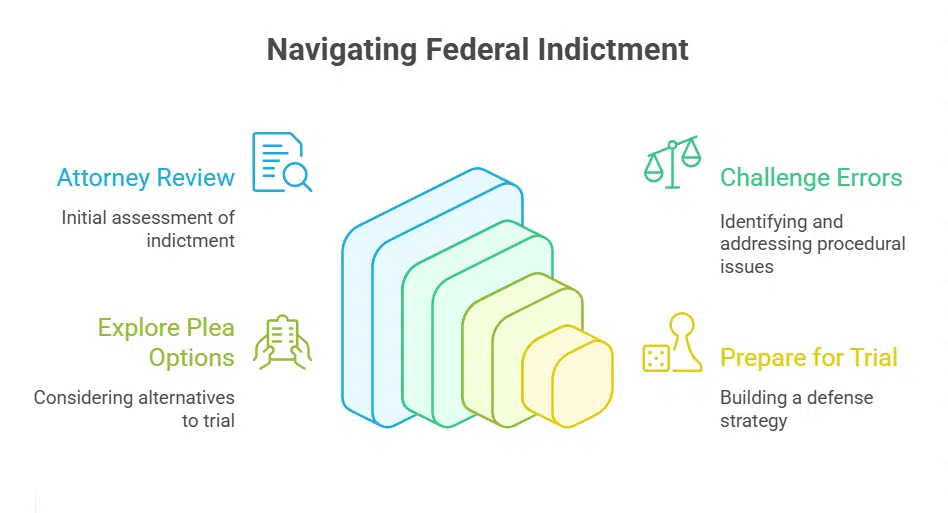
If you’ve been indicted, it means a grand jury has already reviewed evidence and decided there’s enough to formally charge you with a federal crime. By this point, the prosecution has a head start. They’ve likely been working for months gathering witnesses, documents, recordings, and more. You can’t afford to waste another minute.
A qualified federal defense attorney will review the indictment, challenge procedural errors, explore plea options, and prepare to take your case to trial if necessary. This isn’t just about keeping you out of prison – it’s about protecting your future, your family, and your reputation.
Why Federal Defense Is Different From State Criminal Law
You might already know a criminal defense attorney. Maybe you’ve used one before or seen someone close to you navigate the court system. But here’s the thing: federal court is a completely different beast.
- Federal sentencing guidelines are stricter and more complex.
- Prosecutors are often top-tier lawyers with deep experience.
- The discovery process is tighter, and evidence rules are more technical.
- Timelines are shorter, and the stakes are higher.
Any old criminal defense attorney won’t help you here. You need one with specific experience in federal cases.
Ask yourself:
- Have they successfully defended clients in federal court?
- Are they familiar with federal sentencing guidelines and negotiation strategies?
- Do they have relationships with federal prosecutors or judges in your jurisdiction?
- If the answer is no, keep looking. This isn’t the time to gamble with inexperience.
Don’t Wait for the Worst to Happen
Too many people wait until they’re in handcuffs to hire a lawyer. But by then, damage has already been done – evidence has been collected, statements have been made, and options have been lost.
You don’t have to wait for a formal charge to take control of your situation. In fact, the earlier you involve an attorney, the better your chances of shaping the outcome in your favor.