Ever feel like understanding the full story of anime’s most famous ninja is a bit like trying to catch a leaf in a hurricane? You aren’t the only one. With over 700 episodes, 72 manga volumes, and a sequel series that flips the script, getting a handle on Naruto Uzumaki is a massive task. You want to know exactly why this orange-clad hero has sold over 250 million manga copies worldwide. You want the straight facts on “what is Naruto Uzumaki”, his powers, his history, and why he matters right now in 2026.
Naruto Uzumaki is the definition of an underdog. He starts as a shunned orphan with a demon fox sealed in his gut and grows into the most powerful leader in ninja history. In this guide, I’ll walk you through his origins, the “happy accident” behind his headband, and his current status in the Boruto sequels.
Grab a bowl of ramen and let’s get started.
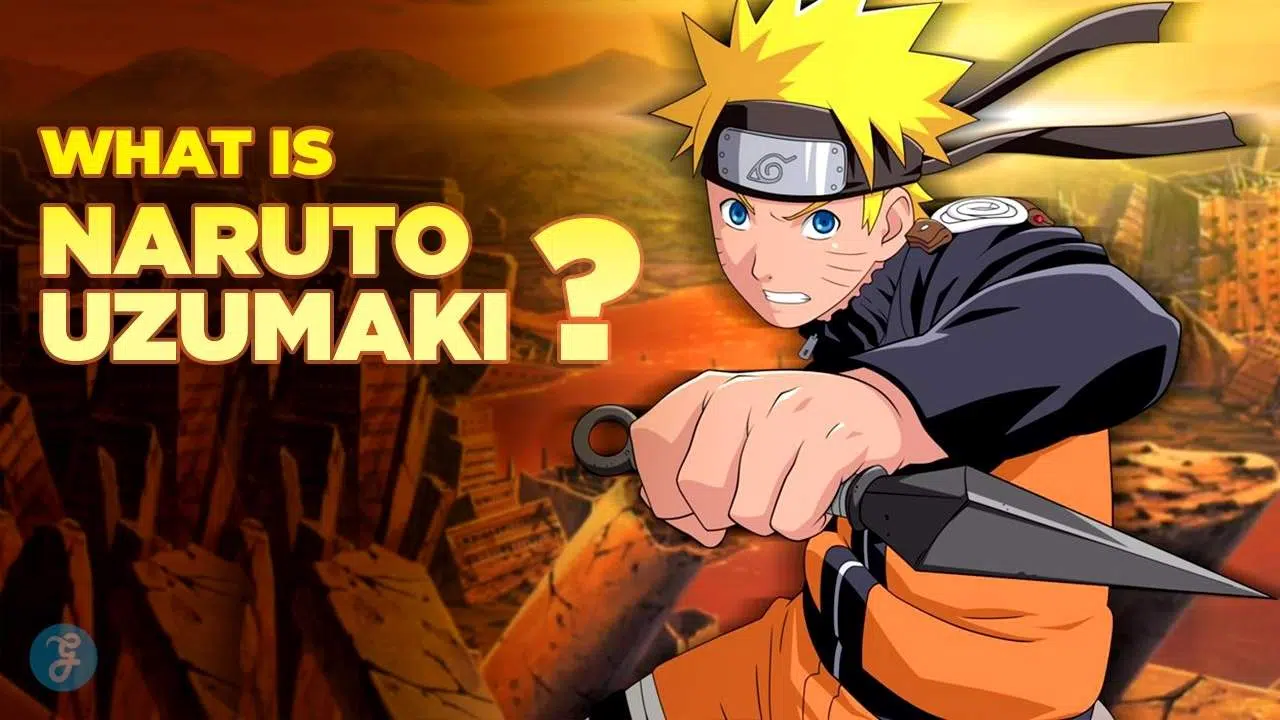
What Is Naruto Uzumaki?
Naruto Uzumaki is the Seventh Hokage of Konohagakure and arguably the most recognizable ninja in pop culture history. But before he was a leader, he was a lonely kid with a massive burden.
The “Knucklehead Ninja” Profile
To really get who he is, you need the quick stats that define his physical and ninja growth through the years. Here is a snapshot of his progression:
| Feature | Part I (Child) | Part II (Shippuden) | Boruto Era (Adult) |
|---|---|---|---|
| Age | 12-13 Years | 15-17 Years | 32+ Years |
| Height | 145 cm (4’9″) | 166 cm (5’5″) | 180 cm (5’11”) |
| Rank | Genin | Genin (Technically!) | Seventh Hokage |
| Signature Move | Shadow Clones | Rasenshuriken | Baryon Mode |
General description
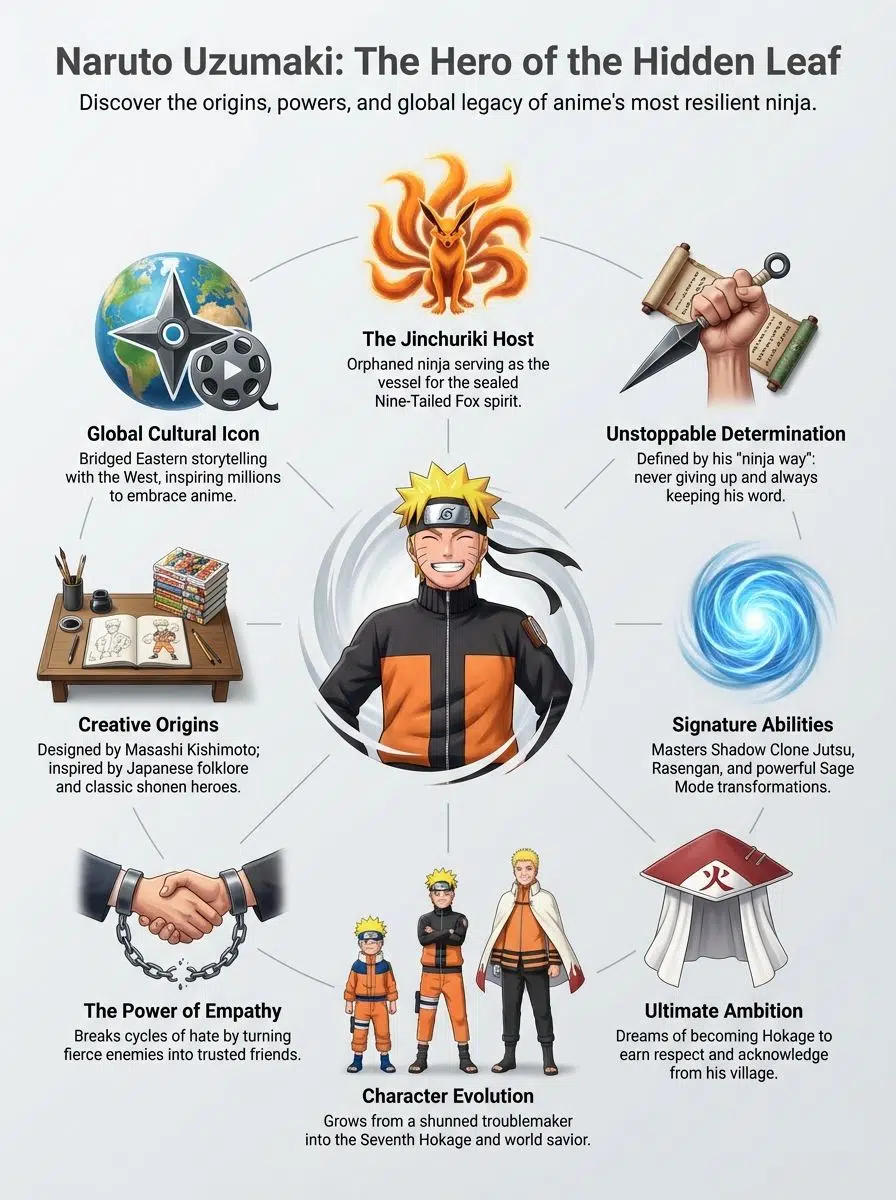
You can spot him a mile away. He has spiky blond hair, blue eyes, and whisker markings on his cheeks, a side effect of the Nine-Tailed Fox’s chakra. He wears a bright orange tracksuit, which might seem like a bad choice for a stealthy ninja, but it fits his loud personality perfectly.
He is a “Jinchūriki,” a human vessel for a Tailed Beast. For most of his life, this made him a target. Yet, instead of turning bitter, he became the village’s biggest optimist. He possesses massive chakra reserves thanks to his Uzumaki lineage, allowing him to fight for days when others would collapse in minutes.
Background and origins
Naruto’s story begins with tragedy. He was born on October 10, the night a masked man unleashed the Nine-Tailed Fox (Kurama) on the Hidden Leaf Village. His parents, Minato Namikaze (the Fourth Hokage) and Kushina Uzumaki, sacrificed their lives to seal the beast inside their newborn son.
For the first 12 years of his life, Naruto didn’t know his parents were heroes. The villagers only saw the monster inside him. He was ignored, isolated, and feared. This isolation is the core of his character. It didn’t break him; it fueled his “Nindō” (Ninja Way).
I’m not gonna run away, I never go back on my word! That’s my nindo: my ninja way!
His significance as the protagonist of the series
Naruto isn’t just the main character; he is the moral compass of the entire franchise. His journey establishes the “Cycle of Hatred” theme. While other characters seek revenge for their pain, Naruto seeks understanding.
During the Fourth Shinobi World War, he united five warring nations that had hated each other for generations. He proved that empathy is a stronger weapon than any jutsu. By the time he battles Kaguya Ōtsutsuki, he is practically a demigod, but his real superpower remains his ability to turn enemies into friends.
Creation and Concept
Creator Masashi Kishimoto didn’t just stumble upon this design. He crafted Naruto with specific inspirations that might surprise you. For instance, the reason Naruto wears a headband isn’t just for style; it was a time-saving hack.
Original concept and influences
Kishimoto originally drew Naruto wearing a pair of pilot goggles on his forehead. However, drawing the reflections and details on those goggles every single week became a nightmare. He replaced them with the metal headband protector to save time, and inadvertently created the most iconic symbol in anime history.
Kishimoto also drew heavy inspiration from “Godzilla” for the Tailed Beasts and classic shonen tropes from Dragon Ball. He wanted a protagonist who was “simple and stupid” but heroic.
I wanted a hero who looked loud but had something missing inside, said Kishimoto in an interview.
Development and design
Naruto debuted in Weekly Shonen Jump in 1999. His orange outfit was chosen specifically to contrast with the black clothes ninjas usually wear in fiction. Kishimoto wanted him to be pop-art and vibrant, not a historical reenactment.
Over the years, his design matured. In Shippuden, he grew taller, and his outfit shifted to black and orange to show his maturity. By the Boruto era, he wears a shorter cape and looks more like a traditional leader, though he still keeps the orange accents as a nod to his roots.
Voice Actors Behind Naruto Uzumaki
Bringing this energetic character to life requires massive stamina. Two women have defined Naruto’s voice for over two decades, and they are legends in the industry.
- Junko Takeuchi (Japanese Voice): She has voiced Naruto since 2002. Her raspy, energetic performance is iconic in Japan. She is also known for voicing Gon Freecss in the 1999 version of Hunter x Hunter.
- Maile Flanagan (English Voice): Maile has been the English voice of Naruto for over 700 episodes and multiple movies. She famously notes that she has “grown up” with the character, despite voicing him well into her adult career.
- A Historic Meeting: In a treat for fans, Maile and Junko appeared together on stage at “Nostalgia Con” in Houston in 2025, marking a rare moment where both “Narutos” united.
- Consistency is Key: Unlike many long-running series that switch actors, both women have voiced Naruto from his bratty childhood all the way to his deep-voiced adult years as Hokage.
Now you know the voices; let’s look at the actual role he plays in the timeline.
Naruto Uzumaki’s Role in the Series
Naruto’s life is split into three distinct phases. Each phase represents a different level of responsibility, from a student to a soldier, and finally, a ruler.
In the Naruto series (Part I)
This is the underdog story. Naruto is the dead-last student at the Ninja Academy. He fails the graduation exam three times before stealing a forbidden scroll and learning the Multi-Shadow Clone Jutsu. He joins Team 7 with Sasuke Uchiha and Sakura Haruno under the leadership of Kakashi Hatake.
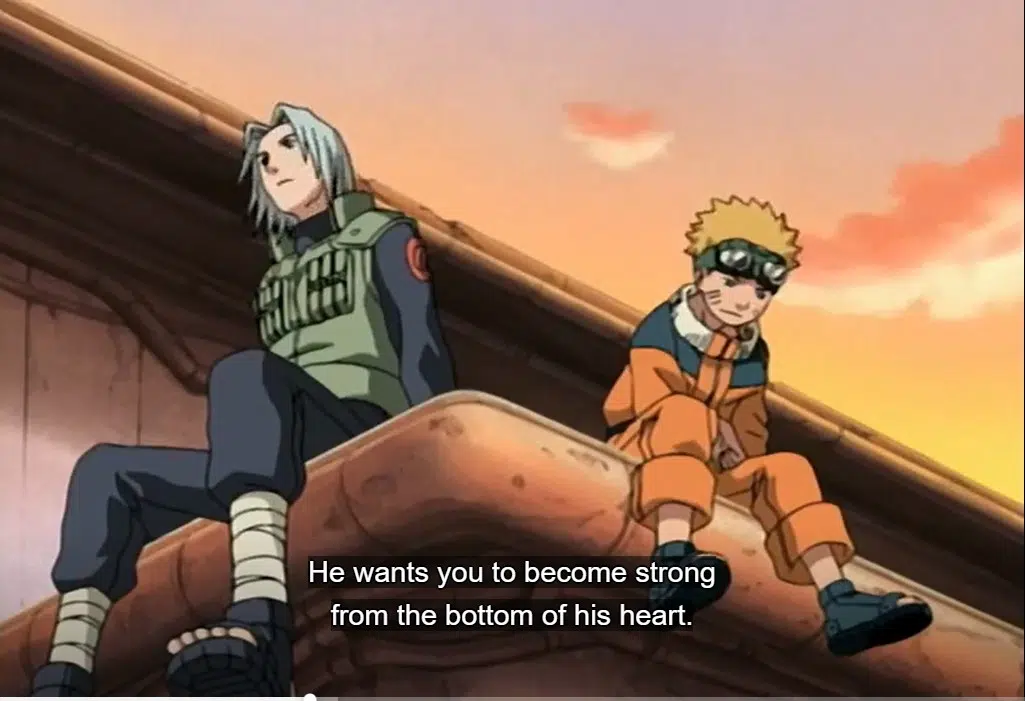
His role here is the disruptor. He challenges the rigid rules of the ninja world, famously fighting Neji Hyuga to prove that destiny isn’t set in stone. The climax of this era is his failure to stop Sasuke from leaving the village, a failure that drives him for the next decade.
In the Naruto Shippuden series (Part II)
After two and a half years of training with Jiraiya, Naruto returns. The stakes are higher: the criminal organization Akatsuki is hunting Jinchūriki. Naruto’s role shifts from a prankster to a protector. He masters the Rasengan, learns Sage Mode (using nature energy), and eventually befriends Kurama, the fox inside him.
The pinnacle of this era is the Fourth Shinobi World War. Naruto and Sasuke team up to defeat Kaguya, and then fight each other one last time at the Valley of the End. Naruto wins the ideological battle, bringing Sasuke back to the light.
In the Boruto series (Current Era)
Naruto finally achieves his dream and becomes the Seventh Hokage. However, the job is harder than he expected. He struggles to balance paperwork with being a father to Boruto and Himawari.
Current Status Warning (2026 Update): In the recent Two Blue Vortex arc, Naruto’s role has taken a dark turn. He is not currently leading the village. He and his wife Hinata have been sealed in a dimension where time does not flow (Daikokuten) by his adopted son, Kawaki. To the rest of the world, he is presumed dead. This tragic twist has set the stage for Boruto’s own journey.
Appearances in light novels and other media
Beyond the main manga, Naruto appears in “Retsuden” novels and various games.
- Naruto Retsuden: Focuses on him suffering from a chakra illness, forcing Sasuke to find a cure.
- Video Games: The Ultimate Ninja Storm series is the best way to replay his battles. The latest connection to the Boruto timeline keeps his move set fresh with Baryon Mode updates.
- Movies: The Last: Naruto the Movie is canon and critical watching. It explains how he fell in love with Hinata.
Characterization and Themes
Why do people connect with a ninja wizard? It’s not the magic; it’s the psychology. Naruto is a textbook ENFP personality type, passionate, idealistic, and deeply empathetic.
Resilience and growth
Naruto’s resilience is his “superpower.” In the ninja world, this is called the “Will of Fire.” It is the belief that love is the key to peace. He doesn’t just defeat villains; he breaks them emotionally until they see the error of their ways. This technique is famously joked about by fans as “Talk no Jutsu.”
Inner conflict and determination
His battle isn’t just external. For years, he fought the hatred of the Nine-Tails inside his own mind. Kurama tried to take over his body whenever he got angry. Naruto had to learn to conquer his own rage before he could conquer any enemy. His reconciliation with his “dark side” at the Waterfall of Truth is a perfect metaphor for self-acceptance.
Connections to mythological and cultural elements
The series is steeped in Japanese folklore.
* Kitsune: The Nine-Tailed Fox is based on the Kitsune of legend, spirits that can be benevolent or malicious.
* Chakra Natures: Based on the Five Elements (Wu Xing).
* Jiraiya, Tsunade, Orochimaru: These three legendary Sannin are taken directly from the Japanese folk tale The Tale of the Gallant Jiraiya.
Significance of Naruto Uzumaki
Naruto is one of the “Big Three” of shonen anime, alongside One Piece and Bleach. His impact on the industry is measurable in billions of dollars and millions of fans.
Impact on the Hidden Leaf Village
Before Naruto, the village was a military dictatorship that used child soldiers and ostracized the weak. Under his reign as Hokage, Konoha has modernized. There are trains, computers, and a general peace that hasn’t been seen in centuries. He literally ushered his world into the modern age.
His role as a symbol of hope and perseverance
He represents the idea that your birth doesn’t define your destiny. Neji Hyuga believed fate was fixed; Naruto proved him wrong. Nagato believed peace was impossible; Naruto proved him wrong. He is the ultimate symbol of defying the odds.
Reception and Cultural Impact
From internet memes to high fashion, Naruto is everywhere.
Popularity and fan reception
In 2025, Naruto was the #1 most-streamed anime franchise on Netflix, proving its staying power decades after its release. With over 250 million manga volumes in circulation, it stands as the 6th best-selling manga of all time.
Influence on global anime culture
You can’t talk about Naruto without mentioning the “Naruto Run.” This arms-back running style became so famous that it sparked the viral “Storm Area 51” event a few years ago. Athletes in the NFL and NBA frequently perform Naruto hand signs after making big plays. The series bridged the gap between niche otaku culture and mainstream American sports.
Representation of Japanese culture and mythology
Naruto introduced millions of Westerners to concepts like ramen, chakra, and shinobi history. The real-life “Ichiraku Ramen” shop in Fukuoka, Japan, has become a pilgrimage site for fans. The series has done more for Japanese soft power than almost any government program.
Live Action Update (2026): A live-action film is currently in development with Lionsgate. It is being directed by Destin Daniel Cretton (director of Shang-Chi), with Masashi Kishimoto giving his stamp of approval. This is the next massive frontier for the character.
Final Words
Naruto Uzumaki’s story is more than just ninja battles. It is a 15-year chronicle of a boy who turned his biggest weakness into his greatest strength. He went from being the village pariah to the Seventh Hokage, teaching us all that “hard work beats talent when talent doesn’t work hard.”
Whether you are reading the original 72 volumes or following the dark twists in Boruto: Two Blue Vortex, the lesson remains the same. If you are ready to see it for yourself, skip the filler (avoid episodes 136-220 of the original series!) and watch the canon story.
Your own ninja path might start today. Believe it!