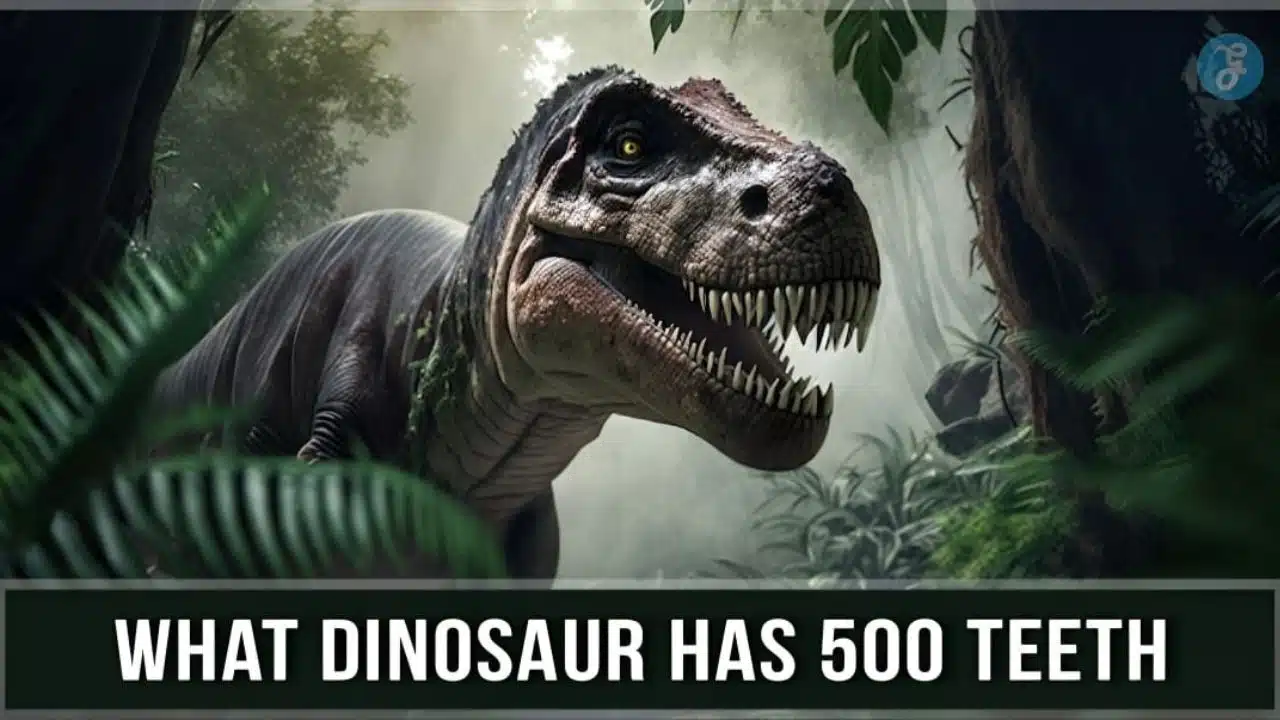
Are you ready to begin a toothy adventure into the mysterious world of dinosaurs? Imagine a creature that had not dozens, not hundreds, but an astounding 500 teeth! Yes, you heard it right: 500 teeth! But what dinosaur has 500 teeth?
Nigersaurus is the dinosaur with 500 teeth. This remarkable sauropod had a mouth filled with slender, tightly packed teeth. It roamed ancient lands as it grazed on low plants. Many ask what dinosaur has over 500 teeth. Some wonder what dinosaur has more than 500 teeth.
Others inquire about what type of dinosaur has 500 teeth or what kind of dinosaur has 500 teeth.
Do you want to learn more about Nigersaurus? Read on for key facts and details.
What Dinosaur Has 500 Teeth?
A three-year expedition led to the find of Nigersaurus, a long-necked dinosaur. Nigersaurus gained its name from the bones uncovered during the search.
One impressive feature is its skull. It held nearly 500 slender teeth arranged along the front of the mouth. This design helped the dinosaur strip vegetation quickly from the ground.
Scientists seek more remains to create a fuller description. Their work aims to rebuild the skeleton for public display.
What Did Nigersaurus Use Those 500 Teeth For?
Nigersaurus used its 500 teeth for grazing. It fed on low plants. The dinosaur evolved hard work to feed close to the ground, while many sauropods fed on high-growing vegetation.
The teeth helped strip leaves and stems fast. Its short legs and long neck enabled easy access to plants. This feeding method gave Nigersaurus a unique role in its habitat. It could eat plants that taller dinosaurs could not reach.
The grazing style resembles that of modern-day cows or sheep. The specialized mouth and many teeth allowed it to process food quickly.
Dental Adaptations and Feeding Habits of Nigersaurus
Tooth arrangement is key to function. The dental batteries in Nigersaurus were aligned neatly along a curved edge of the muzzle. This setup set it apart from other species.
The skull faced different dietary demands. With a short neck and small body, Nigersaurus did not nibble on treetops. Evidence shows it fed on plants at ground level.
The name Nigersaurus comes from Niger in West Africa. Fossils show that the dinosaur roamed forests and braided river areas. It shared its home with large crocodile relatives like Sarcosuchus.
The wide muzzle helped scoop up low plants. The tooth structure made it efficient at shearing through ferns and horsetails. Worn teeth were replaced every 14 days, as noted in a study published in PLOS One in 2013.
History And Discovery of Nigersaurus
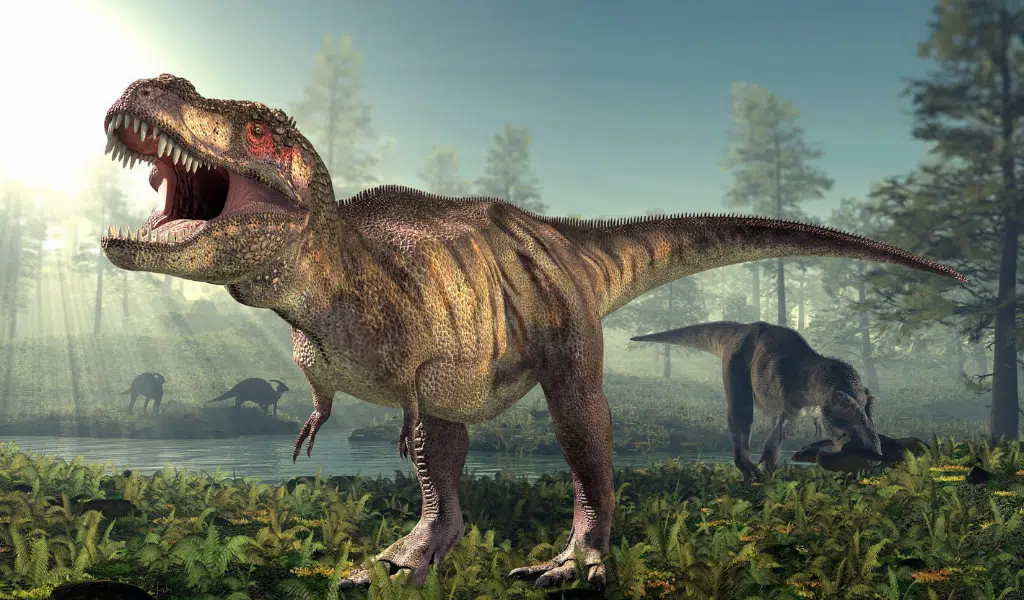
The discovery of Nigersaurus has grown over time. Initial fossils came from Niger. French-led expeditions in the 1960s and 1970s first found fragments. The fragile bones made study hard. Photogrammetry was used to record the delicate fossils before removal.
In 1999, Sereno and his team named the dinosaur Nigersaurus. The genus name honors its Niger roots, and the species name, taqueti, pays respect to Philippe Taquet. The holotype, a partial skull and neck, is kept at the National Museum of Niger.
Sereno and Jeffrey A. Wilson described the skull and feeding adaptations in 2005. A detailed study of a more complete skeleton was published in 2007. Fossils and reconstructions appear at the National Geographic Society. The dinosaur earned the nickname “Mesozoic Cow.”
One discoverer compared its feeding style to that of Darth Vader and a vacuum cleaner.
Research on Nigersaurus deepens our view of sauropod dinosaurs. The lack of complete skulls and skeletons makes study tough. Each new find adds valuable data about its biology.
Posture and Head Position of Nigersaurus: Insights from Inner Ear Analysis
Nigersaurus held its head downward when feeding. Paul Sereno and his team studied the inner ear structure. They examined the lateral semicircular canal (LSC), which helps maintain balance. Their study suggested the dinosaur usually walked with its snout angled about 67 degrees downward.
Later studies in 2009 and 2013 questioned this view. They argued that the LSC does not determine head posture for sauropods. More research is needed to resolve this point.
Skull Biomechanics and Ecological Role
CT scans and analysis of the skull show that its bones were very light. The walls were thin yet strong. Research indicates that reinforcements around the tooth rows helped support the skull. The design kept the skull steady during feeding.
This skull design fit the dinosaur’s way of life. It fed on plants near the ground. The low head posture allowed quick cropping of soft plants like ferns and horsetails. This trait helped Nigersaurus fill a special role in its ecosystem.
General Overview of Nigersaurus
The table below gives key facts about Nigersaurus.
| Name | ton |
|---|---|
| Meaning | Greek for “Niger lizard” |
| Pronunciation | NYE-jer-SORE-us |
| Habitat | Woodlands of northern Africa |
| Historical Period | Early Cretaceous (110 million years ago) |
| Size and Weight | About 30 feet long and five tons |
| Diet | Plants |
| Distinguishing Characteristics | Relatively short neck; hundreds of teeth in wide jaws |
Nigersaurus roamed the Earth about 112 million years ago during the Early Cretaceous period. This article shares fascinating details about its unique dental features.
Discovery and Naming
French paleontologist Philippe Taquet first found fossils in Niger in 1976. American paleontologist Paul Sereno later led more extensive digs in 1999. The name “Nigersaurus” comes from its origins in Niger. The specific name, taqueti, honors Philippe Taquet.
Habitat and Size
Nigersaurus lived in what is now the Sahara Desert in Niger. It measured about 30 feet long. It coexisted with dinosaurs like the carnivorous Suchomimus and the plant-eating Ouranosaurus.
Unique Skull Structure and Teeth
The skull of Nigersaurus is a unique subject. It had a delicate skull with a low, wide mouth. The dinosaur had over 500 teeth that it replaced continuously. This design suited its habit of browsing low plants.
Morphological Quirks
Researchers studied the skull in detail to understand its posture. The light vertebral column marked one of its unusual traits.
Interest in Museums
Museum exhibits show Nigersaurus to captivate young visitors. The National Geographic Museum in Washington, DC displays casts and models of this species.
Nigersaurus, with its 500 teeth and unique skull, remains a striking part of paleontology. Its traits help scientists learn more about dinosaur evolution.
Scientific Classification: The Dinosaur with 500 Teeth
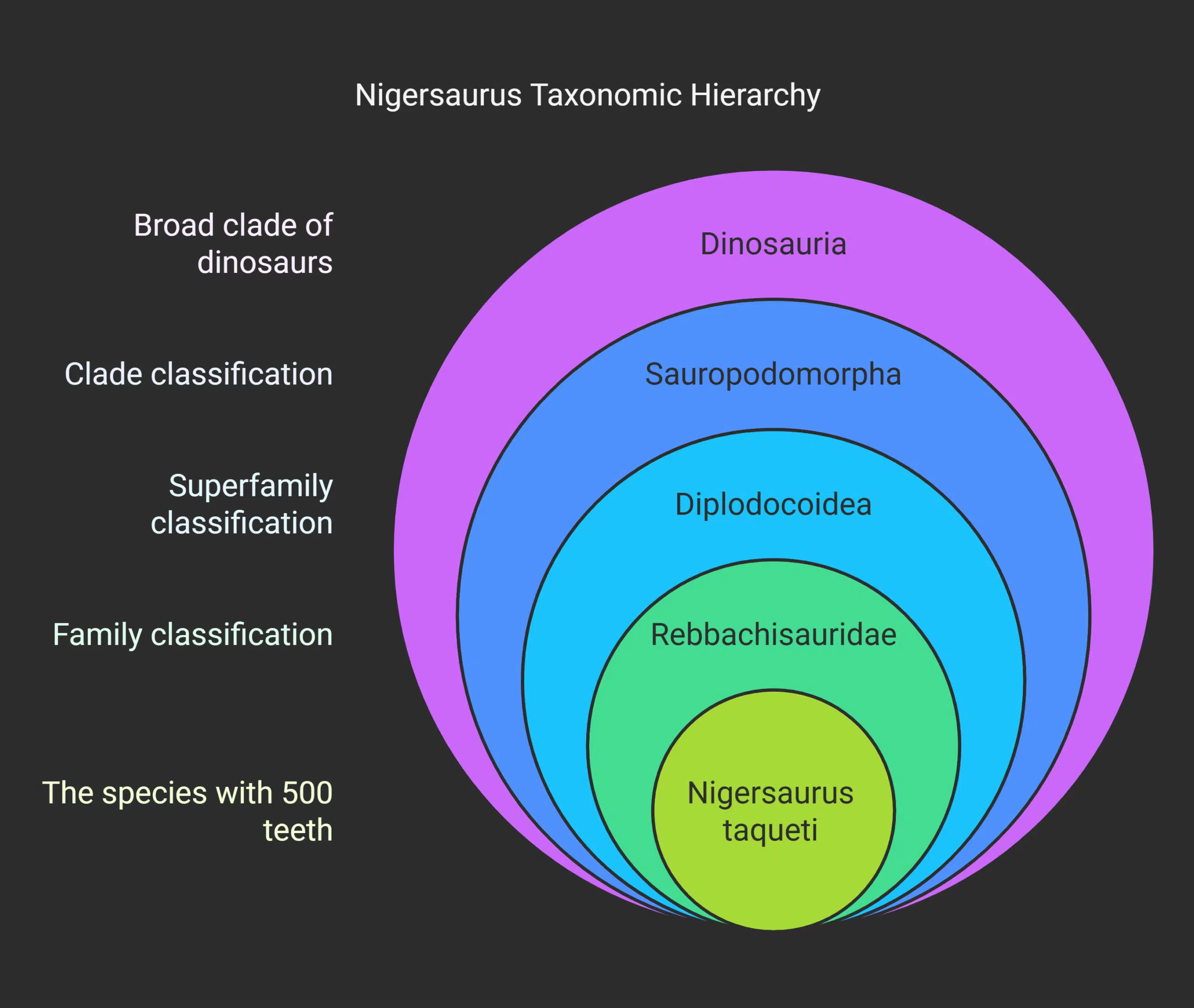
Early on, Nigersaurus was placed in the genus Dicraeosaurus. Later, Sereno reclassified it as a rebbachisaurid diplodocoid. The shorter neck played a key role in this decision.
- Kingdom: Animalia
- Phylum: Chordata
- Genus: Nigersaurus
- Clade: Dinosauria
- Species: Nigersaurus taqueti
- Clade: Saurischia
- Clade: Sauropoda
- Clade: Sauropodomorpha
- Superfamily: Diplodocoidea
- Family: Rebbachisauridae
- Subfamily: Rebecchi Suriname
What Type of Dinosaur Nigersaurus Is?
Nigersaurus is a rebbachisaurid sauropod dinosaur. It lived in the woodlands of Niger during the middle Cretaceous period. Fossil finds date its existence from about 115 to 105 million years ago.
The genus name means “Niger reptile.” The species name honors Philippe Taquet.
What is the Biological Family of Nigersaurus
Nigersaurus belongs to the family Rebbachisauridae. Dinosaurs in this family had long necks and short tails. Their teeth were adapted for browsing on low plants. Fossils have been found in Africa, South America, and Europe. Nigersaurus is among the well-known members of this group.
What Does The Dinosaur With 500 Teeth Eat?
Nigersaurus was a plant-eater that fed on low-lying vegetation. Its compact head and long neck helped it reach food sources with ease.
Researchers note that it shared dietary habits with other sauropods. Small pit-like marks on its teeth show it grazed ground-level plants. The flora of its time included ferns, horsetails, and flowering plants. Grass did not appear during that period.
The feeding method sometimes resembled that of modern flamingos. Scientists suggest it used a comb-like motion to clear aquatic ferns from its mouth. The large number of teeth ensured continuous function as older ones wore out.
Tooth Replacement Mechanism
Nigersaurus had a rapid tooth replacement process. Each tooth was backed by up to eight replacement teeth stacked in columns. The cycle took about 14 days. This fast renewal kept its mouth ready for grazing.
The constant turnover gave the dinosaur a full set of working teeth. This feature set it apart from many other plant-eaters. The system helped the animal deal with abrasive plants and wear quickly.
Where Did Nigersaurus Live?
Nigersaurus lived in the Elrhaz Formation within the Tenere Group in Gadoufaoua, Republic of Niger. At the time, the area featured low fluvial sandstones and dunes. The terrain later became a floodplain during the Early Cretaceous. These conditions provided many low-growing plants.
What Predators did Nigersaurus have?
Nigersaurus faced many predators in its habitat. It lived alongside carnivorous dinosaurs such as Carcharodontosaurus, Suchomimus, and Spinosaurus. Large crocodiles like Sarcosuchus also roamed nearby waters.
The dinosaur may have used its small size and low profile to stay less visible. It likely formed groups to improve safety. A herd could spot and respond to danger more effectively.
Its long whip-like tail might have served to ward off threats. This tactic is seen in some modern animals.
Who Are the Close Relatives of Nigersaurus?
Nigersaurus had close ties with other rebbachisaurids. Its relatives include Rebbachisaurus from Morocco, Demandasaurus from Spain, and Limaysaurus from Argentina. They shared similar skull features and skeletal details that show their evolutionary links.
Also read: 25 animals that don’t sleep
Did Any Other Dinosaurs Have 500 Teeth?
No other dinosaur had exactly 500 teeth. Nigersaurus is known for its massive set of 500 teeth. Some hadrosaurs had even more. For example, Edmontosaurus had over 1,000 teeth. Shantungosaurus, a close relative of Edmontosaurus, also had many teeth.
Lambeosaurus, Corythosaurus, Parasaurolophus, and Gryposaurus featured hundreds of teeth.
Frequently Asked Questions (FAQs)
Now we present some frequent questions on this topic.
1. What was the reason behind Nigersaurus having a lightweight skull?
The skull was light because it had a hollow structure with many openings. This design reduced its overall weight.
2. What was the lifespan of Nigersaurus?
Scientists have not set an exact lifespan. Sauropods may have lived for several decades. Some Nigersaurus individuals may have reached close to a hundred years.
3. What is Nigersaurus nickname?
Nigersaurus earned the nickname “Mesozoic Cow” due to its low browsing habits. One discoverer compared its feeding style to that of Darth Vader and a vacuum cleaner.
4. How Big was Nigersaurus
Nigersaurus had unique traits that set it apart. It measured about 30 feet long and weighed around 4 tons. This size makes it smaller than many other sauropods.
Takeaways
The facts above show that what dinosaur has 500 teeth? is answered by Nigersaurus. Its set of 500 teeth and distinctive features attract scientific interest. The content presents key data drawn from field studies and fossil records.
About This Article and Disclosure: This article was written by a researcher with an academic background in paleontology. The author used verified sources such as PLOS One and the work of Paul Sereno.