You live, work, and relax under one roof in a studio apartment. One open space can feel cramped. You might wish for a bedroom nook or a distinct kitchen area. Without room dividers, your apartment layout can look messy.
Here is a key fact. Natural light can make a tiny studio feel twice as big. This post will show 7 space-saving hacks with floating shelves, sheer curtains, and rugs to define zones.
Task lighting, wall art, and a fresh color palette can mark each spot. You can tuck away gear in a murphy bed or other storage units for more room. Keep reading.
Key Takeaways
- Natural light can make a tiny studio feel twice as big.
- Use bookshelves, a floating sofa, and added shelves to carve out work, living, and sleep corners.
- Layer rugs—plush under a couch, jute under a desk, low-pile by a murphy bed—to mark zones and bounce light.
- Hang floor-to-ceiling sheer curtains on a slim rail and use floor lamps or pendants to split areas without walls.
- Paint accent walls, hang large artwork, and choose multifunctional pieces like a $499 IKEA storage bed or fold-down table.
Use Furniture as Dividers
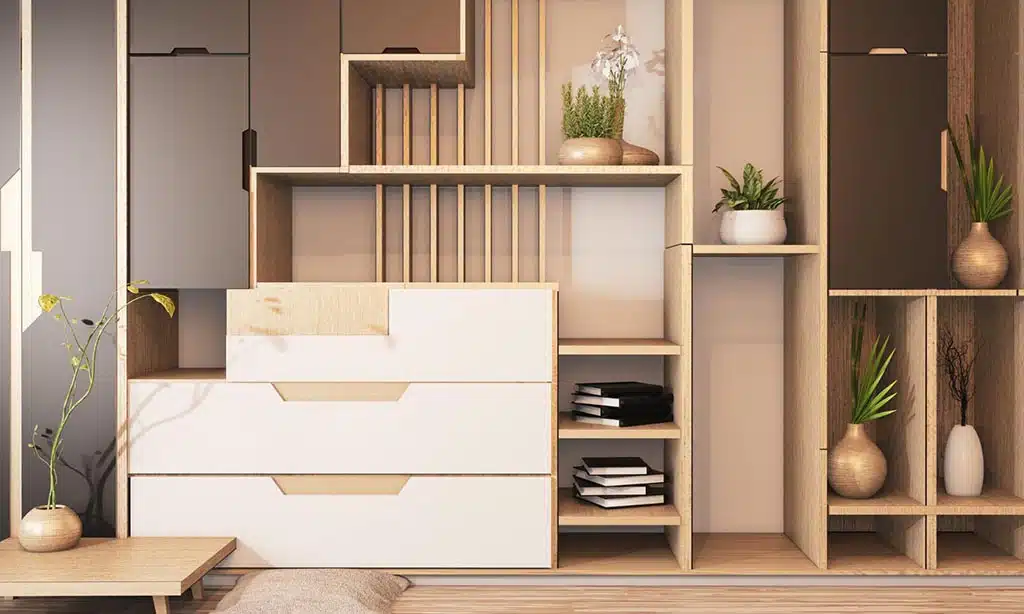
Layer a shelf behind your settee, it acts as a room divider and doubles as a display stand for your favorite finds. Read on to find more tricks that optimize your square footage with style.
Place bookshelves to separate areas
Bookshelves stand tall as room dividers in a studio apartment. They act as non-permanent barriers that carve out a home office, dining nook, or sleeping spot. You get extra storage solutions, and open shelves let natural light drift through.
Try floating shelves near a kitchen counter or tuck a storage bed behind a tall unit. Arrange the unit along your apartment layout after measuring wall space. Trace daily routines to balance task lighting, color scheme, and flow.
Float a sofa to create distinct zones
Center a slim sofa in the room to split the living spot from the sleeping nook. Pick a design with a low back and clean lines to let in natural light, and avoid bulk. Angle it away from the wall, then map out the line with a floor plan app or tape measure.
Add floating shelves on its back for small pots or self storage bins. This move boosts storage solutions and acts as a room divider.
Place a floor lamp behind the sofa for soft task lighting that marks the living area. Lean a slim frame of wall art against the sofa to create a simple decor boundary. Pair a small side table on the other side to hold coffee cups or keys.
Pairing these items creates a clean, minimalist design. A floating sofa alters the studio apartment layout, and delivers space optimization.
Incorporate Rugs to Define Spaces
A bold rug defines your coffee corner, and it sets a stage for wall art. It boosts space optimization in your tiny studio.
Use different rugs for each zone
A plush rug under the sofa marks the living zone, and a jute pad under a desk sets a workspace. This trick turns rugs into room dividers that draw lines without walls in your studio apartment.
You boost space optimization by choosing mats that differ in weave, hue, and shape underfoot. The mats also layer warmth, soften footsteps, and boost lighting design by bouncing natural light across wood floors.
Slide a low-pile pad beneath a murphy bed or floating shelves to tag a sleeping nook. Vibrant stripes by a kitchen island can mark a dining spot and link to minimalist design. A soft runner near a storage bed glows under task lighting and ties to wall art or sheer curtains.
These rugs reshape apartment layout, support storage solutions, and join space-saving hacks for any small home.
Hang Curtains or Sheer Panels
Hang floor-to-ceiling gauze drapes on a slim rail to carve out a cozy nook, boost natural light, and read on for more clever studio tricks!
Create privacy with curtain partitions
Line a ceiling rail with fabric panels. They act as flexible room dividers in a studio apartment. This space-saving hack boosts space optimization and adds softness. Panels boarder a home office or dressing nook in minutes.
Slip sheer curtains onto the same channel. They let natural light beam through, yet keep zones distinct. This trick adds portable walls, without drilling holes. You can slide panels aside for an open plan living feel.
Play with Lighting
Hang a pendant lamp over your desk to boost task lighting and bring focus to your work area. Fit a dimmer smart bulb in a torchiere to bathe your sofa in a soft glow and carve out a cozy lounge zone.
Use floor lamps or pendant lights to highlight zones
Set a tripod lamp behind your couch to define the living area. It gives you warm task lighting for late reading sessions. A globe pendant hangs over your kitchen island. It carves out the dining zone, and adds a bit of wall art flair.
Soft bulbs blend with natural light to craft a cozy mood.
Such lighting design works like room dividers, but it frees up floor space. A clever lamp swap can boost space optimization, nix bulky shelves or sheer curtains. This simple hack fits any studio apartment, it pairs well with a storage bed, murphy bed, or other multifunctional furniture.
Add Statement Decor
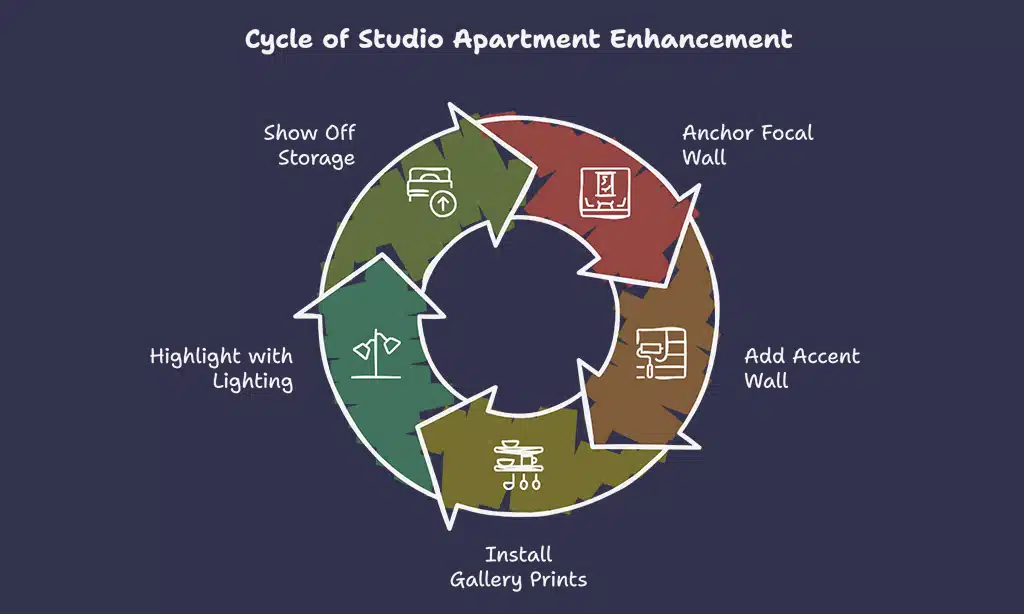
Hang a giant oil painting above the settee to anchor a focal wall. Grab a bubble level and a mini roller to splash one wall with a bold hue.
Use accent walls or artwork to distinguish spaces
A bright accent wall adds depth and personality. Paint one wall behind your sofa or bed. Pick a hue from a color guide. It catches natural light and enlivens the studio apartment layout.
Install large prints in a gallery frame to mark each area. Place one above the kitchen island and one by your murphy bed. Pair wall art with task lighting to highlight zones. Show off storage solutions, like a storage bed under art.
This simple trick feels like a room divider, without walls. It fits perfectly into space-saving hacks and minimalist design.
Use Color Coordination
Use a color wheel to pick bold hues, paint a feature wall, and light each zone with a lamp—read on.
Paint or decorate each zone with a unique color palette
Assign each area in a studio apartment its own unique hue. Light grays and beiges boost a sense of openness. Pastel blues calm a reading corner near sheer curtains. A bold accent wall makes the dining nook stand out.
Tape off edges with painter’s tape. Roll on latex primer and two coats of paint with a roller brush. Test colors with a color wheel to follow basic color theory. This hack adds depth and aids space optimization.
Bright shades reflect natural light so rooms feel bigger. Soft whites behind a murphy bed or storage bed create a sleek backdrop. Chartreuse or dusty rose accents tie in wall art and kitchen island decor.
Minimal furnishings let each palette shine in a minimalist design. Hints of color around room dividers and storage solutions knit zones together.
Include Multifunctional Furniture
Install a fold-down bed to flip your bedroom into a living room in seconds. Choose a rolling kitchen cart to serve as extra prep space and a dining table.
Opt for a bed with storage or a foldable dining table
Add a storage bed to your studio apartment for space optimization. A storage bed hides boxes and clothes under the mattress. The $499 storage frame from IKEA holds shoes, gear, or linens.
These storage solutions free floor space for a small kitchen island or wall art. You will keep natural light flowing by raising bulky bins up. Room dividers won’t block your windows.
A foldable dining table brings more function to a small spot. You can pull it out for guests, then tuck it away after dinner. These space-saving hacks blend with your wall art or knickknacks.
It also works as a desk under your task lighting or as an extra counter by the kitchen. Grab a thin panel, fold it, and glide it against the wall. We will soon move to final tips in the conclusion.
Takeaways
We wrapped up hacks that carve out living, sleeping, and work nooks without walls. You can float a couch, hang curtains, or spread rugs like a patchwork quilt. Clever lamps and wall art mark each corner.
A bed that tucks away or one with built-in drawers frees floor space and cuts clutter. These tips let natural light flow and give each zone its own vibe.
FAQs on Ways to Define Zones Without Walls
1. What is the easiest way to carve zones in a studio apartment without walls?
You can fit folding screens, also called room dividers, to split the space. Hang sheer curtains on a track, stake out a home office with task lighting, and hang wall art over your sleeping spot.
2. How do I keep natural light flowing through each area?
Go light, use sheer curtains instead of heavy drapes, tuck a slim mirror near your storage bed, let every corner soak up natural light. It feels like you get a sunlit loft, even in a small studio apartment.
3. What storage solutions help me make the most of tight quarters?
Try a storage bed with drawers, stash a murphy bed in a closet nook, install floating shelves, toss in multiuse bins. You get big storage solutions with smart space optimization.
4. Can décor and screens add coziness without walls?
Place folding screens, also called room dividers, where you need a break. Add wall decor to signal a lounge zone, drape sheer curtains to soften edges, and shine task lighting on the spot you want to highlight.