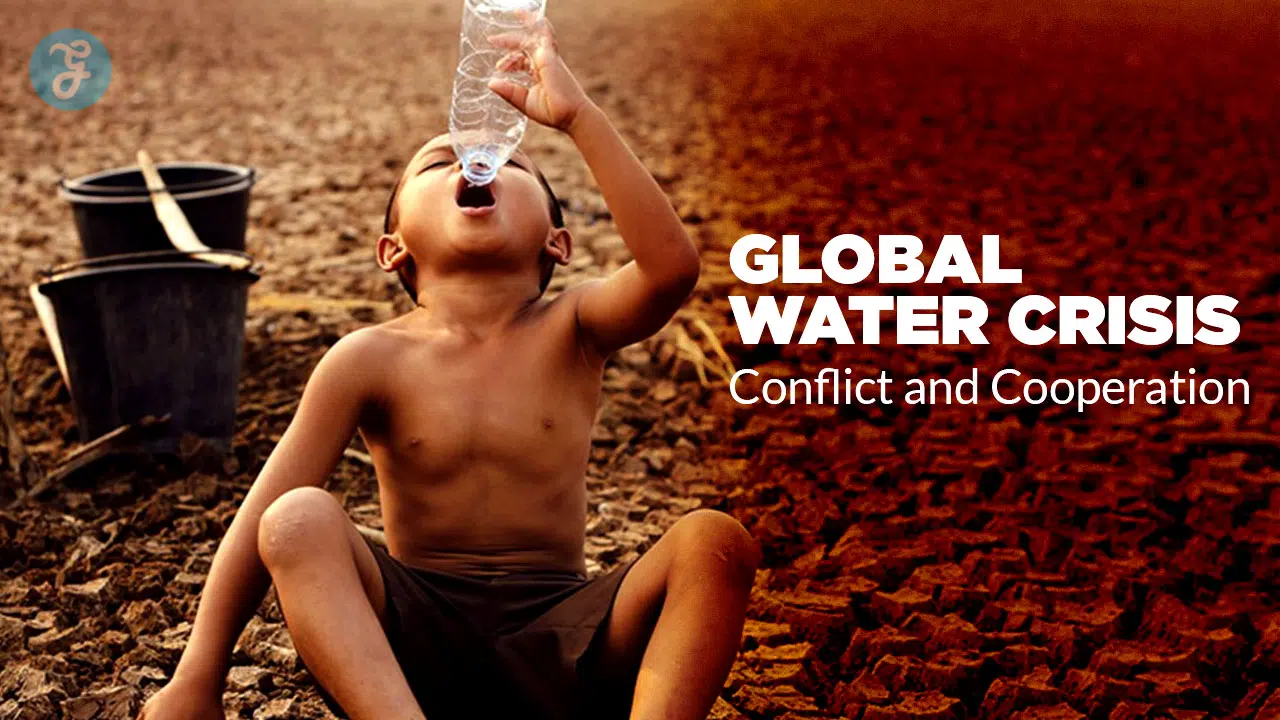
You grab a glass of water, and maybe you feel safe. Yet, many people today can’t count on turning the tap for clean water. If you have seen news about dry rivers or cities running out of water, you know that this problem is growing fast. In 2026, the UN has warned us all. We are facing what they call “global water bankruptcy.” This means many countries may not have enough safe water at home or in their farms and factories.
What’s really going on with the current global water crisis. You’ll learn how conflicts over shared rivers start, but also find stories where nations actually work together to solve these issues.
Curious if there’s hope? Keep reading to see how new ideas and teamwork could change our future with water—for good or bad.
Understanding the Global Water Crisis
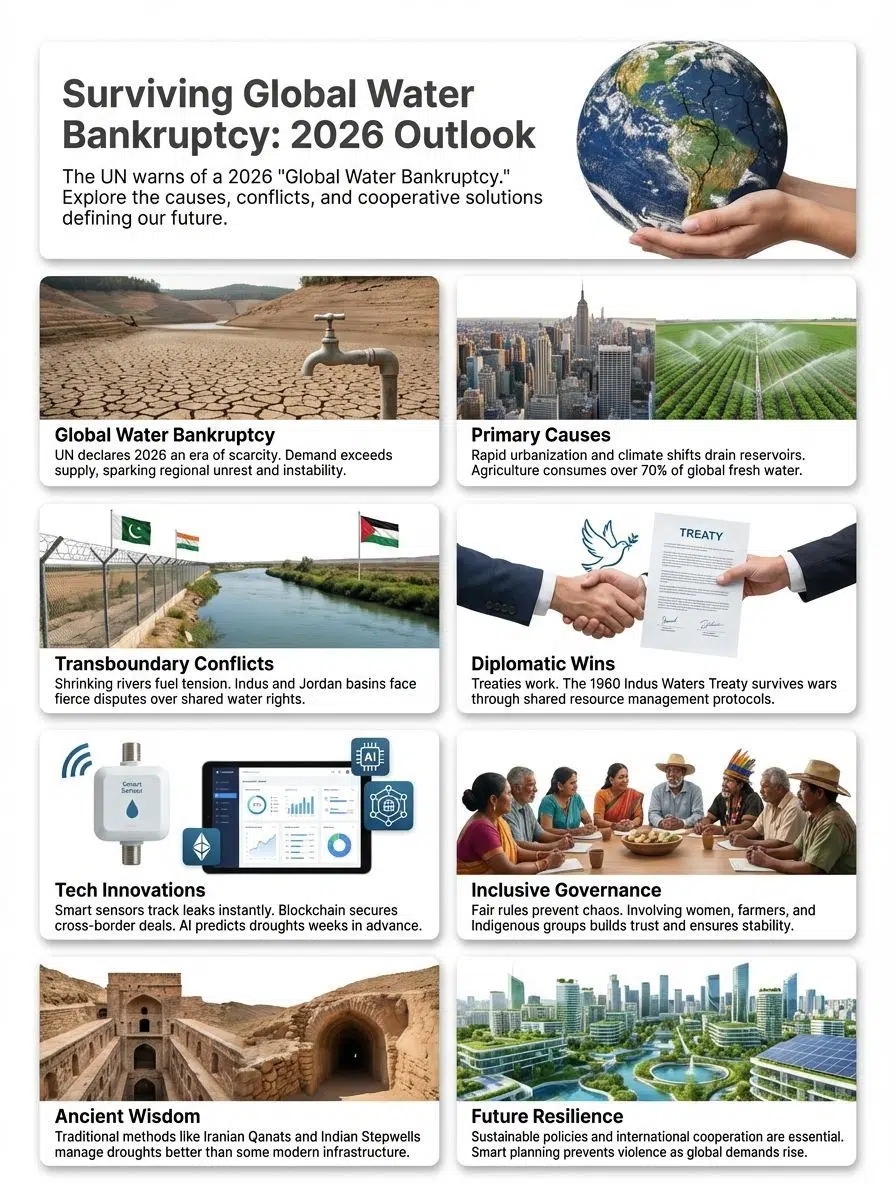
Water is running out fast in many places, setting off a scramble as supplies shrink. This crisis is pushing neighbors to talk, and sometimes fight, about every drop.
Defining “water bankruptcy” in 2026
“Water bankruptcy” isn’t just a scary buzzword anymore. In January 2026, the UN University released a landmark report titled Global Water Bankruptcy, officially defining this term for the first time. It describes a situation where water systems have lost their ability to recover.
Think of it like a financial account that has been overdrawn for so long that it can no longer be balanced. We aren’t just facing temporary droughts; we are seeing permanent “insolvency” in our aquifers and rivers. The report notes that 4 billion people now experience severe water scarcity for at least one month a year.
This is more than just temporary shortages like Flint’s lead-tainted supply. It affects farming, factories, and families every single day. People watch rivers dry up and see crops fail as the rules for sharing resources fail to work fairly.
Instead of only being about shocking disasters or sudden droughts, “water bankruptcy” exposes deep cracks in how countries manage precious supplies across borders and within their own towns and cities.
Key regions facing severe water stress
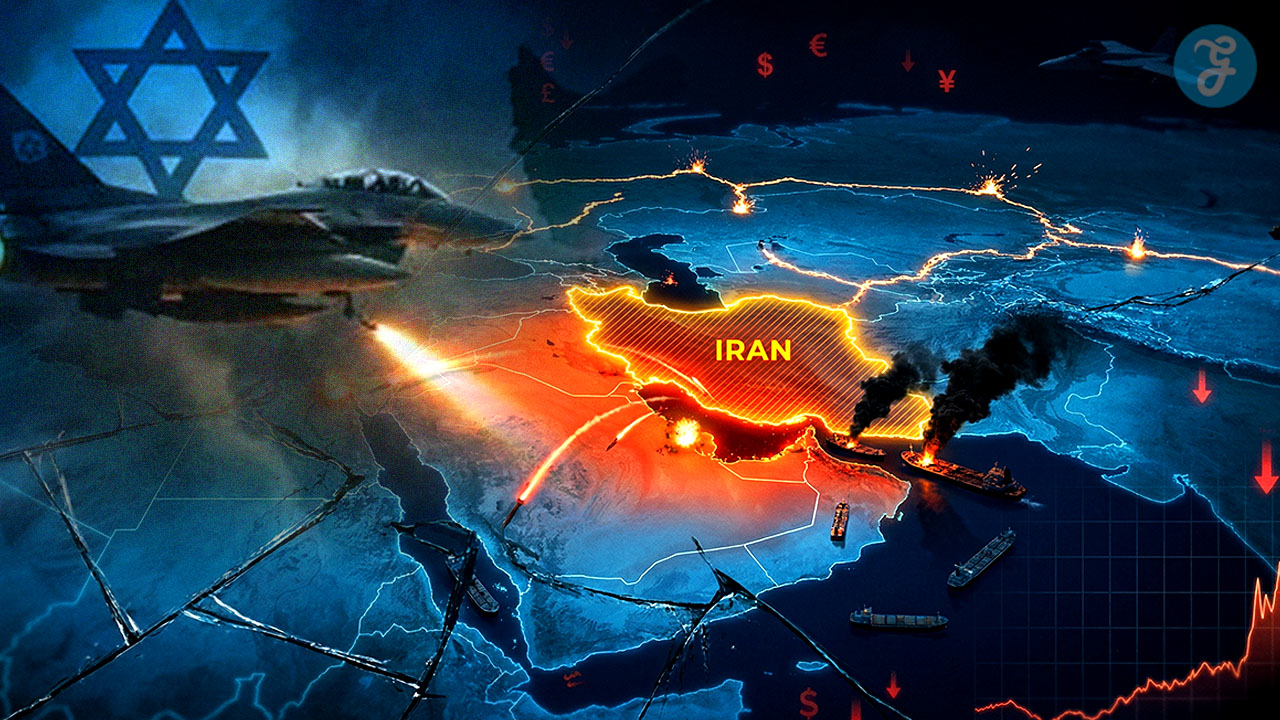
You can see this playing out in real-time headlines. In the United States, the Colorado River Basin is at a breaking point, with states struggling to agree on cuts as reservoirs hit historic lows in early 2026. Meanwhile, Iran grapples with a domestic water crisis that has fueled local unrest and strained communities.
During the summer of 2025, protests erupted in Iranian cities like Sabzevar and even parts of Tehran, where residents chanted “Water, electricity, life – our basic right” after facing days without running water. In places like the Middle East and North Africa, severe shortages have forced governments to rethink water governance before taps run dry for good.
Cities in India face harsh rationing as groundwater vanishes beneath busy streets. Sub-Saharan Africa sees families walking miles daily just to fill buckets at crowded wells. United Nations reports from 2023 show nearly two-thirds of people worldwide now deal with some form of water scarcity for at least part of the year, a human security issue that touches millions from Asia to South America.
Causes of the Water Crisis
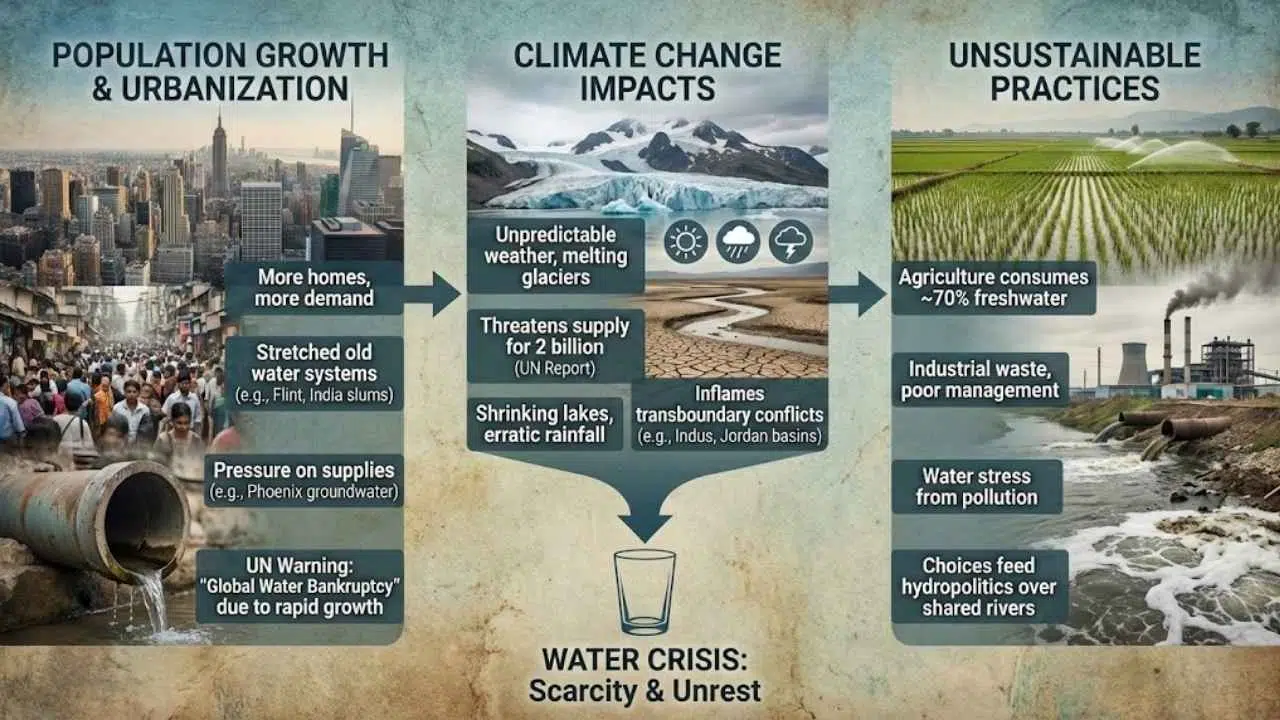
Many places face water shortages as cities grow and weather patterns shift. Farming practices add fuel to the fire, making clean water harder for everyone to get.
Population growth and urbanization
Cities keep growing, pulling in more people every year. By 2026, the world’s population keeps rising fast, putting huge pressure on water supplies. More homes and taller buildings mean more toilets to flush and showers to run.
This is not just a numbers game, bigger crowds need bigger pipes and cleaner rivers. For example, as Phoenix, Arizona continues to expand, city planners are having to look for new water sources as groundwater levels recede.
Iran faces these changes daily. Water scarcity there led to unrest as villages dry up trying to support swelling cities like Tehran. Across the map, from Flint’s lead-tainted taps in Michigan to packed slums in India, booming populations stretch old water systems past their limits.
The UN warns that we are heading into an “Era of Global Water Bankruptcy” because growth runs faster than our resources can handle it. Urban life should not turn into a race for the last clean glass of water, but without smarter planning and better policies, that grim scenario gets closer each day.
Climate change impacts on water availability
Shifting weather patterns make water supplies less predictable every year. Some rivers dry up faster now, while heavy rains flood towns without warning.
The 2025 UN World Water Development Report focused specifically on “Mountains and Glaciers,” warning that the melting of these “water towers” threatens the supply for 2 billion people downstream. In Iran, long droughts strain farms and cities alike.
Water tables drop deeper each decade, forcing people to dig more wells for less reward. The United Nations has warned of an “Era of Global Water Bankruptcy” in 2026 as lakes shrink and rainfall becomes erratic. Water scarcity worsens quickly where heat rises fastest.
Melting glaciers mean the Indus and Jordan river basins lose their snow-fed streams. These shrinking flows inflame transboundary conflicts between neighboring countries who depend on these lifelines. Climate change drives both disaster and dispute, making cooperation essential across borders and in local policy decisions before taps run dry for millions more people worldwide.
Unsustainable agricultural and industrial practices
Farmers use too much water for crops like rice and cotton. In fact, agriculture consumes about 70% of the world’s freshwater. These thirsty plants drain rivers and lakes, leaving little for others. In 2026, the UN declared that the world entered an “Era of Global Water Bankruptcy.”
Many factories dump waste into waterways or take huge amounts to cool machinery. Cities and farms in Iran have seen unrest due to a lack of clean water from these practices. The Flint Water Crisis showed how poor management can poison communities.
Pollution, wasteful irrigation, and careless factory habits make water scarcity worse worldwide. Water stress grows because big industries follow old methods instead of smart resource management or sustainable development plans.
Some governments push for fast growth but ignore environmental policy, hoping short-term profits fix bigger problems later on. These choices feed hydro politics struggles over transboundary resources by making neighbors fight for what’s left in shared rivers such as the Jordan or Indus basins.
Transboundary Water Conflicts
Rivers and lakes do not stop at borders, so nations often bump heads over who gets what. Sometimes, a simple stream becomes a tug-of-war rope between neighbors.
Overview of water disputes between nations
Countries often argue over who owns or controls shared water. Many disagreements center on vital rivers and lakes that cross borders. The Indus River, for example, flows from India into Pakistan and has caused tension since 1947. Both countries rely on it for farming and drinking water, so every drop counts.
Climate change is making these struggles worse by shrinking supplies even more each year. Water nationalism is growing fast in places like Iran, where local unrest erupted due to acute shortages. Across the globe, nearly two billion people live with high water stress, according to recent United Nations reports.
With populations rising and demands climbing higher than ever before, clashes over transboundary resources now shape much of global hydro politics in 2026.
Case studies: Indus, Jordan, and Colorado river basins
Water is at the heart of many international disputes. The stakes are incredibly high in these three key regions.
| River Basin | Key Players | The Core Conflict | 2025-2026 Status Update |
|---|---|---|---|
| Indus River | India, Pakistan, China | Vital for 300 million people; relies on shrinking glaciers. | Major Escalation: In April 2025, India announced a temporary suspension of the Indus Waters Treaty following security incidents, a move Pakistan has challenged at the Permanent Court of Arbitration. |
| Jordan River | Israel, Jordan, Palestine | Flow has dropped 90% since the 1950s due to upstream dams. | Stalled Cooperation: The “Project Prosperity” deal (water for energy) froze due to regional conflict, though back-channel talks continue as Jordan faces acute summer shortages. |
| Colorado River | USA (7 States), Mexico | Supplies 40 million people; reservoirs at historic lows. | Negotiation Deadlock: As of February 2026, Upper and Lower Basin states failed to reach a consensus on cuts before the federal deadline, triggering potential federal intervention. |
The Indus River flows through China, India, and Pakistan. It is vital for drinking water, farming, and energy. In 1960, the Indus Waters Treaty was signed by India and Pakistan with help from the World Bank. This deal split control of six rivers and set sharing rules. It is still seen as a success in water diplomacy despite rising tensions.
However, farmers along the Indus often clash over usage rights during dry seasons. Poor river management sparks local conflicts that can grow much bigger without quick solutions. The Jordan River supplies water to Israel, Jordan, Palestine, Syria, and Lebanon. Its flow has dropped by nearly 90% since the 1950s due to dams and heavy use upstream.
The shrinking river fuels fears of “water bankruptcy” in this region. Tensions increase as each side tries to secure its share for cities and farms. Many past peace talks tried to tackle water allocation, including parts of the Oslo Accords in the 1990s. Political obstacles have often blocked lasting agreements.
Local communities sometimes turn to old methods like rainwater harvesting or small-scale treatment plants when government plans fail them. Environmental groups sound alarm bells about pollution from factories flowing into both river systems which harms fish stocks and health. These basins show that resource management sits at the core of hydro politics today. Solutions need global cooperation as well as fair policies at home.
Collaborative Approaches to Water Management
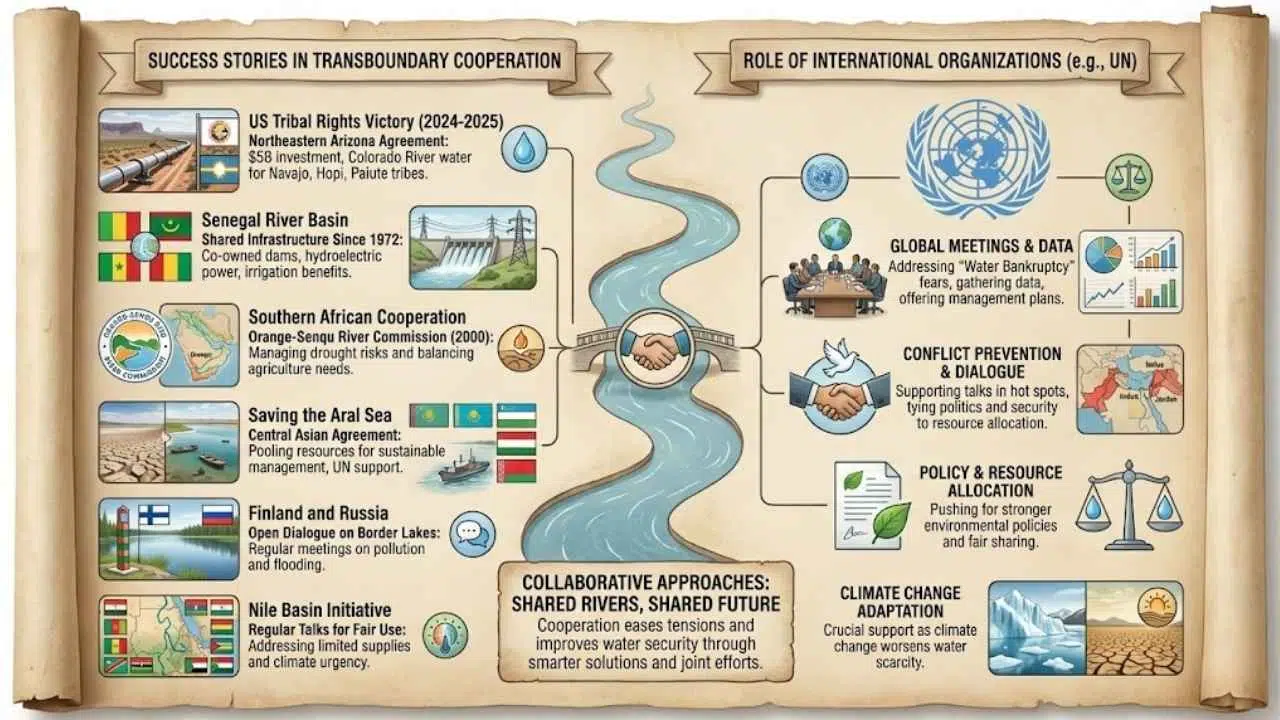
People can do wonders when they work together, and water is no different. Some stories might surprise you, neighbors who once argued now share rivers with a handshake and a smile.
Success stories in transboundary cooperation
Many regions have struggled with water scarcity and transboundary water conflicts, yet some have sparked hope through strong teamwork. These real-world examples show that international cooperation can ease tensions and improve water security.
- US Tribal Rights Victory (2024-2025): The Northeastern Arizona Indian Water Rights Settlement Agreement is a historic win. It secures a $5 billion investment to build a pipeline delivering Colorado River water to the Navajo Nation, Hopi Tribe, and San Juan Southern Paiute Tribe, resolving decades of legal battles.
- The Senegal River Basin: The Senegal River Basin Development Authority unites Mali, Mauritania, Senegal, and Guinea. Since 1972, they have successfully co-owned dams and shared the benefits of hydroelectric power and irrigation, proving that shared infrastructure can build peace.
- Southern African Cooperation: Nations formed the Orange-Senqu River Commission in 2000 to oversee their shared river system. This collaboration helps them manage drought risks brought on by climate change while balancing agriculture needs.
- Saving the Aral Sea: Central Asian countries Kazakhstan, Kyrgyzstan, Tajikistan, Turkmenistan, and Uzbekistan agreed to pool resources over the Aral Sea disaster after years of conflict. International organizations like the UN supported these agreements that now push for sustainable and fair resource management.
- Finland and Russia: In Europe, Finland and Russia keep an open dialogue over their many border lakes and rivers despite past friction. Regular meetings allow quick response to pollution issues or flooding events without escalating tensions.
- Nile Basin Initiative: This gathers Egypt and ten other nations around the world’s longest river for regular talks about fair use of limited water supplies; climate change increases their urgency each year.
Despite deep political divides at home from cases like Iran’s domestic water troubles or Flint’s crisis in America, these cross-border stories highlight how talking across lines saves lives far beyond headlines. These joint efforts inspire policymakers worldwide to keep working on smarter solutions for resource allocation so future generations can avoid repeating today’s mistakes with hydropolitics or environmental governance failures.
The role of international organizations like the UN
Groups like the UN help countries work together on water issues. In 2023, the UN called a global meeting to address growing fears of “water bankruptcy.” They pay close attention to places where fights over rivers or lakes could break out, such as between nations sharing resources in hot spots like the Indus and Jordan basins.
The UN supports talks, gathers data, and offers plans for better resource management. Their work matters even more now that climate change is making things worse. Iran’s recent water crisis sparked unrest and showed how politics and security tie into every drop. The Flint Water Crisis in America also proved that poor decisions can harm communities for years.
By pushing for stronger environmental policies and fair resource allocation, international organizations try to stop conflicts before they start.
Innovative Pathways for Cooperation
Fresh ideas are bubbling up as countries search for better ways to share water. Small sparks of progress show just how much teamwork can change the story.
Leveraging technology for water sharing
Smart sensors and data-sharing apps help track every drop. Governments, even those facing transboundary conflicts, use real-time data to share water more fairly. For instance, the platform Xylem Vue uses artificial intelligence to detect leaks and predict pipe failures before they happen, saving millions of gallons that would otherwise be lost.
Satellite images spot leaks and illegal diversions in places such as the Indus River basin or crisis-hit Jordan. Services like Farmonaut allow farmers to monitor crop health from space, helping them apply precise amounts of water only where needed.
Iran’s domestic water crisis shows how technology can sound alarms for looming shortages that reach into villages before unrest spreads. Blockchain secures deals between countries, making promises about water sharing harder to break.
Digital platforms let local farmers see daily supply levels on their phones, a game-changer in nations struggling with resource management. The UN promotes artificial intelligence tools that predict droughts weeks ahead, using climate change trends from past years like 2023 and 2024 as warnings.
With these advances, communities gain a fighting chance against water scarcity while building new bridges across borders battered by hydro politics and rising pressure over limited resources.
The importance of inclusive governance frameworks
Inclusive water governance puts everyone at the table, so no group gets left behind. In 2026, as water scarcity grows and the UN warns of global “water bankruptcy,” sharing power matters more than ever.
Iran’s domestic water crisis shows that shutting people out sparks unrest; Flint’s story reminds us inequality hits hardest when clean water runs dry. People need fair rules to settle resource allocation across borders and inside communities.
As climate change stirs up transboundary conflicts from the Indus Basin to the Jordan River, only cooperation grounded in equal voice can hold back chaos. International organizations like the UN now push for environmental policy that reflects every stakeholder’s needs, not just government agendas.
Local voices, farmers, women, Indigenous groups, bring real-world solutions rooted in experience with hydro politics and conflict resolution. These frameworks make it easier to build trust across lines of religion or nationality, cut red tape on sustainable development projects, and calm fears about resource management or new technology rollouts before they ignite tension.
With growing demands for water security worldwide in 2026, ignoring inclusion is like poking a hole in your own bucket during a drought: shortsighted and risky for all involved.
The Role of Local and Indigenous Knowledge
Villages and tribes often hold water secrets passed down for generations, helping them manage droughts with skill. Their wisdom shines like a guiding star, offering fresh ideas for conflict resolution in thirsty lands.
Contributions of traditional water management systems
Ancient water systems have guided communities through dry spells for centuries. Qanats, an Iranian invention over 2,500 years old, let people tap underground water across miles of desert. Stepwells in India provided cool access to groundwater and supported families even during long droughts.
These designs did more than conserve drops; they helped stretch supplies and calm local tensions about sharing resources. In Iran today, many villages recall the old qanat rules when facing unrest from the modern water crisis.
Farmers once used shared canals called acequias across Spain and Latin America, where each neighbor had a set time to draw water for their crops. This simple method kept conflicts at bay before lawyers or courts stepped in.
Indigenous groups often mixed traditional knowledge with new tools, letting them adapt as rains grew less predictable due to climate change. As cities like Flint face manmade disasters and rural zones suffer from “water bankruptcy,” history’s lessons show that smart resource management can ease nerves and spark cooperation, no matter how rough the waters get.
Empowering communities to resolve conflicts
Local groups often stand on the front lines of water scarcity. In Iran, angry villagers protested in the streets as lakes dried up and taps ran dry. These community members did not wait for distant officials to fix things; instead, they shared old techniques for collecting rainwater and taught neighbors how to use less for farming.
Flint, Michigan’s residents joined hands after their water turned toxic. They tested supplies themselves, held local meetings, and pushed leaders to act fast.
Working together at home can stop fights before they boil over into bigger trouble. Old wisdom about wells or river sharing gets mixed with new science from universities or aid agencies.
Local people know best where leaks hide or who uses more than others. With tools like mobile apps and cheap sensors, any village today can track every drop if it matters enough to them. Facing climate shifts and empty reservoirs, strong communities help shape fair rules that even big politicians must notice now that water is a human security issue everywhere.
Future Challenges and Opportunities
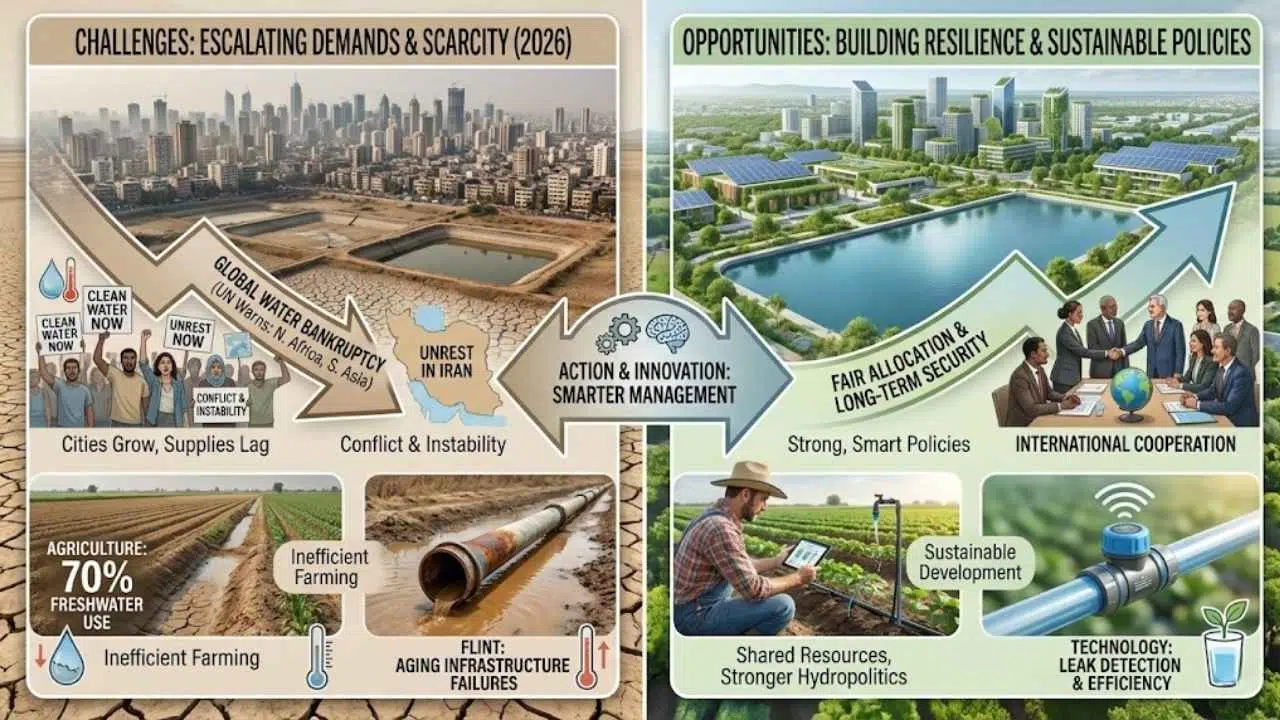
People everywhere will need to use new ideas, as thirsty cities and a changing climate test their limits. More hands at the table can spark hope, and maybe solve some of the trickiest water puzzles yet.
Preparing for escalating water demands
Water shortages will hit harder in 2026. Iran’s domestic water crisis has sparked unrest, sending ripples through its society. Major regions like North Africa and South Asia now face “water bankruptcy,” as called by the UN, putting millions at risk of violence and instability.
Cities grow, yet safe water cannot keep up. The Flint Water Crisis showed even developed places can struggle with clean supplies. Food production eats up over 70% of fresh water worldwide; old farm habits make things worse.
To meet rising demands, better resource management is key. Smart policies, new technologies like sensors for leaks or precision farming tools, plus strong international cooperation give hope for future water security against climate change pressures and nationalism pushing countries apart.
Building resilience through sustainable policies
Stronger rules keep communities safer from water scarcity and resource mismanagement. In 2026, the United Nations called this crisis an “Era of Global Water Bankruptcy.” Countries like Iran face unrest, with local protests over domestic supply failures.
Big shocks catch headlines, but policies that work long-term matter more than quick fixes. Good laws help share water across borders and give everyone a fair shot at clean supplies.
Some governments use smart environmental policy to plan for changes in rain patterns and higher demands. The Flint Water Crisis showed how weak governance risks public health; still, better oversight turns things around fast when people get involved.
Fair resource allocation helps shrink inequality while climate change brings new challenges each year. International cooperation leads to stronger hydropolitics instead of costly conflict between neighbors fighting over shared rivers or lakes. Sustainable development stays at the center to meet growing needs without running dry tomorrow.
Final Thoughts
Water shapes our lives, from city taps to distant farms. Today’s crisis is more than just empty rivers; it stirs conflict and sparks teamwork across borders. Smart policies, fair sharing, and new tools all help turn fights over water into chances for peace. Think about your own habits, could you save a little more? Each person counts in this big puzzle, where every drop really does matter.
If you want practical steps or deeper stories, many global groups have resources online worth exploring. Every small change pushes us toward safer days ahead, so keep pushing for better ways with hope in your heart and action at your fingertips.