

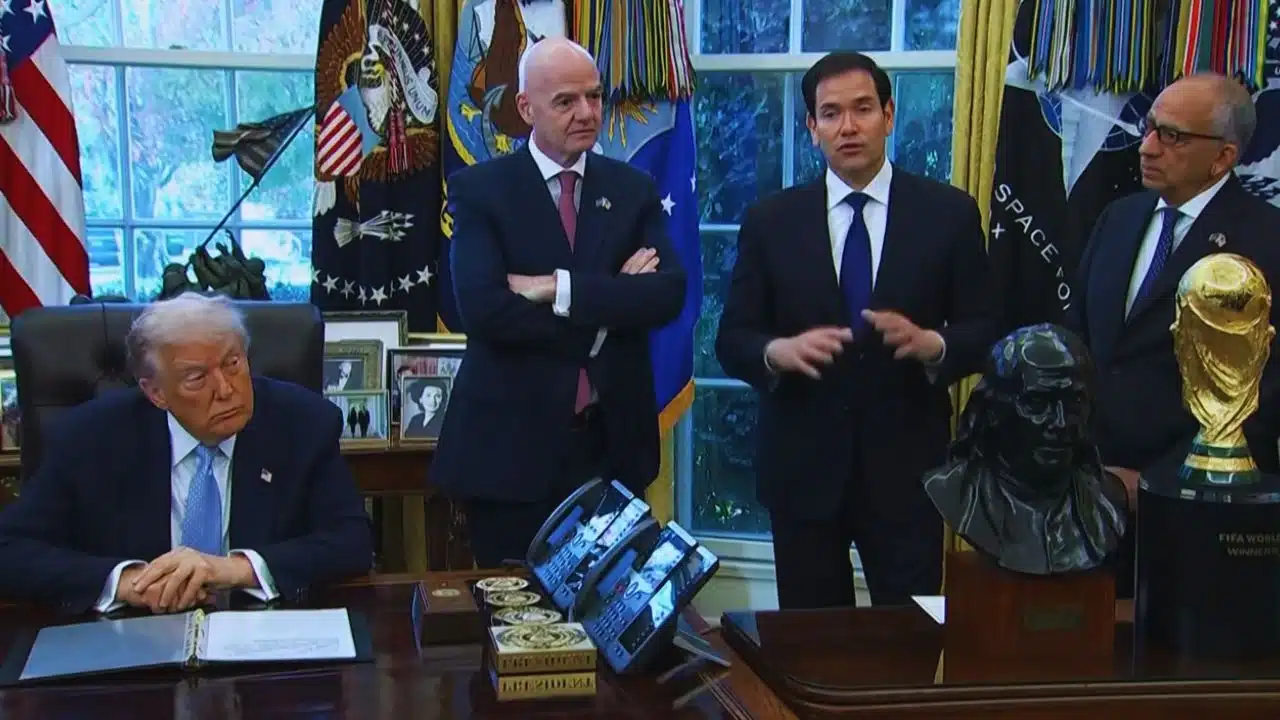
The United States has announced a major change to its visa-appointment system ahead of the 2026 FIFA World Cup, aiming to help millions of international fans secure timely travel approval. President Donald Trump confirmed that U.S. embassies and consulates worldwide will now give priority visa-interview appointments to travelers who have already purchased World Cup tickets. The initiative is designed to ease severe visa backlogs in many countries and ensure that genuine football fans can attend one of the largest sporting events ever held in North America.
Under the new policy, a system called the FIFA Prioritised Appointment Scheduling System (FIFA PASS) will allow ticket-holders facing long wait times to request faster visa interviews through a dedicated channel operated jointly by FIFA and the U.S. State Department. Announcing the measure at the White House, Trump said the system will help streamline travel preparations for fans ahead of the tournament, which will take place in June and July 2026 across the United States, Canada, and Mexico.
Secretary of State Marco Rubio clarified that although the U.S. will expedite the interview scheduling process, the priority does not mean that ticket-holders will automatically receive a visa. The standard security and eligibility checks for all applicants will remain fully in place. Rubio emphasized that “a ticket is not a visa,” stressing that all applicants will undergo the same level of assessment as any other visitor. The only difference is that they will move ahead more quickly in the appointment queue—many within six to eight weeks instead of waiting months or even more than a year in some regions.
The demand for faster processing comes as millions of fans prepare to travel for what is expected to be the most attended World Cup in history. Speaking alongside Trump and Rubio in the Oval Office, FIFA President Gianni Infantino estimated that up to 10 million visitors could travel to the U.S. during the tournament. He noted that the new priority appointment system will help ensure that legitimate fans with valid tickets can enter the country on time, without being blocked by slow visa-appointment systems. Infantino added that this step is crucial for maintaining high standards of fan experience from the moment supporters begin preparing their trips.
Long visa-interview wait times have been a persistent problem. In countries such as Colombia, applicants are currently facing waits of around 11 months just to secure an interview. The wait time in Mexico City is reportedly around nine and a half months, while many non-Canadian residents of Toronto face waits as long as 14 months. Without the new prioritization policy, many fans would face the risk of only receiving interview dates after the tournament had already finished. The expedited appointment path is therefore expected to significantly improve fans’ ability to plan travel, accommodation, and match attendance.
Tourism and travel advocacy groups in the U.S. welcomed the decision. The U.S. Travel Association praised the policy as a practical step that will improve visitor flow while maintaining strong security standards. The association’s CEO, Geoff Freeman, said the change increases efficiency, expands processing capacity, and helps reduce delays—strengthening America’s readiness to welcome millions of visitors for the biggest sports event of the decade. Industry representatives argue that the policy will boost economic activity during the World Cup period, supporting businesses across hospitality, transportation, retail, and entertainment.
However, questions remain about how the new rules will apply to travelers from countries that face existing travel restrictions. Earlier in June, President Trump signed an executive order barring citizens from 12 countries from entering the U.S., citing national-security concerns. Iran—whose national team has already qualified for the tournament—is one of the affected countries. While the executive order makes exceptions for athletes and coaching teams participating in the World Cup and the 2028 Olympics, it is unclear whether regular Iranian fans with match tickets will qualify for priority interviews or exemptions. For now, many supporters from restricted countries may still face significant uncertainty about whether they will be allowed entry at all.
It is also important to note that not all travelers will require a visa in the first place. Citizens of many countries under the U.S. Visa Waiver Program (VWP)—including most of Europe, the United Kingdom, Japan, and Australia—can typically travel to the U.S. visa-free for up to 90 days. These visitors will still need to apply for authorization through the ESTA system, but do not need embassy interviews. At the previous World Cups in Russia (2018) and Qatar (2022), match tickets automatically generated a “Fan ID” that functioned as an entry permit. The U.S. has chosen not to adopt a similar system, opting instead for a visa-interview prioritization model that maintains existing security processes.
Overall, the newly announced FIFA PASS system represents a significant attempt to modernize and manage U.S. visa processing during what is expected to be the largest World Cup ever hosted. With stadiums packed, tourism surging, and millions of international fans preparing to visit North America, the decision is aimed at reducing barriers and ensuring that supporters can experience the tournament without bureaucratic obstacles. Still, despite the faster appointment path, U.S. officials stress that all travelers should apply early, follow visa-application procedures carefully, and remember that a match ticket—no matter how expensive—does not automatically grant entry into the United States.




























