You have big dreams and special skills, but moving to the United States for work feels out of reach. Many talented people feel stuck because they do not know how to get permission to use their gifts here. You might be worrying about tough rules or confusing forms right now. I have some great news for you. The US O-1 Visa: For Individuals With Extraordinary Ability exists just for people like you. This special non-immigrant visa lets top talent in the sciences, arts, business, education, or athletics live and work in the US legally.
I am going to walk you through the exact steps you need to take, and I think you will be surprised at how clear the process actually is. Grab a cup of coffee, and let’s go through it together so you can see if your talent can open these doors!
What is the US O-1 Visa?
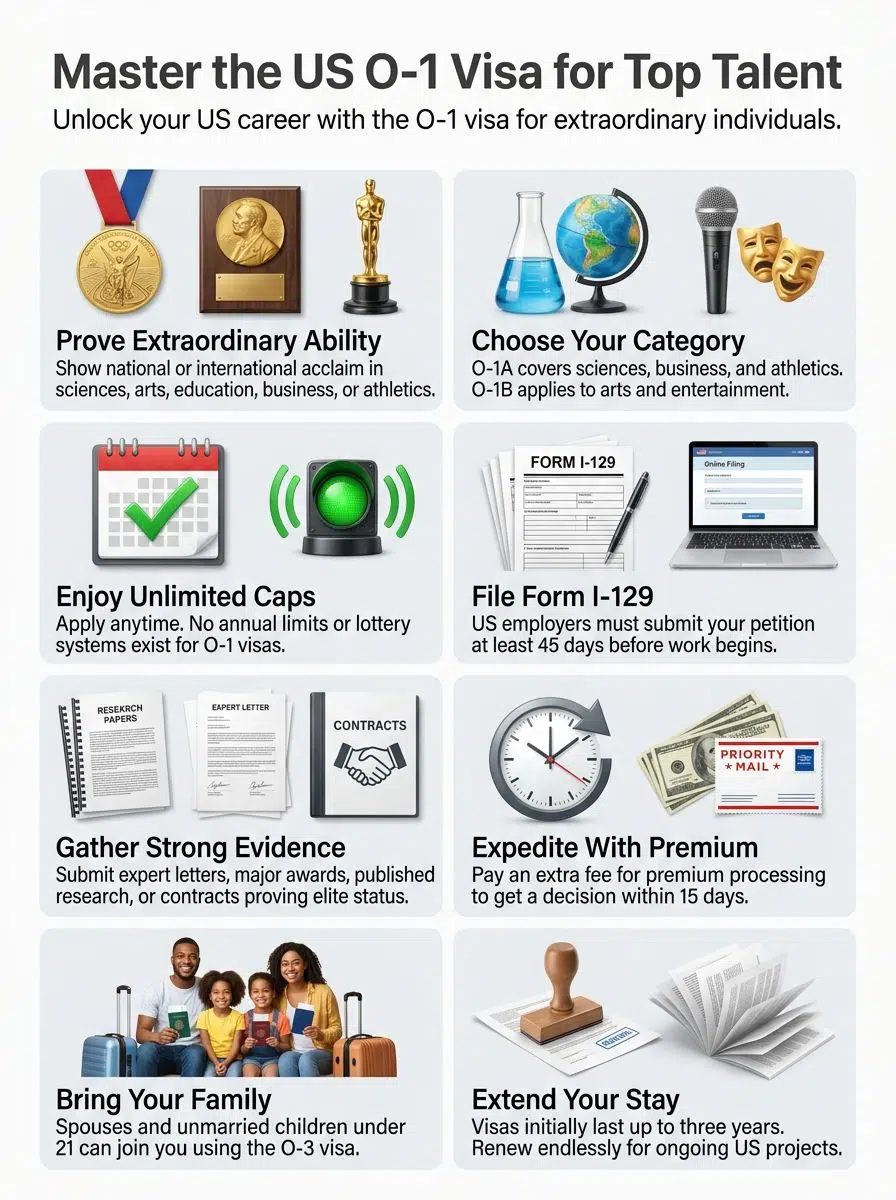
After hearing about the purpose of this guide, let’s talk about a visa for people who truly shine. The O-1 Visa is a non-immigrant work visa for those with extraordinary ability in the sciences, arts, education, business, or athletics. A person must show proof that they stand out with national or international recognition.
You might be wondering if people actually get approved for this. According to 2025 data from the US Citizenship and Immigration Services (USCIS), the O-1 visa has a remarkably high approval rate of 94.6 percent.
USCIS reviews each petition to check if achievements are recognized and respected in the field. The process can move fast. Some get answers within 15 calendar days using premium processing.
Here are a few examples of professionals who frequently use this visa:
- Founders of successful tech startups
- Lead researchers in artificial intelligence
- Award-winning actors and directors
- Chefs with international acclaim
Many famous athletes, artists, scientists, and business leaders have entered the US on an O-1 Visa to pursue temporary jobs requiring their talent. No strict annual cap applies like other work visas. If you qualify, you have a very strong shot at approval.
Eligibility Criteria for the US O-1 Visa
Some people shine so bright in their field that they turn heads everywhere. If you fit that description, keep reading. This visa could open big doors for you.
Extraordinary ability in sciences, arts, education, business, or athletics
Extraordinary ability means standing out at the top of your field. For the O-1 visa, this applies to sciences, arts, education, business, and athletics. USCIS defines it as a level reached by only a small number of people who are experts or pioneers.
Think of Nobel Prize winners in science or Olympic athletes. Famous artists or respected leaders in education can also qualify.
You must show proof of skill much higher than most others in that area. This might include awards like an Oscar, national championships, published research with many citations, leading roles in important projects, big business deals you led to success, or work shown on major platforms worldwide.
To give you an idea of the required level, here are common benchmarks:
- Sciences: Being named an IEEE Fellow or publishing in top journals like Nature.
- Business: Leading a company to a successful acquisition or securing major venture capital funding.
- Arts: Winning a Grammy or directing a film featured at the Sundance Film Festival.
Even teachers who have received top teaching awards may qualify if their impact is clear across the country or world. Each case needs solid evidence to show true acclaim and recognition from others in your field.
National or international recognition for achievements
National or international recognition proves that your talent stands out. Winning awards, receiving honors, or media coverage counts as proof. USCIS looks for clear signs of accomplishment in sciences, arts, business, education, or athletics.
Even a small feature story in a respected magazine can catch their eye. For business leaders, a feature in Forbes 30 Under 30 or TechCrunch holds incredible weight. For artists, a review in The New York Times is a perfect example of national recognition.
Membership in top organizations may help, too, if they pick only the best members. Showing this kind of acclaim tells USCIS you are exceptional in your field. Famous athletes with medals or artists with global exhibits often have an easier time showing sustained achievement for this employment-based visa.
Evidence of sustained acclaim in the field
Proving sustained acclaim means showing a history of big achievements. You must give proof that your talent gets recognized by others in your field, both in the United States and worldwide.
USCIS looks for evidence such as major awards, press coverage, or strong letters from experts. For example, you can show articles about your work from top newspapers or magazines. Olympic medals, international prizes, and published research with many readers all help.
Immigration attorneys often share a helpful tip for this section. You do not need to meet every single criterion on the government list. You only need to provide strong evidence for at least three of the eight evidentiary criteria set by USCIS.
Judges check if people know you and respect your skill over time. Being a member of famous clubs or groups also helps prove lasting success and recognition. Careful records make the case stronger for those on the path to getting an O-1 non-immigrant visa based on extraordinary ability.
Categories of the O-1 Visa
The O-1 visa splits into two main groups. If you are curious which one fits your line of work, keep reading.
O-1A: Sciences, education, business, or athletics
O-1A covers people who shine in sciences, education, business, or athletics. These are folks with top skills that set them apart from others in their field. To get this non-immigrant visa, you must show clear proof of extraordinary ability.
Think of Nobel Prize winners, Olympic medalists, or leaders of major breakthroughs. You need strong evidence like awards or high-paying positions, that prove your fame and achievements. In recent years, artificial intelligence researchers and tech startup founders have become some of the most common successful applicants for the O-1A.
USCIS will want to see national or international recognition through press coverage, publications, or leadership roles. A job offer in the United States is also required from an employer willing to file a petition on your behalf.
This temporary work visa allows talented people to take jobs no one else can fill due to their special skillset and acclaim.
O-1B: Arts, motion picture, or television industry
The O-1B visa is for people with extraordinary ability in the arts or those who work in motion pictures or television. Dancers, actors, directors, musicians, and designers can all qualify if they show high skill and strong achievement.
The government wants proof of acclaim, like awards or big roles in shows. Here are a few examples of professionals who are an ideal fit:
- A lead animator on a major Hollywood film
- A musician who has charted on the Billboard Hot 100
- A costume designer recognized with a national award
Only a U.S. employer can file your petition with USCIS before you start your temporary work. Most applicants must present a contract and clear details of their project in America.
With this non-immigrant visa, artists keep chasing their dreams on Broadway stages or Hollywood sets without an annual cap holding them back. This employment-based visa lets talent shine on screen and behind the scenes, too!
Benefits of the O-1 Visa
This visa opens doors for talented people. It offers special perks that might surprise you, so keep reading to discover what makes this path so appealing.
Ability to work in the U.S. in a specialized field
People with an O-1 visa can work in the United States in a field that matches their talent. For example, athletes compete, artists perform, and scientists research under real job contracts.
The U.S. sets no strict limits on which jobs count as specialized. Jobs must simply use your extraordinary ability every day.
Employers file a petition to hire you for temporary work. You may change employers if each new job meets all rules set by USCIS. Your skills must be clear and needed in areas like sciences, arts, athletics, business, or education.
Many Nobel Prize winners and Olympic medalists have used this non-immigrant status to come to America for work related directly to their expert achievements.
Option to bring dependents under O-3 status
Your spouse and unmarried children under 21 may come with you on an O-3 visa. They can stay in the U.S. for as long as their O-1 status remains valid.
It is helpful to know exactly what your family can and cannot do on this visa:
- Schooling: Children can attend K-12 public or private schools.
- Higher Education: Dependents can enroll in college or university courses.
- Employment: O-3 holders cannot legally work in the US and will not receive a Social Security Number for employment.
Each dependent needs a separate application linked to your main petition. O-3 dependents must follow many of the same steps required for other nonimmigrant visas, like showing family ties and filing paperwork with USCIS.
For most families, this option keeps everyone together while you focus on your employment-based visa job. The process is quite direct. Just gather documents that prove family relationships and support all claims made in the forms.
No annual cap on O-1 visas
O-1 visas do not have a set yearly limit, so there is no cap on the number issued each year. Each person with extraordinary ability in sciences, arts, business, athletics, or other specialty fields can apply at any time during the year.
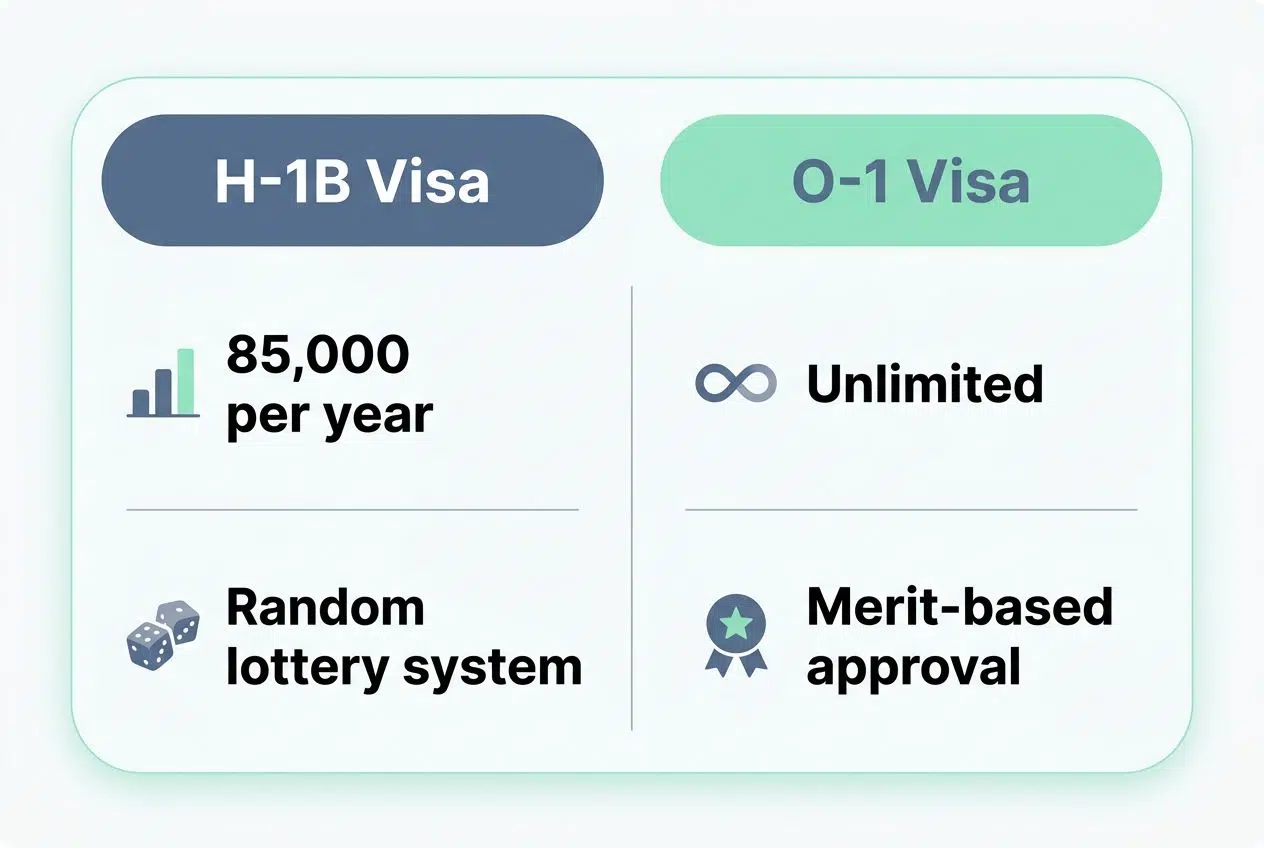
This is a massive advantage over other popular choices. Here is a quick comparison:
| Visa Type | Annual Limit | Selection Process |
|---|---|---|
| H-1B Visa | 85,000 per year | Random lottery system |
| O-1 Visa | Unlimited | Merit-based approval |
This means talented workers are not left waiting for a spot to open up. USCIS reviews each petition based on merit and eligibility alone. The lack of a cap opens more doors for skilled professionals seeking temporary work in the United States. No lottery system exists here, so qualified individuals get a fair shot all year round.
Key Steps in the O-1 Visa Application Process
Getting the O-1 visa involves clear steps, and each one leads you closer to working in your field. With good planning and the right paperwork, you can move forward with confidence.
Submission of Form I-129
Form I-129 starts the O-1 visa process. The U.S. employer, agent, or sponsor files this petition with USCIS for the person who has extraordinary ability. This form asks about the beneficiary’s skills, job details, and planned work in the United States.
Without Form I-129 approval from USCIS, a non-immigrant worker cannot begin temporary work in fields like sciences, arts, business, education, or athletics.
As of 2026, the standard filing fee for Form I-129 is $1,055. However, qualifying small employers with 25 or fewer employees and nonprofits only pay a reduced fee of $530.
The petition must arrive at least 45 days before work starts, but not more than one year ahead of time. After submitting Form I-129 along with all needed paperwork and fees to USCIS, it is time to gather strong supporting documentation next.
Compiling supporting documentation
Start by gathering strong evidence of your extraordinary ability. Get letters from experts or leaders in your field who know about your work and can speak to your skills. Show proof of any big awards, prizes, or honors you received.
Include a strong mix of evidence in your portfolio:
- Invitations to judge the work of others in your field
- Membership in exclusive groups for top professionals
- Copies of published research or patents with your name
- News stories from major publications talking about your impact
You must also include a detailed itinerary of your planned work. Immigration experts note that a common reason for application delays is a weak itinerary. If you have unexplained gaps of two to three weeks without scheduled work, USCIS might question whether you truly have enough employment to justify the visa.
The United States Citizenship and Immigration Services (USCIS) wants clear proof that the person seeking this non-immigrant visa is truly among the best. Every document counts!
Premium processing options
Getting all your supporting papers in order may take time, but waiting for a decision can be even harder. For those who want speed, USCIS offers premium processing for Form I-129.
Starting March 1, 2026, the fee for premium processing is $2,965. By paying this fee, you get a guaranteed decision in 15 calendar days. If no answer comes within that period, the government refunds the fee.
This option is popular with people under tight deadlines or facing job start dates. Many choose it to avoid long waits and cut down on anxiety about their status. Premium processing does not increase approval odds, but it speeds up how fast USCIS reviews your petition. Those needing quick results find this service incredibly helpful.
Supporting Documentation for O-1 Visa Applications
Having strong evidence can open doors. The right documents help you shine bright in your field, so keep reading to learn what helps most.
Letters from experts in the field
Strong letters from experts can tip the scales for your O-1 Visa petition. These letters prove you have extraordinary ability in areas like sciences, arts, business, or athletics. Experts explain your achievements and describe how you made an impact on your field.
They share details about awards, publications, or big projects tied to your work. USCIS weighs these expert opinions as key evidence of your acclaim.
A great tip is to gather four to seven letters from independent experts. Letters from people who have not worked directly with you, but know your work by reputation, carry much more weight than letters from your former bosses.
Each letter should carry a clear explanation of why you stand out among peers in specialty occupations. Letters often come from people with national or international recognition themselves. Think of it less like bragging and more like building a solid case.
Evidence of publications, awards, or memberships
USCIS likes to see proof that you stand out in your field. Published articles or research in well-known journals help show extraordinary ability. Awards from respected groups, even national or international ones, also boost your petition.
Memberships in top organizations count too, especially if getting in means you have achieved something special.
Here are the best ways to present this evidence:
- Publications: Provide citation counts from Google Scholar to show how many others reference your work.
- Awards: Include the judging criteria and the number of competitors to prove the award is prestigious.
- Memberships: Submit the organization’s bylaws showing that membership requires outstanding achievements.
Keep track of every publication and award you get, big or small. Gather certificates, membership cards, and press clippings. Anything official helps your case shine brighter under the O-1 spotlight.
Contract or job offer from a U.S. employer
A written job offer or contract from a U.S. employer is key to your O-1 visa petition. This document must show what work you will do, how long the job lasts, and where you will work in the United States.
Form I-129 requires this proof before it reaches USCIS. The contract can be simple, like a letter of employment signed by both parties. It should include the pay rate and details about your duties in sciences, arts, business, education, or athletics.
Some applicants submit several contracts if they work on different projects with different employers. Agents may file these cases as well. A formal deal memo is often accepted for freelance artists or film directors working on temporary shoots. Without clear terms from an employer, the petition lacks grounds for approval under immigration rules.
Duration and Extensions of the O-1 Visa
The O-1 visa can last for several years, and you might be able to add more time. Keep reading to learn what steps help keep your American dream going.
Initial validity period
O-1 visas get approved for up to three years at first. USCIS decides the exact time based on how long your work or event lasts in the United States. For example, if you have a contract for two years, the visa often matches that length.
If your project ends earlier than three years, expect your non-immigrant status to expire sooner too. Each case depends on the job offer and planned activities listed in your petition. You need clear dates and details about employment for proper processing by USCIS.
This short-term setup helps match extraordinary ability with temporary work needs across fields like sciences, arts, athletics, education, or business. It allows you to work without locking anyone into a long commitment right away.
Process for requesting extensions
O-1 visa holders can stay in the U.S. for up to three years at first. To keep working after this time, your employer or agent sends Form I-129 again to USCIS before your visa ends.
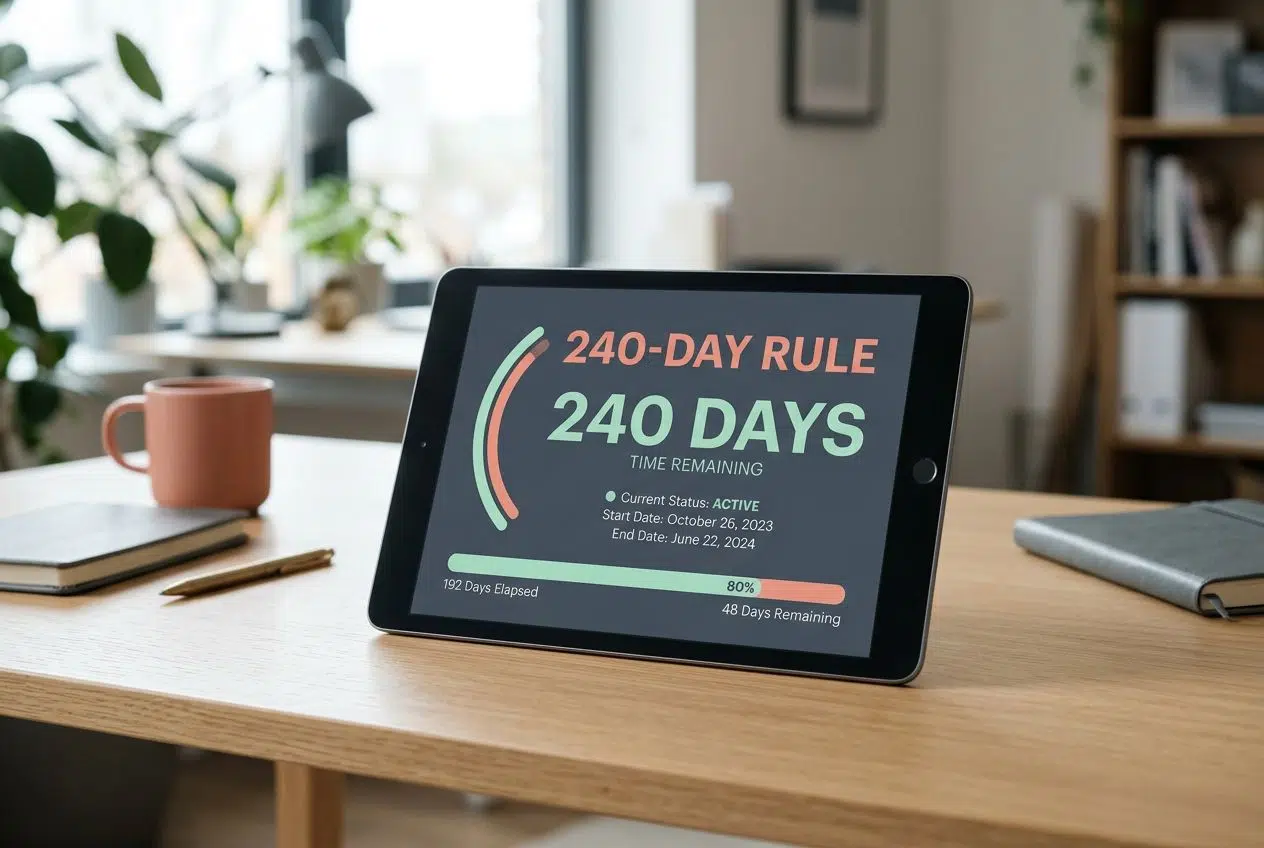
Each extension lets you work on the same project or job for up to one more year. You can actually apply for an unlimited number of these one-year extensions, as long as your original project continues.
A major benefit is the 240-day rule. When filing for an extension, you gain important protections:
- You can legally continue working for up to 240 days while the application is pending.
- You avoid sudden gaps in your employment or income.
- You maintain legal status in the US during the entire review process.
You must show that your work in sciences, arts, business, athletics, or another specialty field needs more time. Clear proof of ongoing projects boosts your chance for more time. Having all paperwork helps prevent delays as you move between employers and roles.
Changing Employers or Employment Terms on an O-1 Visa
Switching employers or changing job duties on an O-1 visa involves paperwork. With the right steps, you can keep your career moving. Curious how it all works? Keep reading.
Employer filing requirements
The U.S. employer must file Form I-129 with USCIS for the person, called a beneficiary, who holds extraordinary ability. This petition needs to include proof like letters of support, contract details, or job offers, and evidence showing national or international acclaim.
Only a U.S. employer, agent, or sometimes a foreign employer through an agent files this petition. Individuals cannot self-petition.
USCIS wants all documents in English or with certified translations. If there are material changes to your employment, such as new employment terms or switching employers, the new company must send in an amended Form I-129 right away. This ensures the O-1 visa holder stays legal in their temporary work status.
All these steps keep both the worker and employer on track with immigration rules.
Transitioning between roles
Once your employer meets the filing rules, switching roles calls for careful steps. If you shift jobs within the same company or get a new title, your boss must update USCIS using an amended petition.
Say you move from being a lab manager to head of research. This counts as a big enough change that it needs government notice. A simple shift, like moving teams but keeping the same job type, may not need much paperwork.
Here is a crucial warning for anyone changing jobs:
- You cannot legally start working for your new employer until USCIS approves the new Form I-129.
- Working before that approval violates your visa status.
- Always double-check with legal advice before making any professional moves.
Even small changes can affect your O-1 status and temporary work rights in the US.
O-3 Visa for Dependents of O-1 Visa Holders
The O-3 visa lets your spouse or kids join you in the U.S. Keep reading to find out how your family can share this adventure with you.

Who qualifies as an O-3 dependent
Spouses and unmarried children under 21 of O-1 visa holders can apply for the O-3 dependent status. Parents, siblings, or married children do not qualify for this non-immigrant visa. Each family member must file their own application with USCIS to join the primary beneficiary in the United States.
O-3 dependents may live in the U.S. as long as the main O-1 visa holder keeps legal status. They cannot work but can attend school or college during their stay. Next up is a look at what rights and limits come with being an O-3 visa holder.
Rights and limitations of O-3 visa holders
After learning who can qualify as an O-3 dependent, it helps to know what daily life looks like for those on this visa. Children and spouses of O-1 visa holders may live in the U.S. under O-3 nonimmigrant status.
This legal path gives them several important opportunities:
- They can attend kindergarten through twelfth grade at public or private schools.
- They can enroll in college or university courses full-time or part-time.
- They can travel in and out of the United States with valid documents.
However, O-3 visa holders cannot work in the U.S., no matter their background or skills. No special job permit exists for them under this category, and they cannot get a Social Security Number for employment.
Each person must keep up-to-date paperwork. If the main O-1 worker loses status, dependents lose theirs too. There are no exceptions here!
Common Challenges in the O-1 Visa Process
Jumping through the hoops of showing extraordinary talent can trip up even the brightest stars. Keep reading to learn how to shine on your application.
Demonstrating extraordinary ability
Standing out for an O-1 Visa means showing skills far above others in your field. You must offer clear proof, like winning a well-known award or prize. Famous awards include the Nobel Prize, Olympic Medal, and an Emmy. Many applicants do not have these top prizes. A strong case needs at least three types of evidence from a list by USCIS.
A very common hurdle is receiving a Request for Evidence (RFE) from the government. Immigration lawyers report that weak contracts and vague recommendation letters are the top reasons for RFEs. To avoid this, ensure your contract specifies exact dates, duties, and pay.
Publications in major media count as one type of evidence. Letters from experts add weight to your petition too. Membership in exclusive groups shows recognition by other professionals. Your documents must point to real achievements and respect earned over time, not just nice words or bold claims on paper.
Delays in processing times
After showing extraordinary ability, applicants still face a wait. Processing times for the O-1 visa can stretch from two to seven and a half months at USCIS for standard applications.
Sometimes, it feels like watching paint dry. Some choose premium processing with an added fee of $2,965 as of March 2026. This service gives a response in 15 calendar days.
Even then, delays can happen if documents need more review or if an RFE arrives. If you receive an RFE, your 15-day premium processing clock stops. It will only restart once USCIS receives your complete response. It helps to stay alert and check your case updates often because patience becomes part of the journey here, too.
Final Thoughts
Getting the O-1 visa might sound tough, but each step is clear and doable if you plan well. You learned that this temporary work visa honors people with great skill in the sciences, arts, business, or sports.
Gathering proof of your ability helps a lot. Think about gathering letters from top experts or highlighting the awards on your shelf. I hope these tips help you spot what makes you shine!
This path can spark careers and open doors to amazing new chances in the US if followed correctly. The US O-1 Visa is truly a fantastic option. Take the leap, and maybe tomorrow you will tell your own success story!