

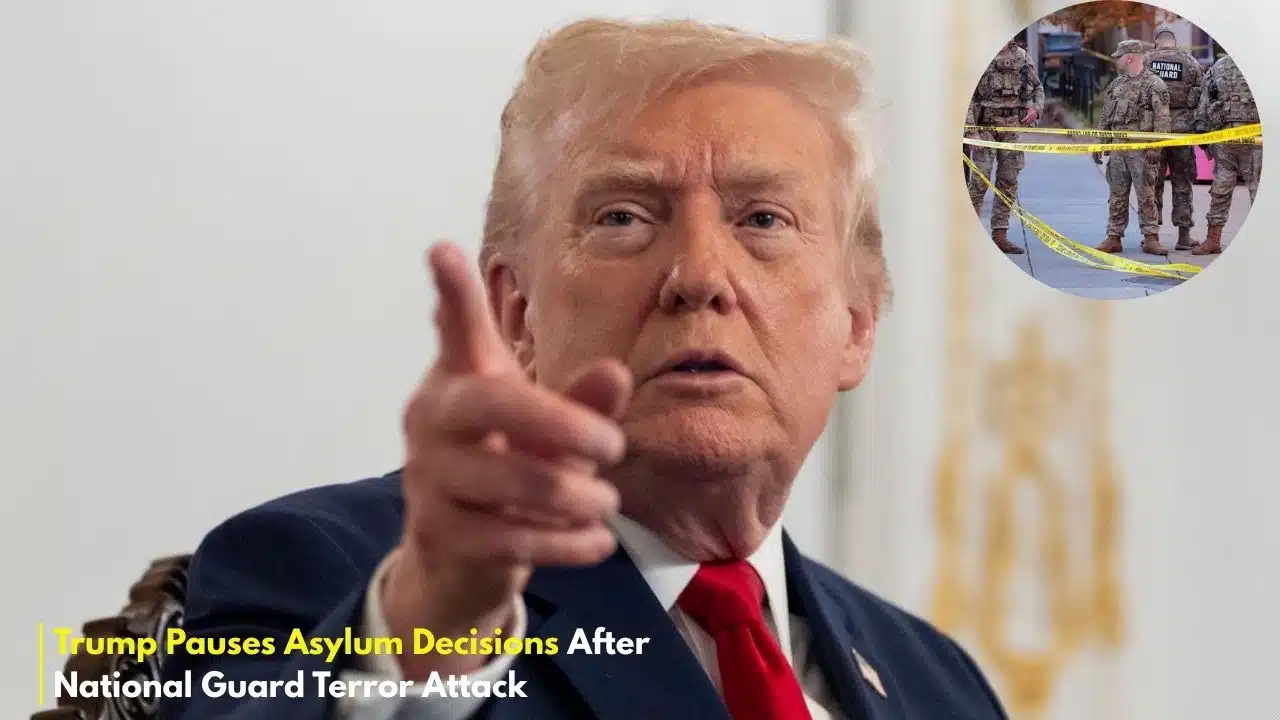
President Donald Trump has officially instructed a sweeping pause on all asylum decisions across the United States, a move directly tied to a tragic shooting involving two National Guard members in Washington, D.C. The incident, which Trump labeled a “terrorist attack,” has triggered an unprecedented crackdown on the nation’s immigration system, affecting millions of pending asylum cases and sparking intense national debate.
The National Guard Shooting: Details and Aftermath
On November 26, 2025, a fatal shooting took place near the Farragut West metro station, just a short distance from the White House. The suspect, identified as Rahmanullah Lakanwal, an Afghan national, ambushed two National Guard members—killing one, Sarah Beckstrom, and critically injuring another, Andrew Wolfe. Lakanwal, who had arrived in the U.S. in 2021 during the Biden administration’s evacuation of Afghan allies, was granted asylum under the Trump administration in 2025. The attack has been classified as an act of terrorism by federal authorities, who are investigating possible ideological or personal motives. Lakanwal’s family has revealed that he struggled with post-traumatic stress disorder, but the full circumstances behind the shooting remain under investigation.
Immediate Suspension of All Asylum Decisions
In the wake of the shooting, President Trump ordered an immediate halt to all asylum adjudications, effectively freezing over 2.2 million pending cases nationwide. USCIS Director Joseph Edlow confirmed that the pause would remain in place “until we can ensure that every alien is vetted and screened to the maximum degree possible,” emphasizing that “the safety of the American people always comes first”. The directive instructs asylum officers to stop making decisions on all cases, regardless of nationality, and to cancel in-person appointments for applicants to receive updates on their status. Officers may continue interviews and case reviews, but are instructed to halt the final decision process.
Broader Immigration Policy Changes
Trump’s response extends beyond the asylum freeze. The State Department has immediately suspended the issuance of visas to all Afghan passport holders, and the administration is reviewing all asylum cases approved under the Biden administration, particularly those connected to the “Operation Allies Welcome” program that resettled tens of thousands of Afghans. The Trump administration is also intensifying background checks for green card holders and asylum seekers from 19 countries, including Afghanistan, Iran, Somalia, Sudan, Cuba, Haiti, and Venezuela, among others. Trump has publicly vowed to “permanently pause migration from all Third World Countries,” a broad term he has used to refer to nations he deems to pose security or economic risks to the U.S..
Impact on Applicants and Legal Processes
The suspension has left hundreds of thousands of asylum seekers in legal limbo, unable to proceed with their cases or receive updates on their status. The directive affects not only those who arrived under recent resettlement programs but also applicants from a wide range of countries, including those who have been in the U.S. for years awaiting decisions. The administration has also indicated that it is considering the deportation of the suspect’s family and is reviewing the status of other individuals who entered the U.S. under similar circumstances. Immigration rights advocates warn that these measures could undermine due process and unfairly target vulnerable populations, while supporters argue that the pause is necessary to protect national security.
Political and Public Reaction
Trump’s announcement has ignited fierce debate across the political spectrum. The president has been vocal in blaming the Biden administration for allowing the suspect entry and for what he describes as systemic failures in the immigration vetting process. He has also used the incident to broaden his criticism of immigration from “Third World Countries,” making sweeping statements about immigrants from Africa and the Middle East and calling for a comprehensive review of all immigration approvals. Critics argue that such rhetoric and policy changes could harm refugees and asylum seekers who have no connection to the shooting, while supporters maintain that the pause is a necessary step to prevent future attacks.
Ongoing Investigations and Future Actions
Federal agencies, including the FBI and Department of Homeland Security, continue to investigate the suspect’s background, motives, and connections. The administration has pledged to keep the public informed as new information emerges and has indicated that further policy changes may be announced as the investigation progresses. The indefinite pause on asylum decisions and the broader crackdown on immigration from certain countries mark a significant escalation in the Trump administration’s approach to national security and immigration, with far-reaching consequences for millions of people awaiting asylum and for the ongoing debate over the balance between security and humanitarian obligations.




























