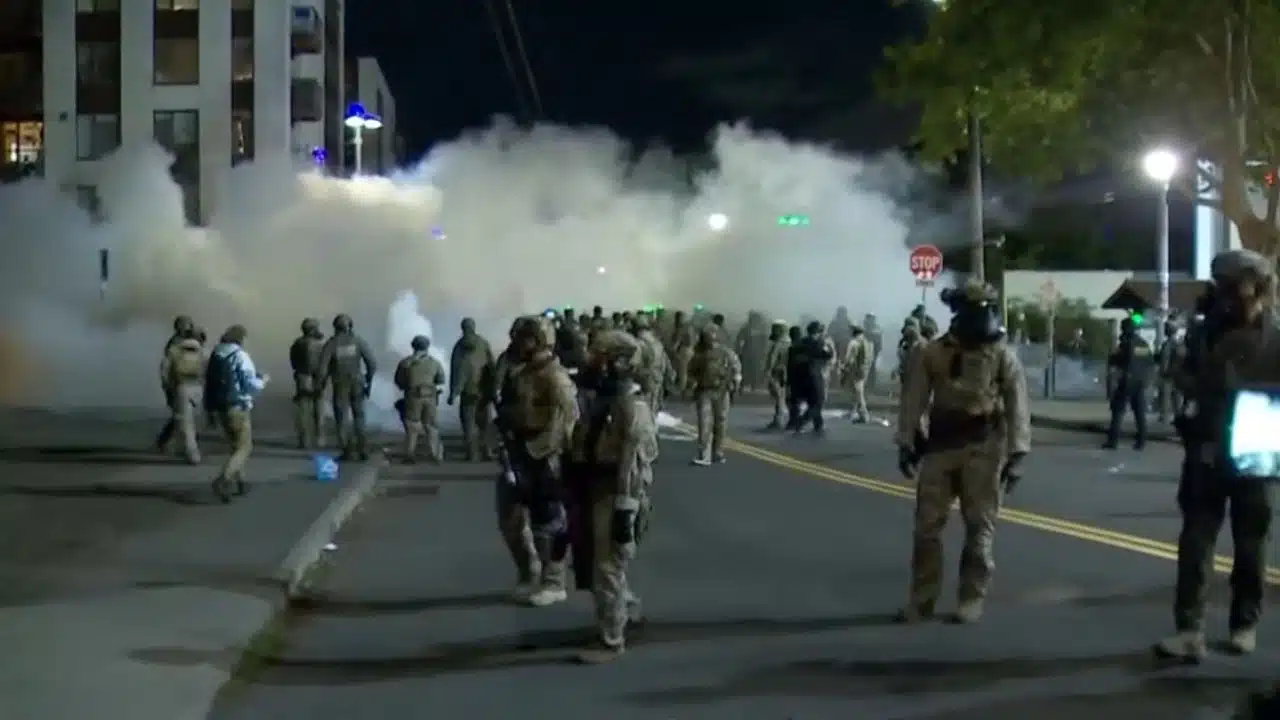
The State of Illinois and the City of Chicago have filed a federal lawsuit to block the Trump administration from deploying National Guard troops to the city, a move state and local officials have decried as a dangerous and unconstitutional overreach. The legal challenge, filed Monday, came as reports indicated that hundreds of troops, including some from Texas, were already preparing to move into the nation’s third-largest city, escalating a tense standoff between Democratic-led jurisdictions and the White House over immigration enforcement and civil unrest.
The lawsuit alleges that President Donald Trump‘s plan to federalize approximately 300 Illinois National Guard members and deploy an additional 400 from Texas is an “unlawful and dangerous” action. Officials argue the deployment is a politically motivated attempt to militarize the city and usurp local authority.
Key Facts / Quick Take
- Lawsuit Filed: The State of Illinois and the City of Chicago filed a joint lawsuit on Monday, October 6, 2025, to prevent the federal deployment of National Guard troops.
- Troop Numbers: The deployment order includes federalizing 300 Illinois National Guard troops and sending 400 more from the Texas National Guard.
- Federal Justification: The White House cites “ongoing violent riots and lawlessness” and the need to protect federal personnel and property, particularly those involved in heightened immigration enforcement operations, as the reason for the deployment.
- State and City Opposition: Governor J.B. Pritzker has labeled the move “Trump’s invasion,” while Mayor Brandon Johnson has accused the administration of “authoritarianism” and creating “ICE-free zones” via executive order to limit federal operations on city property.
- Legal Precedent: A federal judge in Oregon temporarily blocked a similar National Guard deployment to Portland just hours before the Chicago lawsuit was filed, raising questions about the legality of the administration’s actions.
- Current Status: Despite the lawsuit, Texas Governor Greg Abbott posted a photo on social media showing Texas National Guard members boarding a plane, though their destination was not officially specified.
Context: A Clash Over Federal Power and Immigration
The move to deploy the National Guard comes amid weeks of heightened tensions in Chicago. The Trump administration launched an aggressive immigration enforcement operation in the city in September, dubbed “Operation Midway Blitz,” which has led to an increase in federal raids and arrests, primarily in Latino communities. These actions have sparked numerous protests, some of which have resulted in clashes between demonstrators and federal agents.
A particularly volatile incident occurred over the weekend when a federal Border Patrol agent shot a woman on the city’s southwest side. The Department of Homeland Security (DHS) stated that agents’ vehicles were “rammed and boxed in by 10 cars,” prompting the agent to fire. This event has further inflamed the situation, with local leaders accusing federal agents of overly aggressive tactics.
The White House has consistently portrayed Chicago and other Democrat-run cities as hotspots of crime and disorder that local leaders are incapable of controlling. “President Trump will not turn a blind eye to the lawlessness plaguing American cities,” White House spokesperson Abigail Jackson said in a statement over the weekend, confirming the president had authorized the use of the Illinois National Guard.
Official Responses & Quotes
The response from Illinois and Chicago officials has been unified and defiant.
Illinois Governor J.B. Pritzker has been the most vocal critic, calling the deployment a political stunt. In a statement, he said, “This morning, the Trump Administration’s Department of War gave me an ultimatum: call up your troops, or we will. It is absolutely outrageous and un-American to demand a Governor send military troops within our own borders and against our will.” Pritzker also made a direct appeal to Texas Governor Greg Abbott to halt the deployment of his state’s troops, an appeal Abbott rejected, stating the deployment was necessary to protect federal workers.
Chicago Mayor Brandon Johnson took concrete steps to counter the federal presence by signing an executive order on Monday to bar federal immigration agents from using city-owned property for enforcement operations. “We will not tolerate ICE agents violating our residents’ constitutional rights nor will we allow the federal government to disregard our local authority,” Johnson said in a statement.
Latest Data & Statistics
- Total Troops Authorized: 700 National Guard members (300 from Illinois, 400 from Texas) have been authorized for deployment to Chicago as of October 6, 2025
- Recent Arrests: Federal officials reported the arrest of 13 protesters on Friday, October 3, 2025, near a U.S. Immigration and Customs Enforcement (ICE) facility in Broadview, a suburb of Chicago.
- National Polling: A News poll released on Sunday, October 5, 2025, showed that 58% of Americans oppose the use of National Guard troops in cities to handle protests, while 42% support the measure.
Expert Analysis
Legal experts suggest the lawsuit will hinge on the interpretation of federal authority versus states’ rights, particularly concerning the Posse Comitatus Act, which generally limits the use of the military for domestic law enforcement. The temporary restraining order issued in a similar case in Portland by U.S. District Judge Karin Immergut, a Trump appointee, could influence the Chicago case. Judge Immergut questioned whether the administration was attempting to circumvent her earlier orders and stated the protests did not rise to the level of an insurrection that would justify such a deployment.
William Banks, a Syracuse University law professor and expert in constitutional law, noted that the Guard members’ role would be limited to protecting federal property and they could not enforce local laws. He described the deployment as “more symbolic than helpful,” highlighting the potential for a constitutional clash if the administration were to defy a court order.
The immediate focus will be on the federal courthouse in Chicago and whether a judge will grant a temporary restraining order to halt the arrival and deployment of the National Guard troops. The movements of the Texas National Guard will also be closely monitored. The escalating rhetoric and legal battles set the stage for a significant test of presidential power and the federal-state relationship, with potential implications for cities across the country.
The Information is Collected from CBS News and BBC.