
Many people feel trapped in tough situations, like poverty or daily struggles. They dream of breaking free and starting fresh. Songs often capture these feelings, and that’s where Tracy Chapman Fast Car comes in.
This track speaks to anyone who has ever wanted to hit the road for a better life.
Tracy Chapman drew from her own life in Cleveland, Ohio, facing unemployment and racial challenges to create this hit. In this post, we explore the song’s themes of freedom, escape, and hope to help you see your own story in its lyrics.
Keep reading for more insights.
Themes of Freedom and Escape in “Fast Car”
Tracy Chapman’s “Fast Car” captures the deep yearning for freedom and escape from tough lives. The song tells the story of an unnamed female narrator who dreams of breaking free from poverty, addiction, and generational struggles.
She imagines a journey in a fast car as her path to independence and a fresh start. Chapman drew from her own life in Cleveland, Ohio, where she faced unemployment, racial challenges, and overbearing circumstances.
These experiences shaped the lyrics, which show the struggle to leave behind a cycle of hardship. Listeners feel the pull of adventure and the unknown, as the narrator seeks social mobility and hope for something better.
This subdued acoustic ballad highlights the emotional transformation that comes with chasing dreams on the road. The couple in the song tries to build a life together, but they face constant challenges that test their resolve.
“Fast Car” became an unlikely hit and Chapman’s most well-known track, resonating with Gen Xers who shared that longing for escape. Nostalgia fills the reflection on past pains, while the narrative pushes toward self-discovery and a brighter future.
The song stands as a timeless anthem, with its themes of journey and struggle speaking to universal desires for change. Modern artists still draw from its influence, connecting deeply with audiences through these ideas.
The Struggles of Life on the Road
Fast Car” explores deeply the theme of struggle, as people fight to break free from poverty and tough situations. An unnamed female narrator pushes to escape her hard life, and she chases social mobility with fierce hope.
This story hits home for Gen Xers, who connect with the cycle of poverty and the strong wish for something better. Chapman drew from her own past in Cleveland, Ohio, where she dealt with racial challenges that fed into the song’s raw narrative.
She also pulled from experiences with unemployment, addiction, and family struggles across generations, and these elements shaped “Fast Car” into a powerful tale.
The song plays out as a quiet acoustic ballad, and it shows a couple building a life amid constant challenges. They face roadblocks on their journey, yet dreams of escape and independence keep them going.
Listeners feel the reflection in every line, as the struggle transforms into a spark of adventure. This subdued track became Chapman’s biggest hit, and it speaks to anyone stuck in tough spots.
People hear their own battles in the lyrics, and the song captures that universal push for transformation through hardship.
Nostalgia and Reflection in the Lyrics
Tracy Chapman draws from her own life in “Fast Car” to show deep nostalgia. She faced unemployment, addiction, and generational struggles, which shaped the song’s words. Her upbringing in Cleveland, Ohio, amid racial challenges, adds layers of reflection.
Listeners feel this pull toward the past, as the lyrics recall tough times and lost hopes. The unnamed female narrator looks back on her journey, full of escape and struggle. Gen Xers connected strongly with this, seeing their own desires to break free from poverty cycles.
Various interpretations highlight the song’s timeless appeal. Analysts explore its themes of reflection on life’s road, touching universal longings for better days. Chapman creates an acoustic ballad that invites dreams of independence and transformation.
The couple in the narrative reflects on their adventure through hardship. This resonance keeps “Fast Car” alive today, as a quiet anthem of nostalgia.
Dreams of a Better Future
Fast Car” captures dreams of a better future through its story of hope and escape from tough times. The song shows a female narrator who fights to break free from poverty, unemployment, and addiction.
She chases social mobility with her partner, building a life together despite big challenges. Gen Xers felt this pull, as they longed to end cycles of struggle and find something more.
Chapman drew from her own life in Cleveland, Ohio, where racial issues added to the fight. Listeners connect to this universal push for transformation and independence.
This timeless anthem keeps inspiring people today with its message of reflection on the journey ahead. It started as an unlikely hit, yet became Chapman’s top song. The acoustic ballad paints adventure in seeking freedom from generational traps.
Fans see their own nostalgia in the lyrics, dreaming of roads that lead to real change.
Independence and Self-Discovery
Tracy Chapman draws from her own life in “Fast Car” to show independence. She grew up in Cleveland, Ohio, and faced racial challenges there. These shaped the song’s story. The unnamed female narrator wants to break free from poverty.
She seeks social mobility on her own terms. Chapman dealt with unemployment, addiction, and generational struggles. These real experiences add depth to the theme. Listeners feel the pull of self-discovery in the lyrics.
The narrator dreams of escape, and she chases a better life. This journey highlights freedom and reflection. Gen Xers connected with this desire to leave cycles of poverty behind.
The song acts as a subdued acoustic ballad. It tells of a couple building a life amid struggles. Yet, the core focuses on personal transformation. Chapman made “Fast Car” her most well-known hit.
The track became an unlikely success. It explores hope and adventure in tough times. People interpret it as a timeless anthem. The narrative pushes for independence through the unknown.
Listeners find nostalgia in the longing for change. Chapman’s words inspire self-discovery on life’s road.
Adventure and the Unknown
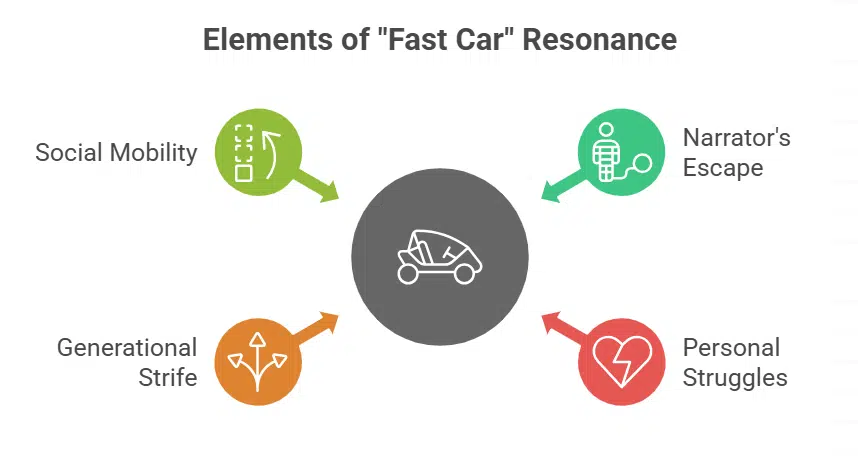
Adventure pulses through “Fast Car” as the narrator chases escape from poverty. She dreams of a journey in that speedy ride, full of hope for freedom. Challenges arise, yet the unknown beckons with promise.
The couple faces struggles together, seeking independence amid uncertainty.
Chapman drew from her own life in Cleveland, Ohio, marked by unemployment and addiction. These elements fuel the song’s reflection on generational strife. Listeners feel the transformation, as the ballad captures universal dreams of adventure.
Gen Xers connected deeply with this tale of social mobility and escape.
Emotional Transformation Through the Journey
Tracy Chapman’s “Fast Car” shows a deep emotional shift in its narrator. She starts trapped in poverty and tough family issues, like addiction and unemployment. These struggles come from Chapman’s own life in Cleveland, Ohio, where she faced racial challenges.
The journey begins with a dream to escape, driving away in that fast car. Hope builds as she seeks freedom and a better life. Yet challenges hit hard, like failed jobs and relationship strains.
Listeners feel this transformation, especially Gen Xers who connect with breaking poverty cycles. The song’s acoustic style pulls you in, making the emotional ride real. Nostalgia creeps in as she reflects on past dreams and current realities.
The unnamed female narrator grows through independence and self-discovery on the road. She pushes for social mobility, leaving overbearing circumstances behind. Chapman shaped this from her experiences with generational struggles.
Adventure mixes with struggle, turning longing into action. Reflection happens in quiet moments, revealing inner change. This timeless anthem resonates today, sparking emotional growth in fans.
Modern artists draw from its themes of transformation and escape. The couple’s story highlights how journeys reshape emotions, fostering hope amid hardship.
The Song’s Timeless Relevance
Fast Car” stands as a timeless anthem. It continues to resonate with listeners across generations. The song’s narrative captured the hearts of Gen Xers. They connected with its focus on the desire to escape a cycle of poverty.
People longed for a better life, and the lyrics spoke to that struggle. This unlikely hit became Chapman’s most well-known song. Fans admire its exploration of freedom and escape. The track delves into dreams of independence amid hardship.
Listeners find adventure in its story of journey and reflection. Emotional transformation shines through the words, too.
Various interpretations keep the song fresh. Analysts explore its themes of life on the road. They highlight the universal longing for a better life. Nostalgia plays a big role in its appeal.
Struggles feel real and relatable, no matter the era. The song sparks discussions about hope and change. It inspires people to think about their own paths. Freedom calls out from every verse.
Escape remains a key draw for new fans. Independence echoes in the melody, drawing crowds still.
Influence of “Fast Car” on Modern Artists
Tracy Chapman’s “Fast Car” shapes modern artists through its deep themes of struggle, freedom, and escape from poverty. Artists draw from the song’s hope for a better life, much like Chapman faced unemployment, addiction, and generational struggles in her own experiences.
This acoustic ballad about a couple chasing dreams amid challenges inspires singers to explore social mobility and reflection in their work. Modern creators echo the narrator’s journey to independence and transformation, pulling from Chapman’s upbringing in Cleveland, Ohio, where racial challenges fueled the lyrics.
They build on the song’s timeless appeal, which first resonated with Gen Xers longing to break cycles of hardship.
Current musicians adapt “Fast Car’s” adventure and nostalgia into fresh sounds, creating anthems that speak to universal desires for change. The track’s unlikely hit status as Chapman’s most famous song encourages artists to craft subdued stories of emotional growth.
Listeners connect with its narrative of dealing with tough circumstances, and artists use this bond to infuse their music with raw honesty. Interpretations of life on the road keep evolving, as the song’s subdued style influences new voices to highlight dreams and self-discovery.
Connection Between Tracy Chapman and Listeners
11. Connection Between Tracy Chapman and Listeners: Tracy Chapman bonds with fans through her raw, heartfelt words in “Fast Car,” making them feel seen on life’s tough paths. Explore her albums to see how she keeps that spark alive, pulling you in for more stories.
Overview of Tracy Chapman’s Albums
Tracy Chapman built her music career with albums full of deep stories. These works often highlight journeys through struggle and dreams of freedom.
- Tracy Chapman’s debut album includes “Fast Car,” a track that explores the theme of breaking free from poverty and tough situations, showing her skill in blending personal pain with hope.
- Her songs across albums touch on hope and the search for a better life, much like the escape and reflection in “Fast Car” that pull listeners into emotional depths.
- Chapman drew from her own battles with job loss, addiction issues, and family hardships to craft the raw narrative in “Fast Car,” a style that echoes in her other album tracks about real-world fights.
- Gen X fans connected strongly with Chapman’s albums because tracks like “Fast Car” capture the drive to break poverty cycles and chase dreams of independence and transformation.
- “Fast Car” turned into an surprise success as Chapman’s top song, boosting her first album’s fame and setting a tone of quiet power in her later releases.
- Albums by Chapman feature stories like the one in “Fast Car,” where a woman narrator pushes for change and climbs social ladders amid adventure and unknown paths.
- Chapman’s life in Cleveland, Ohio, with its racial hurdles, shaped the honest tales in her albums, including the journey and nostalgia in “Fast Car” that feel true to listeners.
- She creates soft acoustic ballads in her albums, such as “Fast Car,” which tells of a pair facing life’s roadblocks while building a shared future full of struggle and reflection.
- Chapman’s albums hold timeless anthems like “Fast Car,” which keep drawing fans through themes of independence and the endless quest for something better.
- People analyze Chapman’s album songs, including “Fast Car,” for their takes on life on the road, with layers of freedom, escape, and emotional shifts that speak to everyone.
Takeaways
Fast Car” captures the raw pull of escape and hope that many feel. Listeners connect with its story of breaking free from tough cycles, and the song’s quiet power still echoes today.
Chapman’s words remind us all to chase dreams, no matter the road ahead.
FAQs
1. What does Tracy Chapman’s song Fast Car tell us about life on the road?
Tracy Chapman’s Fast Car paints a picture of escape and hope, showing how folks chase dreams away from tough spots. It dives into the grit of moving on, like leaving poverty behind in a beat-up sedan. Yet, the road brings its own bumps, reminding us that new starts can feel just as hard.
2. Who is Tracy Chapman, and why is her song Fast Car so famous?
Tracy Chapman is a singer from Ohio who writes deep folk tunes. Her song Fast Car hit big in 1988, touching hearts with stories of struggle and longing.
3. What main themes show up in Fast Car by Tracy Chapman?
Themes in Fast Car include dreams of a better life, the pull of family ties, and the harsh side of chasing freedom on open highways. Chapman weaves in ideas of love and loss, making listeners feel the weight of unmet hopes. Life on the road stands out as a symbol for breaking free, but it often leads back to familiar pains.
4. How does Fast Car explore the ups and downs of road life?
In Fast Car, road life means speed and promise at first, like racing toward brighter days in a trusty coupe. But Tracy Chapman shows the downsides too, such as endless miles that wear you down without real change.