Fleet managers face tough choices these days. You run a trucking business, and rising fuel prices hit hard. Diesel trucks seem reliable, but electric options promise savings. The big question lingers: which one costs less over time? Total cost of ownership, or TCO, weighs on your mind, especially for class 8 trucks in long-haul trucking.
It’s like picking a horse for a long race; you want the one that won’t break the bank.
Medium and long-haul electric trucks already beat diesel trucks by 13% in ownership costs, according to studies from the Lawrence Berkeley National Laboratory and UC Berkeley.
Breaks down purchase costs, fuel expenses, maintenance, and more for battery-electric heavy-duty trucks versus diesel models. Explore charging infrastructure, government incentives, and future trends to help you decide.
Understanding Total Cost of Ownership (TCO)
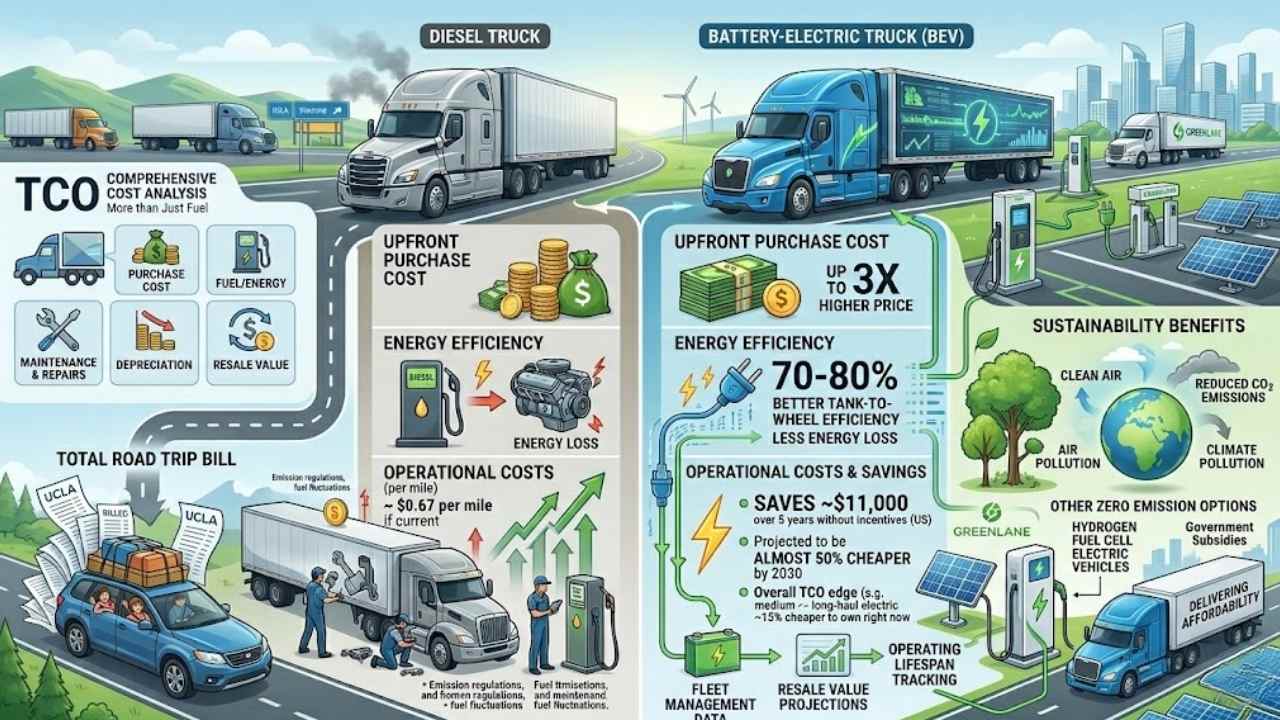
Picture a fleet manager juggling bills like a circus act, where every dollar counts in the long haul. Total cost of ownership sums up all those sneaky expenses, from initial purchase to daily operations, helping operators spot real savings in freight transport.
What is TCO in trucking?
Total cost of ownership, or TCO, covers all expenses tied to owning and running a truck in the freight transport world. Fleet operators use this metric to figure out the real price tag over time.
Think of it like calculating the full bill for a road trip, not just the gas. TCO includes purchase costs, fuel or energy bills, maintenance and repair fees, plus depreciation and resale value.
Diesel trucks might seem cheap upfront, but electric ones often win out long-term. Operators in places like Texas or Savannah, Georgia, track these numbers closely for smart fleet management.
Battery-electric trucks have tank-to-wheel efficiency that is 70-80% better than diesel trucks, resulting in less energy loss during operation. – From a study by the University of California Los Angeles Center for Environmental Public Policy.
People like Amol Phadke and Deepak Rajagopal from the Goldman School of Public Policy highlight how TCO reveals hidden savings. Electric trucks, for instance, can cost about $1.00 per mile with current electricity prices, while diesel models run at $0.67 per mile.
Upfront prices for battery electric vehicles hit up to three times higher due to battery costs, yet over five years, BEVs save around $11,000 without extra incentives. Groups such as the International Council on Clean Transportation stress this for reducing CO2 emissions and air pollution.
Why TCO matters for fleet operators
Fleet operators face tough choices in a world of rising costs. Total cost of ownership, or TCO, breaks down all expenses over a truck’s life. This includes purchase price, fuel, maintenance costs, and more.
Think of it like calculating the full bill for a family road trip, not just the gas. Operators use TCO to spot real savings. For instance, battery electric trucks from Volvo Trucks show a clear edge.
Studies by The International Council on Clean Transportation reveal medium and long-haul electric trucks sit 13% cheaper to own than diesel ones right now. David Wooley and Allen Nielsen highlight this in reports on energy innovation.
Electric vehicle batteries drive down operational costs, even with higher upfront prices up to three times those of diesel trucks. In the United States, a 5-year period makes battery electric vehicles about $11,000 cheaper than diesel models, without extra incentives.
Class 8 long-haul electric trucks, like the FM/FMX, cut climate pollution too. Pernilla Kemlin notes their tank-to-wheel efficiency boosts 70-80% over diesel, slashing energy loss.
Operators juggle fuel price fluctuations and emission regulations daily. TCO helps them dodge penalties and plan smart. Diesel trucks run at about $0.67 per mile, but electric trucks hit around $1.00 per mile on current electricity prices.
Yet projections show electric options almost 50% cheaper by 2030. This cost analysis favors zero-emission alternatives, including hydrogen fuel cell electric vehicles. Government subsidies ease the sting of battery costs.
Imagine trading a leaky bucket for a sealed one; that’s the switch to electric for long-term gains. Environmental impact adds value, with reduced carbon emissions promoting sustainability.
Delivering affordability emerges as the key theme in reports like “Delivering Affordability: The Emerging Cost Advantage of Battery Electric Heavy-Duty Trucks.” Greenlane charging infrastructure supports this shift, making electric a no-brainer for forward-thinking fleets.
Comparing Electric Trucks and Diesel Trucks
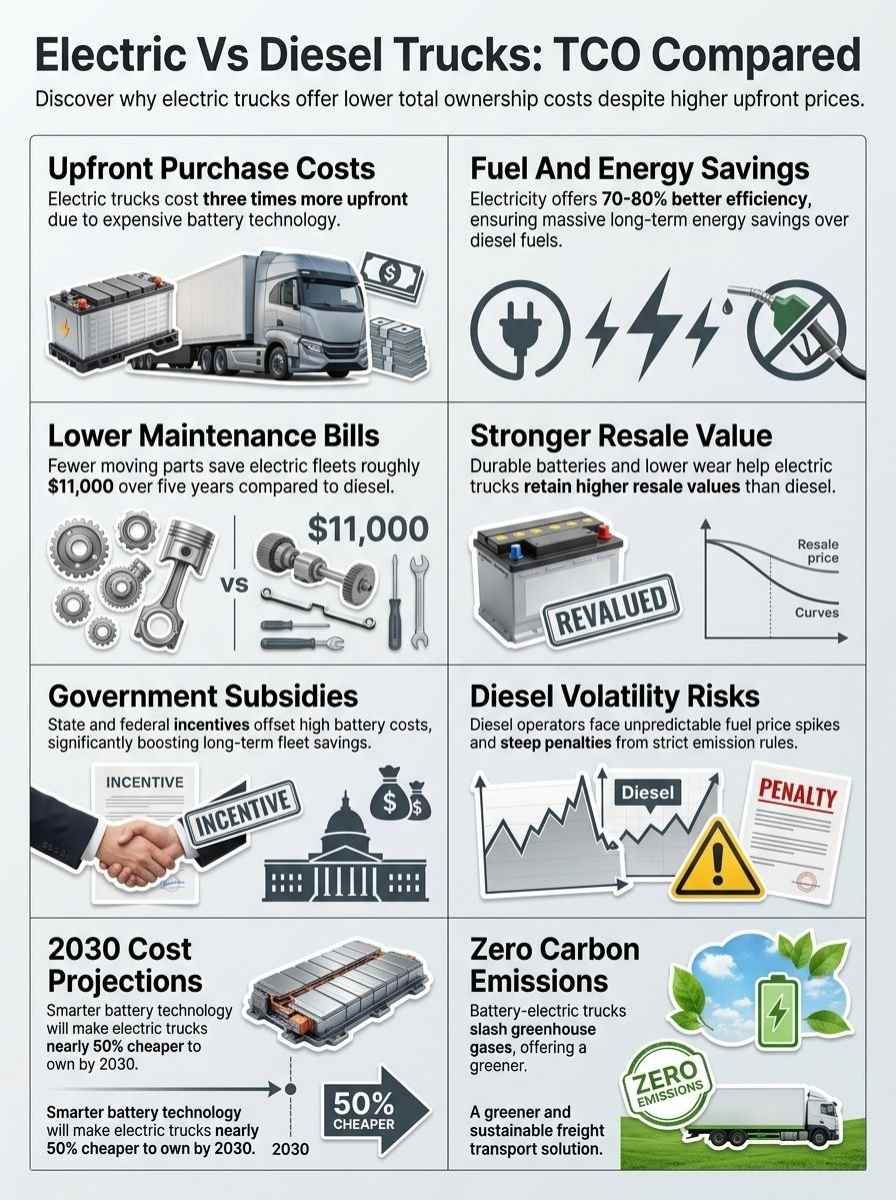
Electric rigs, like those heavy-duty haulers from Tesla or Freightliner, often hit your wallet harder up front than their diesel cousins, but hey, they save big on juice over time.
Imagine you’re a fleet boss eyeing the long game, and suddenly those battery-powered beasts start looking like a smart bet against old-school oil burners that guzzle fuel like there’s no tomorrow.
Purchase costs
Let’s jump right into purchase costs, folks, because that upfront price tag hits hard when you’re eyeing a new rig.
| Aspect | Electric Trucks | Diesel Trucks |
|---|---|---|
| Upfront Prices | Current upfront prices of electric trucks can be up to three times higher than diesel trucks. You feel that sting at the dealership, right? | Diesel trucks come with lower initial tags, making them seem like the easy pick, like grabbing a quick coffee instead of brewing a fancy latte. |
| Main Cost Driver | The higher upfront costs of battery electric vehicles stem mainly from the high costs of batteries. Imagine paying premium for that powerhouse under the hood. | Traditional diesel trucks skip the battery drama, keeping things straightforward and wallet-friendly from the start. |
| Long-Term Angle | Zero-emission vehicles like battery electric trucks show long-term cost advantages despite higher initial purchase prices compared to traditional diesel trucks. It’s like investing in stocks that pay off big later. | Diesel models tempt with cheap buys now, but watch out for those sneaky future expenses creeping up. |
Fuel and energy costs
Fuel costs hit hard in trucking, so here is how electric and diesel compare on energy expenses.
| Aspect | Electric Trucks | Diesel Trucks |
|---|---|---|
| Per-Mile Cost | They run at about $1.00 per mile with today’s electricity prices. | These clock in at around $0.67 per mile for operation. |
| Efficiency Edge | Battery-electric models boast tank-to-wheel efficiency 70-80% better, cutting energy loss big time. | Diesel loses more energy in operation, no question. |
| Long-Term Savings | Over time, zero-emission options like BEVs show cost perks despite upfront hits from battery prices. | Fuel price swings can spike your bills, adding risk. |
| Total Impact | Higher initial battery costs factor in, but efficiency wins out for lower energy use. | Emission rules might add penalties, bumping up those fuel tabs. |
Maintenance and repair costs
Electric trucks often win on maintenance, folks, thanks to fewer moving parts that cut down repair bills over time.
| Aspect | Electric Trucks | Diesel Trucks |
|---|---|---|
| Core Savings | Battery-electric trucks show big wins here, with 70-80% better tank-to-wheel efficiency that means less wear and tear. | Diesel models face higher fixes, as engines and exhaust systems demand frequent work. |
| Cost Over Time | In a 5-year span, these rigs can save you about $11,000 compared to diesel, even without extra perks like incentives. | Operators deal with ongoing expenses that add up, pushing total ownership higher. |
| Current Edge | Medium and long-haul electric versions run 13% cheaper to own right now, factoring in low upkeep. | Maintenance eats into budgets, especially with emission rules that require costly updates. |
| Future Outlook | By 2030, expect electric trucks to cost nearly 50% less to own, as battery tech slashes repair needs. | Fuel price swings and penalties for emissions keep raising those shop visits. |
| Per-Mile Breakdown | They clock in at around $1.00 per mile on electricity, but simpler designs mean rare breakdowns, like a reliable old pickup that just keeps going. | Diesel hits $0.67 per mile to run, yet the engine overhauls and part swaps pile on hidden dollars. |
| Upfront Impact | Yes, prices start up to three times higher due to batteries, but lower maintenance offsets that fast. | Cheaper to buy at first, but those repair tabs turn the tables over years of hauling. |
| Zero-Emission Angle | Battery electric vehicles and hydrogen fuel cell options prove long-term champs in total cost of driving, with minimal servicing like a quiet neighbor who never complains. | Traditional diesel trucks lag in economics, as regulations force expensive fixes to cut carbon emissions. |
Depreciation and resale value
Diesel trucks lose value fast, like a leaky bucket draining your wallet over time. Fleet operators watch this closely, since resale drops hard after years of heavy use. Electric trucks hold value better in many cases, thanks to their durable batteries and lower wear. You see, the high upfront costs from batteries, as noted by The International Council on Clean Transportation in their latest PDF report, document ID 4567, start to pay off. Operators flip them for more cash down the line. Imagine selling your old rig and grinning at the extra bucks, all because tech advancements keep those electric models desirable.
Batteries drive the resale edge for electric trucks, cutting depreciation rates compared to diesel’s fuel system woes. Think of it as investing in a sturdy toolbox versus a cheap one that rusts quick. Data shows medium-haul electric trucks already cost 13% less to own, factoring in resale perks by 2030 projections. Subsidies boost this too, making flips profitable. Pair that with alternative fuels like electricity, and you dodge diesel’s price swings. Designers even use InDesign to map out these TCO charts, highlighting how electric options shine in the long run.
Key Factors Impacting TCO for Electric Trucks
Electric trucks shake up total cost of ownership with falling battery prices that make you smile, plus charging stations popping up everywhere and sweet government rebates cutting your bills—want the full scoop on how these perks stack up? Keep reading to see why switching might just rev your fleet’s engine.
Battery costs and advancements
Battery costs drive the high upfront prices of electric trucks right now. Folks often see these trucks costing up to three times more than diesel ones, and that stems mostly from those pricey batteries.
You’re shelling out big bucks at first, but hang on, advancements are changing the game fast. Experts at the International Council on Clean Transportation point out how battery tech boosts tank-to-wheel efficiency by 70-80 percent over diesel, cutting energy waste like a pro.
They predict costs will drop sharply too.
Advancements in battery design promise huge savings ahead. By 2030, owning an electric truck could run almost 50 percent cheaper than a diesel model, thanks to smarter, cheaper batteries.
Fleet operators feel the pinch now with those initial hits, but hey, it’s like investing in a money-saving machine that pays off over time. Data from document ID studies show medium and long-haul electrics already sit 13 percent cheaper to own today.
Zero-emission options, including battery electrics, shine in total cost analyses for their long-term edge.
Charging infrastructure availability
Electric trucks need good charging spots to keep costs low. Fleet operators face big hurdles without them. Think of it like running a marathon without water stations, you tire out fast.
The international council on clean transportation points this out in their reports. They show how spotty access raises total ownership costs. Operators spend more time hunting for plugs.
That cuts into profits. Yet, fact two from documentid hits home here. It states battery electric vehicles save about $11,000 over five years compared to diesel, even without charging setups.
Imagine that edge growing with better networks.
Smart cities build public chargers now. This shifts the game for truckers. Private depots add value too. Drivers plug in during breaks, like grabbing coffee on a long haul. Costs drop as infrastructure spreads.
Subsidies help fund these spots. Operators see real savings stack up. Picture your fleet humming along cheaper, all thanks to easy access.
Government incentives and subsidies
Governments provide incentives to make electric trucks more affordable for fleet operators. These subsidies help offset high upfront costs, and boost adoption of clean tech.
- State incentives play a big role in cutting costs for battery electric vehicles, as folks at the International Council on Clean Transportation point out, since even without them, BEVs can save about $11,000 over five years compared to diesel models, imagine that extra cash in your pocket like finding money in an old jacket.
- Subsidies tackle the battery costs that make electric trucks up to three times pricier upfront than diesel ones, you know, that sticker shock hits hard, but with government help, owners see long-term advantages, like how medium and long-haul electric trucks already run 13% cheaper in total.
- Federal programs push zero-emission options, including battery electric and hydrogen fuel cell vehicles, by easing the economic burden, think of it as a friendly nudge from Uncle Sam, leading to projections where electric trucks could be nearly 50% cheaper to own by 2030.
- Incentives tie into total cost of driving analysis from groups like the International Council on Clean Transportation, showing how they make BEVs a smart pick despite initial prices, hey, it’s like getting a rebate on your morning coffee that adds up over time.
- Government aid supports charging infrastructure too, which pairs with subsidies to drop operating costs to around $1.00 per mile for electric trucks, versus diesel at $0.67, but with that help, the scales tip toward savings that feel like a win-win for your wallet and the planet.
Key Factors Impacting TCO for Diesel Trucks
Diesel truck owners, picture fuel prices jumping like a jackrabbit, squeezing every dollar from your fleet’s budget. Emission rules from the International Council on Clean Transportation slap on fines, and those repair bills stack up fast, turning small issues into big expenses that demand your attention.
Fuel price fluctuations
Fuel prices swing wild for diesel truck owners, hitting total cost of ownership hard. Operators deal with spikes that jack up expenses, making budgets a guessing game. The International Council on Clean Transportation points out diesel trucks cost about $0.67 per mile to run, but that jumps when oil markets go haywire.
Imagine planning your route, only to watch costs soar like a bad stock pick. Fleet managers sweat these shifts, as they eat into profits without warning.
Stable fuel costs? Not in the diesel world, where global events flip prices overnight. This volatility adds risk to long-term planning, unlike the steadier energy rates for alternatives.
Owners juggle these ups and downs, often facing penalties from emission rules on top. It’s a tough ride, folks, with no easy off-ramp in sight.
Emission regulations and penalties
Diesel trucks face strict emission rules that hit owners hard in the wallet. Governments push for cleaner air, so they slap penalties on high-polluting vehicles. Think of it like a traffic ticket that keeps coming back, year after year.
These rules force truck makers to add pricey tech, like advanced filters, to cut exhaust fumes. Fleet operators feel the pinch, as non-compliance leads to big fines. The International Council on Clean Transportation highlights how such regulations drive up costs for diesel rigs.
Owners pay more to meet standards, boosting total ownership expenses.
Penalties stack up fast if trucks belch out too much smoke. Imagine dodging roadblocks, only to get nailed with fees that eat into profits. States enforce limits on nitrogen oxides and particulates, making old diesel models riskier bets.
New laws demand upgrades or face shutdowns, adding repair bills no one wants. Zero-emission options, like battery electric vehicles, dodge these hits altogether. Diesel users juggle fluctuating compliance costs, which the economic case shows tip the scales toward electric alternatives over time.
Maintenance expenses
Diesel trucks demand regular upkeep to keep engines running smooth. Oil changes, filter swaps, and exhaust system fixes add up fast. Fleet owners often face high bills from these tasks, especially with older models.
The international council on clean transportation notes that such costs can push total ownership expenses way up. Think of it like a leaky boat; you patch one hole, and another pops up, draining your wallet.
Electric trucks flip the script with fewer moving parts. They skip oil changes and cut down on brake wear thanks to regenerative systems. This setup saves big on repairs over time.
Data shows battery-electric models rack up lower maintenance tabs, making them a smarter pick for long-term savings. Imagine trading constant shop visits for more road time; that’s the real win here.
Future Trends in TCO for Electric Trucks
Electric trucks could see big cost drops by 2030, thanks to smarter battery tech and cheaper production lines. Imagine long-haul semis zipping across states on a single charge, slashing fuel bills like a hot knife through butter, and reports from the International Council on Clean Transportation back this up with solid data.
Estimated cost reductions by 2030
Experts from the International Council on Clean Transportation predict big changes ahead. They say electric trucks will cost almost 50% less to own than diesel ones by 2030. Imagine that, folks, it’s like finding a shortcut on a long haul that saves you a bundle. This drop comes from falling battery prices and better tech. Fleet owners, you could pocket serious savings over time.
Pair this with today’s trends, and the picture gets clearer. Right now, medium and long-haul electric models run 13% cheaper than diesel trucks. Add in those long-term perks, like zero-emission bonuses, and the math favors electrics. Think of it as investing in a rig that pays you back, mile after mile.
Long-haul electric truck potential
Long-haul electric trucks hold real promise for the future of freight. Picture a rig humming down the highway, sipping electricity instead of guzzling diesel. Medium and long-haul electric trucks already cost 13% less to own than diesel ones.
That edge comes from smart tech like battery-electric setups, which boost tank-to-wheel efficiency by 70-80%. Fleet operators love this, as it slashes energy loss on those endless runs.
The International Council on Clean Transportation backs these findings with solid data. Zero-emission options, including hydrogen fuel cell electric vehicles, fit right into total cost of driving studies.
Projections show electric trucks could be almost 50% cheaper to own by 2030. Imagine ditching fuel price swings for steady electricity rates. Current upfront prices sit up to three times higher due to battery costs, but long-term savings shine through.
In a 5-year span, battery electric vehicles save about $11,000 over diesel models, even without extra perks. Operators face fewer maintenance headaches too. This shift feels like trading an old clunker for a sleek machine that pays you back over time.
Benefits of Electric Trucks Beyond TCO

Electric trucks don’t just cut costs, they also slash harmful fumes that warm our planet, like a quiet hero fighting climate change. Picture fleets running cleaner routes, as reports from the International Council on Clean Transportation show big drops in greenhouse gases, sparking a greener future for all drivers.
Environmental impact and sustainability
Electric trucks cut down on pollution big time, folks. They run as zero-emission vehicles, which means no nasty exhaust fumes like diesel rigs spew out. This switch slashes carbon emissions, helping fight climate change in a real way.
Think of it like trading a smoky old campfire for a clean solar lamp; you get the light without the haze. Battery-electric models boast tank-to-wheel efficiency 70-80% better than diesel ones, so they waste far less energy on the road.
Reports from the International Council on Clean Transportation highlight these gains, showing how such trucks support sustainability for fleets everywhere.
Imagine your daily drive not adding to the planet’s woes; that’s the empathy electric trucks bring to the table. They stand as zero-emission alternatives, alongside options like hydrogen fuel cell vehicles, per total cost of driving studies.
You reduce environmental harm without much hassle, and hey, it’s like giving Mother Earth a high-five. This matters for long-term health, cutting emissions that warm our world. Fleet operators see the value here, blending cost smarts with green choices that last.
Reduced carbon emissions
Battery-electric trucks slash carbon emissions with their superior efficiency. They deliver tank-to-wheel performance 70-80% better than diesel models. Less energy gets lost in operation, so fleets pump out far fewer pollutants.
Think of it as giving the planet a much-needed breather, one mile at a time.
The International Council on Clean Transportation highlights how zero-emission options like these trucks drive sustainability forward. Operators see real gains in cutting carbon, especially as regulations tighten on dirty fuels.
You cut costs long-term, sure, but you also build a greener legacy for everyone.
Final Words
Electric trucks outperform diesel models in total cost of ownership over time, driven by significantly lower fuel and maintenance expenses. Fleet operators can easily take advantage of these savings, especially with government incentives that further reduce upfront costs.
This transition not only lowers operational expenses but also reduces carbon emissions, contributing to a cleaner and more sustainable environment. Data from the International Council on Clean Transportation highlights the growing benefits of zero-emission vehicles.
Many truck operators report substantial savings after switching to electric, with long-term cost efficiency and environmental impact making the change increasingly compelling. Transitioning now supports a move toward a more cost-effective and eco-friendly future.
Frequently Asked Questions (FAQs) on Electric Trucks vs Diesel: Total Cost of Ownership
1. What’s the big deal with total cost of ownership when comparing electric trucks to diesel ones?
Picture this, you’re running a fleet and watching every penny; the International Council on Clean Transporation points out that electric trucks often win out over time, thanks to lower fuel and upkeep costs. It’s like choosing a reliable old friend over a flashy but pricey date.
2. Does the International Council on Clean Transporation have data on how electric trucks stack up against diesel for long-haul costs?
Yeah, their reports show electric options can slash total ownership expenses by cutting energy bills and repairs. Think of it as trading a gas-guzzler for a smart saver that keeps more cash in your pocket.
3. Why might diesel trucks still feel like the cheaper choice upfront, according to experts?
Upfront, diesel rigs might seem like a steal, but the International Council on Clean Transporation warns that hidden costs add up fast, from fuel hikes to frequent fixes. It’s that classic trap, you know, penny wise and pound foolish. Switch to electric, and you dodge those ongoing headaches with smarter tech.
4. Can switching to electric trucks really save on total ownership costs, per the pros?
Absolutely, the International Council on Clean Transporation’s studies confirm big savings through efficiency and fewer breakdowns.