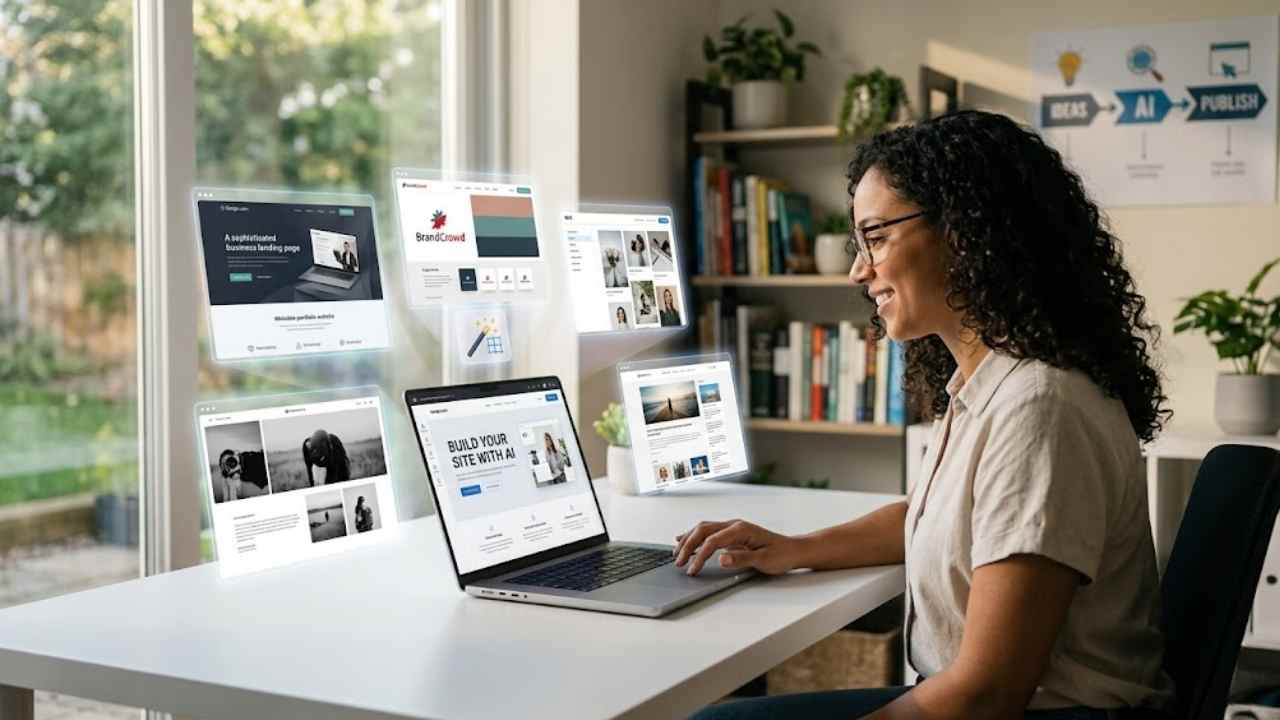
Imagine your website feels stuck in the past, like an old flip phone amid sleek smartphones. You want to boost user engagement and stand out online, but keeping up with web design trends seems overwhelming.
Small businesses often struggle with this, especially when mobile browsing dominates and conversion rates suffer from outdated looks. Think of it as trying to run a marathon in worn-out sneakers – you need fresh gear to keep pace.
One key fact stands out: AI-powered personalization leads web design trends for 2026, making sites feel custom-made for each visitor. This blog post explores the top 10 trends, from dark mode to bold typography and immersive 3D experiences, with tips on using tools like Figma for responsive design.
We’ll show you how to mix in accessibility-first design and motion effects to improve UX design and brand identity. Get ready for ideas that spark creativity. Keep reading to transform your digital presence.
Why Follow Web Design Trends?
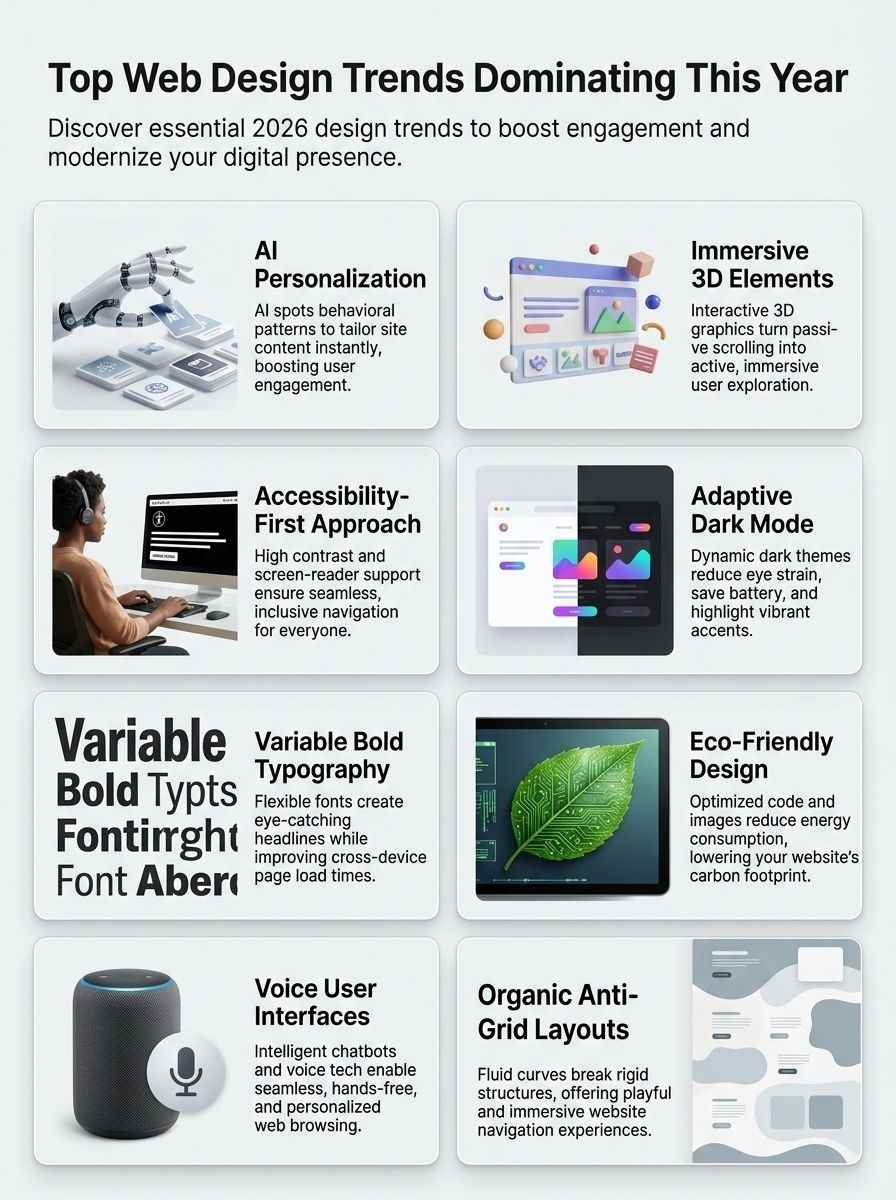
Web design trends keep your site fresh and appealing to users. They boost user experience by matching what people expect online today. Think of it like updating your wardrobe; old styles feel dated, while new ones draw attention.
AI-powered personalization stands out as a dominant trend for 2026, letting sites tailor content to individual visitors. Immersive experiences with 3D elements pull users in deeper.
Experimental navigation makes browsing fun and intuitive. Vibrant color palettes replace dull ones, sparking excitement. Dark mode offers comfort for eyes in low light. Motion design adds lively animations that hold interest.
Accessibility-first design opens doors for everyone, following WCAG 2.2 AA standards. These shifts create engaging digital experiences, much like a chatty friend who knows just what you need.
Sites that ignore trends risk losing visitors to competitors like Nike or Vistaprint, who embrace them. Motion effects and animations lift engagement, turning passive scrolling into interactive storytelling.
Conversational UI with intelligent chatbots feels natural, like talking to a helpful buddy. Typography shines in bold ways, paired with long-scrolling layouts for smooth reads. GIFs and data visualization make info pop without overwhelming.
Forrester reports show Gen Z and Gen Alpha crave these vibrant, ai-driven web designs. Performance optimization ensures quick loads on mobile-first setups. Tools like FigJam help with prototyping these ideas fast.
Organic shapes and anti-grid layouts break free from stiff grids, adding a playful vibe. Following trends builds resonant, cute-alism touches that connect on a human level.
AI-Powered Personalization
AI powers personalization as a top web design trend for 2026, folks. Imagine your favorite site greets you like an old friend, showing content that fits your tastes right away. Designers use artificial intelligence to tailor experiences, making each visit feel special.
Think about how Netflix suggests shows based on what you watch; websites now do the same with smart algorithms. Interaction design plays a big role here, creating flows that adapt in real time.
Conversational UI, with intelligent chatbots, handles questions like a helpful buddy, boosting engagement without the hassle. Tools like Wix make this easy to set up, even for beginners.
You get resonant stark effects that grab attention, blending tech with human touch. Picture scrolling through a page that changes colors to match your mood, all thanks to AI smarts.
This trend keeps users coming back, turning casual browsers into loyal fans.
Intelligent chatbots lead the charge in this shift, answering queries with natural language that feels real. Sites adopt UI design that learns from your clicks, serving up mobile-first design for on-the-go access.
Accessibility-focused designs ensure everyone joins the fun, following rules like ADA Title II. Vibrant setups replace old minimalist layouts, adding flair without overwhelming. Web design trends 2026 highlight how AI spots patterns in your behavior, like a detective piecing together clues.
You might see personalized deals pop up, or layouts shift to highlight what you love most. Interaction design gets a boost from these features, making every tap count. Tools such as WebGL add immersive scrolling that pulls you in deeper.
Brutalist web design meets AI for bold, no-nonsense personalization that stands out.
Immersive and Interactive 3D Experiences
Immersive experiences pull you right into the action on websites this year. Designers use 3D elements to create worlds you can explore with a click or swipe. These setups boost engagement, much like a video game that draws you in for hours.
Motion effects and animations make every interaction feel alive, adding that extra spark to keep users hooked. Picture a product page where you rotate a gadget in 3D, spotting details up close, all while interactive storytelling weaves a tale around it.
WebGL powers these visuals, letting browsers handle complex scenes without a hitch. Three.js simplifies the coding side, so even small teams craft stunning effects. Y2K vibes mix in sometimes, giving that dial-up delight with retro flair, but updated for today.
People love the frosted touch in these designs, like glass overlays that add depth without clutter. Visual hierarchy guides your gaze, from bold foregrounds to subtle backgrounds, making sites intuitive.
Organic shapes twist and turn in 3D space, breaking free from flat grids. Think of it as chatting with a friend about a cool find; “Hey, check this out, you can spin it around!” Developers turn to Blender for modeling these assets, exporting them straight to the web.
Unity steps in for more interactive bits, blending games with everyday browsing. These trends dominate 2026, focusing on key experiences that feel real and fun.
Immersive 3D turns passive scrolling into active exploration, revolutionizing how we connect with content, notes web design expert Sarah Chen.
Accessibility-First Design
Designers now put accessibility at the front of every project, and you should too. Think about it like building a house with ramps from the start, not as an afterthought. This approach makes sites work for everyone, including folks using screen readers like JAWS or NVDA.
Modern web development demands this priority, as fact seven points out. You avoid leaving users out in the cold. Bold colors need high contrast ratios, say 4.5 to 1 for text, to help those with low vision.
Add alt text to images, and your site sings for voice-over tools. Developers use ARIA labels to guide interactions, turning confusion into smooth sailing. Picture a user with motor challenges; keyboard navigation becomes their best friend.
We all win when sites feel inclusive, right?
Sites shine brighter with tools like the WAVE evaluator for quick checks. Variable fonts adjust for better readability, tying into fact ten. Empathy drives this trend; imagine chatting with a friend who can’t see the screen.
You explain every detail. Dark mode, from fact five, pairs well here, easing eye strain for many. Interactive elements get focus states, so no one misses a beat. Voice UI, as in fact nine, boosts access with natural talk.
This isn’t just nice; it builds loyal fans. Gamified features, like simple quizzes, engage without barriers. Organic shapes flow easy on the eyes, avoiding gridlock hassles.
Dark Mode and Adaptive Color Systems
Dark mode keeps shining as a top trend in web design. Users love it for reducing eye strain, especially at night. Sites now switch between light and dark themes based on device settings.
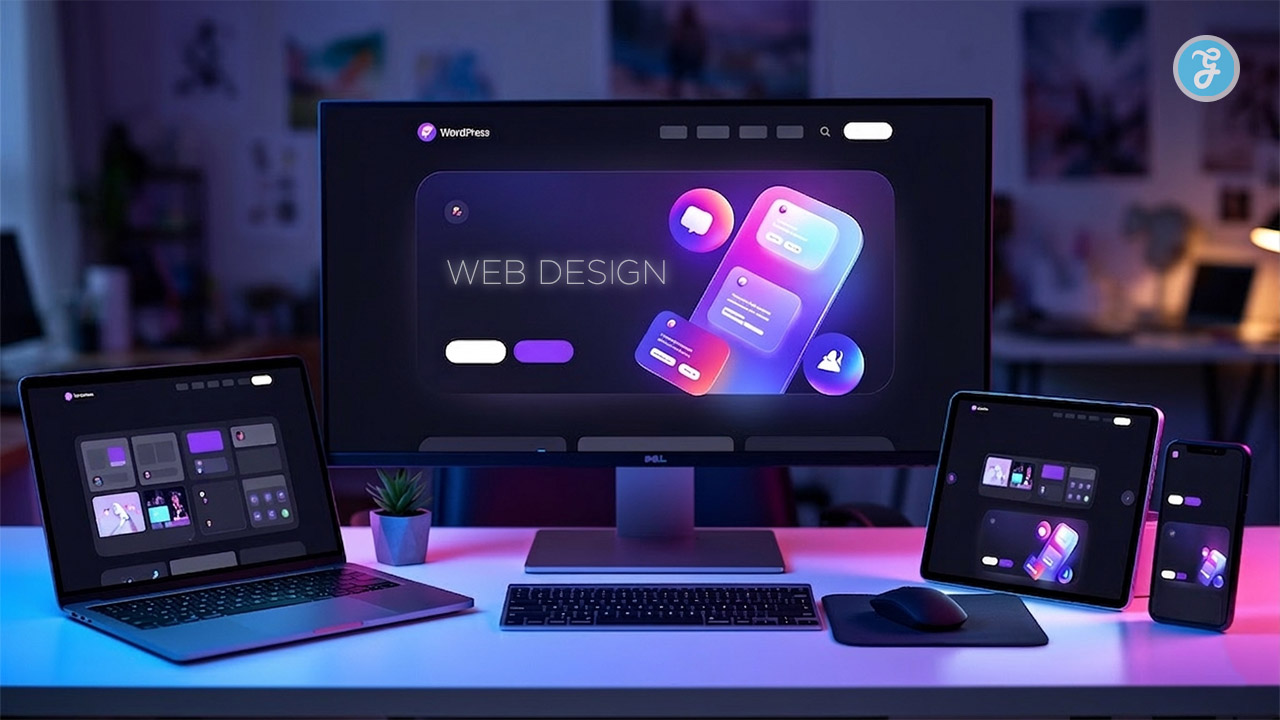
This adaptive approach boosts comfort and saves battery on mobile gadgets. Picture scrolling through a page that feels just right, like a cozy blanket on a chilly evening. Developers use CSS media queries to make these changes happen smoothly.
Vibrant color palettes pop even more in dark mode, swapping out those dull, muted looks from before.
Think about how this trend ties into accessibility. People with light sensitivity get a better experience. You can test it on sites like Twitter or Apple, where toggles let you flip modes easily.
Motion effects pair well here, adding subtle glows that engage without overwhelming. Bold typography stands out against dark backgrounds, creating that wow factor. Go ahead, try implementing it on your own site, and watch user time skyrocket.
Bold Typography and Variable Fonts
Bold typography grabs attention like a shout in a quiet room, folks. Designers use it to make headlines pop and guide your eyes across the page. Variable fonts step in as the flexible stars here; they let you tweak weight, width, and style all in one file.
This tech saves load times and keeps sites sleek. Think of Google Fonts offering these options, or Adobe Fonts for custom tweaks. Typography shines as a key element for 2026, pairing well with long-scrolling websites to keep you hooked.
Picture scrolling through a site where fonts shift smoothly as you read, like a chameleon changing colors. These bold choices boost readability on any device, and they team up with GIFs for fun bursts of motion.
Data visualization gets a lift too, turning numbers into eye-catching stories. You feel the energy, right? Experimental touches like this make web experiences fresh and inviting, especially with those vibrant palettes lighting things up.
Experimental navigation approaches grow more popular in web design these days. Designers ditch the old top-bar menus for fresh ideas that grab attention. Think of side-swiping panels or floating icons that follow you as you scroll.
These setups make browsing feel like an adventure, not a chore. Long-scrolling websites fit right in, letting users flow through content without endless clicks. Add some GIFs for flair, and you boost engagement big time.
Picture a site where the menu hides until you need it, popping up like a helpful friend. This trend keeps visitors hooked longer.
Web pros experiment with voice UI too, blending it into navigation for hands-free ease. Say a command, and the page jumps to what you want. Interactive storytelling ties in here, turning menus into part of the tale.
Data visualization helps, showing paths like a colorful map. Vibrant color palettes highlight these features, making them pop against dark mode backgrounds. Motion effects add smooth transitions, so every move feels alive.
You see this in sites that adapt to your habits, almost reading your mind.
Motion Design and Micro-Interactions
Motion design brings websites to life, and micro-interactions make every click feel rewarding. Picture a button that bounces a bit when you hover over it; that small touch keeps users hooked.
Designers use tools like CSS animations and JavaScript libraries, such as GSAP, to create these effects. Motion effects and animations enhance user engagement on websites, no doubt about it.
GIFs emerge as significant design elements for 2026, adding flair without overwhelming load times. Interactive storytelling creates more engaging user experiences, like a page that unfolds as you scroll.
You feel the site’s pulse, right? Long-scrolling websites pair well with subtle animations, guiding eyes down the page smoothly.
Think about those tiny reactions, like a heart icon pulsing after you like something. They build emotional connections, almost like a friendly nod from the screen. Data visualization comes alive with motion, turning static charts into dynamic stories.
Users stick around longer, exploring with curiosity. Bold moves in motion design spark joy, and they fit right into trends like dark mode or vibrant palettes. Micro-interactions handle feedback loops, showing progress bars that fill up in real time.
Tools such as Framer or Adobe After Effects help craft these gems. Motion ties into accessibility too, with options to tone down effects for sensitive viewers.
Sustainable and Eco-Friendly Web Design
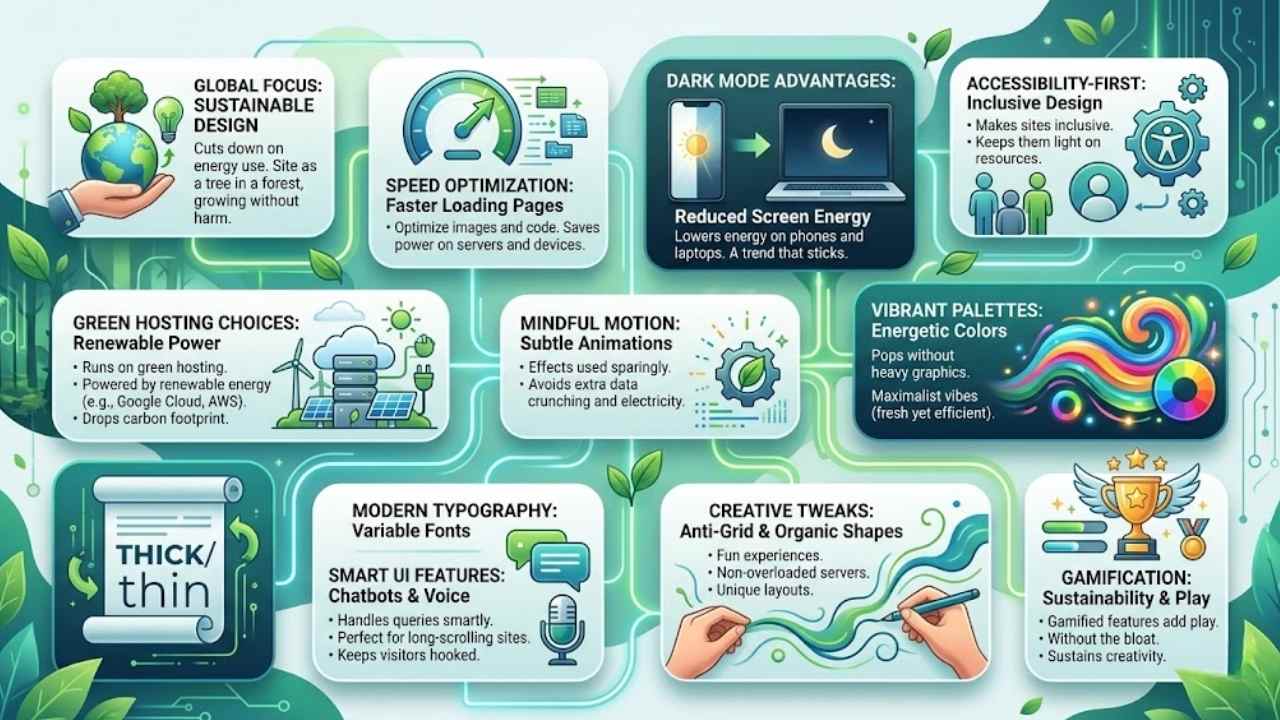
Web designers now focus on the planet, just like they do on users. Think of your site as a tree in a forest; it should grow without harming the environment. Sustainable design cuts down on energy use, much like turning off lights in an empty room.
You optimize images and code to load pages faster, which saves power on servers and devices. Dark mode fits right in here, as it reduces screen energy on phones and laptops, a trend that sticks around for good reason.
Add in accessibility-first approaches, and you make sites inclusive while keeping them light on resources. Imagine telling a friend, “Hey, my website runs on green hosting from companies like Google Cloud or AWS, powered by renewable energy.” That choice drops your carbon footprint, and users love knowing they’re browsing an eco-conscious space.
Motion effects and animations boost engagement, but use them sparingly to avoid extra data crunching that guzzles electricity. Vibrant color palettes pop on screen without needing heavy graphics, tying into maximalist vibes that feel fresh yet efficient.
Typography shines in variable fonts, which load quicker than old-school ones, perfect for long-scrolling sites that keep visitors hooked without wasting bandwidth. Chatbots and voice UI handle queries smartly, reducing the need for constant page reloads.
Picture a designer chuckling, “Who knew saving the world could look this cool?” Eco-friendly tweaks, like anti-grid layouts with organic shapes, create fun experiences that don’t overload servers.
Gamified features add play without the bloat, proving sustainability sparks creativity in web worlds.
Neumorphism and Glassmorphism
Neumorphism brings a soft, tactile feel to web interfaces, like buttons that pop out from the page with subtle shadows. Designers love it for creating depth without overwhelming the eyes.
Pair it with dark mode, and you get a sleek look that saves battery on devices. Imagine your site feeling like molded clay, inviting users to touch and explore.
Glassmorphism adds a frosty glass effect, with blurred backgrounds and vibrant color palettes that shine through. This trend layers elements for a modern, see-through vibe, boosting visual appeal.
Tools like Figma help craft these designs quickly. Think of it as peering through a misty window, where bold typography stands out against lively hues for that extra engagement punch.
Vibrant and Maximalist Color Palettes
Designers ditch those dull, muted tones for good. Vibrant color palettes burst onto the scene, replacing old schemes with energy and flair. Think bold reds, electric blues, and sunny yellows that grab attention right away.
These choices make websites pop, like a fireworks show on your screen. Users feel the excitement, you know, that rush from colors that scream personality. In 2026, this trend rules, blending maximalist vibes with data visualization tools to tell stories.
Adobe Color helps pick these palettes, turning simple pages into visual feasts. Mix in GIFs for extra punch, and watch engagement soar.
People love sites that feel alive, not flat. Maximalist designs layer colors without fear, creating depth that draws you in. Picture a canvas splashed with every hue under the sun, yet it all works together.
This approach fits long-scrolling websites perfectly, keeping eyes glued as you scroll. Color theory plays a big role here, guiding picks that evoke emotions. Tools like Coolors generate these vibrant sets fast, making it easy for anyone to try.
Add some humor with unexpected combos, like pairing neon green with deep purple, and your site stands out in a crowd.
Retro-Futurism and Digital Nostalgia
Retro-futurism mixes old visions of tomorrow with today’s tech, and it pulls you right in. Think about those classic sci-fi vibes from the 80s, now alive on your screen with glowing neon and sleek lines.
Designers use this style to spark joy, like flipping through an old comic book that suddenly comes to life. GIFs play a big role here; they loop simple animations that nod to early web days, making sites feel fun and familiar.
Add in bold typography, and you get text that pops like a retro video game title. Long-scrolling websites fit perfectly too, letting stories unfold like a nostalgic journey through time.
Digital nostalgia taps into that warm fuzzy feeling from past tech, but amps it up for 2026. Imagine websites that mimic old CRT monitors or pixelated graphics, pulling users back to simpler times.
Data visualization shines in this trend; charts and graphs styled like vintage infographics tell stories with a twist of humor. You know, like turning boring stats into something that feels like a blast from the past.
Voice your thoughts out loud, and natural language interfaces respond in a chatty, old-school way. This approach keeps things fresh, blending comfort with surprise to hook readers every time.
Voice UI and Natural Language Interfaces
Voice user interfaces let you talk to websites, just like chatting with a friend over coffee. These setups use natural language processing to understand your words and respond in real time.
Designers now weave in intelligent chatbots that handle queries with ease, making sites feel alive and helpful. Think of Siri or Alexa on your phone; they guide you through shopping or booking trips without typing a thing.
This trend ties into AI-powered personalization for 2026, where sites adapt to your voice commands for a smoother ride. You get conversational UI that boosts engagement, turning a simple visit into an interactive adventure.
Imagine asking your favorite online store for outfit ideas, and it replies with options customized just for you, like a personal stylist in your pocket.
Smart voice tech cuts down on clicks, saving you time and frustration on the go. Natural language interfaces grasp slang and accents, so everyone joins the fun, no matter how they speak.
Web pros add these features to create seamless experiences, blending voice with visuals for that wow factor. Chatbots powered by machine learning learn from your habits, offering spot-on suggestions that keep you coming back.
This approach fits right into current web design, where conversational elements shine as must-haves. Imagine browsing a recipe site by voice alone, hands-free while you cook, and laughing at its witty comebacks to your questions.
Gamified Design Features
Gamified design turns websites into fun playgrounds, folks. Users earn points for tasks, like completing a quiz or sharing content. Badges pop up as rewards, boosting that sense of achievement.
Think of it like a video game, where levels keep you hooked. Motion effects and animations enhance user engagement on websites, adding zing to every click. Interactive storytelling creates more engaging user experiences, pulling visitors deeper into the site.
GIFs bring quick laughs or surprises, much like a friendly nudge from an old pal. Data visualization turns boring stats into exciting charts that users can play with. For 2026, these elements shine bright in web trends.
Long-scrolling websites fit perfectly here, they guide you through a journey with mini-games along the way.
Picture your site as a treasure hunt, full of surprises. Challenges prompt users to explore more pages, increasing time spent. Leaderboards show top scorers, sparking a bit of friendly rivalry.
Typography plays a role too, with bold fonts highlighting wins or tips. Conversational UI and intelligent chatbots join the fun, they act like game guides offering hints. Vibrant color palettes make everything pop, replacing dull schemes with energy.
Dark mode functionality continues as a mainstream trend, it eases eye strain during long sessions. Folks, this approach feels empathetic, it understands we all crave a little excitement online.
Emerging for 2026, these features mix nostalgia with fresh twists, like retro games meeting modern tech.
Organic Shapes and Anti-Grid Layouts
Designers break free from rigid grids this year. They use organic shapes like curves and blobs to create fluid, natural flows on websites. Picture a site that feels like a winding river, drawing you in with soft edges instead of sharp boxes.
This trend pairs well with vibrant color palettes, replacing those muted schemes we saw before. Typography pops more too, especially on long-scrolling pages that let users explore without strict lines.
Tools like Figma help craft these layouts, making sites fun and engaging for 2026.
You gain better user connection with anti-grid designs. They encourage experimental navigation, where paths twist like a maze in a garden. Add in GIFs for subtle motion, and your page comes alive.
Think of data visualization that flows organically, not trapped in squares. Accessibility stays key here; these shapes work if you test them right. Chat with your team about trying this, folks, it boosts that immersive feel without the hassle.
Tips for Incorporating Trends into Your Website
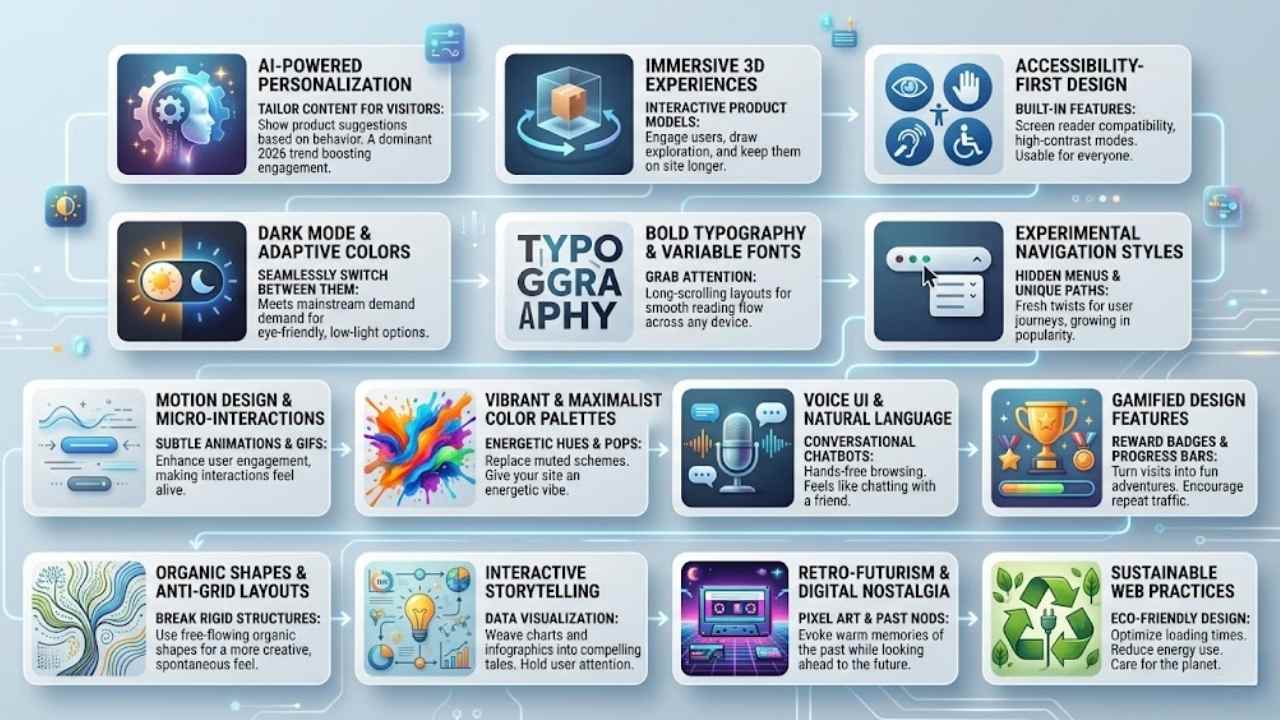
You want to make your website stand out this year. These tips will help you weave in the latest trends without overwhelming your users.
- Start with AI-powered personalization to tailor content for each visitor, like showing product suggestions based on past behavior, a dominant trend for 2026 that boosts engagement.
- Add immersive and interactive 3D experiences, such as rotatable product models, to draw users in and keep them exploring longer.
- Prioritize accessibility-first design from the ground up, ensuring features like screen reader compatibility and high-contrast modes make your site usable for everyone.
- Implement dark mode and adaptive color systems that switch seamlessly, meeting the mainstream demand for eye-friendly options in low-light settings.
- Use bold typography and variable fonts to grab attention, pairing them with long-scrolling layouts for a smooth reading flow on any device.
- Try experimental navigation styles, like hidden menus that reveal on hover, which are growing popular and add a fresh twist to user journeys.
- Incorporate motion design and micro-interactions, including subtle animations and GIFs, to enhance user engagement and make interactions feel alive.
- Embrace vibrant and maximalist color palettes that pop, replacing those muted schemes with energetic hues to energize your site’s vibe.
- Integrate voice UI and natural language interfaces, such as conversational chatbots, for hands-free browsing that feels like chatting with a friend.
- Add gamified design features, think reward badges or progress bars, to turn visits into fun adventures and encourage repeat traffic.
- Experiment with organic shapes and anti-grid layouts for a free-flowing feel, breaking away from rigid structures to spark creativity.
- Focus on interactive storytelling through data visualization, weaving in charts and infographics that tell compelling tales and hold attention.
- Blend in retro-futurism and digital nostalgia elements, like pixel art nods to the past, to evoke warm memories while looking ahead.
- Weave sustainable and eco-friendly practices, such as optimized loading times to cut energy use, showing you care about the planet.
Final Thoughts
We’ve covered trends like AI personalization, immersive 3D elements, and bold typography that shape modern sites. These ideas fit easily into your projects, saving time while boosting user appeal.
Adopt them to make your website stand out, drawing more visitors and sparking real connections. Check out resources from sites like Awwwards or Smashing Magazine for detailed explorations of tools such as Figma or Adobe XD.
Start now, and watch your designs transform the web landscape like a fresh coat of paint on an old house.
Frequently Asked Questions (FAQs) on Web Design Trends
1. What makes these web design trends stand out this year?
Oh, picture your site as a cozy coffee shop, folks walk in and stay because it’s inviting. Trends like bold colors and smooth animations grab attention fast, they keep users clicking around longer. Hey, it’s like adding sprinkles to your ice cream, makes everything more fun.
2. How do I spot a trend that’s right for my site?
Start by peeking at what big sites do, like those sleek scrolling effects. If it fits your crowd, jump in, it could boost visits. Remember, not every shiny toy works for everyone, pick wisely.
3. Will these trends help my business grow?
You bet, things like mobile-first designs pull in more phone users. They make shopping a breeze, turning browsers into buyers. Imagine your site as a magnet, drawing folks right to your door.
4. What’s one wild trend I shouldn’t miss?
Dark mode is exploding, it’s easy on the eyes at night. Pair it with voice search features, and bam, your site’s ahead of the pack.