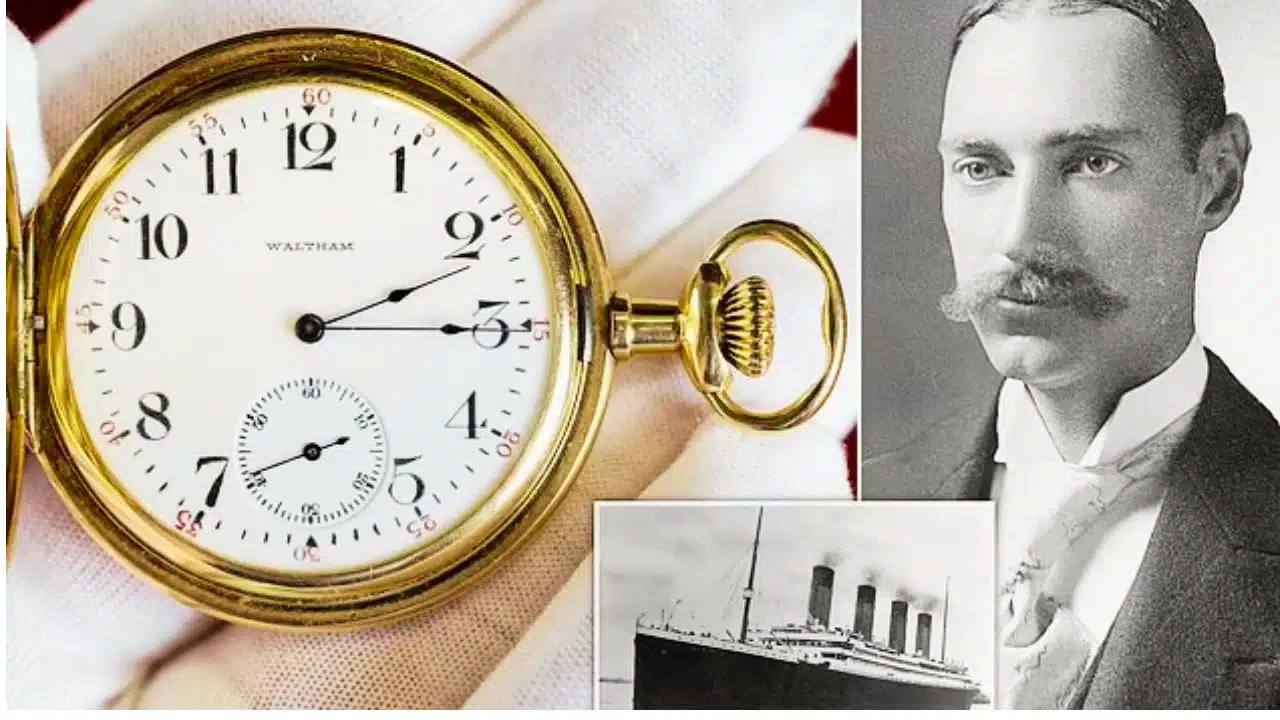
A gold pocket watch recovered from Titanic first-class passenger and Macy’s co-owner Isidor Straus has sold for a record-breaking £1.78 million, setting a new world record for Titanic memorabilia at a UK auction. The sale underscores how artifacts linked to the 1912 disaster continue to command intense global interest more than a century later.
Record price for Titanic artifact
Auctioneers confirmed that the 18-carat gold pocket watch achieved £1.78 million (around €2 million), the highest sum ever paid for a single item connected to the Titanic. The figure eclipses the previous record of about £1.56 million set last year by another gold pocket watch presented to Captain Arthur Rostron of the rescue ship RMS Carpathia.
The watch went under the hammer at Henry Aldridge & Son in Devizes, Wiltshire, a specialist auction house known for handling many of the most valuable Titanic-related sales. Bidding quickly surged past its presale estimate of £800,000 to £1 million, reflecting what the auctioneer described as “sustained interest” in high-profile pieces from the ill-fated liner.
Who were Isidor and Ida Straus?
The watch belonged to Isidor Straus, a prominent American businessman, politician and co-owner of the famed New York department store Macy’s. Isidor and his wife Ida were among the few first-class passengers who did not survive the sinking, and their refusal to be separated has become one of the most enduring human stories associated with the disaster.
The couple, both in their 60s, were travelling home to New York when Titanic struck an iceberg and sank on 14–15 April 1912, with more than 1,500 lives lost. In popular culture, they are widely believed to have inspired the elderly couple shown embracing in bed in James Cameron’s 1997 film “Titanic,” although the movie does not name them explicitly.
A timepiece frozen at the moment of disaster
Straus’s 18-carat Jules Jurgensen pocket watch was recovered from his body after the sinking, alongside other personal effects that were catalogued and returned to his family. The movement stopped at 02:20, aligning with the time historians widely accept as the moment the Titanic disappeared beneath the Atlantic.
Inscribed with Straus’s initials, the timepiece is believed to have been a gift from Ida in 1888, marking his 43rd birthday and the year he and his brother Nathan became full partners in Macy’s. For more than a century, the watch remained in the Straus family, passed down through descendants before being consigned for sale as part of a broader collection of family heirlooms.
Inside the £3 million Titanic auction
The record-setting watch headlined a dedicated Titanic auction that realised about £3 million in total sales. Alongside the watch, a letter written by Ida Straus on Titanic stationery and posted while the ship was en route sold for around £100,000, far above many early expectations.
Other notable pieces included an original passenger list, which fetched approximately £104,000, and a gold medal awarded to crew members of the RMS Carpathia by the survivors they rescued, which brought in about £86,000. Collectively, the lots reinforced the shrinking supply and rising value of historically significant Titanic material in the auction market.
Growing market for Titanic memorabilia
Specialist auctioneers say the new record highlights a long-term trend of escalating prices for rare Titanic artifacts with strong provenance and personal stories attached. In recent years, several headline-making sales have involved pocket watches, including the Tiffany timepiece presented to Captain Rostron and a gold watch recovered from millionaire passenger John Jacob Astor, each setting records before being surpassed.
Experts note that items linked to well-documented individuals, especially first-class passengers and heroic figures from the rescue operations, attract intense competition among collectors and institutions. The Straus watch, combining an iconic family, a dramatic love story, and a time frozen at the exact moment of the ship’s sinking, was seen as one of the most evocative Titanic artifacts likely to reach the open market in this generation.