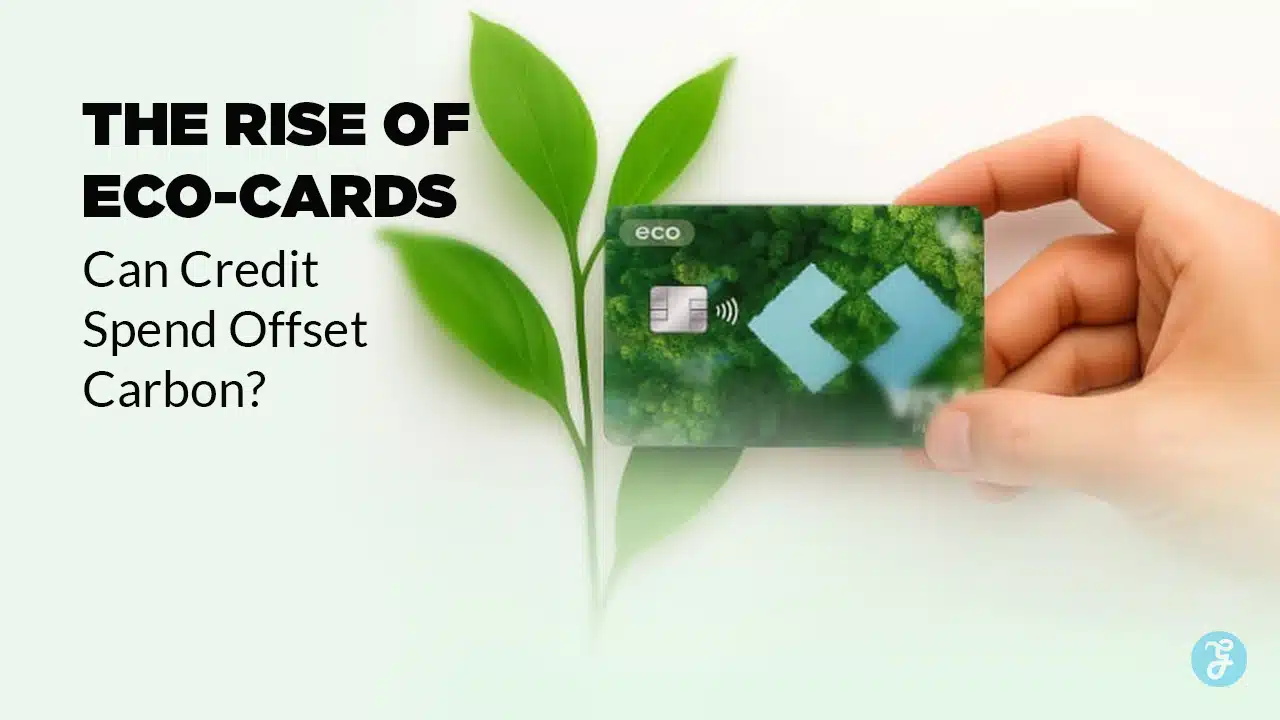
Plenty of trends come and go. But the shift toward “eco-cards” feels different; it’s not just a marketing gimmick anymore; it’s a fundamental change in how financial products are engineered. You might be asking yourself, “Can a credit card really fight climate change, or is this just greenwashing?” It’s a fair question.
Traditional banking has a massive carbon footprint, but a new wave of fintechs is trying to turn your daily coffee run into a net-positive action for the planet. Mastercard and American Express are already moving to phase out pure PVC by 2028. Yet, as we saw with the recent market shakeups in 2025, not every green promise holds water.
In this guide, I’ll walk you through the tech that actually works, the “junk offsets” you need to avoid, and the specific cards that are making a measurable difference right now. Let’s dig into the data.
Understanding the Rise of Eco-Cards
Eco-cards are quickly moving from a niche product to a standard expectation for younger consumers. As someone who analyzes SaaS architectures, I see this as a hardware upgrade for the banking industry, replacing obsolete materials with sustainable tech.
Materials Used in Eco-Cards
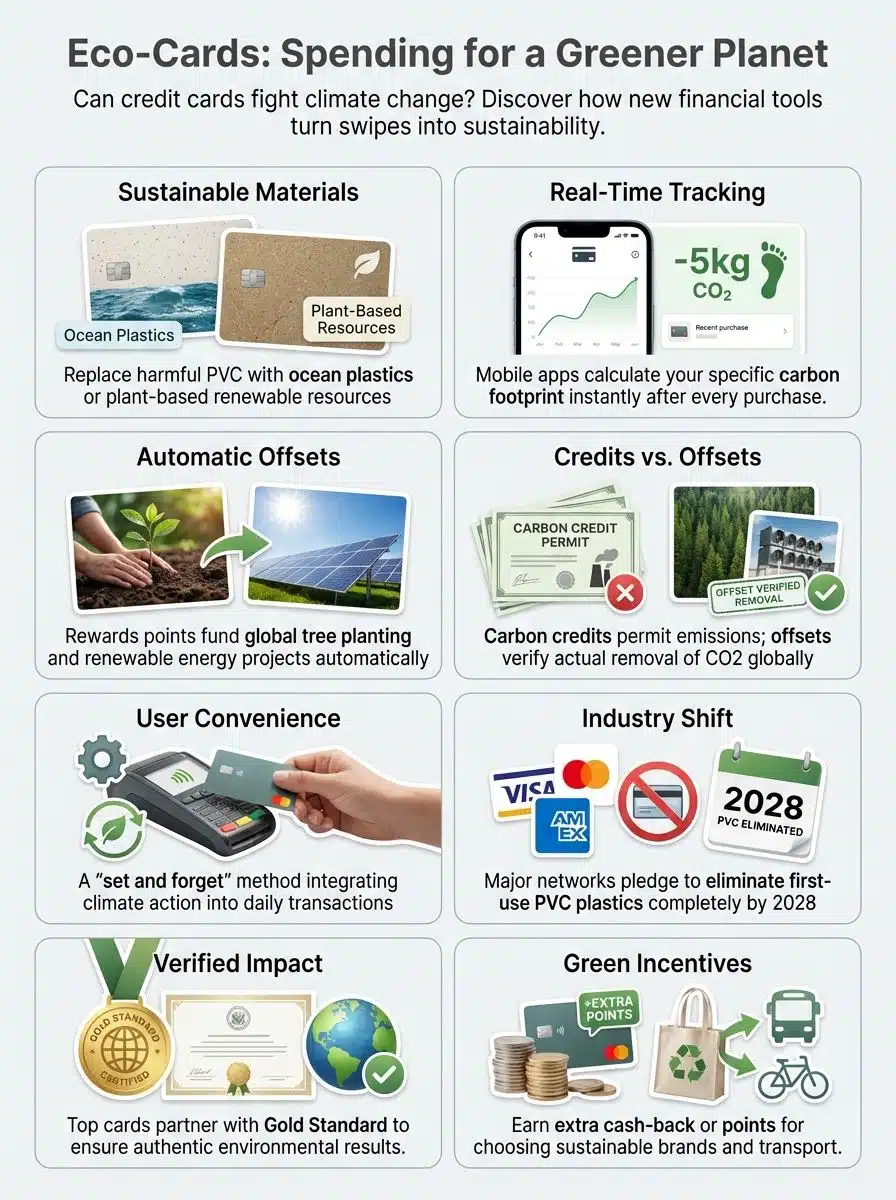
The days of the virgin PVC card are numbered. Most traditional credit cards are made of polyvinyl chloride (PVC), a plastic that is notoriously difficult to recycle and releases toxic chlorine-based chemicals when incinerated. The industry is pivoting to three superior alternatives:
- Ocean Plastic (rPET): Companies like Thales Group now manufacture cards using 70% plastic waste recovered from coastal areas. This cleans up beaches while creating a durable financial tool.
- Polylactic Acid (PLA): This is a bio-sourced plastic made from corn starch. Unlike PVC, it is industrially compostable and requires significantly less energy to produce.
- Recovered Wood: Fintechs like TreeCard use sustainably sourced cherry wood. It’s a striking visual statement that creates a conversation every time you tap to pay.
Transition Away from PVC Cards
This isn’t just about startups; the giants are moving too. Mastercard has mandated that by 2028, all newly produced cards on its network must be made from sustainable materials. This is a massive logistical shift involving thousands of banks and billions of cards.
Insider Insight: While the card material matters, it’s the “scope 3” emissions, the carbon footprint of what you buy, that really counts. A recycled plastic card used to buy fast fashion still has a massive negative impact. The best eco-cards today don’t just change the plastic; they change the behavior.
Visa has also issued over 30 million eco-friendly cards as of 2022, and banks are increasingly adopting the “Visa Eco Benefits” bundle. This package allows issuers to integrate carbon footprinting directly into their banking apps, giving you a dashboard for your personal climate impact.
How Eco-Conscious Travel Credit Cards Actually Work
When you swipe an eco-conscious travel card, you aren’t just paying for a flight; you are triggering a background process designed to calculate and mitigate the emissions of that trip. It’s like having a background app running on your phone, but for the planet.
The technology behind this is fascinating. Most major banks now partner with climate-tech firms like Ecolytiq or Doconomy. These platforms use the “Merchant Category Code” (MCC) of your purchase to estimate carbon emissions. For example, spending $100 at a gas station triggers a higher carbon score than spending $100 at a local grocery store.
Real-Time Data in Action:
- Amex Green Card: This card is made from 70% reclaimed plastic collected from beaches and offers 3x points on transit, encouraging you to take subways and buses over private cars.
- FutureCard Visa Debit: This is a standout in the US market for 2026. Instead of just “offsetting,” it actively pays you to be green. You get 5% cash back on heavy-impact reductions like EV charging, public transit, and second-hand clothing stores.
These incentives are more powerful than offsets because they change financial behavior before the carbon is emitted.
What is the Difference Between a Carbon Credit and a Carbon Offset?
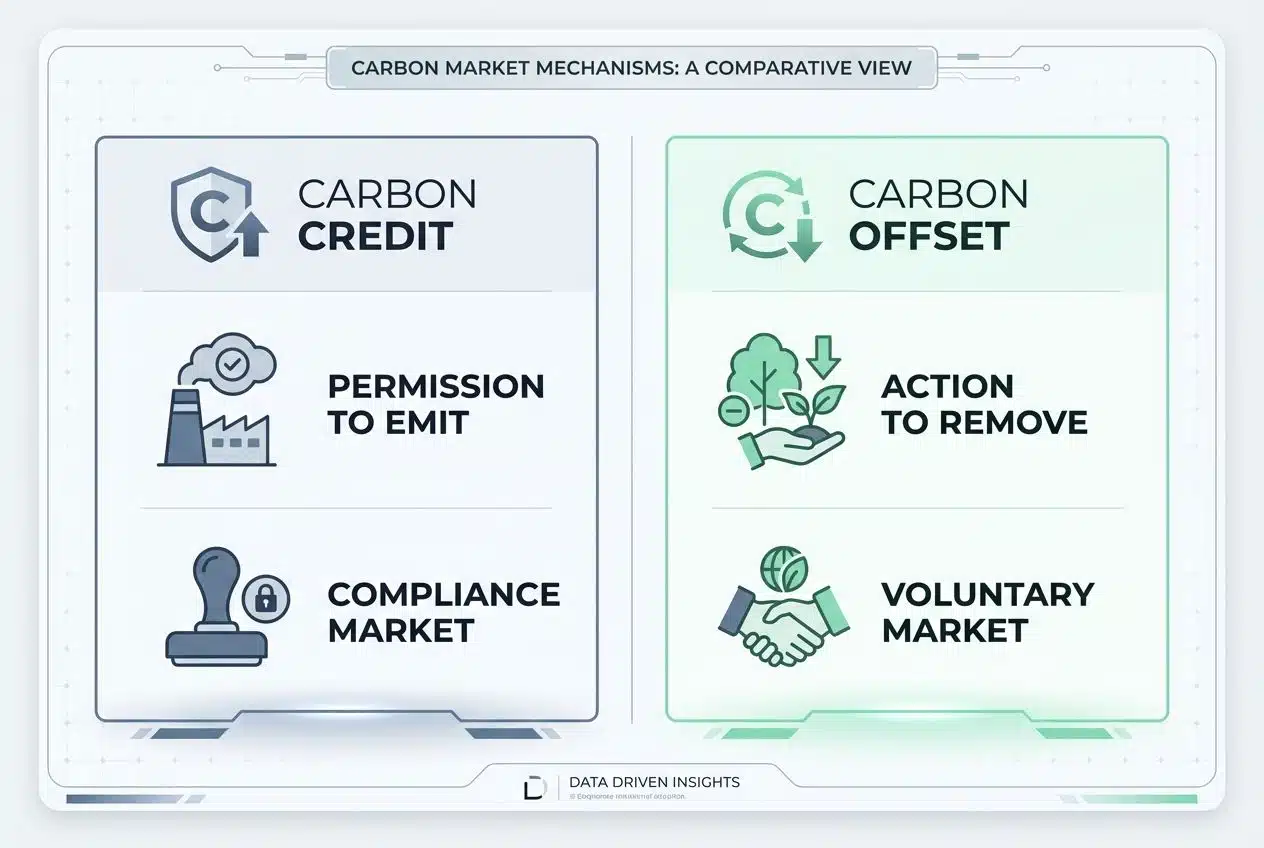
In the boardroom, we often see these terms used interchangeably, but they are distinct financial instruments. If you are building a climate strategy, you need to know the difference.
| Feature | Carbon Credit | Carbon Offset |
| Primary Purpose | Permission to emit | Action to remove/avoid |
| Who Buys It? | Companies under legal caps (Compliance Market) | Individuals or brands voluntarily (Voluntary Market) |
| Example | A factory buys a credit to exceed its pollution limit. | You are planting a tree to balance out your flight. |
Companies buy credits to meet regulatory requirements. You and I buy offsets to balance our personal “climate ledger.” Eco-cards operate almost exclusively in the offset space, funding projects like reforestation or methane capture to “cancel out” your daily spending.
Linking Credit Spend to Carbon Offset
The most seamless way to contribute is to have your credit card do the heavy lifting for you. The “set it and forget it” nature of these tools is their biggest selling point.
Carbon Tracking and Offset Programs
Modern fintech apps have turned carbon tracking into a user experience feature, similar to tracking your daily steps.
- Transaction Analysis: The moment you buy a coffee, the app calculates the CO2e (carbon dioxide equivalent). It might tell you that your latte costs 300g of carbon.
- Automatic Offsetting: Some cards, like TreeCard, use the interchange fee (the fee merchants pay the bank) to fund reforestation. They essentially route corporate profits into tree planting without charging you extra.
- Verified Partners: The best programs don’t just guess; they partner with Gold Standard or Verra. These organizations audit projects to ensure the trees are actually planted and survive.
- Gamification: Apps now give you a “Climate Score.” Lowering your score by biking instead of driving can unlock higher interest rates on savings or better cash-back rewards.
- The “Round-Up” Feature: A popular tool allows you to round up every purchase to the nearest dollar, with the spare cents going directly to renewable energy projects in places like India or Kenya.
Carbon-Offset Subscriptions: Beyond the Monthly Fee
Beyond cards, you can now subscribe to “Netflix for the planet.” You pay a monthly fee (usually $8-$15), and the service promises to erase your personal carbon footprint. However, you need to be careful here.
The “Junk Offset” Warning
A landmark 2025 study from the University of Oxford labeled a large portion of voluntary offsets as ineffective. They found that many “avoided deforestation” projects were protecting forests that weren’t actually in danger.
When choosing a subscription, look for:
- Removal vs. Avoidance: Prioritize projects that actively remove carbon (like direct air capture or biochar) rather than just paying someone not to cut down trees.
- Transparency Reports: Legitimate services like Cool Effect or Wren publish detailed receipts. You should be able to see exactly where your money went, down to the project coordination fees.
- Additionally: This is a key term. It means the green project would not have happened without your money. If a wind farm was going to be built anyway because it’s profitable, your offset didn’t actually help.
Head-to-Head Comparison: What Reduces Your Footprint—Really?
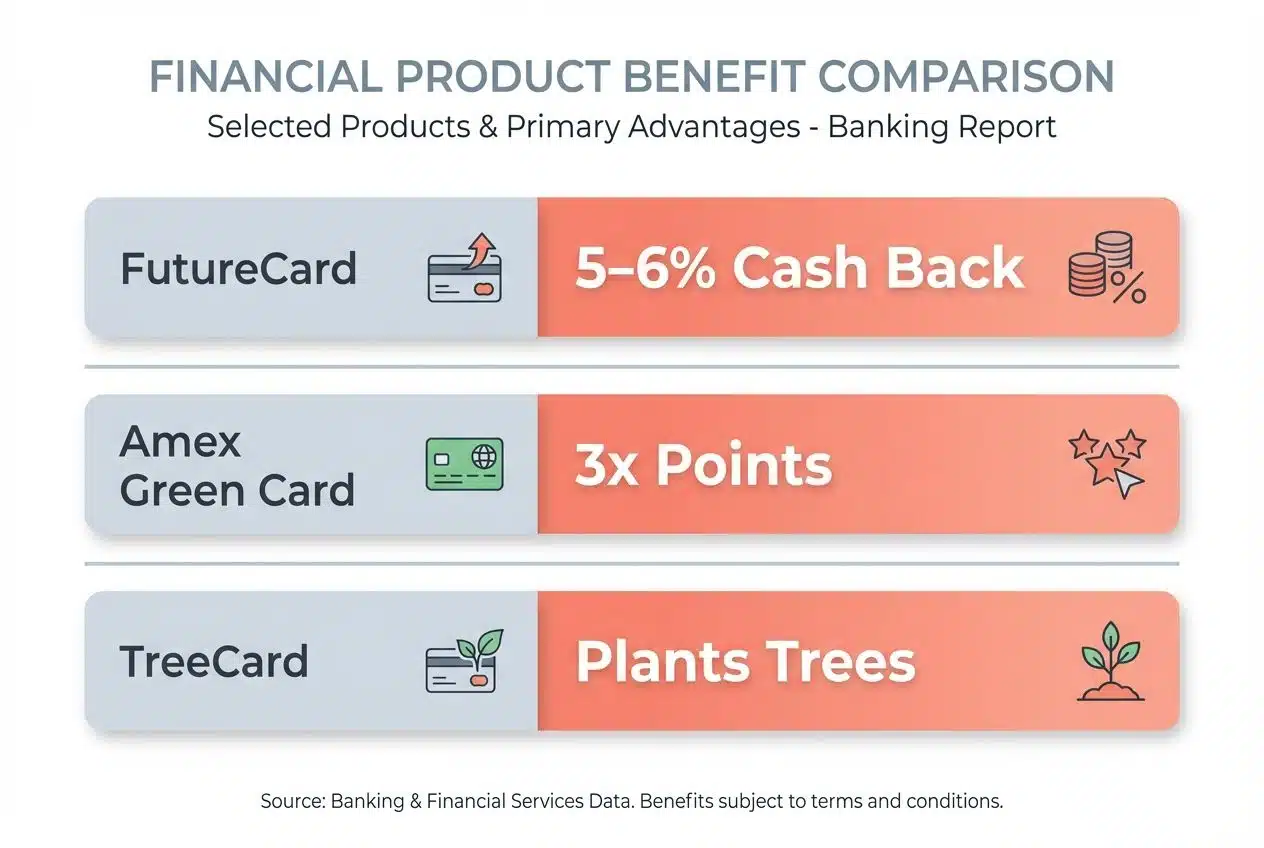
Data drives decisions. I’ve compared the top contenders in the US market to help you see which option offers real value versus just good marketing.
| Option | Primary Benefit | The “So What?” (Value) | Transparency Rating | Best For… |
| FutureCard (Visa Debit) | 5-6% Cash Back on green spending (EVs, Transit, Thrift). | Actually pays you to lower your emissions. It changes your behavior by rewarding green choices. | High (Clear cash rewards) | Urban commuters & EV owners. |
| Amex Green Card | 3x Points on transit and dining; made of 70% reclaimed plastic. | Strong travel rewards for public transit users, backed by reliable customer service. | Medium (Corporate sustainability reports) | Frequent travelers who value points. |
| TreeCard | Plant trees with merchant fees; wooden card hardware. | Passive impact. You don’t have to change habits to contribute to reforestation. | High (Updates on planting projects) | Students & Gen Z want passive action. |
| Offset Subscriptions | Complete offset of estimated lifestyle emissions. | Can cover “unavoidable” emissions like heating your home, but requires out-of-pocket cash. | Varies (Check for Gold Standard) | High-income earners wanting net-zero status. |
Advantages of Eco-Cards
Why should you switch? Aside from the obvious environmental impact, there are practical benefits to carrying one of these cards in your wallet.
- Plastic Reduction: By using a card made of wood or PLA, you are directly reducing the demand for virgin plastic production. It’s a small piece of plastic, but at scale, it’s tons of waste diverted from landfills.
- Financial Incentives: As mentioned with FutureCard, the industry is moving toward rewarding green behavior. Getting 5% back on your train ticket is often a better return than standard travel cards offer.
- Visual Signaling: It sounds minor, but pulling out a wooden card or a distinctively green card sparks conversation. It signals your values to your network, which is a subtle but powerful way to influence others.
- Automated Philanthropy: It removes the friction from donating. You don’t have to remember to write a check to a climate charity; your daily spending handles it automatically.
- Real-Time Accountability: Seeing your carbon footprint in your banking app prevents “out of sight, out of mind.” It forces you to confront the reality of your consumption habits daily.
Real-World Impact: A Case Study in Accountability
Let’s look at Mastercard’s Priceless Planet Coalition. Unlike smaller projects that might lack oversight, this initiative aims to restore 100 million trees by 2025 in critical geographies like Kenya, Brazil, and Australia.
They don’t just plant seedlings and walk away. They use Conservation International and the World Resources Institute to monitor the trees for years. This ensures the forests actually mature and sequester carbon.
In contrast, we’ve seen cautionary tales. Aspiration, an early leader in this space, faced significant financial headwinds and operational challenges by 2025. This teaches us a valuable lesson: always choose financial partners that balance their mission with a sustainable business model. You want your bank to be around long enough to see those trees grow.
Actionable Steps: Building a Credible Climate Strategy
If you are a business owner or just managing your household budget, here is how you can implement a strategy that actually counts.
- Audit Your Hardware: When your current cards expire, request eco-friendly replacements. If your bank doesn’t offer them, switch to one that does. It sends a demand signal to the market.
- Prioritize Behavior Over Offsets: Use cards like FutureCard to incentivize lower-carbon choices first. Reduce your emissions before you try to offset them.
- Verify the Partners: Before signing up for a card, check who handles their offsets. If you don’t see names like Gold Standard, Verra, or American Forests, be skeptical.
- Ignore the “Net Zero” Hype: Focus on “Carbon Negative” actions. Look for projects that remove carbon rather than just neutral promises.
- Digital First: The most eco-friendly card is no card at all. Use Apple Pay or Google Pay whenever possible to reduce the need for physical plastic replacements.
- Check the Fees: Ensure that the fee you pay for an offset subscription is mostly going to the project. A good benchmark is that at least 80% of funds should go to the field, not administrative overhead.
- Educate Your Team/Family: Share your carbon dashboard. Turning climate action into a shared metric makes it a team goal rather than a solo burden.
Final Words
Eco-cards are a powerful tool, but they aren’t a magic wand. They work best when they are part of a broader lifestyle change, using smart data to drive smarter spending.
My advice? Start with one card that aligns with your biggest spending category. If you commute, grab a card that rewards transit. If you shop sustainably, find one that offers cash back for those brands. Real change happens when we align our financial incentives with our environmental goals.
If you’re ready to make the switch, check out the specific terms for cards like FutureCard or the Amex Green Card and see which one fits your wallet. Every swipe is a vote for the kind of future you want to see.