

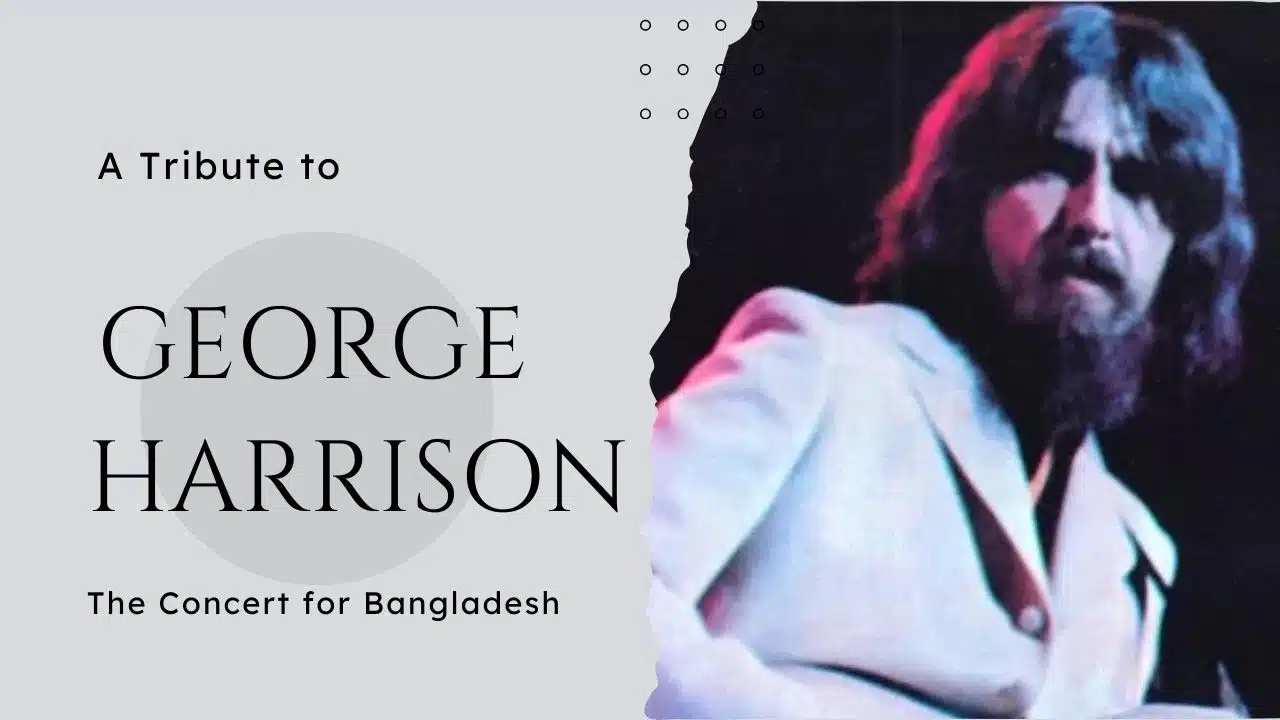
On George Harrison’s 24th death anniversary, the world looks back not only at the guitarist George Harrison, who shaped the Beatles’ sound, but also at the humanitarian visionary who transformed global music activism.
The Concert for Bangladesh, held on 1 August 1971 at Madison Square Garden, stands today as a milestone in charity history—but its journey was filled with struggles, confusion, diplomacy, and personal sacrifice.
This is the untold story of the crisis, chaos, and courage that changed music forever.
George Harrison: The Birth of a Humanitarian Mission
The humanitarian mission behind the Concert for Bangladesh traces its origins to Harrison’s growing global awareness and his personal connection to the suffering of millions. His immediate decision to act marked the beginning of a remarkable journey.
Ravi Shankar’s Plea That Sparked a Movement
The crisis began when Indian sitar maestro Ravi Shankar, devastated by the refugee suffering during the Bangladesh Liberation War, turned to Harrison for help. Millions had fled from then–East Pakistan (now Bangladesh) into India. Famine, disease, and homelessness were escalating daily. Shankar expected Harrison to donate or raise awareness. Instead, Harrison stunned him by saying,
“Let’s do something bigger.”
From Compassion to Action: A Five-Week Deadline
Most charity concerts today take months of planning. Harrison had five weeks to:
-
book a venue
-
gather star performers
-
build a cause campaign
-
coordinate international logistics
-
and secure global media coverage
What happened next was unprecedented.
The Herculean Task of Assembling Music Legends
The star-studded stage of the Concert for Bangladesh did not materialize overnight. It was the result of Harrison’s steadfast loyalty and his ability to convince fellow musicians to rise beyond fame and answer a humanitarian call.
Convincing Bob Dylan: The Biggest Challenge
Bob Dylan had largely retreated from public life. His last major show had been years earlier. Harrison personally visited him multiple times, gently urging him to join.
Dylan finally agreed—only hours before the concert.
Eric Clapton’s Health Crisis
Eric Clapton was battling severe personal struggles, including addiction. He wasn’t sure he could perform. Harrison prepared backup plans, yet Clapton arrived—exhausted but committed—because of George.
The Beatles Puzzle: Who Would Join?
-
Ringo Starr immediately agreed.
-
Paul McCartney politely declined due to unresolved tensions after the Beatles breakup.
-
John Lennon initially said yes but withdrew when Yoko Ono was not included.
Harrison had to navigate old friendships, rivalries, and fragile emotions while remaining focused on the cause.
Creating a Concert From Scratch
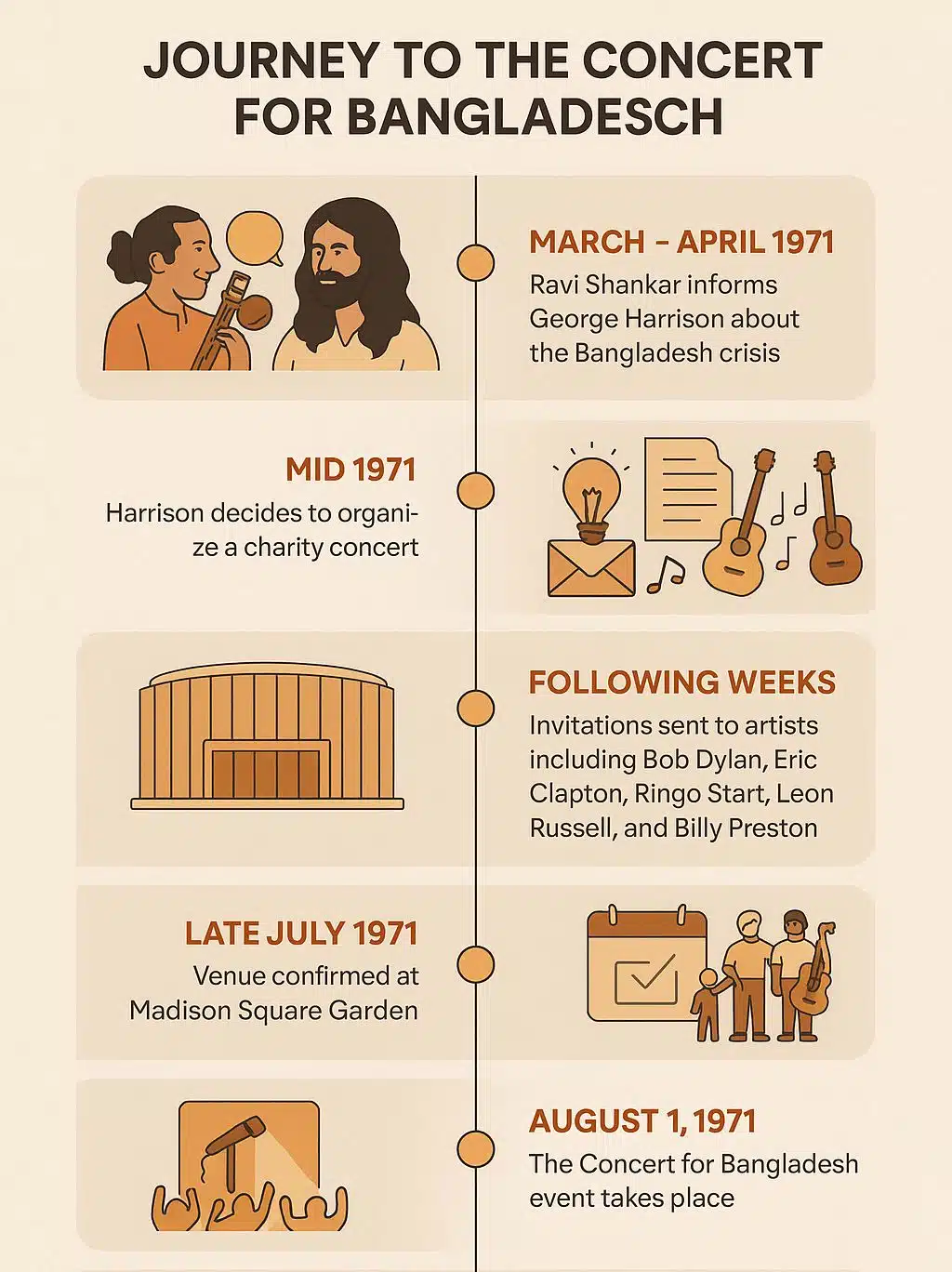
Once the artists were on board, Harrison faced an even greater challenge—building an entire concert in just a few weeks. From securing a venue to shaping a message, every detail had to be created from the ground up.
Securing Madison Square Garden
Finding a venue on such short notice was nearly impossible, but Harrison secured the 12,000-seat MSG for two back-to-back shows.
Building a Stage of East–West Fusion
Harrison insisted on giving Ravi Shankar and Indian classical music a prominent opening segment. This wasn’t popular with Western promoters, but Harrison didn’t compromise.
Rehearsals That Never Happened
Few of the performers rehearsed together beforehand. Harrison trusted the chemistry of legendary musicians to carry the show—a risk that paid off.
The Legal and Financial Storm Behind the Curtain
Because the event was organized quickly, the appropriate charitable foundations weren’t established beforehand. The IRS froze the concert’s revenue, preventing immediate transfer of money to Bangladeshi refugees.
Harrison was heartbroken, saying:
“The money was needed yesterday.”
Record Label War: Who Owns the Music?
The live album and film were critical for long-term fundraising, but:
-
Apple Records
-
Columbia
-
and artist managers
all argued over contractual rights. Instead of focusing on humanitarian work, Harrison spent weeks embroiled in legal battles.
The Bootleg Problem
Illegal recordings surfaced almost immediately. Harrison worried these would divert funds that should have gone to refugees.
Emotional Burden: The Weight of a Humanitarian Vision
He became the global spokesperson for Bangladesh—explaining a distant geopolitical crisis to Western audiences unfamiliar with South Asia.
Media Pressure and Public Scrutiny
Journalists questioned:
-
why a Beatle was involved
-
whether the money would reach refugees
-
if the concert was a publicity stunt
Harrison handled it with rare calmness, always redirecting attention back to the suffering of the people.
The Spiritual Responsibility
Harrison’s deep belief in compassion and dharma made the mission personal. He once said:
“If you feel something strongly enough, you have to do something about it.”
The Day of the Concert: Organized Chaos
The atmosphere inside Madison Square Garden was electric, but behind the curtains, the situation was anything but calm. Harrison and his team diligently navigated through uncertainties, demonstrating that even legendary moments emerge from chaos.
The Electric Atmosphere of Madison Square Garden
When the lights dimmed and Shankar’s sitar resonated through the hall, the audience rose in ovation—not knowing they were witnessing the birth of a global movement.
Iconic Performances That Defined the Night
-
Ravi Shankar’s classical opener
-
Harrison’s emotionally charged “Here Comes the Sun”
-
Billy Preston’s explosive “That’s the Way God Planned It”
-
Dylan’s rare return to stage with “Blowin’ in the Wind”
-
The all-star jam that closed the show
Each set became a symbol of solidarity with a suffering nation.
After the Applause: The Long Road to Impact
Despite delays, legal challenges, and bureaucracy, the funds eventually reached UNICEF and were used to assist refugees and rebuild lives. The concert’s album and documentary continued generating humanitarian funds for decades. Live Aid, Farm Aid, Concert for Kampuchea, and modern global charity festivals all owe their existence to Harrison’s template.
Legacy of the Concert for Bangladesh
The legacy of the Concert for Bangladesh extends far beyond the music itself. It reshaped how the world views celebrity responsibility, set a new standard for humanitarian engagement, and became the blueprint for every major charity concert that followed.
Birth of Celebrity Activism
Before 1971, celebrities rarely used fame for humanitarian causes. Harrison changed that forever.
A Beatle’s Transformation Into a Humanitarian Leader
The concert proved that:
-
music can move nations
-
compassion can redefine careers
-
and one artist can create global change
Harrison had evolved from “Quiet Beatle” to global humanitarian pioneer.
Why the Concert for Bangladesh Still Matters Today
More than five decades later, the Concert for Bangladesh continues to stand as a powerful reminder of how art can influence global change. Its impact is still visible in every modern charity event, proving that Harrison’s vision was far ahead of its time.
A Modern Relevance in an Age of Crisis
From refugee crises to global pandemics, Harrison’s model of rapid, compassionate action remains relevant.
A Lesson in Courage and Empathy
Harrison showed that leadership doesn’t always roar—sometimes it whispers, organizes, and heals.
Final Words
One man’s determination to help strangers in need drove the Concert for Bangladesh, despite the applause and iconic performances. Harrison’s journey—from hearing Ravi Shankar’s plea to battling legal chaos and conquering impossible odds—remains one of the most remarkable humanitarian stories in music history.
On his death anniversary, the world remembers not just a Beatle, but a man who turned compassion into a movement. George Harrison’s greatest performance wasn’t a song—it was his humanity.






























