The alarm rings at 6:00 AM. Before your feet touch the floor, your thumb is already scrolling. Emails, news alerts, and social pings flood your brain before you have even had a sip of water. This is the pulse of April 2026. For most of us, stress is no longer a guest that visits during a deadline. It is the very air we breathe. As we observe Stress Awareness Month 2026, the focus has shifted from merely noticing the pressure to actively mastering it.
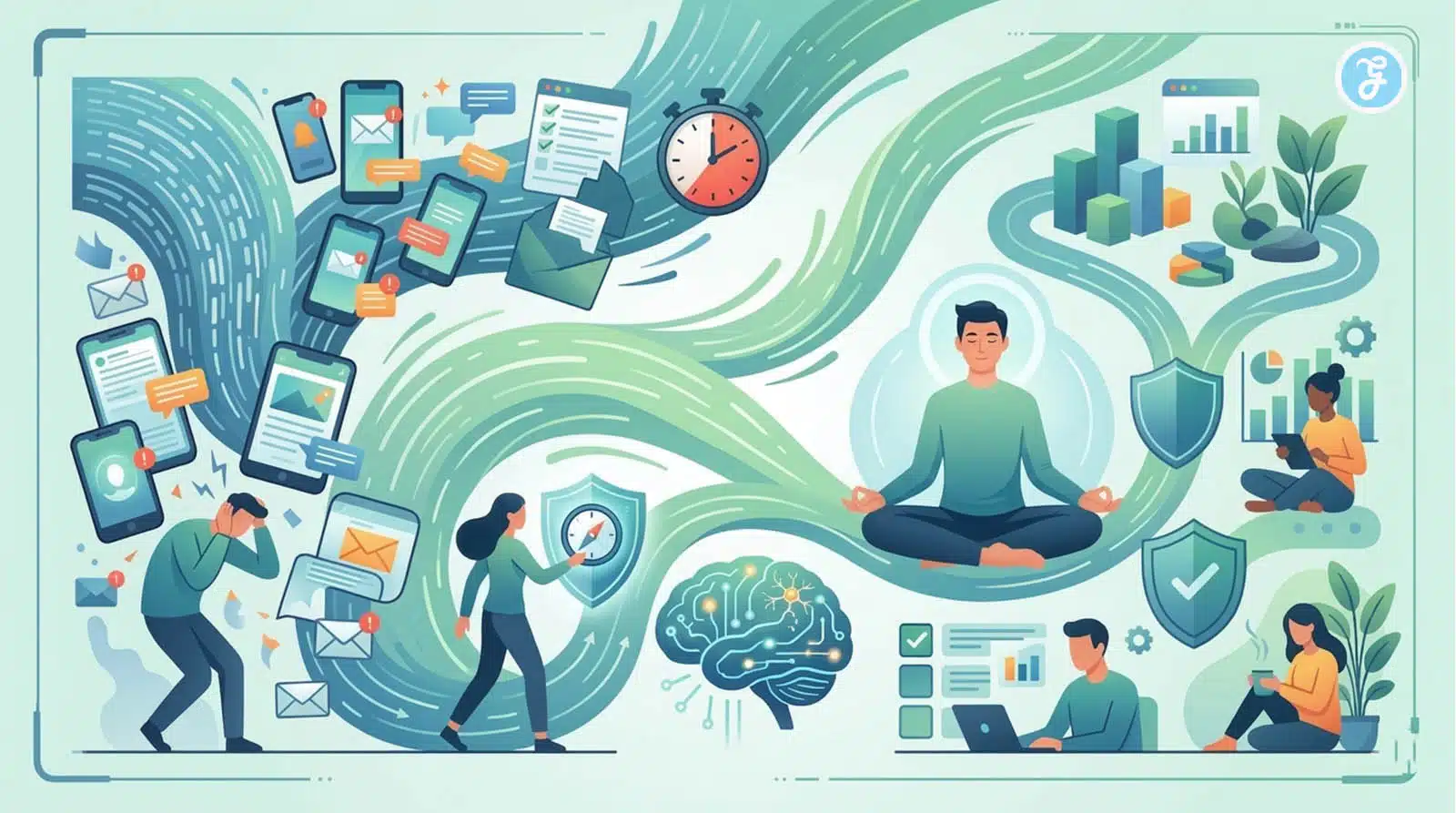
The numbers tell a staggering story of a world on the edge. According to the Mental Health UK Burnout Report 2026, 91% of adults reported experiencing high or extreme stress over the past year, with 39% of young adults aged 18 to 24 taking time off due to stress-related mental health challenges. This is not just a corporate buzzword anymore. It is a quiet epidemic that lives in our pockets and sits at our dinner tables. We are currently living through a period of constant urgency. Digital overload and silent burnout have become the standard settings for modern existence.
This year, the data shows a sharp demographic shift. Younger professionals are feeling the weight most acutely. Recent statistics indicate that 39% of workers aged 18 to 24 took time off this year specifically for stress-related mental health challenges. They are entering a workforce where the lines between “on” and “off” have completely dissolved. The traditional office cubicle has been replaced by a persistent, glowing connection to work that never truly sleeps.
To meet this moment, we are moving beyond simple awareness. The 2026 theme, #BeTheChange, represents a transition toward true stress agency. It is about taking the wheel. We are learning that while we cannot always control the global economy or the pace of AI integration, we can control our internal response. Stress management is the most essential life skill of this decade. It is the difference between simply surviving the day and actually owning your life.
This month is an invitation to look at your routines with fresh eyes. It is about recognizing that your nervous system was not built for a 24/7 data stream. By understanding the real-life patterns of our “always-on” lifestyle, we can begin to build emotional resilience that lasts. Resilience is not about being a wall that never breaks. It is about being a person who knows how to reset. We are shifting the narrative from being victims of a fast world to being architects of our own calm.
The Physiology of the Polycrisis
Your body is a masterpiece of survival engineering. It is designed to handle a sudden threat by flooding your system with energy. However, in 2026, the threats are no longer momentary. They are constant, invisible, and deeply embedded in our digital lives. Understanding how your biology reacts to this environment is the first step toward reclaiming your calm.
From Survival to Stagnation
We often talk about the fight or flight response as a quick burst of adrenaline. This acute reaction was perfect for outrunning a physical predator. Today, the predators are unread messages and shifting job markets. When these triggers never stop, your nervous system can move into a state known as functional freeze.
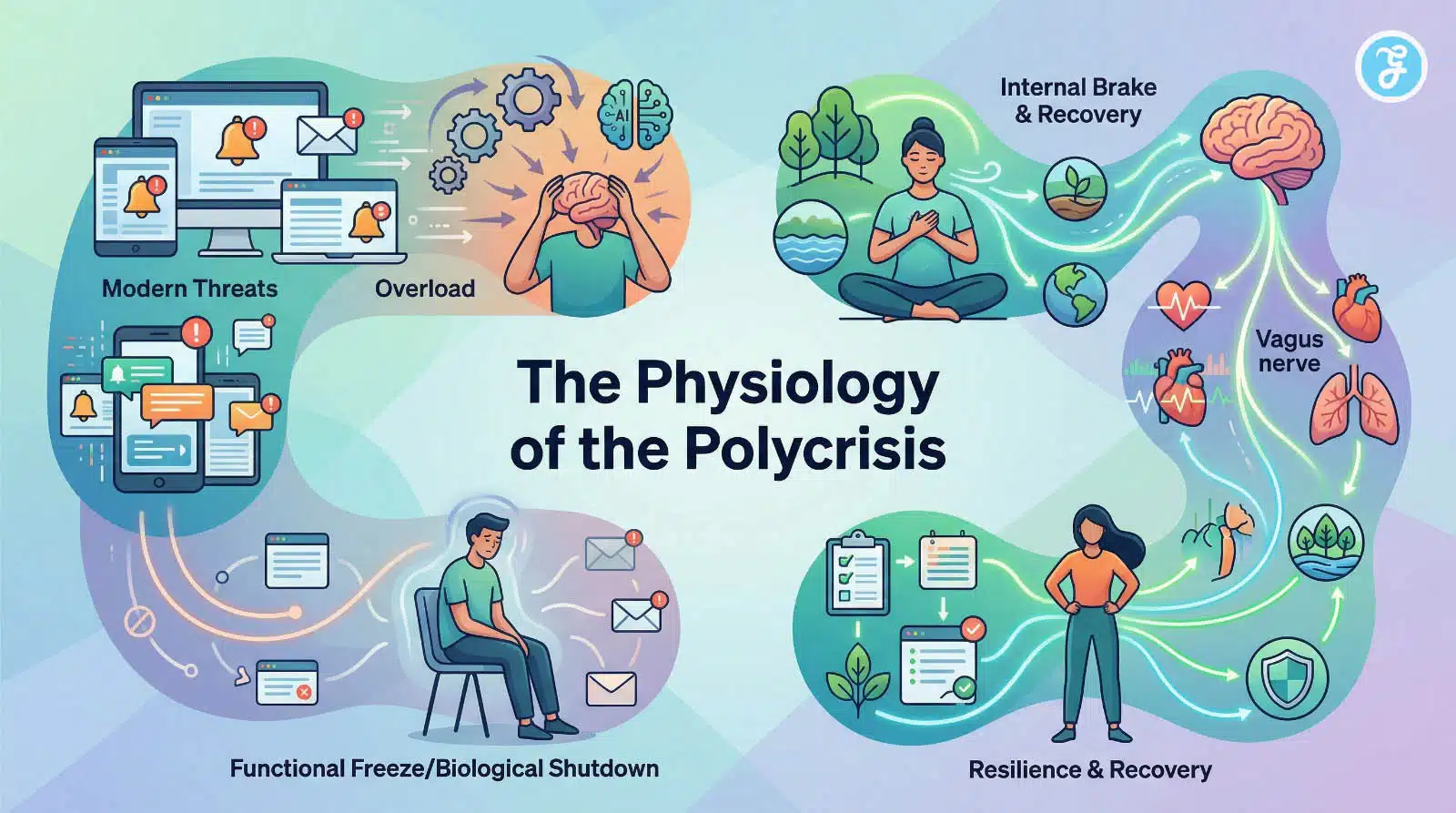
This is not just being tired. It is a biological shutdown where you feel numb, disconnected, and unable to take action despite a long to-do list. You are not lazy. Your body is simply trying to protect you from an overload it cannot process.
The year 2026 has introduced a unique set of pressures that experts call a polycrisis. We are simultaneously adapting to rapid AI integration at work and navigating global economic volatility. Add to this the relentless digital saturation of our personal time. Each notification is a micro-stressor that keeps your brain in a state of high alert. This constant noise prevents your system from ever returning to a baseline of safety. When every part of life feels like it is changing at once, your internal alarm system stays on. This sustained tension erodes your health and drains your mental clarity.
The Science of the Internal Brake
To find balance, we must look at Heart Rate Variability or HRV. Think of HRV as a snapshot of your resilience. High variability means your heart can adapt quickly to changing needs. Low variability suggests your system is stuck in a stress loop. The key player here is the vagus nerve. This nerve acts as the physiological brake of the body. It sends signals from your brain to your heart and lungs to slow down and rest. Current research shows that we can strengthen this nerve through simple breathing and grounding exercises. By training your vagus nerve, you give your body the tools to switch off the alarm and enter a state of recovery. This is not about avoiding stress but about building the physical capacity to move through it.
Workplace Wellness: Beyond the Pizza Party
The corporate world has long relied on superficial fixes for deep-seated exhaustion. A free lunch or a branded water bottle cannot repair a culture of burnout. In 2026, the shift is moving toward genuine psychological safety and structural change. Leaders are finally recognizing that a healthy bottom line starts with a mentally resilient workforce.
The Silence in the Boardroom
There is a profound disconnect between what leadership believes and what employees feel. Current data shows that 35% of workers still feel uncomfortable discussing their stress levels with their managers.
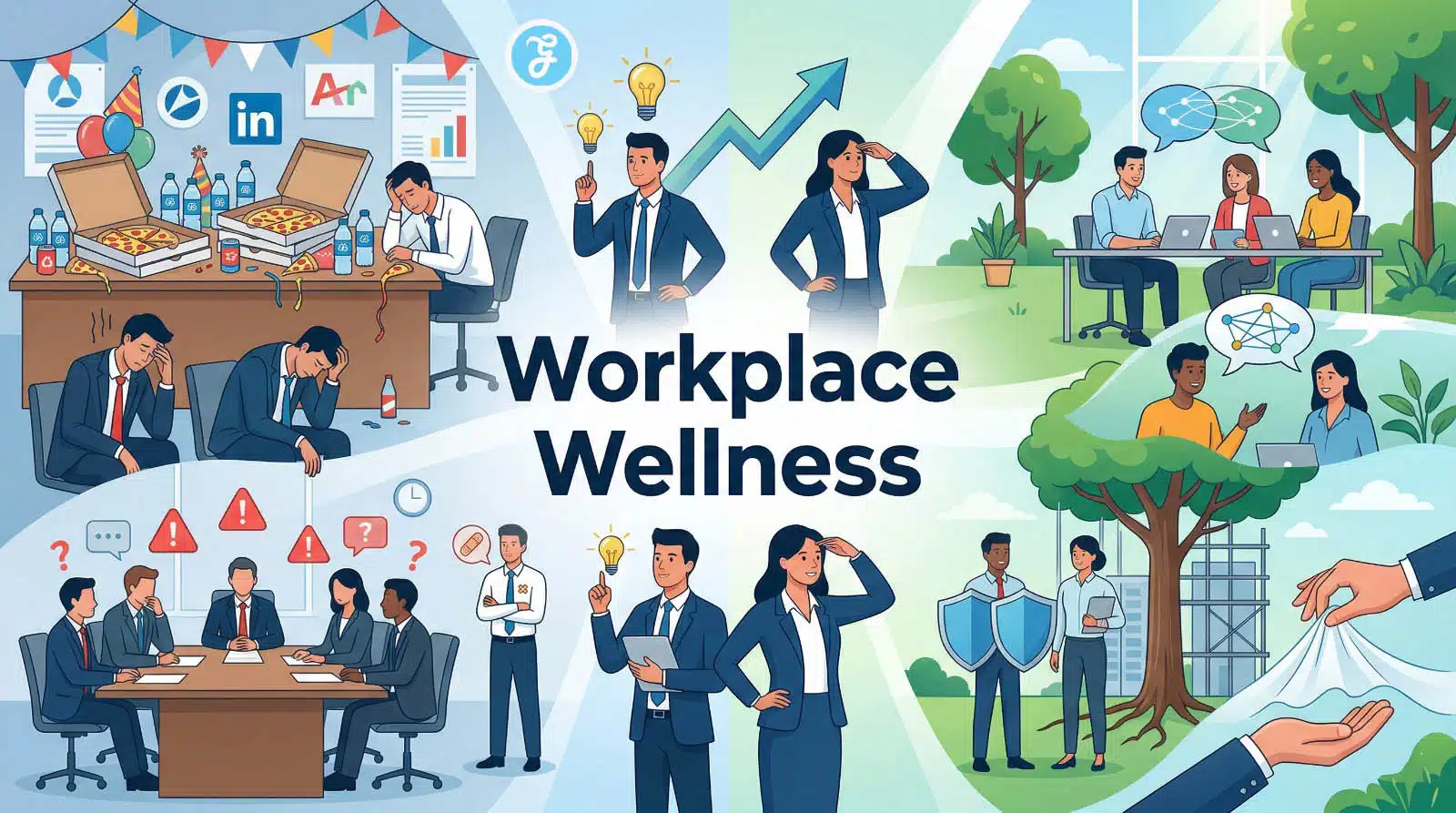
This silence is a major barrier to recovery. When people hide their struggles, the pressure only intensifies until it leads to a total breakdown. A culture that penalizes vulnerability is a culture that breeds turnover. True wellness starts with an environment where employees can speak honestly without fearing for their professional standing.
Structural Solutions and the Right to Disconnect
Real change requires more than just empathy. It requires policy. The “Right to Disconnect” is gaining momentum as a legal and cultural standard to protect personal time. This ensures that a 6:00 PM email does not become an 11:00 PM crisis. Furthermore, the industry is seeing a need for formal return-to-work plans for those recovering from burnout. Currently, only 17% of workers are offered these structured transitions. Without a clear path back, many employees fall straight back into the same cycles that broke them in the first place.
The Massive Cost of Disengagement
For those who view wellness as a luxury, the economic reality is a loud wake-up call. According to Gallup, employee disengagement costs the global economy nearly $9 trillion each year. This is not just a human tragedy. It is a massive financial failure. High-stress environments directly lead to lower productivity, increased absenteeism, and poor decision-making. Investing in the mental well-being of a team is the smartest financial move an executive can make. A business that ignores the mental health of its people is leaving trillions of dollars on the table. Supporting humans is no longer optional for a successful enterprise.
The Life Skill Toolkit: Science-Backed Resets
True resilience is built in the small gaps between your daily tasks. It is not about a week-long retreat but about sixty-second resets that protect your brain. In 2026, these techniques are the tools that allow high performers to stay grounded. Mastering your internal state is now the most practical skill you can own.
NSDR: The Power of Non-Sleep Deep Rest
When your brain feels foggy mid-day, a nap is often not an option. Non-Sleep Deep Rest or NSDR is a protocol that uses guided relaxation to shift your body into a state of recovery. Practices like Yoga Nidra are scientifically proven to reduce cortisol levels and replenish dopamine in the brain. By spending just ten minutes in this state, you can achieve a level of cognitive recovery that usually takes hours of sleep. This is not about checking out. It is about a deliberate recalibration that allows you to return to your work with sharp focus and a calm heart.
The 5-4-3-2-1 Sensory Grounding Method
Acute panic or a sudden surge of stress can make you feel like you are losing control of your surroundings. The 5-4-3-2-1 technique is a sensory grounding method designed to pull you back into the present moment. It forces your brain to switch from an emotional loop to an observational state. Follow these five steps to halt a rising stress response:
- Identify five things you can see around you.
- Acknowledge four things you can touch or feel.
- Notice three things you can hear in the distance.
- Recognize two things you can smell right now.
- Identify one thing you can taste.
Protecting Your Sleep with Digital Sunsets
The blue light from our devices is a primary disruptor of natural rest. By 2026, health experts have established a clear guideline known as the digital sunset. This involves powering down all screens at least two hours before you intend to sleep. This window allows your body to produce melatonin naturally, which is often suppressed by screen fatigue. A digital sunset is not just a break from work. It is a biological necessity that ensures your brain can actually enter the deep sleep phases required for emotional processing. Reclaiming the last two hours of your day is the most effective way to start the next one with a clear mind.
Building Sustained Resilience
The workday ends, but the mental engine often keeps running. We carry the tension of a morning meeting into our evening meal. This spillover effect is what experts call burnout bleed. To protect our peace, we must create a clear boundary between our professional duties and our personal lives.
The Power of the Third Space
The Third Space is a transition ritual that acts as a buffer between work mode and home mode. It is the time spent shedding the pressures of the day before you interact with family or friends. This can be as simple as a fifteen-minute walk or listening to a specific playlist during your commute.
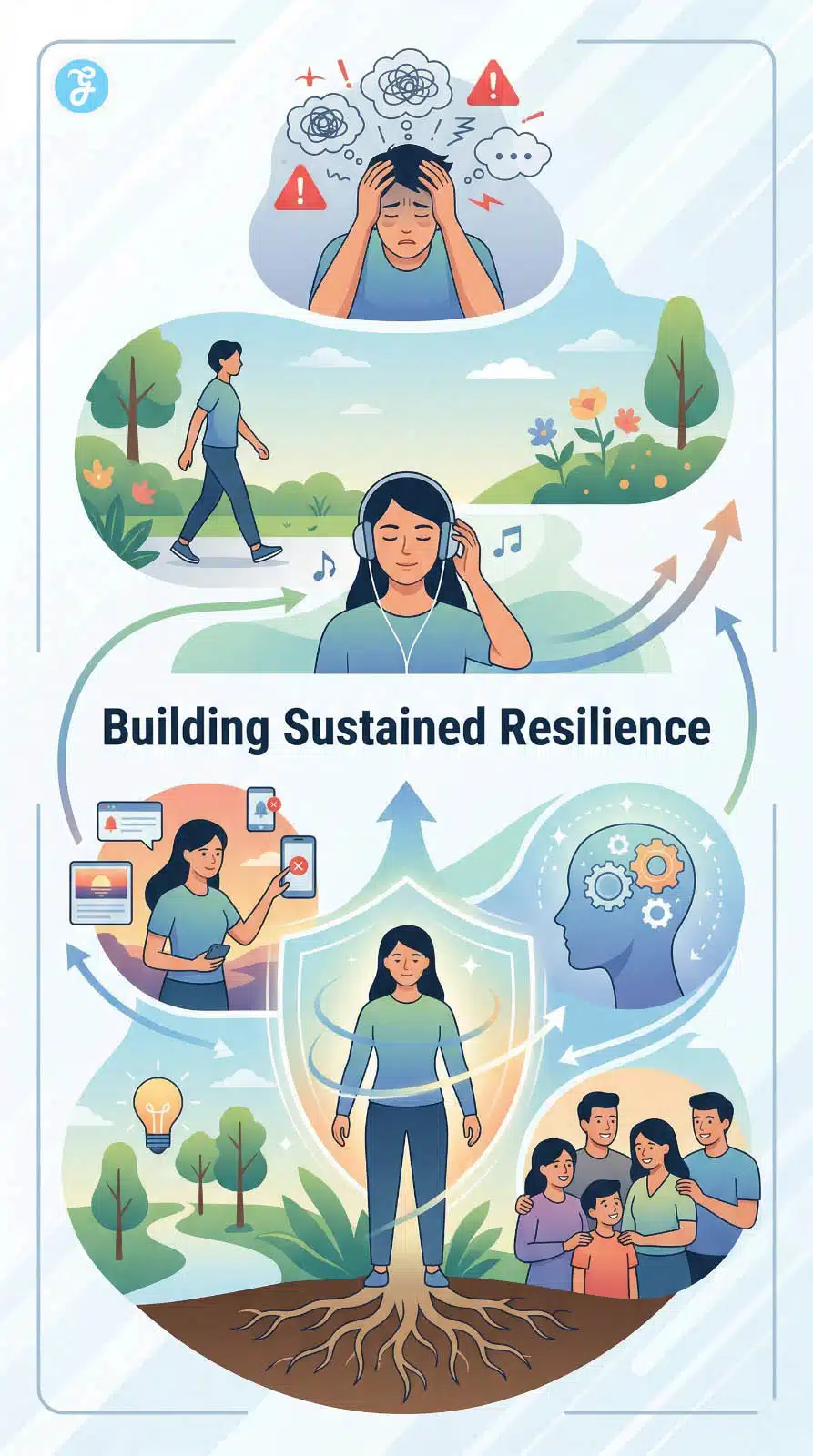
By consciously stepping into this middle ground, you prevent the residue of workplace stress from staining your private moments. This practice allows you to show up fully for the people who matter most. It is not a waste of time. It is an investment in the quality of your relationships.
Taking Ownership with #BeTheChange
As we wrap up our look at Stress Awareness Month 2026, the message is clear. Stress management is a collective responsibility that starts with the individual. We must move away from the idea that being constantly busy is a badge of honor. Real success is measured by your ability to maintain your well-being in a high-pressure world.
Aligning with the #BeTheChange initiative means making small, daily choices that prioritize your nervous system. Whether it is a digital sunset or a grounding exercise, these micro-actions add up to a significant shift in your mental health. We are all part of this cultural change. By mastering these life skills, we create a ripple effect that encourages others to do the same. This April, choose to be the architect of your own calm. Start with one small habit today and watch how it transforms your tomorrow.
Frequently Asked Questions About Stress Awareness Month 2026
The conversation around mental well-being is moving faster than ever. As we navigate this April, new questions are emerging about how our bodies and minds adapt to a high-tech world. Here are some of the less common but vital queries currently surfacing in global search trends regarding Stress Awareness Month 2026.
What is the specific 2026 theme for Stress Awareness Month?
The official theme for 2026 is #BeTheChange. This campaign focuses on moving beyond simple awareness and toward personal and collective action. It encourages individuals to pick one small, sustainable habit to maintain throughout the thirty days of April. The goal is to prove that tiny, consistent changes to your routine can lead to a significant shift in your overall emotional resilience.
How does AI integration contribute to modern workplace stress?
In 2026, AI integration has created a new form of pressure known as “algorithmic anxiety.” Workers often feel they must match the speed and 24/7 availability of automated systems. This leads to a constant sense of urgency and the fear of becoming obsolete. Managing this stress requires setting clear boundaries between human creativity and machine productivity, ensuring that technology remains a tool rather than a taskmaster.
Can your diet actually change how you handle a polycrisis?
Yes, nutritional psychiatry is a major focus this year. High levels of ultra processed foods can inflame the nervous system, making you more reactive to stress triggers. A diet rich in magnesium and omega-3 fatty acids supports the vagus nerve and helps maintain a higher Heart Rate Variability. When your body is fueled correctly, it has a much higher threshold for handling the complex, overlapping challenges of a polycrisis environment.
What is “notification fatigue” and how do I fix it?
Notification fatigue occurs when the brain is bombarded by so many digital alerts that it stays in a permanent state of high alert. This drains your cognitive energy and makes it difficult to focus on deep work. The most effective fix is a “notification audit.” Turn off all non-human alerts and schedule specific times to check your devices. This restores your sense of agency and prevents your phone from dictating your heart rate throughout the day.
Why is the “Third Space” becoming a standard wellness recommendation?
As remote and hybrid work remain common, the physical lines between the office and the home have blurred. The Third Space provides a mental bridge that allows you to decompress. Without this ritual, the stress of a difficult project can easily bleed into your evening, affecting your sleep and your personal relationships. Creating this gap is a simple but powerful way to protect your long-term mental health and prevent total burnout.