
Have you ever tried moving your business abroad, only to hit a massive wall of paperwork? It is a frustrating feeling. You have a great idea and solid funding. Yet, figuring out where to move your startup feels impossible. Visa rules change constantly across different borders. Many founders wonder if the effort is even worth it. Here is the good news. Europe made this process much easier for US expats and global founders. Many countries now offer special programs designed just for you.
If you are searching for information about Startup Visas in Europe, then you are in the right place. These programs cut through the red tape. They give you legal status and access to massive markets. Your startup can actually take root in Europe without years of waiting.
I am going to walk you through the exact steps I use to evaluate these programs. We will look at real pathways to residency and success.
What is a Startup Visa?
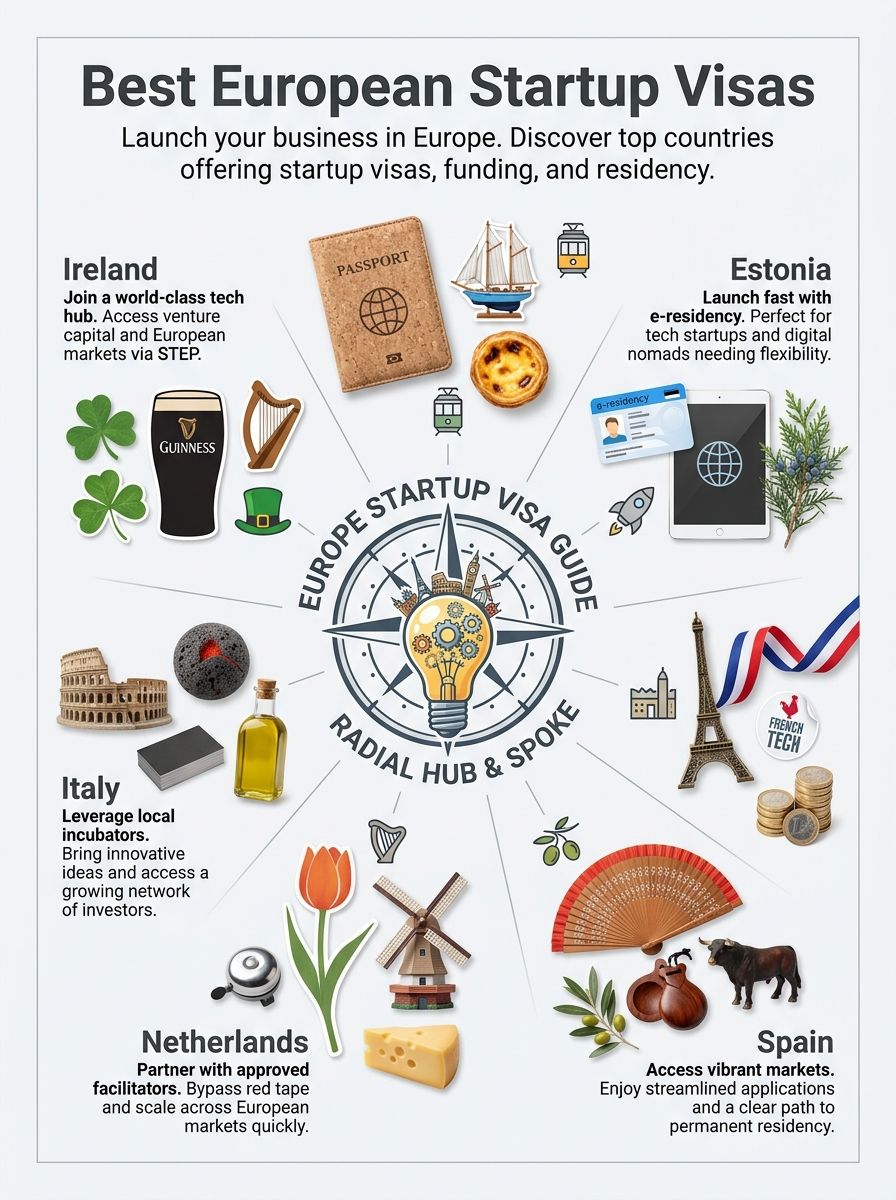
Now that you understand why these programs matter, we need to define what they actually are. A startup visa is a special immigration pathway created by governments. They offer these to founders who want to launch new businesses in their countries.
These programs give you a legal way to relocate and establish your company. The visa acts as your ticket into a country’s innovation ecosystem. It lets you access funding and hire local talent.
Different countries structure their programs in very different ways. They all share a common goal of attracting talented people who drive economic growth. Some programs require you to secure funding from approved venture capital firms. Others ask you to prove your business idea has real potential for job creation.
“European startup visas typically grant an initial stay of one to two years, with a clear path to renewal if you meet your business milestones.”
These governments essentially want your innovation on their soil. They remove red tape and sometimes offer tax breaks to sweeten the deal. This makes relocation across Europe incredibly attractive for serious founders.
Benefits of Startup Visas in Europe
Startup visas open doors to thriving markets across the entire continent. Your business can grow faster here than it might back home. You gain access to world-class talent and investor networks. These resources can transform your startup into a major player.
Access to European markets
Europe’s 450 million consumers represent one of the world’s largest markets. A startup visa grants you direct access to this massive audience. The European Union’s single market is a massive advantage for US founders.
Your product can reach customers in Portugal, France, and Spain under one regulatory umbrella. You skip the hassle of setting up separate legal entities in each nation. Recent 2026 economic projections from BusinessEurope show the EU economy expanding by 1.4 percent. This growth means your target audience has reliable purchasing power.
Investors notice when you have a European market presence. It signals serious commitment and real traction to venture capital firms. Customers in Germany and Italy become your immediate target audience. This geographic advantage means your business can scale faster and reach profitability sooner.
Opportunities for innovation and collaboration
Startups thrive when they connect with other brilliant minds. Europe’s startup ecosystems buzz with incredible energy. Joining one puts you right in the middle of the action. You get to work alongside tech experts who share your drive.
- Incubators: Spaces like Station F in Paris provide instant networking.
- Accelerators: Programs like Wayra in Spain offer direct corporate partnerships.
- Government Grants: Many hubs provide non-equity funding for research.
Collaboration happens naturally in these hubs. Your business idea grows faster when smart people challenge it. Funding flows more freely when you plant your startup in the right soil. Angel investors and government grants concentrate in these major hubs.
Your pitch reaches the right ears much faster. You build partnerships that open doors to new customers. Being part of this ecosystem means your business gains immediate credibility.
Pathway to residency and citizenship
Beyond building networks, visa holders gain a direct path to permanent residency. Most European countries tie their entrepreneur visas to long-term permits. Your business success directly translates into a secure legal status.
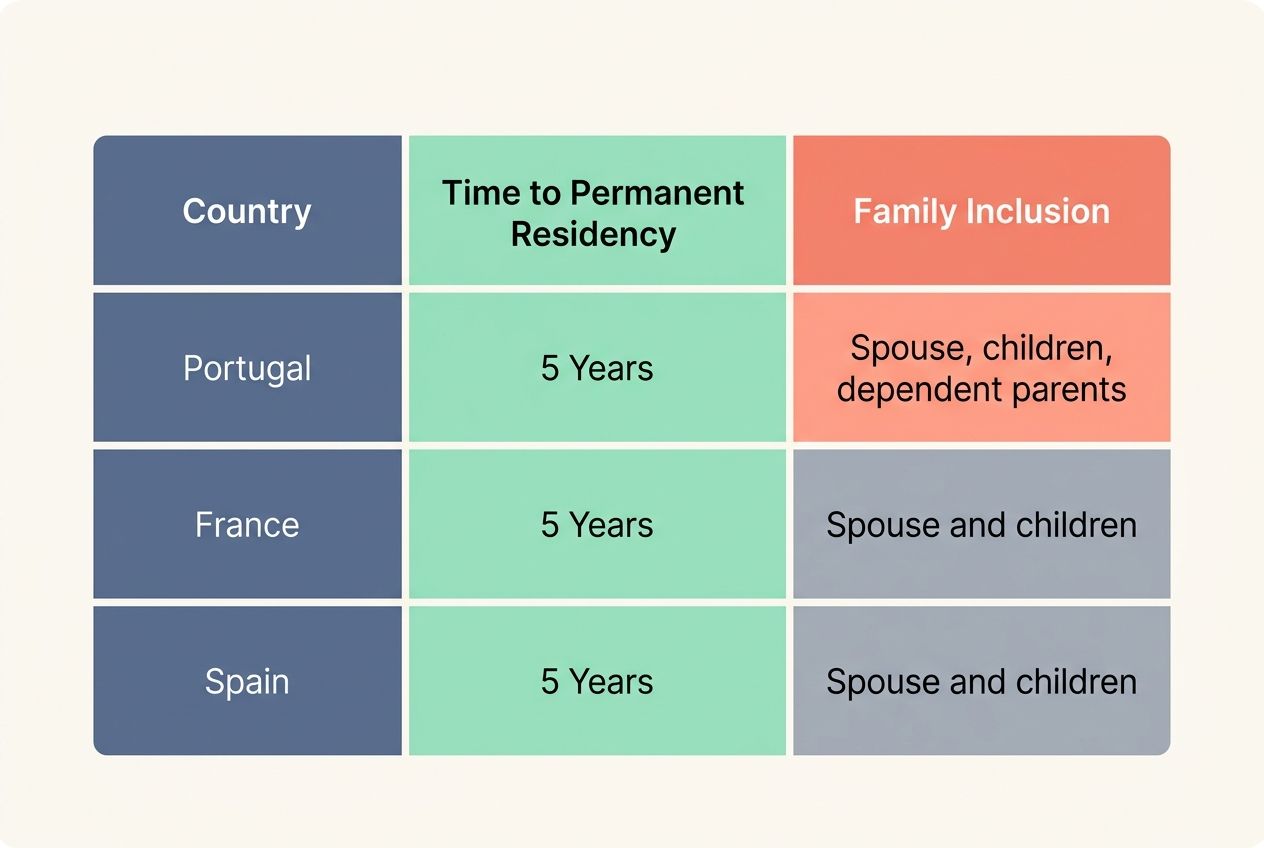
| Country | Time to Permanent Residency | Family Inclusion |
|---|---|---|
| Portugal | 5 Years | Spouse, children, dependent parents |
| France | 5 Years | Spouse and children |
| Spain | 5 Years | Spouse and children |
Founders can usually move from temporary status to permanent residency within five years. You build your company while establishing roots in Europe. This matters because it removes the constant pressure of visa renewals. Your family can settle into schools, and you can purchase property.
Many programs require you to maintain your business to keep your status. These are completely achievable goals for serious entrepreneurs. Spain and Italy actively reward founders who hit their milestones. They essentially promise you a real home if you prove your business works.
Key Requirements for Startup Visas
To qualify, you need to show investors that your business idea actually works. You must prove you have the money to back it up. You also need a clear plan to create local jobs.
Innovative and scalable business idea
Your business idea must solve real problems that people face daily. Programs across Europe want founders who think big and act bigger. They look for companies that can grow fast and reach new markets.
Your innovation does not need to reinvent the wheel completely. It just needs to show clear, verifiable value. Immigration officials want to see how your product fills a gap. The best ideas combine smart thinking with highly practical execution.
- Revenue Targets: Programs like Ireland’s STEP look for potential to hit €1 million in sales.
- Job Growth: You must show how you will hire local workers.
- International Reach: Your product must appeal beyond the local city.
Scalability matters more than almost anything else in the application process. A small local coffee shop will not impress visa committees. A tech platform that serves thousands of users absolutely will.
Your business plan must show how you will grow from day one. Make your case simple, direct, and backed by market research.
Financial resources and funding
Most programs across Europe require you to show real money in the bank. You need to check what each specific nation demands before applying. France, Portugal, and Spain each set very different minimum amounts.
For example, Italy requires a €250,000 (about $275,000 USD) investment for an innovative startup. Ireland requires €50,000 (about $55,000 USD) for a single founder. Portugal does not require a fixed business investment, but you must show personal living funds. In 2026, Portugal asks you to hold at least €10,440 (roughly $11,500 USD) to prove you can support yourself.
Showing solid funding tells officials that you will not drain public resources. Funding can come from business grants, investors, or personal savings. Many programs partner with local incubators to help match founders with capital. Lenders want to see that your business shows genuine potential for economic growth.
Business plan and job creation potential
Your business plan acts as your primary roadmap. Countries like Estonia, the Netherlands, and Italy take this document very seriously. Evaluators want to see exactly how your company will create jobs. A strong plan demonstrates that your ideas make financial sense.
You need exact numbers, timelines, and clear milestones. Job creation potential often separates the winners from the rest. Immigration officials care deeply about employment for local workers. Your application should spell out hiring plans for the first three years.
“Ireland’s STEP visa explicitly requires your business plan to show the capacity to create at least 10 jobs in Ireland.”
Show that your tech startup will bring real opportunities to the region. Funding often flows toward entrepreneurs who demonstrate commitment to building teams. Paint a realistic picture of growth that benefits the entire community.
Startup Visas In Europe: Which Countries Offer The Best Terms?
Europe offers several standout countries that roll out the red carpet for entrepreneurs. Each nation brings totally different strengths to the table. Some offer tech-focused ecosystems, while others provide straightforward application paths.

Portugal: Startup Visa Program
Portugal stands out as a massive haven for global entrepreneurs. The government welcomes founders with innovative ideas and solid backing. You need a business plan that shows real growth potential.
Portugal actively supports tech startups through various funding opportunities. The application process is surprisingly straightforward for international founders. Residency permits come with the visa, giving you a solid foundation. The tech scene in Lisbon and Porto has exploded recently.
- Cost of Living: It stays very reasonable compared to London or Paris.
- Living Funds: You only need to prove €10,440 in savings for yourself.
- Incubator Requirement: You must get an acceptance letter from a certified Portuguese incubator.
Your startup must show scalability and economic growth potential. Demonstrating how your business will hire local workers strengthens your application. The visa gives you legal status to operate your business and expand.
The residency permits also open doors to travel across member states. This combination of financial support and flexibility makes Portugal a very smart choice.
Estonia: Startup Visa and Digital Nomad Visa
Estonia stands out as a true tech powerhouse in Europe. It offers two separate pathways that attract founders and remote workers. The startup visa targets entrepreneurs with solid business ideas. The digital nomad visa welcomes remote employees earning a steady income.
Both programs operate through Estonia’s famous e-Residency framework. This lets you handle business matters online without a physical presence. Estonia processes applications fast, often within a few weeks. The tech ecosystem thrives with strong access to venture capital networks.
“According to Startup Estonia, their strict committee approves about 32% of startup visa applications, making it highly competitive but incredibly validating.”
The digital nomad visa asks for proof of monthly income. Both pathways grant residency permits that open doors to the broader market. The nation’s unique corporate tax rate makes it financially brilliant.
You only pay corporate tax on distributed profits, not reinvested capital. Entrepreneurs gain fast access to amazing talent acquisition networks.
France: French Tech Visa
France takes a very bold approach by focusing on established tech founders. The French Tech Visa is designed specifically for founders and investors. This program grants you a multi-year residency permit immediately.
It positions your startup within one of Europe’s strongest innovation hubs. The French government backs this program heavily to drive economic growth. The program operates with very straightforward terms for qualified applicants. You need a solid business plan and demonstrated experience in the tech sector.
| French Tech Visa Path | Key Requirement |
|---|---|
| Founder Route | Acceptance into a partner incubator (like Station F) |
| Investor Route | Capital investment of at least €300,000 |
| Employee Route | Job offer from an eligible French tech company |
France provides massive support through incubators and accelerators. The visa pathway leads to permits that transition into permanent status. Your startup gains access to incredible French business grants.
This strengthens your financial foundation while you build your presence. It makes France an amazing choice for securing serious capital.
Spain: Entrepreneur Visa
Spain steps up with a very compelling alternative to France. The Entrepreneur Visa opens doors for founders wanting a vibrant hub. The program welcomes people with solid business plans and funding.
Spain values innovation, so they actively recruit founders globally. This program stands out because of its fast processing times. Approvals often take just 3 to 6 months for qualified applicants. Spain expects a minimum investment of around €50,000 for your venture.
- Tax Advantage: Spain offers a low 15% corporate tax rate for startups during their first four years.
- Family Perks: The visa allows you to bring your spouse and children.
- Fast Access: You get immediate Schengen area access for travel.
The government streamlined its application procedures significantly. You gain residency status while building your company in Madrid or Barcelona. The pathway leads toward permanent residency and citizenship. This makes Spain an excellent choice for long-term relocation.
Netherlands: Startup Visa with Facilitator Support
The Netherlands stands out as a total powerhouse for these programs. They offer entrepreneurs a smooth path through mandatory facilitator support. Dutch authorities partner with approved facilitators who guide you.
These experts act as your business champions throughout the process. They help you understand local requirements and connect with hubs in Amsterdam. You need proof of funding and backing from a recognized facilitator. This unique system guarantees a very high quality of applicants.
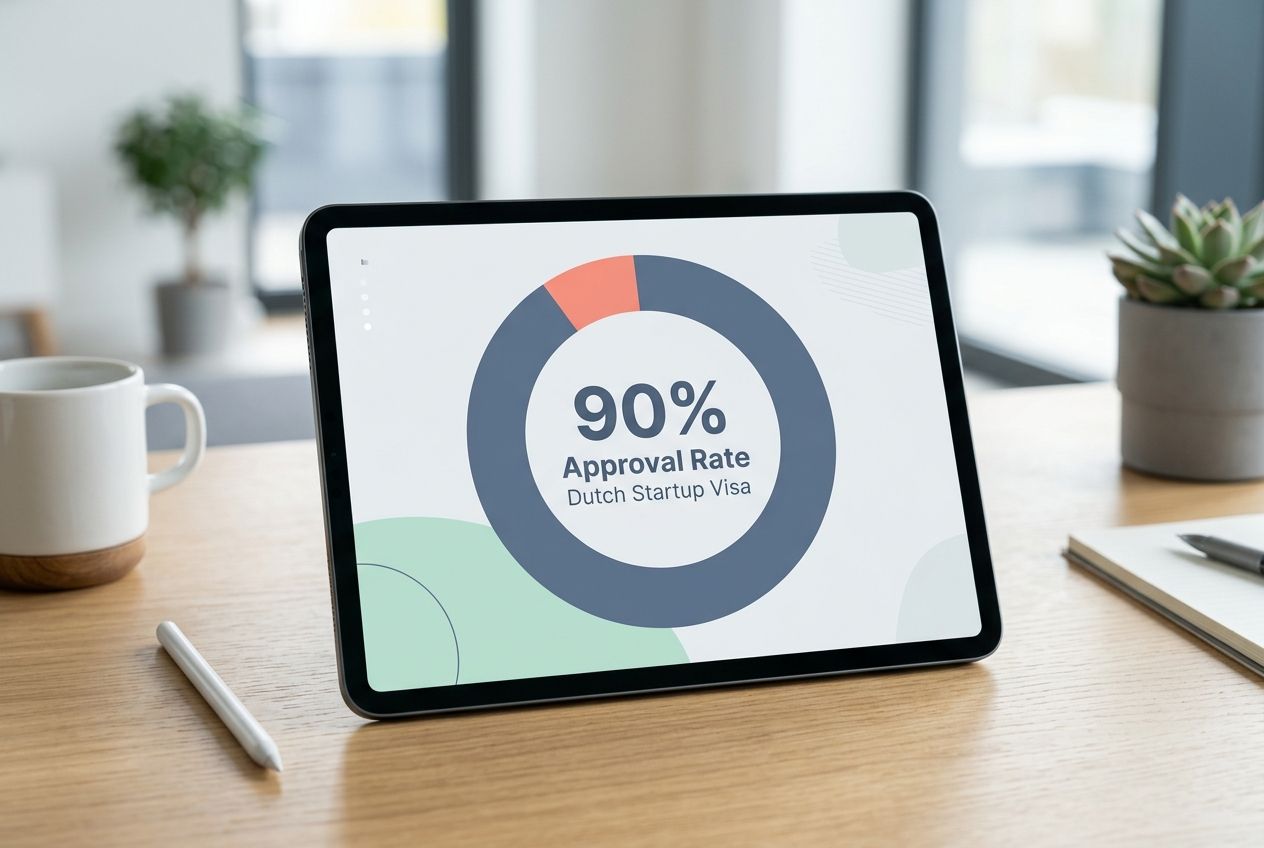
“Because of the strict facilitator vetting process, the Dutch Startup Visa maintains an impressive approval rate of around 90 percent.”
The country welcomes founders from all corners of the globe. The Netherlands is deeply committed to job creation and economic growth. Your facilitator helps you tap into funding opportunities immediately.
The Dutch startup scene thrives on a no-nonsense approach to getting things done. Founders discover that the Netherlands opens doors to a world-class environment.
Italy: Italian Startup Visa
Italy rolled out its program to attract ambitious entrepreneurs. This pathway welcomes founders with innovative ideas and clear plans. Italy’s ecosystem has grown strong, making it a highly attractive hub.
The country offers residency permits to qualifying business owners. You must demonstrate how your venture will contribute to the region. Italy requires a minimum investment of €250,000 for innovative startups. Your business must show true scalability and genuine market potential.
- R&D Focus: Italy loves startups where at least 15% of costs go toward research and development.
- Incubator Support: You can apply directly or through a certified incubator like PoliHub in Milan.
- Income Proof: You must prove a minimum personal income of about €8,500 from the previous year.
The program opens doors to fantastic funding opportunities. Many founders choose Italy because the cost of living stays reasonable. You gain access to talent and can tap into the broader EU ecosystem.
Ireland: Start-up Entrepreneur Programme (STEP)
Ireland’s STEP opens incredible doors for founders entering the EU. This program targets people with solid business ideas and real funding. Applicants need to show they can bring true innovation to the market.
The Irish government works with facilitators who review your business plan. You must secure €50,000 in funding for a single founder. If you have a co-founder, you need an additional €30,000. If approved, you will receive a residency permit to grow your company in Dublin.
“Ireland’s low corporate tax rate and English-speaking environment make it a top choice for US founders.”
The program gives you access to venture capital and business grants. You get a residency permit that opens pathways to citizenship. The application process moves faster than many other European programs.
Your family members can join you easily on dependent visas. This makes Ireland a highly practical base of operations.
Tips for a Successful Application
Winning your application comes down to three very core moves. You need a business plan that makes investors pay attention. You must team up with local experts who know the game. You also need to study each country’s specific rules closely.
Creating a strong business plan
Your business plan is your roadmap to success. It shows visa officers that you have thought through your idea carefully. A strong plan includes market research and realistic financial projections. You need to explain who your customers are and why they need you.
Show that you understand your competition completely. Include specific numbers so people can see your vision is real. A common mistake US founders make is using generic global market data. You must show localized traction and an understanding of the European market.
Programs want to see that you have a solid funding strategy. Detail exactly how much money you need to launch and grow. Break down your costs for hiring staff and buying equipment. Avoid fluff and stick to the hard facts that actually matter.
Partnering with local incubators or facilitators
Local incubators act as your secret weapon in this process. These organizations know the absolute ins and outs of immigration requirements. They help you polish your business plan and connect you with mentors.
Many countries actively encourage applicants to work with approved facilitators. Think of them as your guides through a complicated maze. Partnering with groups like HighTechXL in the Netherlands gives you real credibility. Incubators have already built relationships with government officials.
Your proposal gets serious attention when a known entity backs it. Most incubators provide office space and access to their alumni network. You are not just getting visa support; you are joining a community. This transforms your application into a compelling story about growth.
Understanding the specific requirements of each country
Your incubator partners can point you toward the right path. However, you must remember that each country plays by different rules. Portugal wants your startup to show real job creation potential.
- Review Financials: Do not assume a $50,000 investment works everywhere; Italy requires much more.
- Check Timelines: Factor in that some countries take 6 months to process applications.
- Language Rules: Ensure your documents are translated by certified professionals if required.
Spain focuses on entrepreneurs with strong financial backing. Each nation sets its own funding thresholds and residency timelines. Skipping this research step is a terrible idea.
Dig into each country’s specific program requirements before you submit anything. Read the official guidelines and talk to founders who have already been approved.
Current Trends in Startup Visas Across Europe
Europe’s programs are shifting fast to accommodate modern work styles. Countries simplify their application processes almost every single year. This makes it easier for ambitious leaders to pack up and launch.
Adoption of Hybrid Visas for Digital Nomads
Countries now blend traditional entrepreneur visas with digital nomad provisions. This creates hybrid programs that appeal to remote workers and founders alike. Spain and Portugal lead this charge with flexible new rules.
They recognize that top talent works from absolutely anywhere these days. These hybrid visas cut through red tape brilliantly. They let skilled workers stay longer while building their ventures. Tech visas are becoming infinitely more flexible across the continent.
“Spain’s Digital Nomad Visa allows qualifying remote workers to access the ‘Beckham Law’, offering a flat 24% tax rate instead of standard progressive taxes.”
A founder can now secure residency while maintaining remote US clients. Ireland and the Netherlands have also streamlined their programs. Job creation requirements have softened for digital nomads.
Countries value the tax revenue that nomads bring immediately. This evolution makes relocation far more practical for modern entrepreneurs.
Simplification of Application Procedures
Hybrid visas opened doors, and now standard applications are simpler too. Countries across Europe actively cut red tape to attract more entrepreneurs. Governments realized that complex paperwork scared away talented founders.
Portugal and France now offer faster processing and online systems. Some nations created dedicated facilitators who guide applicants entirely. This shift means you spend less time in bureaucratic limbo. The trend continues to gain serious momentum across the continent.
Spain now processes many entrepreneur visas in just 20 to 30 days. Many countries publish exact timelines so you know what to expect. Residency permits arrive faster, and job creation gets evaluated fairly. This practical approach makes Europe an incredibly attractive destination.
Wrapping Up
Europe’s startup visa programs open real doors for entrepreneurs ready to build. Portugal, Estonia, France, Spain, the Netherlands, Italy, and Ireland offer amazing paths. Strong business plans and local partnerships make your application stand out. You now have the roadmap for Startup Visas in Europe: Which Countries Offer the Best Terms?
The next step lands squarely in your court. Start researching the country that matches your vision and timeline. Your startup journey in Europe starts with one simple application. The entrepreneurial spirit thrives here, and your breakthrough could happen tomorrow. Take that bold move forward today.
FAQs on Startup Visas In Europe
1. Which European countries offer the best startup visas for new business founders?
Portugal, Spain, and France are currently the top choices for US founders looking to launch abroad. Spain’s updated Startup Law is especially popular right now because it offers a flat 24 percent tax rate for your first six years. France is also a huge draw with its dedicated French Tech Visa program.
2. What are the main requirements to get a startup visa in Europe?
You generally need a government-approved business plan and enough savings to support yourself, like the 2026 Spanish requirement of proving you have about $3,000 per month. Many countries also require you to partner with an officially recognized local business incubator to prove your idea is truly innovative.
3. How long can I stay in Europe on a startup visa?
Durations vary by country, but the French Tech Visa offers an impressive four-year stay right from the start.
4. Can my family join me if I move to Europe on a startup visa?
Yes, most programs like the French Tech Visa and Spain’s startup pathway let you bring your spouse and dependent children along. Your spouse will even get their own residence permit with full rights to work locally, which makes the transition much easier for your whole family.