Netflix has officially released the much-awaited third and final season of Squid Game, the international hit series that first captivated viewers in 2021. With just six gripping episodes, this concluding chapter dives deep into themes of resistance, morality, and survival, closing the arc of Seong Gi-hun while introducing a new generation of players in the twisted, deadly competition. Since its release, it has sparked global debate and trended across social media, with fans reacting strongly to its powerful ending.
The Plot Resumes: Gi-hun Returns to Take on the System
Season 3 picks up immediately after the events of Season 2. Seong Gi-hun, the reluctant hero played by Lee Jung-jae, makes a bold decision—not to escape the game, but to fight it from within. Haunted by the trauma of his past experiences and the revelations about the game’s organizers, Gi-hun returns with a new purpose: dismantling the brutal system that exploits the desperate for entertainment.
Instead of trying to survive or win the prize money, Gi-hun seeks justice. He strategically reinserts himself into the deadly competition as a participant, planning to uncover its inner workings and expose its secrets. But what awaits him is darker and more complex than ever before.
A Deadlier Game with Higher Stakes
This season raises the stakes significantly. The games are more brutal, the emotional toll is deeper, and the line between humanity and cruelty becomes increasingly blurred. Viewers are introduced to a new batch of desperate contestants, each carrying their own painful backstories, ambitions, and secrets. The twisted game design continues to prey on emotional vulnerabilities, personal histories, and group dynamics.
The Front Man, portrayed once again by Lee Byung-hun, returns as the cold and calculating overseer of the competition. His control over the system seems absolute, but cracks begin to appear in his authority as Gi-hun challenges him from the inside. Tension between these two characters becomes a driving force of the narrative.
Among the new characters introduced are Jun-hee, played by Jo Yu-ri, Myung-gi, portrayed by Im Si-wan, and Dae-ho, played by Kang Ha-neul. Each character brings new emotional layers to the series, highlighting the broader societal issues the show critiques—inequality, debt, systemic injustice, and despair.
Innovative and Ruthless New Games
In Season 3, the game designers have introduced more intricate and psychologically tormenting challenges. Traditional childhood games are transformed into high-stakes death traps, pushing players to the edge of sanity. Some notable new games include:
| Game Name | Description |
|---|---|
| Hide-and-Seek Terror | A high-tech twist on the classic children’s game, played in pitch darkness with deadly drones |
| Jump Rope Bridge | A high-wire challenge where one misstep leads to a fatal fall |
| Sky Squid Game | A final symbolic battle played on towering platforms surrounded by collapsing glass tiles |
These games are not just about physical skill—they test alliances, trust, betrayal, and mental endurance. Every round results in casualties that further intensify the emotional burden of survival.
The Twist That Shocked the World: A Baby Wins the Game
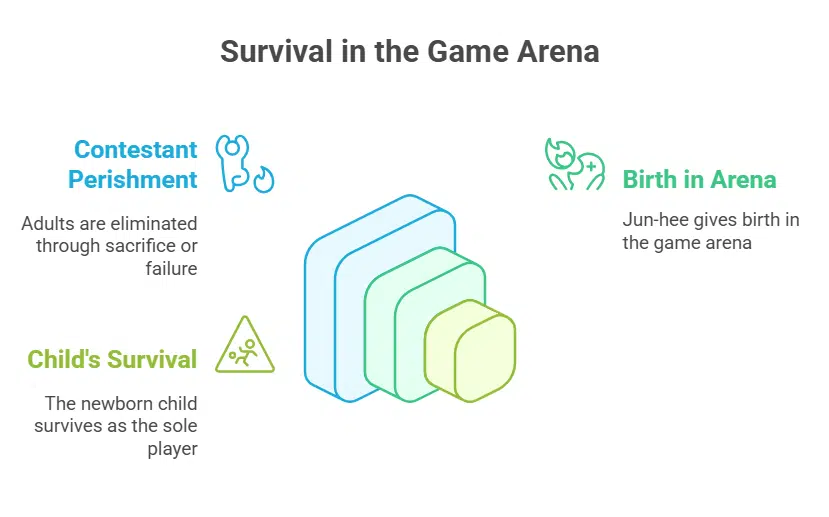
The final episode delivers the most surprising moment in the entire franchise. After surviving until the final stage, Jun-hee gives birth to a child within the game arena. As the last remaining adult contestants perish, either through sacrifice or failure, the newborn child emerges as the sole surviving “player.”
This unprecedented outcome is not just a twist for shock value. It carries symbolic weight. The infant, innocent and untouched by the horrors of the world, becomes a beacon of hope and renewal. Creator Hwang Dong-hyuk explained in a Netflix Tudum feature that this choice represents a metaphor for innocence prevailing in a corrupt world, and a possible rebirth of humanity beyond the cycle of violence.
This decision leaves viewers questioning the very nature of the games, the morality of those watching, and the future of a society built on entertainment through suffering.
Gi-hun’s Ultimate Sacrifice
Throughout the season, Seong Gi-hun evolves from a man seeking answers to someone willing to sacrifice himself for others. His journey ends with a powerful act of redemption. By shielding Jun-hee’s baby from harm, Gi-hun not only ends the game but also reclaims his moral humanity, breaking free from the trauma and guilt that haunted him since Season 1.
His actions directly lead to the destruction of the game’s central facility. Explosions erupt as systems collapse from the inside—signaling not just the end of the competition, but possibly the end of the entire organization behind it.
A Glimpse into the Future: Hints of a Spin-off
In the closing scenes, a mysterious woman approaches a group of young people in Los Angeles with a signature invitation—the same red-blue card viewers associate with the games. That woman is portrayed by Cate Blanchett, in a surprise cameo appearance that caught fans off guard.
This brief appearance implies that the deadly competition might expand to a global stage, and possibly continue in a new form. Netflix has not confirmed any official spin-off, but there are strong industry rumors that a U.S.-based continuation or prequel might be in development. Reports also link the cameo with a potential collaboration involving acclaimed director David Fincher, although no official announcements have been made.
Critics and Audiences React: The Most Philosophical Season Yet
Season 3 has received widespread acclaim from critics. It currently holds a 90% rating on Rotten Tomatoes, with praise focusing on its bold storytelling, emotional depth, and timely social commentary.
Many critics have highlighted the philosophical undertones of the season. The themes of sacrifice, redemption, generational trauma, and moral resistance are more prominent than ever before. The show’s commentary on class disparity, human greed, and the ethics of entertainment has never been more urgent or thought-provoking.
Fans across the world are equally emotional. The ending has sparked massive conversations online, with the hashtag #SquidGame3 trending across platforms like Twitter, Reddit, and TikTok. Reactions range from devastated to hopeful, with many fans praising the show for concluding the story in a meaningful way while leaving room for future exploration.
A Brutal Yet Hopeful Goodbye
Squid Game Season 3 successfully brings closure to the story that began with Gi-hun’s participation in a cruel competition driven by desperation and money. It ends not with a traditional hero’s victory, but with a newborn child symbolizing hope in a decaying world. This final chapter balances brutality with compassion, and violence with the possibility of change.
While this may be the end for Seong Gi-hun’s story, the show’s final moments make it clear that Squid Game’s world is far from over. Whether through a spin-off, a global reboot, or new perspectives, the legacy of this groundbreaking Korean drama is likely to continue influencing television for years to come.