
If having a well-maintained yard clashes with your schedule or willpower, you’re not alone. It doesn’t seem like a big project at first, but yardwork can take over your life – especially if you have to answer to a homeowner’s association. The constant cycle of mowing, weed whacking, watering, and pruning feels endless, but if you put it off, the guilt sets in fast.
The good news is you don’t have to sacrifice all your time and energy just to maintain a nice looking yard. With a handful of simple strategies, you can significantly reduce the amount of time you spend on yardwork.
This article will explore some practical ways to create a manageable routine to regain your free time.
1. Get efficient equipment
First things first. Get equipment that will do the job efficiently. Whether it’s a chainsaw, a weed eater, or a lawn mower, don’t settle for tools that make the job slow or require redoing your work. For instance, battery-powered weed whackers are lightweight and convenient, but you can’t use thick string and they don’t have enough power to cut quickly. Gas weed eaters work better and you can even use blade attachments for blackberry and other thick foliage.
If you have large areas of grass, you can’t just get any mower. You need something powerful and fast. With a zero-turn mower equipped with a large deck, you can cover more ground faster and in fewer passes. Zero-turn machines are faster and more efficient than traditional riding mowers, and the time you’ll save makes them well worth the investment.
2. Redesign your landscaped areas
The foundation of low-maintenance yardwork begins with a strategic design. Rather than trying to fight against nature, redesign your yard space in a way that reduces the need to manage everything. For example, choose plants that don’t grow out of control quickly and use drought-resistant plants, like succulents, to cut down on watering and fertilizing.
If you must have plants that require regular watering, group them together based on hydration needs. This practice is called hydrozoning, and it makes watering easier since you can water zones based on specific needs without worrying about over or underwatering.
Once you have a low-maintenance landscape, you’ll benefit further from drip irrigation. By delivering water directly to plant roots, you minimize the runoff and evaporation that comes from using sprinklers or manual watering methods. You’ll not only reduce water usage by up to 50%, but you won’t have to drag out the hose or manage sprinklers.
3. Be proactive about weeds
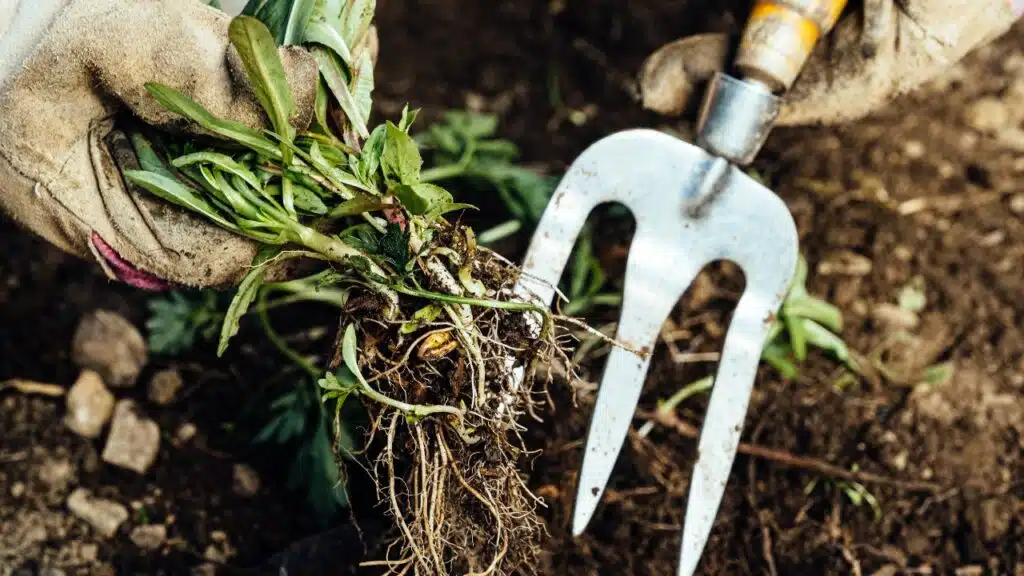
Weeding is arguably one of the most hated yardwork tasks, but it’s essential if you want your plants to get all the water and nutrients they need. One small patch of weeds left to grow can quickly turn into an uncontrollable problem. By focusing on prevention rather than constant removal, you can significantly reduce the amount of time you have to spend on this frustrating chore.
The obvious choice is weed killer, but if you don’t like the idea of using chemicals (or if you have pets), mulch will be your best friend. Adding between two and four inches of organic mulch, like wood chips or straw, will block sunlight from reaching weed seeds and will prevent them from germinating. Mulch also keeps soil moist and maintains soil temperature to protect plant roots. Best of all, it breaks down over time and adds nutrients to the soil. A little time spent mulching will save you countless hours throughout the year.
4. Mow when your grass is tall
Maintaining grass is time-consuming when you add in all the frequent watering, fertilizing, and pest control. However, you might be surprised to learn that it’s better to mow your lawn less frequently when the grass gets tall. When you wait until the grass reaches at least 3 inches, it will have time to become more drought-resistant and the roots will grow deeper.
Taller grass shades the soil, which reduces water evaporation and suppresses weed seed germination. By only mowing when your lawn actually needs it, you’ll spend less time mowing. Just remember to only remove up to one-third of the grass blade height each time to avoid stressing the turf. In the end, your lawn will need less watering and weeding, saving you precious time and energy.
Work smarter, not harder
If you’d rather be doing something else other than cutting grass and trimming trees, you need a strategy that simplifies your approach to yardwork.
By using efficient tools, implementing strategic landscaping, and being proactive about weeds, you can enjoy a beautiful, well-kept yard, no matter how busy life gets.