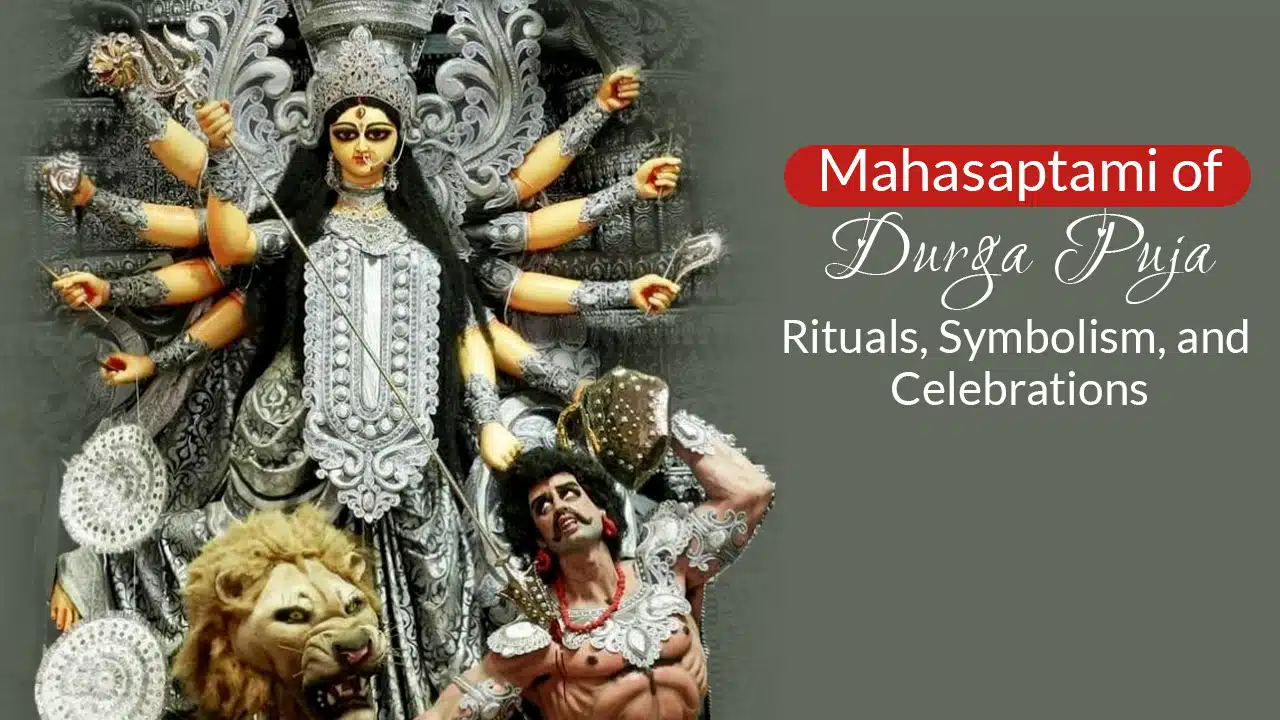
Durga Puja, the most celebrated Hindu festival in Bengal and across many parts of India, is much more than a religious ritual—it is a cultural identity, a spiritual awakening, and a community celebration. Spread over several days, each day of the festival carries its own symbolic and ritualistic importance.
The Mahasaptami of Durga Puja, known as Mahasaptami, marks the beginning of Goddess Durga’s battle against the demon king Mahishasura. It is a day of divine invocation, nature worship, and cultural vibrancy. Mahasaptami not only holds mythological importance but also showcases the union of spirituality with social celebrations.
Mythological Significance of Mahasaptami
According to Hindu scriptures, Durga was created by the combined energies of the gods to defeat the buffalo demon Mahishasura, who had become invincible through a boon. While Shashti marks her descent, it is on Saptami that she begins her battle against evil forces.
-
In many traditions, the Goddess is worshipped as Katyayani or Kalaratri on this day, representing fierce strength and the power to destroy negativity.
-
The day signifies courage, resilience, and the divine feminine force (Shakti) rising to protect the world.
-
Rituals and recitations from the Chandi Path highlight the beginning of her heroic journey toward victory, celebrated later on Dashami.
Key Rituals Performed on Mahasaptami of Durga Puja
The Mahasaptami of Durga Puja, is marked by sacred rituals that blend spirituality with symbolic tradition. On this day, devotees believe the Goddess begins her battle against evil, and each ceremony performed carries deep meaning.
From the dawn ritual of Nabapatrika Snan, which honors nature, to the solemn Pran Pratishtha, where the idol is infused with divine energy, Saptami unfolds as a day of devotion and divine awakening. The offerings, chants, and prayers performed throughout the day reflect not only reverence for the Goddess but also the community’s unity in faith.
Nabapatrika Snan – Bathing of the Nine Plants
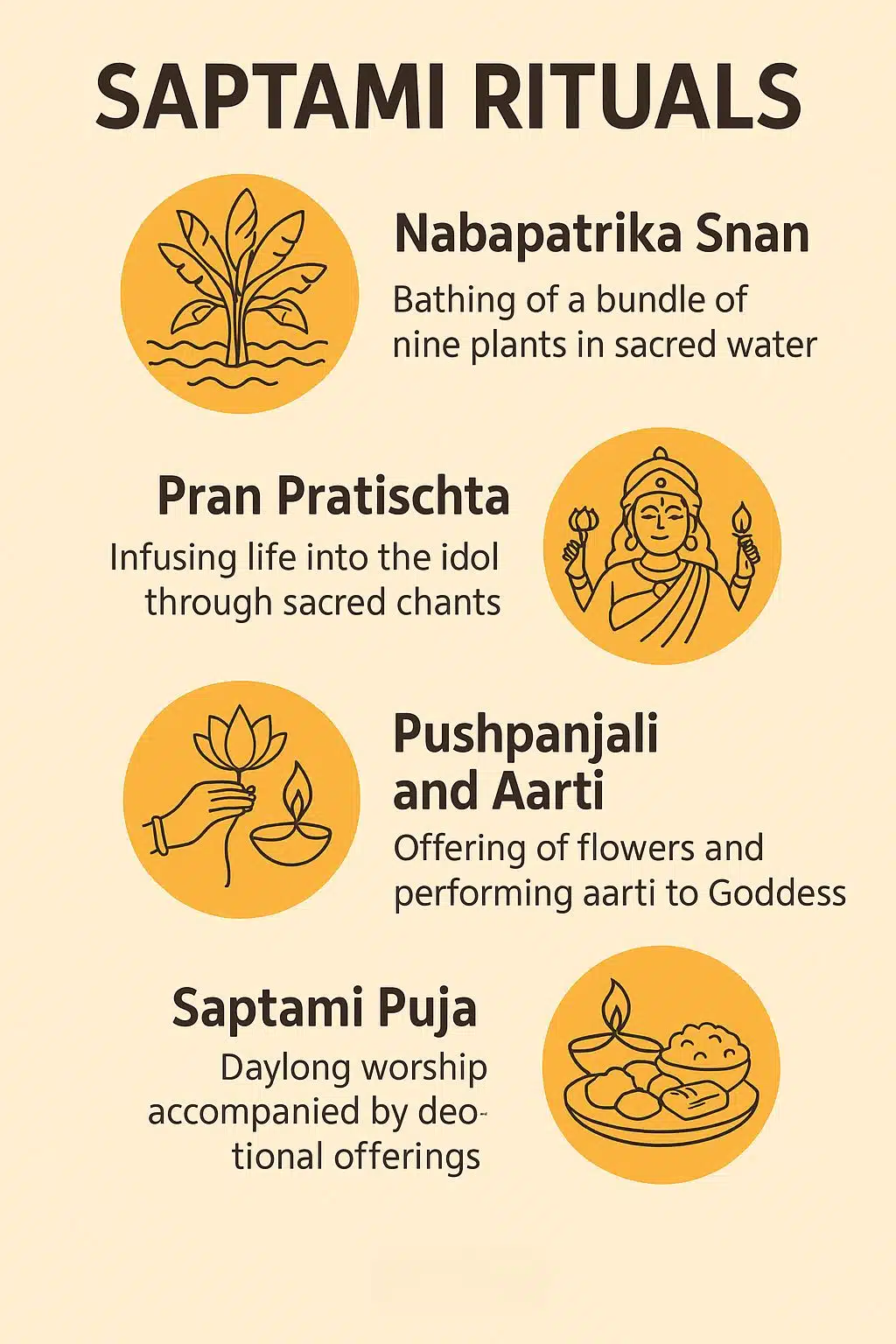
One of the most iconic rituals of Saptami is the Nabapatrika Snan, also known as Kola Bou Snan. At dawn, a bundle of nine sacred plants—banana, turmeric, rice, pomegranate, arum, jayanti, bilva, ashoka, and colocasia—is tied together with a white cloth. This bundle is taken to a river or pond and bathed in water.
-
Each plant represents one form of Durga, symbolizing her connection with nature.
-
Collectively, the Nabapatrika embodies the nine manifestations of Shakti.
-
After the ritual bath, the Nabapatrika is placed beside Lord Ganesha, and in many traditions, it is affectionately referred to as Ganesha’s wife, Kola Bou.
Pran Pratishtha—Infusing Life into the Idol
The priests perform Pran Pratishtha, a powerful ritual where sacred chants and offerings are made to infuse life into the idol of Durga. This act symbolizes the goddess taking her place among her devotees, blessing them with her divine presence.
Pushpanjali and Aarti
Devotees gather in large numbers to offer Pushpanjali (flowers) while chanting mantras from the Chandi. It is believed that sincere prayers on this day remove obstacles and grant courage. Aarti with dhunuchi (incense-filled clay pots) and rhythmic beats of the dhak (drums) fill the pandals with devotion and energy.
Daylong Saptami Puja
Throughout the day, rituals continue with offerings of fruits, sweets, and bhog. Community kitchens prepare khichuri, labra, chutney, and mishti (sweets) to be served as bhog prasadam to thousands of devotees.
Cultural and Social Celebrations of Mahasaptami
Beyond rituals, Mahasaptami also reflects the cultural essence of Durga Puja.
-
Pandals Overflow with Devotees: On Saptami, pandals officially become the heart of the festival. People begin their pandal-hopping journeys, visiting different neighborhoods to admire the artistry of idols and decorations.
-
Food and Feasting: While bhog is central, food stalls surrounding pandals serve an endless variety of street foods—from phuchka and rolls to sweets like roshogolla and sandesh.
-
Traditional Attire: Men wear kurta-pajamas, while women dress in elegant sarees, often in festive colors like red, yellow, or white with red borders.
-
Cultural Programs: Evenings are filled with performances of Rabindra Sangeet, dance dramas, recitations, and modern shows that bring together art, music, and entertainment.
Regional Observances of Saptami
West Bengal: In Kolkata and across Bengal, Nabapatrika rituals are the highlight of the morning, followed by daylong celebrations in community pandals. Crowds flock to famous pujas like Bagbazar, College Square, and Kumartuli Park.
Assam and Tripura: Rituals closely resemble those of Bengal, with traditional recitations and cultural nights marking the celebration.
Odisha and Bihar: Saptami puja includes temple-centric rituals with emphasis on Chandi Path, lighting of lamps, and distribution of bhog.
Bangladesh: As the largest Hindu festival in Bangladesh, Saptami is celebrated in grandeur, especially in Dhaka, Chittagong, and Sylhet, where thousands of devotees gather in temples and pandals.
Global Bengali Diaspora: From New York to London and Toronto to Singapore, Bengali communities abroad recreate the Saptami rituals with equal devotion. Live-streaming of rituals, virtual pujas, and community feasts make it a unifying global event.
Symbolism and Spiritual Meaning of Mahasaptami
The Mahasaptami of Durga Puja carries layers of symbolic significance:
-
Nature Worship: Through Nabapatrika, devotees acknowledge the Goddess’s presence in nature, reinforcing the bond between humans and the environment.
-
Beginning of the Battle: The day signifies the start of Durga’s fight against Mahishasura, reflecting the eternal struggle of good against evil.
-
Empowerment: The rituals remind devotees of the inner strength and resilience needed to face challenges in life.
-
Unity and Community: Saptami emphasizes collective celebration, where spirituality and festivity blend seamlessly.
Modern-Day Observance of Mahasaptami
While rooted in tradition, the Mahasaptami of Durga Puja has evolved with time:
-
Eco-Friendly Pujas: Many communities now adopt eco-friendly idols made of clay, natural dyes, and biodegradable decorations.
-
Technology and Social Media: Live streaming of rituals, Instagram-ready pandal photography, and WhatsApp invites for bhog distribution are now common.
-
Blending Tradition with Modernity: Traditional rituals are preserved, while cultural evenings often feature modern theatre, concerts, and even celebrity appearances.
Takeaways
The Mahasaptami of Durga Puja, is a sacred day that symbolizes the awakening of divine power, the beginning of the Goddess’s battle, and the devotion of her followers. With rituals like Nabapatrika Snan, Pran Pratishtha, Pushpanjali, and Aarti, Saptami blends spiritual depth with cultural richness.
From Kolkata to Dhaka, from Assam to New York, the spirit of Saptami unites devotees in faith and festivity. As the day concludes, the celebrations build momentum toward Ashtami and Navami, leading to the grand finale of Vijaya Dashami, when Durga’s victory over Mahishasura is celebrated as the triumph of good over evil.