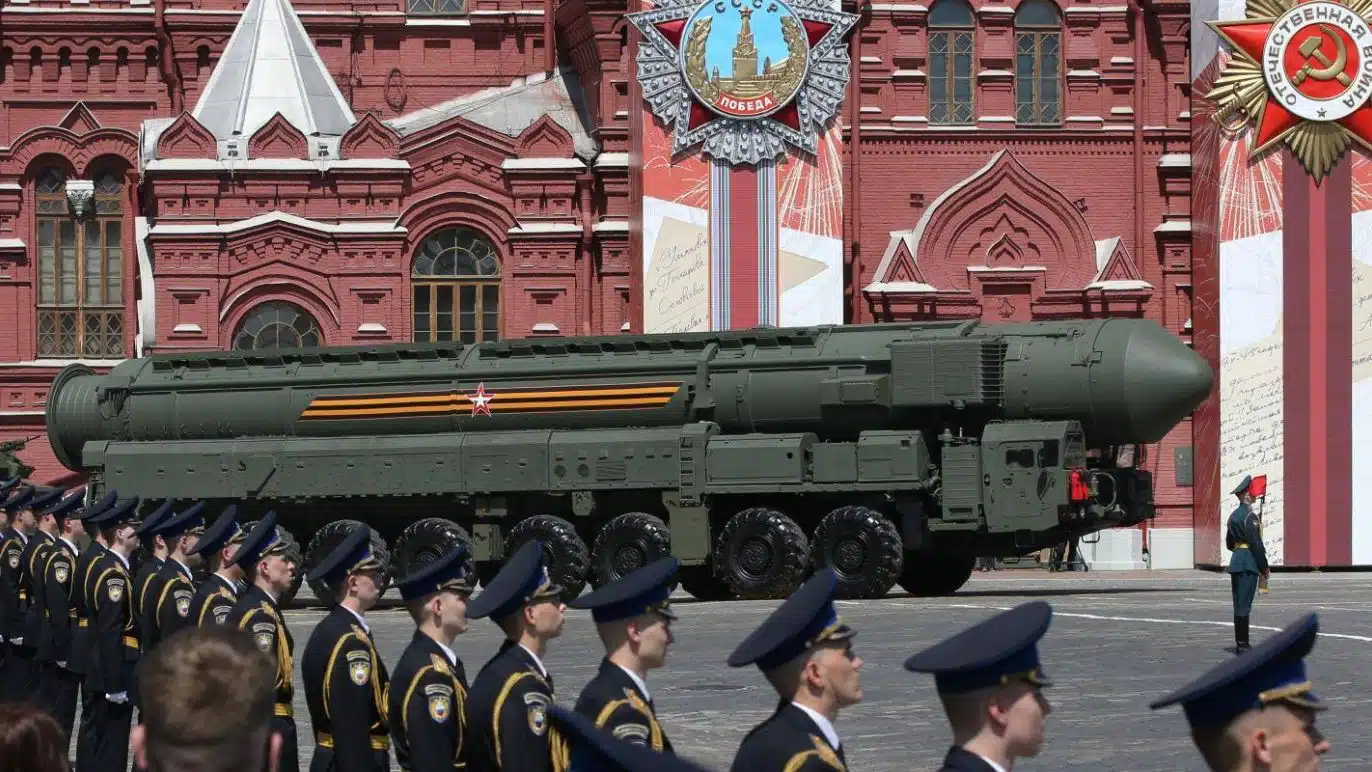
Russia’s Strategic Rocket Forces have rolled out upgraded RS-24 Yars intercontinental ballistic missile (ICBM) systems during recent exercises in Siberia, underscoring Moscow’s ongoing commitment to modernizing its nuclear arsenal amid heightened global tensions. The deployment, described by the Defense Ministry as part of routine training, involved mobile launchers maneuvering through challenging terrain, including nighttime operations, to simulate real-world combat patrols. This move comes as President Vladimir Putin continues to emphasize nuclear deterrence, with the Yars forming a cornerstone of Russia’s land-based strategic capabilities.
Deployment Details Emerge from Siberia Drills
On December 16, 2025, Russia’s Defense Ministry announced that Yars mobile ground-based rocket systems in Siberia had been dispatched to patrol routes as part of scheduled drills. Crews executed dozens of tasks, including technical maintenance, intense maneuvering up to 100 kilometers, position changes, and dispersal of missile divisions to evade detection. Logistics personnel and drivers practiced engineering setups at field positions, camouflaging techniques, and combat security measures, with Eleron drones providing aerial surveillance along routes.
These exercises highlight the Yars’ road-mobile design, which allows launchers to operate from remote, forested areas, enhancing survivability against preemptive strikes. The ministry stressed that such maneuvers improve interoperability among Strategic Missile Forces units, ensuring readiness for extended combat duty. While officials framed the activity as routine, its timing—amid stalled U.S.-Russia arms talks and ongoing Ukraine conflict—has drawn international scrutiny.
Evolution of the Yars: From Topol-M to Upgraded Variants
The RS-24 Yars, NATO-designated SS-27 Mod 2 or SS-29, entered service in 2009 as an evolution of the single-warhead Topol-M, introducing multiple independently targetable reentry vehicles (MIRVs) for greater flexibility. This solid-fuel, three-stage ICBM boasts a range of 11,000 to 12,000 kilometers, capable of reaching targets across North America from Siberian bases, with payloads of up to six to ten warheads each yielding around 300 kilotons.
Upgrades have produced variants like Yars-S and Yars-M, with improved guidance integrating inertial systems and GLONASS satellites for pinpoint accuracy. These enhancements include maneuverable reentry vehicles, active/passive decoys, and better penetration aids to counter U.S. missile defenses like Aegis and THAAD. By late 2019, Yars-S units were combat-ready in locations such as Barnaul and Yoshkar-Ola, with ongoing rearmament plans targeting full regimental integration by 2026.
Technical Specifications and Capabilities
| Feature | Specification | Strategic Advantage |
|---|---|---|
| Length | 23.2 meters | Compact for mobile transport |
| Diameter | 1.8 meters | Fits TEL (Transporter Erector Launcher) vehicles |
| Weight | 49 tons at launch | Solid-fuel for rapid deployment |
| Stages | Three solid-propellant | Quick launch (minutes from alert) |
| Range | 11,000-12,000 km | Covers U.S., Europe, Asia |
| Warheads | 3-10 MIRVs (300 kt each) | Overwhelms defenses |
| Guidance | Inertial + GLONASS | CEP <150 meters |
| Speed | Mach 25+ reentry | Hypersonic evasion |
The Yars’ MIRV technology allows a single missile to strike dispersed targets, multiplying destructive potential while complicating interception. Its truck-mounted mobility—via MZKT-7930 16×16 vehicles—enables off-road operations, dispersing units across vast Siberian expanses. Recent upgrades reportedly include hypersonic glide elements akin to Avangard, though unconfirmed for standard Yars.
Strategic Role in Russia’s Nuclear Triad
Yars systems anchor Russia’s ground-based leg of the nuclear triad, alongside silo-based options and complementing Sineva/SLBM submarine launches and air-delivered weapons. Over 200 launchers are deployed, forming the bulk of ICBM forces, with routine patrols ensuring constant alert status. Moscow views Yars as “invincible,” integral to doctrines allowing nuclear response to conventional threats endangering state survival.
In 2025 exercises, including October’s Plesetsk-to-Kura launch overseen by Putin, Yars demonstrated full command-and-control integration. These drills, involving Tu-95 bombers and submarines, verified readiness amid U.S. President Trump’s reelection and plutonium accord withdrawal. Analysts note Yars’ role in signaling resolve, as seen in February’s Novosibirsk patrols countering sabotage scenarios.
Global Reactions and Escalation Concerns
Western observers interpret Siberia’s deployment as nuclear saber-rattling, especially post-Ukraine incursions and NATO expansions. Ukraine’s GUR intelligence labeled similar 2025 ICBM plans “intimidation” tactics. U.S. outlets like Newsweek highlighted risks to peace talks, noting Russia’s arsenal edges America’s in deployed warheads.
NATO has bolstered European defenses, with F-35 integrations and hypersonic countermeasures, yet Yars’ decoys challenge efficacy. China and India monitor closely, as Yars ranges cover Asia-Pacific hotspots. Despite New START expiry looming in 2026, no successor treaty exists, fueling arms race fears.
Historical Context of Yars Deployments
Yars deployments trace to 2009, with Kaluga’s Kozelsk base hosting early units by 2023. 2022-2024 saw Tver region patrols near Ukraine, syncing with “Zapad” drills. 2025 intensified: February Siberia maneuvers, July ICBM showcases, October full triad tests.
Past exercises, like 2023’s 3,000-troop Yars ops across three regions, practiced anti-drone and concealment tactics. This progression reflects Putin’s pivot from conventional forces strained in Ukraine to nuclear primacy.
Comparisons with Peer Systems
| Missile | Operator | Range (km) | Warheads | Mobility | Status |
|---|---|---|---|---|---|
| RS-24 Yars | Russia | 12,000 | 6-10 MIRV | Mobile/Silo | Deployed, upgrading |
| LGM-30 Minuteman III | USA | 13,000 | 1-3 (post-NSTART) | Silo | Aging, to be replaced |
| DF-41 | China | 12,000-15,000 | 10 MIRV | Mobile | Expanding rapidly |
| Sarmat (RS-28) | Russia | 18,000 | 10-15 | Silo | Entering service |
Yars outpaces Minuteman in MIRV count and mobility, though Sarmat promises heavier payloads. China’s DF-41 mirrors Yars’ road-mobility, intensifying triad competitions.
Implications for Arms Control and Future Modernization
With over 1,500 strategic warheads, Russia’s Yars-heavy force complies with New START limits but eyes post-2026 expansion. Upcoming Osina ICBM may supplant Yars, integrating hypersonics fully. Siberia drills signal no détente under Trump 2.0, as Moscow prioritizes deterrence over reductions.
Experts urge renewed dialogues, warning MIRV proliferation risks “use it or lose it” escalations. Yet, Yars’ upgrades affirm Russia’s resolve: a robust triad deters aggression, from Ukraine to Taiwan straits.
Broader Geopolitical Ramifications
Siberia’s Yars rollout bolsters Moscow’s hand in multipolar rivalries, countering U.S. prompts and EU sanctions. It reassures allies like Belarus, joint in Zapad 2025 cruises. For global stability, sustained transparency—absent since 2020—remains key to averting miscalculations.
As 2025 closes, these deployments remind: nuclear shadows lengthen when diplomacy falters. Russia’s Strategic Forces, Yars at forefront, stand vigilant.