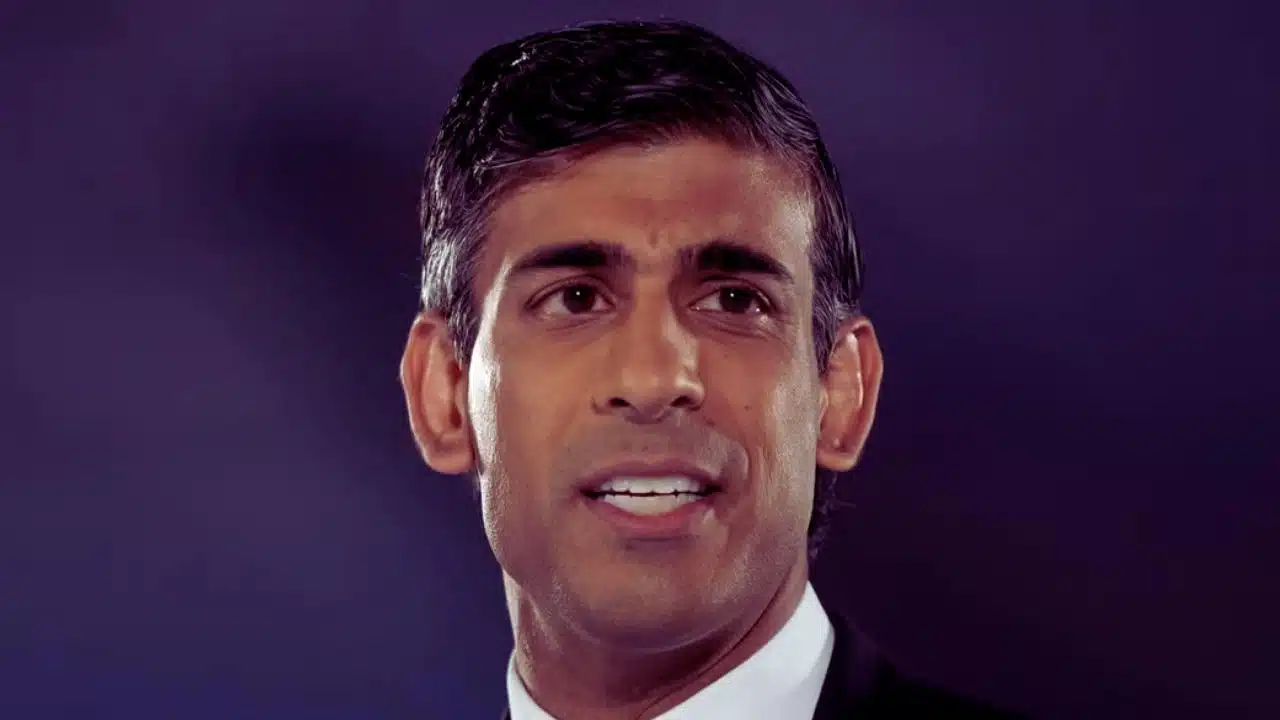
In an unprecedented and constitutionally fraught move, Prime Minister Rishi Sunak has accepted senior advisory positions with technology giant Microsoft and leading AI firm Anthropic, Downing Street confirmed in a bombshell announcement today. The decision, effective immediately, makes Mr. Sunak the first sitting UK Prime Minister to hold formal roles with private corporations, triggering a political firestorm and immediate calls for his resignation over what critics are calling a “monumental conflict of interest.” The move raises profound questions about the integrity of government and the UK’s future AI policy, with the role of Rishi Sunak AI adviser now inextricably linked to his public office.
The dual appointments will see the Prime Minister advising both companies on global AI regulation and safety frameworks. A spokesperson for No. 10 insisted the roles were “pro-bono” and designed to “leverage the UK’s unique leadership position post-Bletchley Park AI Safety Summit, ensuring British insights are at the heart of global technological development.” However, the explanation has done little to quell the immediate and fierce backlash from across the political spectrum and from ethics watchdogs.
The Sunak Advisory Crisis
- Unprecedented Action: A sitting UK Prime Minister has never before accepted a formal advisory role with a private company, let alone two major global tech firms.
- Conflict of Interest Allegations: The government is a major client of Microsoft, and both companies are heavily involved in shaping AI policy, which the Prime Minister oversees. This has prompted immediate accusations of a severe breach of the Ministerial Code.
- Calls for Resignation: The Leader of the Opposition has called for Mr. Sunak’s immediate resignation, planning to table a motion of no confidence.
- Impact on UK AI Policy: The move threatens to undermine the UK’s credibility as an impartial leader in global AI safety and regulation, a key pillar of Sunak’s premiership.
- Government Contracts at Stake: UK public sector bodies have spent over £5.5 billion on Microsoft products and services since 2018, raising questions about impartiality in future procurement.
The Revolving Door Hits Overdrive
The “revolving door” between Whitehall and the private sector has long been a point of contention in British politics. Former ministers and senior civil servants frequently take up lucrative positions in industries they once regulated. Notable examples include former Deputy Prime Minister Nick Clegg’s move to become President of Global Affairs at Meta, and former Chancellor George Osborne’s multiple roles, including a controversial advisory position at investment giant BlackRock.
However, Mr. Sunak’s decision shatters all precedent by eliminating the “former” prefix. He remains the ultimate authority on UK national policy, including technology, competition, and defence—areas in which Microsoft and Anthropic are dominant players.
The Advisory Committee on Business Appointments (ACOBA), the body that vets such appointments for former ministers, has no jurisdiction over a serving Prime Minister. This leaves a vacuum in oversight, a point seized upon by critics. The Committee on Standards in Public Life has already issued a statement expressing “grave concern” over the move’s potential to erode public trust.
Data & Statistics: The Scale of the Conflict
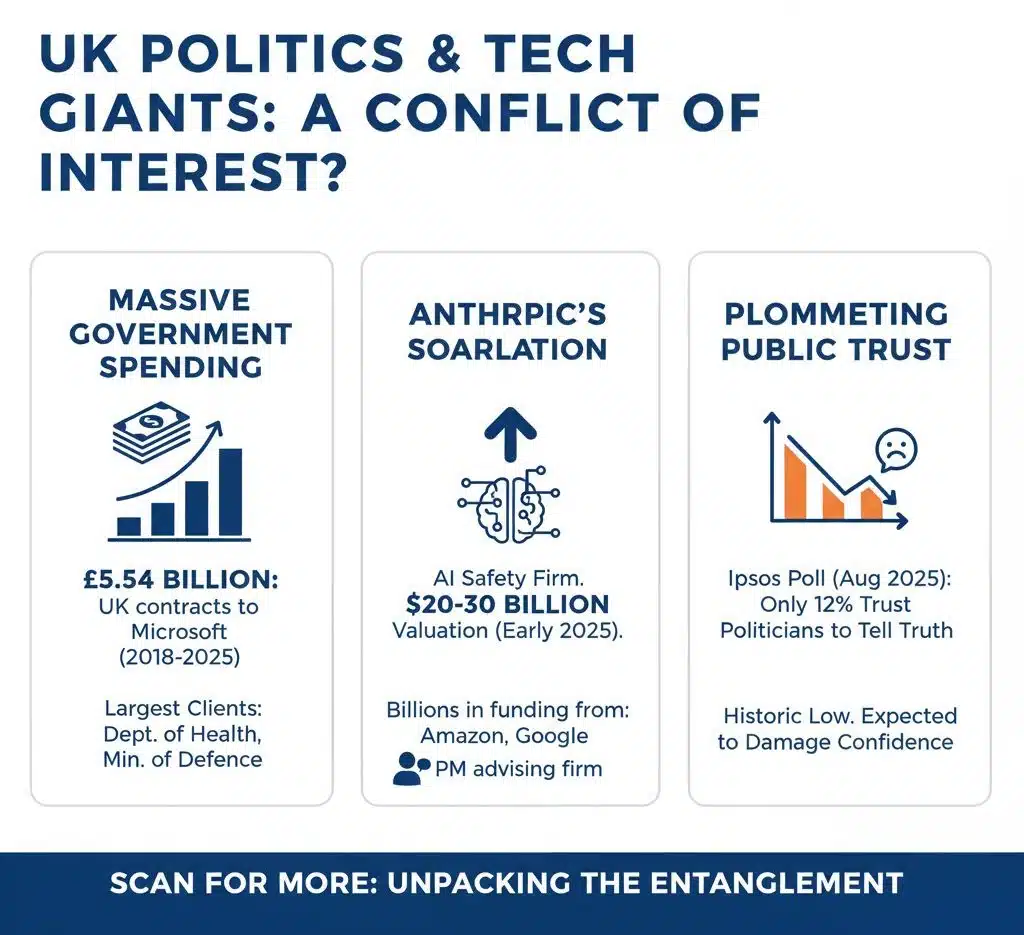
The financial and political ties between the UK government and these tech giants make the appointments particularly problematic. An analysis of public data reveals the deep entanglement:
- Massive Government Spending: Between January 2018 and September 2025, UK public bodies awarded contracts to Microsoft with a total value of £5.54 billion. The Department of Health and Social Care and the Ministry of Defence are among its largest clients. This ongoing financial relationship raises critical questions about how the Prime Minister can make impartial decisions affecting a de facto corporate partner.
- Anthropic’s Soaring Valuation: AI safety and research company Anthropic, a key rival to OpenAI, has received billions in funding from tech giants including Amazon and Google. Its latest valuation is estimated to be between $20-$30 billion as of early 2025. By advising Anthropic, Mr. Sunak is associating himself with a firm at the epicentre of a commercial and technological race that his government is tasked with regulating.
- Plummeting Public Trust: The move comes at a time when public trust in politicians is already at a historic low. A recent poll conducted in August 2025 by Ipsos found that only 12% of the British public trust politicians to tell the truth, a slight decrease from the previous year. This action is widely expected to further damage public confidence in government integrity.
Official Responses and Expert Analysis
The reaction has been swift and damning.
In a heated press conference, Leader of the Opposition Sir Keir Starmer stated:
“This is not just a conflict of interest; it is a corruption of the office of Prime Minister. He has made his position untenable. For the sake of our country’s integrity and our democracy, he must resign immediately. The British public deserves a Prime Minister who serves them, not one who serves as a consultant for Big Tech.”
Microsoft and Anthropic released a joint statement attempting to frame the appointments positively. “We are honoured to have Prime Minister Sunak’s globally respected insights to help guide our work on developing safe and beneficial AI. This collaboration between the public and private sectors is vital for responsible innovation,” the statement read.
Dr. Hannah White, Director of the Institute for Government, a leading independent think tank, provided a stark analysis. “The Ministerial Code is built on the principle that ministers must ensure no conflict arises, or could reasonably be perceived to arise, between their public duties and their private interests,” she explained in a briefing note. “An advisory role with a major government supplier and a key player in a regulated industry is not a perceived conflict; it is the definition of a conflict. Constitutionally, this is uncharted territory.”
What to Watch Next
The immediate future for the Prime Minister appears politically perilous. Several key events are expected to unfold rapidly:
- Parliamentary Showdown: An emergency debate is being requested in the House of Commons, and the Opposition will likely force a vote of no confidence within the week.
- Cabinet Reaction: The silence from senior cabinet members is deafening. All eyes are on the Chancellor and Foreign Secretary to see if they will continue to support the Prime Minister or force his hand.
- Independent Adviser on Ministers’ Interests: Sir Laurie Magnus, the current adviser, will be under immense pressure to launch an investigation, though his powers are limited and he can only advise the Prime Minister—the very subject of the investigation.
- Market Jitters: The pound sterling has already slipped against the dollar and euro on the news, as markets react to the political instability. Microsoft’s stock (MSFT) saw a minor initial bump before falling as the political risks became clear.
A Crisis of Credibility
Prime Minister Sunak’s decision to accept advisory roles at Microsoft and Anthropic has plunged his government into a profound crisis. While framed as an innovative step to blend public and private expertise, it is almost universally seen as a catastrophic misjudgment that strikes at the core of governmental ethics. By blurring the lines between public service and private interest so brazenly, the Prime Minister has not only jeopardised his own political career but has also risked undermining the UK’s global standing and the public’s already fragile trust in its leaders. Whether this is a gamble that can be survived remains to be seen, but the immediate political damage appears severe and potentially irreversible.
The Information is Collected from MSN and Yahoo.